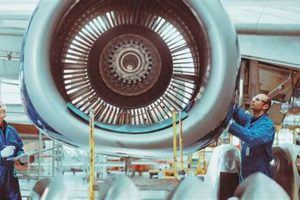
The occupation involves the inspection, repair, and overhaul of aircraft and spacecraft components and systems. These positions ensure the safety and operational readiness of aerial vehicles through preventative measures and corrective actions. Examples include performing routine checks on engine performance, replacing damaged structural parts, and troubleshooting electrical malfunctions within an aircraft.
This field is vital for ensuring passenger and cargo safety, maintaining regulatory compliance, and extending the lifespan of expensive aviation assets. A well-executed repair and upkeep program minimizes the risk of accidents and operational disruptions, contributing significantly to the economic viability of airlines and aerospace organizations. Historically, specialized expertise in these areas has always been a cornerstone of successful flight operations.
The following sections will delve into the required qualifications, essential skills, and career progression opportunities available within this highly specialized sector. Furthermore, potential challenges and future trends impacting the field will also be addressed.
Essential Guidance for Securing a Position in Aircraft Upkeep
The following guidance outlines key strategies for individuals seeking a career focused on the repair and preservation of aerial vehicles.
Tip 1: Obtain Relevant Certifications: Completion of programs such as FAA Airframe and Powerplant (A&P) certification is crucial. These certifications validate fundamental knowledge and skills required to work on aircraft.
Tip 2: Pursue Formal Education: Consider a degree in aviation maintenance technology or a related field. A formal education provides a comprehensive understanding of aviation systems and regulations.
Tip 3: Gain Practical Experience: Seek internships or apprenticeships with airlines, maintenance facilities, or aerospace manufacturers. Hands-on experience is highly valued by employers.
Tip 4: Develop Strong Troubleshooting Skills: The ability to diagnose and resolve mechanical, electrical, and structural issues is essential. This requires analytical thinking and a thorough understanding of aircraft systems.
Tip 5: Maintain Up-to-Date Knowledge: Aviation technology is constantly evolving. Continuously update knowledge through industry publications, training courses, and professional development activities.
Tip 6: Network with Industry Professionals: Attend industry events, join professional organizations, and connect with individuals working in this field. Networking can provide valuable insights and career opportunities.
Tip 7: Emphasize Safety and Compliance: Demonstrate a strong commitment to safety procedures and regulatory compliance. These are paramount in the aircraft repair and upkeep field.
Adherence to these recommendations significantly enhances an individual’s prospects for entry and advancement within the competitive aircraft upkeep landscape.
The subsequent section will explore the long-term career trajectory within the aerospace maintenance sector.
1. Certification Requirements

Certification requirements are foundational to the “aerospace maintenance job.” These stipulations are mandated by regulatory bodies to ensure a minimum standard of competence and safety within the aviation sector. Meeting these prerequisites is not merely procedural; it directly impacts the ability to legally perform maintenance tasks on aircraft.
- FAA Airframe and Powerplant (A&P) License
The A&P license, issued by the Federal Aviation Administration (FAA) in the United States, is a primary certification for aircraft technicians. This license permits holders to inspect, maintain, repair, and alter aircraft and their related systems. Without an A&P license, technicians are typically restricted from independently performing critical maintenance tasks, significantly limiting job opportunities in the field. Example: A technician must hold an A&P license to certify that an engine overhaul has been completed according to FAA regulations.
- EASA Part-66 License
The European Aviation Safety Agency (EASA) Part-66 license is the corresponding certification standard in Europe. This license framework establishes different categories and subcategories based on the type and complexity of aircraft systems. Each category permits the holder to certify maintenance work on specific aircraft types. Example: A Part-66 B1 license holder is authorized to perform and certify mechanical maintenance on aircraft, while a B2 license holder can certify avionic systems maintenance.
- Type Ratings
In addition to general A&P or Part-66 licenses, type ratings are often required for maintenance on specific aircraft models, particularly larger commercial airliners. These ratings demonstrate competence in the systems and maintenance procedures unique to a particular aircraft type, such as the Boeing 737 or Airbus A320. Example: A technician working on the avionics system of a Boeing 777 typically needs to hold a type rating for that specific aircraft.
- Specialized Training Certifications
Beyond baseline licenses and type ratings, specialized training certifications might be necessary for certain maintenance tasks, such as non-destructive testing (NDT) or composite repair. These certifications demonstrate mastery of specific techniques and technologies used in aircraft maintenance. Example: A technician performing ultrasonic inspection on an aircraft wing spar would need to hold a valid NDT certification in ultrasonic testing.
The multifaceted nature of certification requirements underscores their significance in the “aerospace maintenance job.” These certifications not only validate an individual’s knowledge and skills but also ensure accountability and adherence to industry standards, ultimately contributing to the overall safety and reliability of air travel. The absence of proper certification can have significant legal and operational consequences for both the technician and the employing organization.
2. Technical Proficiency

Technical proficiency represents a core competency within the aerospace maintenance field. It dictates the ability of personnel to effectively diagnose, repair, and maintain complex aircraft systems. Without a high degree of technical skill, ensuring the safe and efficient operation of aerial vehicles becomes problematic.
- Diagnostic Acumen
The capacity to accurately identify faults within aircraft systems is paramount. This requires understanding schematics, utilizing diagnostic equipment, and interpreting test results. Example: Utilizing a multimeter to trace an electrical fault within a flight control system, or employing specialized software to analyze engine performance data. Impaired diagnostic skills lead to prolonged downtime and potential safety compromises.
- Mastery of Tools and Equipment
Proficiency in operating a wide range of tools, from basic hand tools to sophisticated testing equipment, is essential. This includes torque wrenches, borescope, hydraulic test stands, and avionics diagnostic tools. Example: Properly calibrating and using a torque wrench to ensure critical fasteners are tightened to the precise specification. Inadequate tool handling risks damage to components and unsafe operating conditions.
- Knowledge of Aircraft Systems
A comprehensive understanding of aircraft systemsincluding engines, hydraulics, avionics, and structural componentsis indispensable. Technicians must comprehend how these systems interact and their impact on overall aircraft performance. Example: Knowing the functional relationship between the autopilot system and the flight control surfaces. Deficient system knowledge contributes to misdiagnosis and improper repairs.
- Adherence to Technical Documentation
The ability to interpret and follow technical manuals, service bulletins, and regulatory guidelines is crucial. This ensures that maintenance tasks are performed according to approved procedures. Example: Referencing the Aircraft Maintenance Manual (AMM) for the correct sequence of steps to replace a landing gear actuator. Non-compliance with technical documentation results in substandard repairs and potential regulatory violations.
These facets of technical proficiency are inextricably linked within the profession. Competent upkeep professionals continuously hone these skills through ongoing training and practical experience. The safety and reliability of air travel hinges directly on the technical expertise possessed by those engaged in the upkeep and repair of aircraft.
3. Safety Protocols
Adherence to safety protocols is non-negotiable within the aerospace maintenance field. These protocols serve as the foundation for minimizing risk, preventing accidents, and ensuring the well-being of maintenance personnel and the operational integrity of aircraft. Strict compliance is essential, given the inherent hazards associated with working on complex mechanical and electrical systems in close proximity to heavy machinery and hazardous materials.
- Lockout/Tagout Procedures
Lockout/tagout procedures are critical for preventing accidental activation of aircraft systems during maintenance. These procedures involve isolating energy sources (electrical, hydraulic, pneumatic) and attaching locks and tags to prevent inadvertent operation. Example: Before working on a hydraulic system, technicians must lock out the hydraulic power unit and tag it to indicate that maintenance is in progress. Failure to implement proper lockout/tagout can lead to serious injury or equipment damage.
- Use of Personal Protective Equipment (PPE)
Personal protective equipment, including safety glasses, hearing protection, respirators, and protective clothing, is mandatory for safeguarding personnel from workplace hazards. The specific PPE required depends on the task being performed and the potential risks involved. Example: When working with chemical solvents, technicians must wear gloves and eye protection to prevent skin and eye irritation. Neglecting to use appropriate PPE exposes technicians to unnecessary health risks.
- Hazardous Materials Handling
Aircraft maintenance often involves the use of hazardous materials, such as fuels, oils, solvents, and paints. Strict protocols govern the storage, handling, and disposal of these materials to prevent environmental contamination and health hazards. Example: Used oil must be collected in designated containers and disposed of according to environmental regulations. Improper handling of hazardous materials can result in fines and legal liabilities.
- Confined Space Entry Procedures
Working in confined spaces within aircraft, such as fuel tanks or cargo holds, presents unique safety challenges due to limited ventilation and potential exposure to hazardous atmospheres. Confined space entry procedures mandate atmospheric testing, ventilation, and the use of safety harnesses and rescue equipment. Example: Before entering a fuel tank for inspection, technicians must ensure that the atmosphere is safe and use a supplied-air respirator. Failure to follow confined space entry protocols can lead to asphyxiation or toxic exposure.
The scrupulous application of these safety protocols is inextricably linked to the overall safety and efficiency of aerospace maintenance operations. These protocols not only protect personnel from injury and illness but also prevent damage to aircraft and the environment. A robust safety culture, characterized by proactive hazard identification, risk assessment, and continuous improvement, is paramount to mitigating the inherent risks associated with this demanding occupation.
4. Regulatory Compliance
Regulatory compliance is an indispensable facet of the aerospace maintenance occupation. Stringent rules, mandated by authorities such as the FAA, EASA, and other national aviation administrations, govern all aspects of aircraft upkeep. Adherence to these regulations directly impacts airworthiness, operational safety, and the legal standing of maintenance organizations and personnel. Failure to comply can result in severe penalties, including fines, license revocation, and grounding of aircraft.
A crucial example is the meticulous record-keeping required for all maintenance activities. Regulations demand that every inspection, repair, and modification be documented in detail, including the date, work performed, parts replaced, and the identity of the certifying technician. This documentation provides a traceable history of an aircraft’s maintenance and serves as a critical reference for future upkeep and troubleshooting. Another example is compliance with Airworthiness Directives (ADs), issued by regulatory agencies to address known safety issues. Technicians must meticulously follow the instructions outlined in ADs to correct the identified problem and prevent potential accidents. This includes specific inspection procedures, component replacements, or system modifications. The practical significance is clear: aircraft operating without full regulatory compliance risk catastrophic failures and pose a direct threat to passenger safety. Furthermore, airlines and maintenance facilities found in violation face significant legal and financial repercussions.
In summary, regulatory compliance is not merely a procedural formality within the aerospace maintenance field; it is the bedrock upon which safety, reliability, and legal accountability are built. Navigating the complex web of regulations requires continuous training, meticulous attention to detail, and a unwavering commitment to upholding the highest standards of airworthiness. The consequences of non-compliance underscore the critical importance of this element within every aspect of the occupation, ensuring the safe operation of aircraft worldwide.
5. Problem-Solving Skills
The domain of aircraft upkeep is inherently predicated on effective troubleshooting and resolution of mechanical, electrical, and structural anomalies. Competence in problem-solving distinguishes proficient technicians and engineers within the “aerospace maintenance job,” directly impacting operational safety and efficiency.
- Systematic Fault Isolation
A logical, step-by-step approach to identifying the root cause of a malfunction is critical. This involves using diagnostic tools, interpreting schematics, and systematically eliminating potential causes. For example, when troubleshooting an inoperative autopilot system, a technician would methodically check power supplies, sensor inputs, and servo motor functionality. Impaired fault isolation leads to unnecessary component replacements and prolonged downtime.
- Adaptive Repair Strategies
The ability to devise effective repair solutions, even when faced with unforeseen circumstances or limited resources, is essential. This requires innovative thinking and a thorough understanding of aircraft systems. For example, if a replacement part is unavailable, a technician might need to devise a temporary repair that meets regulatory requirements and allows the aircraft to return to service safely. A lack of adaptive strategies results in operational disruptions and potential safety compromises.
- Risk Assessment and Mitigation
Evaluating the potential risks associated with a particular repair or modification is vital for ensuring safety. This involves considering factors such as the criticality of the system, the potential for cascading failures, and the impact on overall aircraft performance. For example, before performing a structural repair on a wing, a technician would assess the load-bearing capacity of the repaired area and ensure that it meets required standards. Inadequate risk assessment can lead to catastrophic failures and loss of life.
- Collaborative Troubleshooting
Working effectively with other technicians, engineers, and pilots to diagnose and resolve complex problems is crucial. This requires clear communication, active listening, and a willingness to share knowledge and expertise. For example, a technician might consult with an engineer to troubleshoot an intermittent engine problem that defies routine diagnosis. Ineffective collaboration impedes problem resolution and increases the risk of errors.
These interconnected aspects of problem-solving underscore their significance within aircraft upkeep. Adept practitioners continuously refine these capabilities through ongoing education, practical experience, and collaborative knowledge-sharing. The safety and dependability of air travel are directly contingent upon the problem-solving acumen displayed by those entrusted with the maintenance and repair of aircraft.
6. Physical Stamina

The nature of aircraft upkeep necessitates a significant degree of physical endurance. Tasks frequently involve prolonged periods of standing, bending, lifting heavy components, and working in confined spaces. This physical exertion is not merely occasional; it constitutes a regular aspect of the occupation, demanding sustained stamina to perform duties effectively and safely. Aircraft technicians may spend hours working on engine repairs within tight engine cowlings, requiring them to maintain awkward postures while applying considerable force. The cumulative effect of these physical demands can lead to fatigue, increasing the risk of errors and injuries.
The practical significance of adequate physical conditioning extends beyond preventing immediate injuries. Sustained exertion can contribute to long-term musculoskeletal issues if not properly managed. Furthermore, fatigue impairs cognitive function, impacting decision-making and potentially leading to omissions or mistakes in critical maintenance procedures. Consequently, employers often implement physical fitness assessments and training programs to ensure that personnel possess the necessary stamina to meet job requirements. These programs may include exercises designed to strengthen core muscles, improve flexibility, and enhance cardiovascular fitness. Proper lifting techniques are also emphasized to minimize the risk of back injuries.
In conclusion, physical stamina is not merely a desirable attribute but an essential component for successful and safe performance in the “aerospace maintenance job.” Its impact extends from immediate task completion to long-term health and operational efficiency. Acknowledging and addressing the physical demands of the occupation through training, fitness programs, and ergonomic considerations is paramount for mitigating risks and ensuring the continued competence of upkeep professionals.
7. Continuing Education

The dynamic nature of aviation technology necessitates ongoing professional development within the “aerospace maintenance job.” Certification, regulations, and technological advancements continually evolve, demanding a commitment to lifelong learning to maintain competence and ensure operational safety.
- Regulatory Updates and Compliance Training
Aviation regulations are subject to periodic revisions and updates. Technicians must participate in regular training to stay abreast of changes in FAA, EASA, or other relevant regulatory requirements. Failure to comply with updated regulations can result in fines, license suspension, or grounding of aircraft. Example: Changes to Airworthiness Directives (ADs) or Maintenance Review Board Reports (MRBRs) necessitate immediate updates to maintenance procedures.
- Aircraft-Specific Training
Each aircraft model possesses unique systems and maintenance requirements. Technicians need to complete type-specific training courses to gain proficiency in maintaining particular aircraft. These courses cover the intricacies of the aircraft’s systems, troubleshooting techniques, and approved repair procedures. Example: A technician transitioning from working on Boeing 737s to Airbus A320s would require specialized training on the Airbus systems.
- Advanced Technical Skills Development
The introduction of new materials, technologies, and diagnostic tools requires technicians to acquire advanced technical skills. This may involve training in areas such as composite repair, non-destructive testing (NDT), advanced avionics troubleshooting, or digital aircraft maintenance systems. Example: The increasing use of composite materials in aircraft structures necessitates training in specialized repair techniques and inspection methods.
- Human Factors Training
Recognizing the impact of human factors on maintenance performance, technicians often undergo training in areas such as crew resource management (CRM), error prevention, and communication skills. This training aims to minimize human error and enhance teamwork in maintenance operations. Example: Training on effective communication techniques to ensure clear and accurate information exchange during shift handovers.
These facets of continuing education are integral to maintaining proficiency and ensuring safety within the “aerospace maintenance job.” The commitment to lifelong learning equips maintenance personnel with the knowledge and skills necessary to address the evolving challenges of aircraft maintenance, thereby contributing to the overall safety and reliability of air travel.
Frequently Asked Questions
The following questions address common inquiries regarding the responsibilities, requirements, and career prospects within the field of aerospace maintenance.
Question 1: What specific tasks are encompassed within the duties of an aerospace maintenance job?
Responsibilities include, but are not limited to, conducting routine inspections, diagnosing mechanical and electrical malfunctions, performing repairs and component replacements, and ensuring compliance with all applicable regulatory standards.
Question 2: What educational qualifications are typically required to secure an aerospace maintenance job?
A minimum requirement generally includes a high school diploma or equivalent, coupled with completion of a certified aviation maintenance program approved by the Federal Aviation Administration (FAA) or a similar regulatory body. An associate’s or bachelor’s degree in aviation maintenance technology may be preferred for certain positions.
Question 3: What certifications are essential for individuals pursuing a career in aerospace maintenance?
Possession of an FAA Airframe and Powerplant (A&P) license is typically mandatory in the United States. Equivalent certifications are required in other countries, such as the EASA Part-66 license in Europe. Additional certifications may be necessary for specialized tasks, such as non-destructive testing (NDT).
Question 4: What are the primary challenges encountered in the daily performance of an aerospace maintenance job?
Challenges include working in confined spaces, adhering to strict deadlines, troubleshooting complex technical issues, and ensuring compliance with evolving regulatory requirements. Maintaining a high level of safety awareness is also paramount.
Question 5: What is the projected career outlook for individuals employed in aerospace maintenance jobs?
The demand for qualified aviation maintenance technicians is expected to increase in the coming years, driven by the growth of the air travel industry and the increasing complexity of modern aircraft. Opportunities exist in airlines, maintenance repair and overhaul (MRO) facilities, and aerospace manufacturing companies.
Question 6: What are the key skills necessary for success in an aerospace maintenance job?
Essential skills include strong mechanical aptitude, troubleshooting abilities, attention to detail, the capacity to interpret technical documentation, and a commitment to safety and regulatory compliance. Effective communication and teamwork skills are also important.
A successful career in aerospace maintenance hinges on a combination of technical expertise, regulatory knowledge, and a dedication to maintaining the highest standards of safety and airworthiness. The field offers opportunities for professional growth and specialization.
The subsequent section will address future trends and innovations impacting the domain of aerospace maintenance.
Conclusion
This exposition has explored the multifaceted nature of the “aerospace maintenance job,” elucidating the critical role it plays in ensuring the safety and operational integrity of aircraft. Key elements, including stringent certification requirements, technical proficiency, rigorous adherence to safety protocols, and unwavering regulatory compliance, have been underscored. Furthermore, the demanding physical requirements and the necessity for continuous professional development have been examined, highlighting the commitment required for success in this field.
The continued advancement of aviation technology necessitates an unwavering dedication to excellence within aerospace upkeep. As aircraft become increasingly complex, the demand for highly skilled and rigorously trained technicians will only intensify. Upholding the highest standards of airworthiness remains paramount, demanding a proactive approach to training, innovation, and a relentless pursuit of safety. The future of air travel hinges upon the competence and unwavering commitment of those entrusted with maintaining the world’s aircraft.