The economic landscape that dictates employment opportunities and career progression for professionals trained in the design, development, and testing of aircraft, spacecraft, and related systems is a complex and dynamic one. It reflects the overall health of the aerospace industry and the broader economy, influenced by factors such as government spending, technological advancements, and global demand for air travel and space exploration. For instance, increased investment in commercial aviation could lead to a surge in demand for engineers specializing in aircraft design.
Understanding the forces that shape this environment is crucial for both aspiring and experienced engineers. It allows them to make informed decisions regarding education, career paths, and professional development. Awareness of historical trends, such as shifts from military to commercial projects or the impact of economic recessions, provides a valuable perspective for navigating career choices. The advantages of gaining such insights include enhanced career prospects, optimized skill development, and increased earning potential.
This article will explore the primary drivers influencing the availability of positions, the key sectors within the field offering the most promise, the geographic distribution of opportunities, and the skills and qualifications most sought after by employers. Furthermore, it will examine the impact of emerging technologies and future trends on the long-term prospects for professionals in this demanding and rewarding discipline.
Strategic preparation and informed decision-making are paramount for individuals seeking successful careers related to the development and application of flight technology. The following guidelines offer actionable insights for effectively navigating the relevant employment landscape.
Tip 1: Cultivate Specialized Expertise: Possessing advanced knowledge in a niche area, such as computational fluid dynamics, propulsion systems, or avionics, significantly enhances marketability. For example, a deep understanding of additive manufacturing techniques for aerospace components is highly valuable.
Tip 2: Prioritize Internship and Co-op Experiences: Practical experience gained through internships and cooperative education programs provides a competitive advantage. Exposure to real-world engineering challenges and industry practices is highly regarded by potential employers.
Tip 3: Acquire Relevant Certifications and Licenses: Professional certifications, such as those offered by the American Institute of Aeronautics and Astronautics (AIAA), demonstrate a commitment to professional development and industry standards. Specific licenses may be required for certain engineering roles.
Tip 4: Develop Strong Communication and Collaboration Skills: Aerospace projects are inherently collaborative, requiring effective communication and teamwork. Demonstrated proficiency in technical writing, presentation skills, and interpersonal communication is essential.
Tip 5: Stay Abreast of Technological Advancements: Continuous learning is crucial in a rapidly evolving field. Staying informed about emerging technologies, such as electric propulsion, autonomous systems, and advanced materials, enhances long-term career prospects. Regularly attending industry conferences and workshops is advisable.
Tip 6: Target Specific Companies and Locations: Researching companies involved in preferred areas of specialization and geographic locations allows for a focused job search strategy. Networking within targeted organizations increases the likelihood of identifying suitable opportunities. For instance, targeting companies involved in space exploration if that is your passion.
Employing these strategies will enable professionals to optimize their career trajectories in this dynamic and technologically advanced arena. A proactive and informed approach to career development is crucial for achieving sustained success.
The subsequent sections will delve into the factors influencing salary expectations, the importance of networking, and the long-term outlook for professionals in this sector.
1. Demand Drivers
The forces that directly stimulate the need for aerospace engineering professionals significantly influence the overall health and robustness of the employment landscape. Fluctuations in these forces can create periods of expansion or contraction, impacting career opportunities and compensation levels.
- Commercial Aviation Expansion
Growth in passenger air travel and cargo transport directly correlates with the demand for new aircraft and the maintenance of existing fleets. This necessitates engineers for design, manufacturing, testing, and certification, impacting hiring rates across various specializations.
- Government Spending on Defense and Space
Government investment in military aviation, space exploration programs, and related research initiatives forms a crucial pillar supporting employment. Variations in defense budgets and space program funding directly influence the availability of engineering positions in these sectors.
- Technological Advancements and Innovation
Breakthroughs in areas such as electric propulsion, autonomous flight systems, and advanced materials create demand for engineers with specialized expertise. Companies developing these technologies require skilled professionals to drive innovation and implement new solutions.
- Regulatory Changes and Environmental Concerns
New regulations concerning air safety, emissions standards, and noise reduction create opportunities for engineers specializing in compliance and sustainable technologies. The development and implementation of environmentally friendly aircraft designs are increasingly important.
These demand drivers collectively shape the overall prospects for professionals in the field. Understanding the interplay between these factors allows individuals to anticipate shifts in the employment environment and strategically position themselves for career advancement. The level of activity within these key areas dictates the overall tone and character of the employment setting.
2. Geographic Distribution

The geographic distribution of opportunities in the aerospace engineering field is not uniform and significantly impacts employment prospects. Concentrations of jobs often align with established aerospace hubs and regions with strong industrial or governmental presence.
- Proximity to Major Aerospace Manufacturers
Regions hosting headquarters, research facilities, or major manufacturing plants of prominent aerospace companies tend to offer a higher density of engineering positions. Examples include the Seattle area (Boeing), Southern California (various aerospace firms, including SpaceX and Northrop Grumman), and the Dallas-Fort Worth metroplex (Lockheed Martin, Bell Helicopter). The presence of these companies creates a localized demand for a wide range of engineering specializations.
- Location of Government Research Facilities and Military Bases
Areas surrounding NASA centers (e.g., Houston, Huntsville, Hampton) and major military installations (e.g., Edwards Air Force Base, Patuxent River Naval Air Station) often have a robust market for aerospace engineers. These locations support research and development activities, as well as testing and evaluation of aerospace systems. Civil service and contractor positions are commonly found in these areas.
- Presence of Aerospace Clusters and Innovation Hubs
Certain regions have cultivated aerospace clusters through a combination of academic institutions, research centers, and industry collaboration. These hubs foster innovation and attract both established companies and startups. Examples include areas around MIT and Caltech, as well as emerging aerospace centers in states like Colorado and Florida. The collaborative environment within these clusters enhances career opportunities.
- Cost of Living and Quality of Life Considerations
While a region may have a high concentration of opportunities, factors such as cost of living, housing availability, and quality of life can influence an engineer’s willingness to relocate. Areas with a lower cost of living or desirable amenities may be more attractive to job seekers, even if salaries are slightly lower. Conversely, high-cost areas require proportionally higher compensation to attract and retain talent. These factors influence talent distribution within the overall landscape.
Understanding the geographic distribution is critical for job seekers as it informs targeted searches and relocation decisions. While remote work opportunities may be increasing, many aerospace engineering roles still require on-site presence due to the nature of the work, particularly in manufacturing, testing, and research and development. Consequently, awareness of these geographical trends is a crucial element of career planning and is the way to optimize the job market for aerospace engineers.
3. Skill Requirements

The specific competencies demanded of aerospace engineers directly shape the employment prospects within the industry. A mismatch between available skill sets and industry needs can create bottlenecks, limiting opportunities for both individuals and organizations. Cause-and-effect relationships are readily apparent: increased demand for specialized knowledge in areas such as unmanned aerial vehicles (UAVs) or advanced composite materials leads to heightened competition for engineers possessing these skills. Therefore, skill requirements serve as a critical component of the dynamics, influencing hiring practices, salary expectations, and career trajectories. As an example, the growing utilization of simulation and modeling tools in aircraft design has elevated the importance of proficiency in software such as ANSYS and MATLAB, making these skills highly desirable in the current climate.
Furthermore, the ability to integrate interdisciplinary knowledge is increasingly valued. Modern aerospace projects often require engineers to collaborate across various domains, including aerodynamics, propulsion, control systems, and software development. Expertise in systems engineering principles, coupled with strong communication and teamwork abilities, enhances an engineer’s ability to contribute effectively to complex projects. A real-world application is seen in the design of next-generation airliners, where engineers must consider the interplay between fuel efficiency, passenger comfort, and environmental impact, requiring a holistic understanding of the system as a whole. This highlights the practical significance of possessing a broad and adaptable skill set.
In summary, the demand for specific competencies dictates the vitality of the sector. As technology advances and the industry evolves, the relevance of particular skills will shift. By recognizing these trends and proactively acquiring the necessary expertise, professionals can significantly enhance their competitive advantage. Continuous learning and adaptation are essential for navigating the shifting demands and ensuring long-term success in this dynamic field. Ignoring the evolving “skill requirements” can result in stagnation, while strategically developing relevant capabilities unlocks increased opportunity.
4. Salary Expectations

Salary expectations are intrinsically linked to the dynamics within the aerospace engineering employment landscape. They function as both a reflection of the current demand and a driver influencing the talent pool’s behavior. Higher compensation often signals increased demand for specific skill sets or experience levels. Conversely, suppressed wages may indicate a saturated market or a lack of investment in certain areas. The interplay between compensation and availability directly impacts hiring practices and career trajectories within the field.
A practical example of this connection is evident in the demand for engineers with expertise in electric propulsion systems for aircraft. As the industry shifts towards more sustainable technologies, companies are willing to offer premium salaries to attract professionals with the specialized knowledge required to develop and implement these new systems. This increased compensation not only attracts qualified engineers but also incentivizes individuals to pursue further education and training in this emerging field, thereby expanding the talent pool. This dynamic demonstrates how salary expectations can directly influence the availability and quality of skilled labor.
Understanding the salary landscape is crucial for both job seekers and employers. For engineers, awareness of prevailing compensation rates allows them to negotiate effectively and make informed career decisions. For companies, offering competitive salaries is essential for attracting and retaining top talent, which is critical for maintaining a competitive edge in the rapidly evolving aerospace industry. An awareness of salary trends allows for realistic expectation settings for those who seek to enter or advance within the job market for aerospace engineers. Failure to account for these factors can lead to dissatisfaction among employees and difficulties in recruiting qualified candidates.
5. Industry Growth and the Employment Landscape
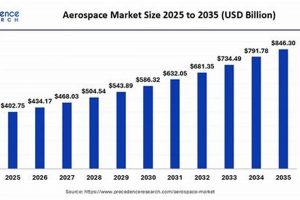
Industry expansion serves as a primary catalyst for the generation of employment opportunities in the aerospace engineering sector. A direct correlation exists: periods of sustained or accelerated growth within the industry invariably lead to an increased demand for qualified engineers across various specializations. This growth may stem from a multitude of factors, including increased commercial air travel, heightened defense spending, renewed emphasis on space exploration, or the development and adoption of novel aerospace technologies. As companies expand operations, develop new products, or undertake larger projects, their need for skilled engineering personnel intensifies, subsequently impacting the landscape.
The impact of industry vitality can be readily observed in instances such as the surge in commercial space activities. The emergence of private space companies and the expansion of satellite-based services have created a significant demand for aerospace engineers specializing in spacecraft design, propulsion systems, and mission operations. This increased demand translates into more job openings, higher salaries for specialized skill sets, and greater competition among employers to attract qualified talent. In addition, governmental support for the creation and implementation of sustainable aviation technologies will create jobs for engineers. These are real-world manifestations of the direct relationship between an expanding sector and the availability of employment.
In conclusion, sector expansion forms a critical component of a robust and dynamic market. By understanding the factors that drive sector growth and monitoring the overall health of the industry, both aspiring and experienced engineers can make informed decisions regarding career paths, skill development, and job search strategies. The capacity to identify and capitalize on opportunities arising from industry expansion is essential for long-term success in this field. Therefore, an understanding of growth drivers allows for successful maneuvering through the job market for aerospace engineers.
Frequently Asked Questions Regarding the Aerospace Engineering Employment Landscape
The following section addresses common inquiries and misconceptions surrounding the employment market for professionals trained in the design, development, and testing of aerospace systems.
Question 1: What are the primary factors influencing the availability of positions for aerospace engineers?
The availability of positions is subject to fluctuations influenced by various factors, including government spending on defense and space programs, the overall health of the commercial aviation sector, technological advancements within the industry, and global economic conditions. A downturn in any of these areas can negatively impact hiring rates.
Question 2: Which specific areas of specialization within aerospace engineering are currently experiencing the highest demand?
Specializations such as those related to autonomous systems, electric propulsion, advanced materials, and cybersecurity are currently in high demand due to technological advancements and evolving industry priorities. Expertise in these areas enhances career prospects.
Question 3: How important is practical experience, such as internships or co-op programs, for securing employment after graduation?
Practical experience gained through internships and co-op programs is highly valued by employers and significantly improves a graduate’s competitiveness in the job market. These experiences provide exposure to real-world engineering challenges and industry practices.
Question 4: What role do advanced degrees (Master’s or Ph.D.) play in career advancement within the aerospace engineering field?
Advanced degrees can provide a competitive advantage and open doors to specialized research and development roles. While not always required for entry-level positions, a Master’s or Ph.D. can be beneficial for career advancement and leadership opportunities.
Question 5: Are there specific geographic regions within the United States that offer more opportunities for aerospace engineers?
Yes, certain geographic regions with a strong presence of aerospace companies, government research facilities, or military bases tend to offer a higher concentration of opportunities. Examples include Southern California, the Seattle area, and the Dallas-Fort Worth metroplex.
Question 6: How can aerospace engineers stay current with the latest technological advancements and maintain their competitiveness in the job market?
Continuous learning is essential. Aerospace engineers should stay abreast of technological advancements through professional development courses, industry conferences, technical publications, and participation in relevant online communities.
The answers provided above offer a concise overview of key considerations for navigating the employment landscape. A proactive and informed approach to career planning is crucial for success.
The next section will provide a summary of the key takeaways from this exploration of the job market for aerospace engineers.
Concluding Assessment of the Aerospace Engineering Employment Landscape
This exploration of the job market for aerospace engineers has highlighted the multifaceted factors influencing career prospects. Demand drivers, geographic concentrations, evolving skill requirements, and fluctuating salary expectations collectively shape the landscape. Understanding these elements enables both aspiring and experienced professionals to make informed decisions regarding education, career paths, and professional development. The interplay between industry growth, technological advancements, and government policies further underscores the dynamic nature of this employment arena.
The aerospace engineering profession demands continuous adaptation and a proactive approach to skill acquisition. As the industry evolves, staying informed about emerging technologies and market trends is paramount for sustained success. Professionals are encouraged to leverage this knowledge to optimize their career trajectories and contribute to the ongoing advancement of the field. Strategic planning and a commitment to lifelong learning are essential for navigating the complexities of the job market for aerospace engineers.