A comparison between two distinct fields of engineering involves understanding the core principles that define each discipline. One field focuses on the study and application of electricity, electronics, and electromagnetism. Its practitioners design, develop, test, and supervise the manufacturing of electrical equipment, including electric motors, power generation systems, and telecommunications equipment. The other discipline addresses the design, development, testing, and production of aircraft, spacecraft, and related systems. Professionals in this area deal with aerodynamics, propulsion, materials science, and control systems specific to flight vehicles.
The significance of each area lies in its contributions to societal advancement and technological progress. The first field is crucial for powering modern society, enabling communication, and automating industries. Its historical roots trace back to the discoveries of electricity and electromagnetism, leading to innovations like the telegraph, telephone, and electric power grids. The second field is paramount for exploration, transportation, and national defense. Its origins are tied to early aviation efforts and have evolved dramatically with advancements in materials science, computer technology, and propulsion systems, culminating in space exploration and advanced aircraft designs.
A further examination of these two professional paths requires a consideration of the specialized knowledge, skills, and career opportunities associated with each. Understanding the specific educational requirements, typical job responsibilities, and potential career trajectories is essential for individuals considering pursuing either of these challenging and rewarding fields.
Selecting the appropriate engineering path requires careful consideration. The following tips aim to provide insights into the distinct aspects of each discipline.
Tip 1: Assess Foundational Interests: Electrical engineering often appeals to those fascinated by circuits, electronics, and signal processing. Aerospace engineering may attract individuals with a strong interest in flight mechanics, aerodynamics, and space exploration.
Tip 2: Evaluate Math and Science Aptitude: Both fields demand a solid foundation in mathematics and physics. Electrical engineering leans heavily on electromagnetism and circuit theory, while aerospace engineering emphasizes fluid dynamics and structural mechanics.
Tip 3: Consider Career Goals: Electrical engineers find employment in diverse sectors, including power generation, telecommunications, and consumer electronics. Aerospace engineers typically work in aircraft manufacturing, space agencies, and defense industries. Researching specific job roles within each field can help clarify career aspirations.
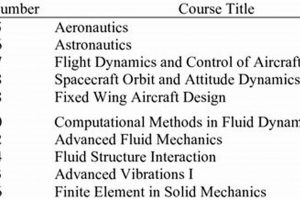
Tip 4: Research Curriculum Differences: Review the curricula of electrical and aerospace engineering programs. Electrical engineering courses often include topics like control systems and digital signal processing, while aerospace engineering focuses on aerodynamics and propulsion systems.
Tip 5: Explore Hands-On Opportunities: Seek out internships or research experiences related to both electrical and aerospace engineering. Practical experience can provide valuable insights into the day-to-day activities and challenges of each profession.
Tip 6: Understand Job Market Trends: Examine current and projected job market demands for both electrical and aerospace engineers. This analysis can inform decisions about specialization and geographic location.
Tip 7: Evaluate Personal Strengths: Consider personal strengths and weaknesses. Electrical engineering may suit those with strong analytical and problem-solving skills related to circuits and systems. Aerospace engineering may appeal to those with spatial reasoning and an interest in complex mechanical systems.
Choosing between these engineering disciplines necessitates a thorough understanding of personal interests, academic aptitudes, and career aspirations. Careful consideration of these factors will facilitate a more informed and successful decision.
In conclusion, a well-informed decision between the two career paths allows individuals to pursue their passions while contributing to technological advancements and societal progress.
1. Circuitry and Flight

The intersection of circuitry and flight exemplifies the interdependent nature of electrical and aerospace engineering. While seemingly disparate, the operational capabilities of modern aircraft and spacecraft are inextricably linked to sophisticated electrical systems.
- Avionics Systems
Avionics systems, encompassing navigation, communication, and flight control, rely entirely on complex electrical circuits. These systems process sensor data, execute control commands, and transmit critical information, enabling safe and efficient flight. The reliability and performance of these circuits directly impact the aircraft’s overall functionality. Without avionics, controlled flight would be impossible.
- Engine Control Units (ECUs)
Modern aircraft engines are managed by ECUs, which are sophisticated electronic circuits that optimize engine performance, fuel efficiency, and emissions. These units monitor various engine parameters, adjust fuel injection, and control ignition timing. The precision and responsiveness of ECUs are crucial for maintaining optimal engine operation throughout the flight envelope. The advancement of ECU technology directly contributes to improvements in engine efficiency and reliability.
- Power Distribution Networks
Aircraft require extensive power distribution networks to supply electricity to various systems, including avionics, lighting, environmental control, and actuators. These networks must be designed to handle high power loads, maintain voltage stability, and ensure redundancy to prevent system failures. The design of power distribution networks is critical for ensuring the reliable operation of all electrical systems on board the aircraft.
- Electromagnetic Compatibility (EMC)
Aircraft electrical systems must be designed to minimize electromagnetic interference (EMI) to ensure the proper functioning of all electronic equipment. EMI can disrupt sensitive circuits, leading to malfunctions or failures. EMC testing and design techniques are essential for ensuring that aircraft electrical systems meet stringent safety and performance standards. Proper EMC design is crucial for maintaining the integrity of critical flight systems.
The examples demonstrate the integral role of electrical engineering principles in aerospace applications. From basic functions to mission-critical systems, understanding the principles underlying circuitry allows for advances in the aeronautical world. The necessity is the same for each and provides a foundation for continued growth in each field.
2. Power and Propulsion

The convergence of power and propulsion represents a critical nexus between electrical and aerospace engineering. Effective management and utilization of power are fundamental to the operation of aircraft and spacecraft, while advanced propulsion systems enable sustained flight and space exploration. The synergy between these disciplines drives innovation and enhances performance across a broad spectrum of aerospace applications.
- Electric Propulsion Systems
Electric propulsion systems, such as ion thrusters and Hall-effect thrusters, utilize electrical energy to accelerate propellant, generating thrust. These systems offer significantly higher specific impulse compared to traditional chemical rockets, enabling longer mission durations and greater payload capacity for spacecraft. Electrical engineers play a vital role in designing and optimizing the power processing units, control systems, and plasma sources that constitute these propulsion systems. Aerospace engineers focus on integrating these systems into spacecraft and optimizing their performance for specific mission requirements.
- Hybrid-Electric Propulsion for Aircraft
Hybrid-electric propulsion systems are emerging as a promising technology for reducing fuel consumption and emissions in commercial aircraft. These systems combine traditional gas turbine engines with electric motors and generators, allowing for more efficient power generation and distribution. Electrical engineers contribute to the design of the electric motors, generators, power electronics, and energy storage systems that enable hybrid-electric propulsion. Aerospace engineers focus on integrating these systems into aircraft designs and optimizing their performance for various flight conditions.
- Power Generation and Distribution in Spacecraft
Spacecraft rely on solar arrays, radioisotope thermoelectric generators (RTGs), or fuel cells to generate electrical power. This power is then distributed to various subsystems, including communication, navigation, life support, and scientific instruments. Electrical engineers are responsible for designing the power generation systems, power management units, and power distribution networks that ensure reliable and efficient power delivery. Aerospace engineers integrate these systems into spacecraft designs and optimize their performance for specific mission profiles.
- High-Power Electrical Systems for Directed Energy Applications
Directed energy weapons (DEWs) require high-power electrical systems to generate and focus energy beams. These systems involve sophisticated power conditioning, beam steering, and control technologies. Electrical engineers play a crucial role in designing and developing these high-power systems, while aerospace engineers focus on integrating them into airborne or space-based platforms. The development of DEWs presents unique challenges in terms of power management, thermal management, and system integration.
These facets illustrate the complementary roles of electrical and aerospace engineers in advancing power and propulsion technologies. From enhancing the efficiency of spacecraft propulsion to reducing the environmental impact of commercial aviation, the collaboration between these disciplines is essential for driving innovation and shaping the future of aerospace engineering. The combined expertise leads to transformative advancements.
3. Electronics and Aerodynamics

The integration of electronics and aerodynamics represents a critical interface between electrical and aerospace engineering. Advancements in electronics have significantly enhanced the understanding and control of aerodynamic phenomena, leading to improvements in aircraft performance, stability, and efficiency. This interplay underscores the collaborative nature of these two engineering disciplines.
- Fly-by-Wire Systems
Fly-by-wire (FBW) systems replace traditional mechanical flight controls with electronic interfaces. Sensors measure pilot input, and computers process these signals to actuate control surfaces. This enables enhanced maneuverability, stability augmentation, and improved safety features. Electrical engineers design the electronic components, sensors, and control algorithms, while aerospace engineers focus on integrating these systems into aircraft and validating their aerodynamic performance. The deployment of FBW significantly reduces pilot workload and enables the design of aircraft with inherently unstable aerodynamic characteristics.
- Active Flow Control
Active flow control (AFC) utilizes electronic sensors and actuators to manipulate the airflow around an aircraft, reducing drag, increasing lift, and improving stall characteristics. Techniques include synthetic jets, pulsed blowing, and suction. Electrical engineers develop the electronic components that drive these actuators and the sensors that monitor flow conditions. Aerospace engineers design the AFC system, optimize its placement on the aircraft, and analyze its aerodynamic effects. AFC has the potential to significantly improve aircraft fuel efficiency and maneuverability.
- Electronic Warfare Systems
Electronic warfare (EW) systems are integrated into aircraft to detect, identify, and counter enemy radar and communication systems. These systems rely on sophisticated electronic components, including antennas, receivers, signal processors, and jammers. Electrical engineers design and develop the EW hardware and software, while aerospace engineers integrate these systems into aircraft and optimize their performance in various operational scenarios. EW systems play a critical role in ensuring aircraft survivability in hostile environments.
- Unmanned Aerial Vehicles (UAVs)
Unmanned Aerial Vehicles (UAVs), or drones, heavily rely on the integration of advanced electronics and aerodynamic design. Navigation, control, sensing, and communication systems all are essential electronic components. Aerodynamic efficiency and stability is crucial for UAV functionality. The integration of both components is essential for optimal UAV operation.
The examples underscore the synergistic relationship. Electronic advancements enable increased understanding. The collaboration of each allows for innovation, benefiting from each other’s knowledge.Electrical and aerospace engineers contribute synergistically to enhance the capabilities of aircraft, addressing critical needs in efficiency, performance, and safety.
4. Control Systems

Control systems are fundamental to both electrical and aerospace engineering, albeit with differing applications and design considerations. These systems regulate the behavior of dynamic systems, ensuring stability, precision, and desired performance characteristics. The design and implementation of these systems require a deep understanding of mathematical modeling, feedback control principles, and system dynamics.
- Feedback Control in Electrical Circuits
In electrical engineering, feedback control is essential for regulating voltage levels in power supplies, stabilizing operational amplifier circuits, and controlling motor speeds. Feedback loops monitor output parameters and adjust input signals to maintain desired setpoints. For instance, a voltage regulator employs a feedback loop to maintain a constant output voltage despite variations in input voltage or load current. These circuits employ sensors, comparators, and control elements to achieve stable and accurate performance. The stability and response time of these control systems are critical for ensuring the reliable operation of electrical equipment.
- Flight Control Systems in Aerospace Engineering
In aerospace engineering, flight control systems are essential for stabilizing aircraft, guiding spacecraft, and controlling unmanned aerial vehicles. These systems utilize sensors, actuators, and control algorithms to maintain desired flight paths, altitudes, and orientations. Autopilots employ feedback control to automatically maintain heading, altitude, and airspeed, reducing pilot workload and improving flight safety. Advanced control techniques, such as model predictive control and adaptive control, are used to optimize aircraft performance and handle uncertainties in the flight environment. The reliability and robustness of flight control systems are paramount for ensuring safe and efficient flight operations.
- Process Control in Electrical Power Generation
Electrical power generation plants utilize sophisticated control systems to regulate turbine speeds, boiler pressures, and generator outputs. These systems employ feedback control loops to maintain stable and efficient operation, responding to variations in demand and disturbances in the power grid. Supervisory control and data acquisition (SCADA) systems monitor and control various plant parameters, enabling operators to optimize performance and prevent equipment failures. The stability and responsiveness of these control systems are crucial for ensuring the reliable supply of electrical power.
- Guidance, Navigation, and Control (GNC) in Spacecraft
Spacecraft rely on guidance, navigation, and control (GNC) systems to determine their position, orientation, and velocity, and to execute maneuvers to achieve desired trajectories. These systems utilize inertial measurement units (IMUs), star trackers, GPS receivers, and reaction wheels to estimate spacecraft state and generate control commands. Kalman filtering and other estimation techniques are used to fuse sensor data and provide accurate estimates of spacecraft position and attitude. The precision and robustness of GNC systems are essential for achieving mission objectives and ensuring spacecraft safety.
The examples illustrate the diverse applications of control systems in both electrical and aerospace engineering. The principles of feedback control, stability analysis, and system modeling are fundamental to both disciplines, although the specific hardware, software, and design considerations may vary significantly. Both electrical and aerospace engineers contribute to the development and implementation of advanced control systems that enable technological advancements and improve system performance.
5. Materials Science

Materials science is a cornerstone discipline that underpins both electrical and aerospace engineering. The selection, processing, and characterization of materials are critical for achieving the performance, reliability, and longevity required in diverse applications within these fields. From conductive metals in circuits to high-strength alloys in airframes, materials properties dictate the capabilities and limitations of engineered systems.
- Semiconductors in Electronics
Semiconductors, such as silicon and gallium arsenide, are the foundational materials for transistors, diodes, and integrated circuits. Their unique electrical properties, which can be precisely controlled by doping, enable the creation of complex electronic devices used in communication systems, microprocessors, and power electronics. In electrical engineering, selecting the appropriate semiconductor material is crucial for optimizing device performance, minimizing power consumption, and ensuring reliable operation across a range of temperatures and frequencies. Advancements in semiconductor materials, such as wide-bandgap semiconductors like silicon carbide and gallium nitride, are enabling higher power density and efficiency in electrical systems. In aerospace engineering, radiation-hardened semiconductors are essential for electronic systems operating in space environments, where they are exposed to high levels of ionizing radiation.
- High-Strength Alloys in Aerospace Structures
Aerospace structures require materials with high strength-to-weight ratios to minimize weight while maintaining structural integrity. Aluminum alloys, titanium alloys, and nickel-based superalloys are commonly used in airframes, engine components, and landing gear. These materials offer a combination of high strength, low density, and resistance to corrosion and fatigue. In aerospace engineering, the selection of structural materials involves careful consideration of factors such as tensile strength, yield strength, fracture toughness, and creep resistance. Advancements in materials science, such as the development of advanced composite materials, are enabling the design of lighter and more efficient aircraft structures. The aerospace industry must also consider the high temperatures experienced during atmospheric reentry and develop thermal protection systems (TPS) using materials like ceramics and ablative composites.
- Dielectric Materials in Capacitors and Insulators
Dielectric materials are non-conducting materials that are used in capacitors to store electrical energy and in insulators to prevent electrical current leakage. The dielectric constant and breakdown strength of these materials are critical parameters that determine their performance. In electrical engineering, selecting the appropriate dielectric material is essential for optimizing capacitor energy storage capacity, minimizing dielectric losses, and ensuring high insulation resistance. Examples include ceramics like aluminum oxide used in high-voltage insulators and polymers used in flexible circuit boards. In aerospace applications, dielectric materials are used in coaxial cables, waveguides, and antenna radomes, requiring materials that can withstand extreme temperatures and vibrations.
- Composite Materials in Lightweight Structures
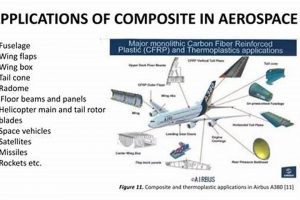
Composite materials, such as carbon fiber reinforced polymers (CFRPs) and fiberglass reinforced polymers (GFRPs), offer high strength-to-weight ratios and can be tailored to specific structural requirements. These materials are widely used in aircraft wings, fuselages, and control surfaces, as well as in spacecraft structures and rocket motor casings. The design of composite structures involves careful consideration of fiber orientation, matrix properties, and bonding techniques. In aerospace engineering, composite materials are enabling the creation of lighter and more fuel-efficient aircraft. In electrical engineering, composites are used in printed circuit boards for structural support and electrical insulation.
The interplay of materials science with both electrical and aerospace engineering results in the development of advanced technologies across multiple domains. Understanding the properties and behavior of materials is crucial for designing systems that are not only functional and efficient but also reliable and safe. Continuing advances in materials science promise to drive further innovation in both fields, leading to more efficient electrical systems, more advanced aircraft and spacecraft, and more sustainable engineering practices.
6. Software Integration

Software integration is an indispensable facet of both electrical and aerospace engineering, serving as the connective tissue that enables complex systems to function cohesively. In these fields, software bridges the gap between theoretical designs and practical implementations, facilitating control, monitoring, and analysis. The effective integration of software is a critical determinant of system performance, reliability, and overall mission success. In electrical engineering, software integrates disparate hardware components in power grids, embedded systems, and telecommunications networks. In aerospace engineering, it is vital for flight control, navigation, and spacecraft operations. The failure of software integration can lead to catastrophic consequences, highlighting its paramount importance.
Practical applications of software integration are numerous and diverse. In electrical engineering, software enables smart grids to optimize energy distribution, adapt to fluctuating demand, and incorporate renewable energy sources. Embedded systems, such as those found in automobiles and industrial machinery, rely on tightly integrated software to manage sensors, actuators, and communication interfaces. In aerospace engineering, flight control systems employ sophisticated software algorithms to maintain aircraft stability, navigate autonomously, and respond to pilot commands. Spacecraft depend on software for orbital maneuvering, communication with ground stations, and scientific data acquisition. The integration of these software systems demands rigorous testing, validation, and verification to ensure they operate as intended, even under extreme conditions.
In summary, software integration represents a crucial dependency in modern electrical and aerospace systems. It allows for complex automation, data processing, and efficient control. Challenges in software integration include managing system complexity, ensuring cybersecurity, and mitigating software errors. A thorough understanding of software integration principles, along with a dedication to rigorous testing and validation, is essential for both electrical and aerospace engineers to develop and deploy robust and reliable systems. As these fields continue to evolve, the importance of software integration will only increase, demanding continued innovation and refinement in software development practices.
Frequently Asked Questions
This section addresses common inquiries and clarifies key differences between electrical and aerospace engineering disciplines. It is intended to provide prospective students and professionals with objective information to facilitate informed decision-making.
Question 1: What are the fundamental differences in the core curriculum between electrical and aerospace engineering programs?
Electrical engineering curricula typically emphasize circuit theory, electromagnetics, signal processing, and control systems. Aerospace engineering programs prioritize aerodynamics, propulsion, structures, and flight dynamics. While there may be some overlap in introductory math and physics courses, the advanced coursework diverges significantly to address the specific challenges within each field.
Question 2: Which field, electrical or aerospace engineering, generally requires a greater emphasis on mathematical modeling and simulation?
Both fields rely heavily on mathematical modeling and simulation. However, aerospace engineering often involves more complex simulations due to the inherent complexities of fluid dynamics, structural mechanics, and orbital mechanics. Electrical engineering, while also employing sophisticated models, frequently deals with more well-defined systems amenable to analytical solutions.
Question 3: What are typical career paths for graduates of electrical and aerospace engineering programs?
Electrical engineering graduates find employment in diverse sectors, including power generation, telecommunications, consumer electronics, and software development. Aerospace engineers typically work in aircraft manufacturing, space agencies, defense industries, and research institutions. Career paths are highly dependent on specialization and individual interests within each field.
Question 4: Does one field offer greater job security or higher earning potential compared to the other?
Job security and earning potential are subject to market fluctuations and individual qualifications. Both electrical and aerospace engineering fields are generally considered to offer stable employment prospects. Earning potential is largely influenced by factors such as experience, specialization, geographic location, and employer. It is advisable to research current job market trends and salary data for specific roles within each field.
Question 5: Which field, electrical or aerospace engineering, requires a greater focus on teamwork and interdisciplinary collaboration?
Both fields increasingly emphasize teamwork and interdisciplinary collaboration due to the complexity of modern engineering projects. Large-scale projects in both electrical and aerospace engineering require the integration of expertise from diverse engineering disciplines. However, aerospace engineering projects often involve a greater degree of collaboration due to the inherent complexity of aircraft and spacecraft systems.
Question 6: What are some emerging trends in electrical and aerospace engineering that prospective students should be aware of?
Emerging trends in electrical engineering include renewable energy systems, smart grids, electric vehicles, and artificial intelligence. In aerospace engineering, prominent trends include hypersonic flight, space exploration, unmanned aerial vehicles, and sustainable aviation. Prospective students should research these trends and consider specializing in areas that align with their interests and career goals.
In conclusion, selecting the engineering path necessitates careful evaluation of individual aspirations, academic aptitudes, and industry trends. Each possesses unique rewards with the potential for professional fulfillment and the opportunity to drive innovation.
The next section will provide insight into the current state and future prospects of the career options.
Conclusion
The preceding exploration of electrical vs aerospace engineering delineates two distinct yet intertwined engineering disciplines. Electrical engineering’s focus on electricity, electronics, and electromagnetism contrasts with aerospace engineering’s concentration on the design, development, and operation of aircraft and spacecraft. Each field demands unique skill sets and academic preparation, leading to diverse career opportunities and contributions to technological advancement.
Ultimately, a well-informed decision regarding which engineering path to pursue requires careful self-assessment and a thorough understanding of the specific challenges and rewards offered by each. Continued advancements in both fields promise to shape the future of technology and impact society in profound ways.