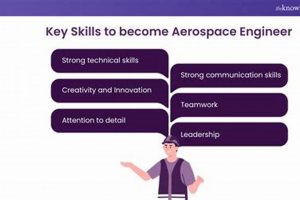
Interpersonal attributes, often referred to as people skills, are crucial for success in the aerospace field. These attributes, encompassing communication, teamwork, problem-solving, and leadership, are distinct from the technical expertise gained through academic training. An example is an engineer effectively conveying complex technical data to a non-technical project manager, ensuring shared understanding and informed decision-making.
The integration of these attributes into engineering practice is vital for several reasons. They foster effective collaboration within diverse project teams, leading to increased efficiency and innovation. Historically, an overemphasis on technical skills has, at times, resulted in project setbacks due to communication breakdowns or ineffective teamwork. Recognizing the significance of these skills is leading to their increased integration into engineering curricula and professional development programs.
Therefore, the following sections will delve into specific examples of essential capabilities, how they are applied in this industry, and strategies for their development. This exploration will highlight how cultivating such traits is essential for navigating the complex and collaborative landscape of this field and achieving career success.
Cultivating Essential Capabilities
The development of interpersonal attributes is a continuous process that requires focused effort and self-awareness. The following points provide actionable guidance for engineers aiming to enhance these crucial capabilities.
Tip 1: Active Listening Enhancement: Prioritize attentiveness during interactions. Focus intently on the speaker, minimizing internal distractions and formulating responses only after comprehension is complete. An aerospace engineer attending a design review meeting should actively listen to feedback from various stakeholders, ensuring all concerns are understood before proposing solutions.
Tip 2: Clear and Concise Communication: Practice conveying complex technical information in a simplified and accessible manner. Employ visual aids and avoid jargon when communicating with non-technical audiences. When presenting research findings to a team, an engineer should translate intricate data into easily digestible charts and graphs, facilitating broader understanding.
Tip 3: Proactive Team Collaboration: Actively seek opportunities to contribute to team discussions and decision-making processes. Share expertise and support colleagues, fostering a collaborative work environment. For example, an engineer can volunteer to assist a team member struggling with a particular aspect of a project, leveraging individual strengths for collective success.
Tip 4: Conflict Resolution Proficiency: Develop strategies for effectively managing disagreements and resolving conflicts constructively. Approach conflicts with a problem-solving mindset, seeking mutually agreeable solutions. When faced with differing opinions on a design approach, an engineer should facilitate a discussion that explores the merits of each option, ultimately arriving at the best decision for the project.
Tip 5: Adaptability and Flexibility: Cultivate the ability to adapt to changing priorities and unexpected challenges. Embrace new technologies and methodologies, remaining open to innovation. For example, an engineer faced with a sudden shift in project requirements should demonstrate flexibility by quickly adjusting the work plan and exploring alternative solutions.
Tip 6: Leadership Development: Seek opportunities to lead projects or initiatives, even in informal capacities. Delegate tasks effectively, provide constructive feedback, and inspire team members to achieve their full potential. An engineer can take the initiative to lead a cross-functional team in developing a new testing procedure, demonstrating leadership and fostering collaboration.
By actively implementing these strategies, engineers can significantly enhance their interpersonal attributes, leading to improved teamwork, communication, and overall project success. These skills are not merely supplementary but are integral to achieving excellence in this demanding field.
Therefore, a continuous commitment to self-improvement in these areas is paramount for sustained career advancement and contribution to the aerospace industry.
1. Communication Proficiency

Communication proficiency is a cornerstone within the framework of interpersonal attributes essential for aerospace engineering. Its impact is multifaceted, directly affecting project timelines, budget adherence, and overall engineering accuracy. Inadequate communication can lead to misunderstandings, design errors, and subsequent rework, all detrimental to a project’s success. An aerospace engineer’s ability to clearly articulate technical specifications, test results, and proposed solutions is, therefore, paramount.
The importance of this skill manifests in various scenarios. For instance, during the design phase of a new aircraft wing, an engineer must effectively communicate structural analysis findings to a team of designers, manufacturing specialists, and project managers. Accurate and easily understandable communication of stress concentrations, fatigue limits, and material properties ensures the design meets safety and performance requirements. Similarly, during the testing and certification process, detailed and precise reporting is crucial for regulatory compliance. A lack of proficiency in these communications can result in delays, cost overruns, and potential safety hazards.
In summation, communication proficiency is not merely a supplementary skill but a fundamental requirement for aerospace engineers. The ability to convey complex information clearly and concisely, both verbally and in writing, directly translates to increased efficiency, reduced errors, and improved collaboration. Prioritizing the development of strong communication skills is, therefore, a critical investment in an engineer’s career and the success of the aerospace industry.
2. Teamwork efficacy

Teamwork efficacy, a critical component of overall operational effectiveness in aerospace engineering, relies heavily on the application of interpersonal attributes. The success of any aerospace project, typically involving complex systems and numerous specialists, is inherently linked to the ability of individuals to collaborate effectively.
- Shared Understanding and Communication
The bedrock of effective teamwork is a shared understanding of project goals and open communication channels. Engineers must clearly convey technical information, design concepts, and potential challenges to colleagues from diverse backgrounds. A lack of clarity can result in duplicated efforts, misinterpretations, and ultimately, project delays. For instance, aerodynamicists, structural engineers, and manufacturing specialists need to coordinate seamlessly during the design of an aircraft wing. Effective communication ensures each discipline is aware of the constraints and requirements of the others, leading to a cohesive and optimized design.
- Conflict Resolution and Collaboration
Disagreements are inevitable in any collaborative endeavor. The capacity to navigate these conflicts constructively is a vital aspect of teamwork efficacy. Aerospace engineers must be able to articulate their perspectives respectfully, listen to opposing viewpoints, and work towards mutually agreeable solutions. In the development of complex avionics systems, for example, disagreements between software and hardware engineers may arise. Skilled conflict resolution can transform these disagreements into opportunities for innovation and improved system integration.
- Role Clarity and Accountability
Well-defined roles and clear accountability are essential for preventing confusion and ensuring all tasks are completed effectively. Each team member should have a clear understanding of their responsibilities and how their contributions fit into the overall project objectives. In the context of spacecraft development, where numerous subsystems must function in harmony, clear role assignments prevent critical tasks from being overlooked and ensure that individuals are accountable for their specific contributions.
- Mutual Support and Knowledge Sharing
A supportive team environment where knowledge is freely shared fosters innovation and accelerates problem-solving. Engineers should be willing to assist colleagues, provide constructive feedback, and share their expertise. In the field of propulsion system design, for instance, experienced engineers can mentor junior colleagues, sharing their knowledge of complex engine components and troubleshooting techniques. This knowledge sharing not only benefits the individuals involved but also strengthens the overall expertise of the team.
The facets outlined highlight how interpersonal attributes underpin teamwork efficacy in aerospace engineering. The ability to communicate effectively, resolve conflicts constructively, define roles clearly, and foster a supportive environment directly influences project outcomes. By cultivating these traits, aerospace engineers can enhance their ability to collaborate, innovate, and contribute to the success of complex projects.
3. Problem-solving acumen

Problem-solving acumen, a crucial element within the domain of interpersonal attributes in aerospace engineering, relies heavily on attributes such as critical thinking, communication, and collaboration. The aerospace field, characterized by complex systems and stringent safety requirements, necessitates engineers capable of systematically identifying, analyzing, and resolving multifaceted technical challenges. The efficacy of problem-solving is directly influenced by an engineer’s ability to communicate effectively with team members, understand diverse perspectives, and collaboratively devise solutions. For instance, debugging a flight control system malfunction demands not only technical expertise but also the ability to convey diagnostic findings clearly and solicit input from various specialists, including software developers, hardware engineers, and flight test personnel.
This interplay between technical proficiency and interpersonal attributes manifests in several practical scenarios. Consider the development of a new composite material for aircraft structures. If structural failures occur during testing, engineers must leverage their problem-solving acumen to identify the root cause. This process involves analyzing test data, consulting with materials scientists, and conducting simulations. Effective communication is essential for conveying technical findings and coordinating efforts. Similarly, in the design of unmanned aerial vehicles (UAVs), engineers encounter numerous challenges related to aerodynamics, propulsion, and control systems. Interpersonal attributes facilitate collaboration with other engineers, fostering a more holistic and effective approach to problem-solving.
In summary, problem-solving acumen in aerospace engineering is not merely a function of technical knowledge but is inextricably linked to interpersonal attributes. The ability to communicate, collaborate, and critically analyze information significantly enhances an engineer’s capacity to address complex technical challenges. Developing both technical expertise and these interpersonal skills is vital for success in this demanding field. The industry needs engineers capable of not just identifying solutions but also conveying them effectively and collaboratively implementing them within a team environment.
4. Leadership capabilities

Leadership capabilities are integral to the successful application and navigation of technical expertise within the aerospace engineering sector. These skills are not solely about holding a formal management position but encompass the ability to influence, motivate, and guide teams towards the achievement of complex project goals. Within aerospace, where projects often involve multidisciplinary teams and cutting-edge technologies, effective leadership is critical for coordinating efforts and ensuring alignment across diverse expertise. The cause-and-effect relationship is clear: well-developed leadership skills lead to improved team performance, better project outcomes, and enhanced organizational success. Consider, for example, the development of a new satellite system. A project leader with strong leadership attributes can effectively manage the diverse expertise involved, from propulsion engineers to communications specialists, ensuring each team member is aligned and contributing optimally.
Further practical examples underscore this connection. During the design phase of a novel aircraft, conflicting design priorities may arise between aerodynamic performance and structural integrity. An engineer with leadership capabilities can facilitate discussions, mediate disputes, and guide the team toward a solution that balances these competing needs. Without such leadership, projects can stagnate, leading to delays and increased costs. Furthermore, ethical leadership is vital in this field. Engineers must make decisions that prioritize safety and responsible innovation. A leader committed to ethical principles will foster a culture of integrity within their team, ensuring that decisions are always made with the best interests of the public and the organization in mind.
In conclusion, leadership capabilities represent a cornerstone of interpersonal attributes within aerospace engineering. These skills are not merely supplementary but are essential for coordinating complex projects, resolving conflicts, and fostering a culture of ethical decision-making. Cultivating leadership attributes is therefore paramount for engineers aspiring to advance in the field and contribute to the industry’s ongoing success. The challenge lies in recognizing the importance of these abilities and actively seeking opportunities for development, whether through formal training or practical experience.
5. Adaptability quotient
The adaptability quotient (AQ), a measure of an individual’s capacity to adjust to changing conditions, is intrinsically linked to the success of aerospace engineers. This is because aerospace projects are highly dynamic and often subject to evolving requirements, technological advancements, and unforeseen challenges. The intersection of adaptability and interpersonal attributes directly influences an engineer’s ability to navigate these complexities and contribute effectively to project outcomes.
- Embracing Technological Advancements
The aerospace industry is characterized by rapid technological advancements. Engineers with a high AQ are more receptive to adopting new tools, methodologies, and materials. For example, the shift from traditional design processes to computer-aided engineering (CAE) requires engineers to adapt to new software platforms and simulation techniques. The effective integration of these technologies hinges on an engineer’s willingness to learn and embrace change, contributing to greater efficiency and innovation.
- Responding to Shifting Project Requirements
Aerospace projects are frequently subject to changes in scope, budget, or timeline. Engineers must be able to adjust their plans and priorities accordingly. Consider a scenario where a satellite mission’s objectives are redefined due to unforeseen scientific discoveries. Engineers with a high AQ can quickly re-evaluate the mission’s design, identify necessary modifications, and implement them efficiently, minimizing disruptions to the overall project schedule.
- Navigating Team Dynamics and Collaboration
Aerospace projects often involve multidisciplinary teams with diverse expertise and perspectives. Engineers with a high AQ are adept at collaborating with colleagues from different backgrounds, adapting their communication style to effectively convey technical information, and resolving conflicts constructively. This collaborative approach is crucial for ensuring seamless integration of various subsystems and components.
- Overcoming Unexpected Challenges
Aerospace projects inevitably encounter unexpected challenges, such as equipment malfunctions, design flaws, or regulatory hurdles. Engineers with a high AQ are resourceful in finding creative solutions to these problems, adapting their approach to overcome obstacles and keep projects on track. For example, if a critical component fails during testing, an engineer with a strong AQ can quickly identify alternative solutions or redesign the system to mitigate the impact of the failure.
The above facets collectively demonstrate the indispensable role of adaptability in the aerospace field. Its cultivation, therefore, alongside the development of technical acumen, represents a potent combination. Such a blend enables engineers to not only master the technical complexities of their work, but also thrive in the dynamic, ever-evolving environment that characterizes modern aerospace engineering.
6. Ethical Considerations

Ethical considerations are paramount within aerospace engineering. The industry’s direct impact on public safety, national security, and environmental sustainability necessitates a strict adherence to ethical principles. Acknowledging these responsibilities is essential for maintaining public trust and ensuring the long-term viability of the profession. Engineers must possess the judgment and character to navigate complex ethical dilemmas that arise frequently in their work.
- Safety Prioritization
The paramount ethical obligation for aerospace engineers is to prioritize safety in all aspects of their work. This includes adhering to rigorous design standards, conducting thorough testing, and implementing robust safety protocols. In instances where cost constraints or performance demands conflict with safety considerations, engineers must uphold their commitment to safety, even if it requires making difficult decisions or challenging established practices. For example, an engineer discovering a potential flaw in an aircraft design must report it immediately, regardless of potential delays or financial implications. This unwavering commitment to safety safeguards the lives of passengers, crew, and the general public.
- Transparency and Disclosure
Maintaining transparency and disclosing potential conflicts of interest are essential ethical obligations. Aerospace engineers should avoid situations where personal or financial interests could compromise their professional judgment. If such conflicts arise, they must be disclosed openly and honestly to all stakeholders. For example, an engineer involved in evaluating proposals for a new aircraft component must recuse themselves if they have a financial interest in one of the competing companies. This transparency ensures that decisions are made objectively and in the best interests of the project and the public.
- Environmental Responsibility
Aerospace activities can have significant environmental impacts, including greenhouse gas emissions, noise pollution, and the potential for contamination from rocket launches. Engineers have an ethical responsibility to minimize these impacts by designing fuel-efficient aircraft, developing quieter engines, and implementing sustainable practices in manufacturing and operations. This commitment to environmental responsibility demonstrates a broader ethical awareness and contributes to the long-term sustainability of the aerospace industry.
- Responsible Innovation
Aerospace engineering is characterized by rapid technological innovation. However, innovation must be pursued responsibly, with careful consideration of the potential social, economic, and ethical implications. Engineers should assess the potential risks and benefits of new technologies before deploying them, ensuring that they are used in a way that benefits society as a whole. For example, the development of autonomous aircraft raises ethical questions about safety, privacy, and accountability. Engineers must address these questions proactively and ensure that these technologies are deployed responsibly.
These facets underscore the vital role of ethical considerations in aerospace engineering. Navigating the dilemmas and responsibilities outlined requires more than just technical expertise. Clear communication, collaboration, responsible leadership, and problem solving skills are required to uphold integrity within the industry. These “soft skills” are therefore crucial. Successfully implementing ethical practices necessitates the ability to articulate concerns effectively, work collaboratively with colleagues to identify solutions, demonstrate leadership in upholding ethical standards, and resolve conflicts that arise in the pursuit of responsible innovation. These interwoven facets are imperative in a sector where decisions often have far-reaching and potentially life-altering consequences.
7. Critical thinking

Critical thinking forms a foundational element of the interpersonal attributes essential for aerospace engineering. This cognitive process, involving objective analysis and evaluation of information, directly enhances an engineer’s ability to navigate complex challenges and make informed decisions. Its importance stems from the multifaceted nature of aerospace projects, requiring engineers to assess data from various sources, identify potential risks, and develop innovative solutions. Critical thinking, therefore, is not a standalone skill but an enabler of other abilities. Specifically, the ability to communicate technical findings clearly, collaborate effectively within diverse teams, and lead projects responsibly is all underpinned by the capacity for rigorous analysis and objective reasoning. For instance, when confronted with conflicting simulation results during aircraft design, an engineer employing critical thinking will systematically evaluate the assumptions and methodologies used in each simulation, consult with experts from different disciplines, and arrive at a conclusion based on evidence rather than bias. This process directly influences the team’s ability to make informed design decisions, minimizing the risk of errors and optimizing performance.
The practical application of critical thinking extends across numerous aspects of aerospace engineering. During failure investigations, for instance, engineers must objectively analyze data from flight recorders, maintenance logs, and eyewitness accounts to determine the root cause of an incident. This process demands the ability to separate factual information from speculation, identify potential biases in data collection, and draw logical inferences based on the available evidence. Furthermore, critical thinking is vital for evaluating the feasibility and effectiveness of proposed design modifications or technological advancements. Engineers must consider not only the potential benefits of a new technology but also the associated risks, costs, and ethical implications. This requires the ability to assess the reliability of data from manufacturers, research institutions, and regulatory agencies, as well as the potential consequences of implementing new technologies on system performance, safety, and environmental impact.
In summary, critical thinking represents a cornerstone of effective engineering practice. It enhances communication, collaboration, and leadership. The ability to analyze information objectively, evaluate assumptions rigorously, and make informed decisions based on evidence is essential for success in the field. The incorporation of critical thinking principles into engineering education and professional development programs is vital for fostering a culture of innovation, safety, and ethical responsibility. While aerospace engineers often deal with highly complex and technical information, the capacity to think critically is the fundamental skill that enables them to use that information effectively to make decisions that have high-stakes consequences.
Frequently Asked Questions
The following questions and answers address common inquiries and misconceptions regarding the significance of interpersonal attributes within the aerospace engineering field.
Question 1: Why are interpersonal attributes considered important for aerospace engineers, given the field’s heavy reliance on technical expertise?
While technical skills are undoubtedly critical, interpersonal attributes facilitate effective collaboration, communication, and problem-solving within diverse teams. These attributes enhance project efficiency, reduce errors, and foster innovation, contributing to overall project success.
Question 2: What specific interpersonal attributes are most valued in the aerospace industry?
Key attributes include effective communication (both written and verbal), teamwork skills, leadership capabilities, adaptability to changing priorities, problem-solving acumen, ethical decision-making, and critical thinking.
Question 3: How do interpersonal attributes contribute to safety in aerospace engineering?
Effective communication and collaboration facilitate the identification and mitigation of potential safety hazards. Ethical decision-making ensures that safety considerations are prioritized over cost or schedule pressures. Strong leadership fosters a culture of safety consciousness within project teams.
Question 4: Can interpersonal attributes be developed, or are they inherent traits?
While some individuals may possess a natural inclination towards certain attributes, interpersonal skills can be cultivated and enhanced through focused effort, training, and practical experience. Engineers should actively seek opportunities to improve their communication, teamwork, and leadership abilities.
Question 5: How are interpersonal attributes assessed during the hiring process for aerospace engineers?
Employers often assess interpersonal skills through behavioral interview questions, group exercises, and evaluations of past project experiences. Resumes and cover letters should also highlight instances where these attributes have been demonstrated successfully.
Question 6: What are the potential consequences of neglecting the development of interpersonal attributes for an aerospace engineer?
A lack of interpersonal skills can hinder career advancement, limit opportunities for collaboration, and negatively impact project outcomes. Engineers who struggle to communicate effectively, work in teams, or adapt to changing circumstances may face professional challenges and reduced job satisfaction.
The development and application of interpersonal skills represent a continuous journey that requires self-awareness and dedicated effort, ultimately contributing to professional success and advancement in the aerospace field.
The following section will provide actionable strategies for engineers to enhance their interpersonal skillset.
Soft Skills for Aerospace Engineering
This article has explored the crucial role of soft skills for aerospace engineering professionals. It has been shown that beyond technical proficiency, attributes such as communication, teamwork, leadership, adaptability, ethical considerations, and critical thinking are essential for navigating the complexities of the field. The discussion emphasized that proficiency in these areas directly influences project success, safety, and overall industry advancement.
The aerospace industry’s future hinges on the holistic development of its workforce. It is, therefore, incumbent upon both individual engineers and educational institutions to prioritize the cultivation of these vital interpersonal capabilities. A continued emphasis on soft skills will ensure that aerospace engineers are not only technically competent but also effective collaborators, ethical decision-makers, and innovative leaders, thereby driving the industry toward sustained excellence and responsible progress.