The trajectory of the field dedicated to designing, developing, testing, and producing aircraft and spacecraft is poised for significant transformation. This evolution encompasses advancements in technology, shifts in global priorities, and the increasing demand for sustainable and efficient transportation solutions. Anticipated developments span numerous areas, including propulsion systems, materials science, autonomous flight, and space exploration initiatives.
Progress in this area is vital for sustained economic growth, national security, and scientific discovery. Historically, advancements in aviation and space travel have spurred innovation across diverse sectors, creating new industries and improving the quality of life. The continued pursuit of breakthroughs will yield further benefits, ranging from faster and more environmentally friendly air travel to enhanced capabilities in satellite communication and resource management.
Key topics to be addressed include the development of alternative propulsion systems, the integration of advanced materials, the rise of autonomous flight systems, and the expanding scope of space exploration. These areas represent the forefront of innovation and are shaping the skills and knowledge required for professionals in the field.
Understanding the evolving landscape is crucial for professionals and aspiring engineers seeking success in this dynamic field. Strategic planning and continuous learning are essential to capitalize on emerging opportunities and adapt to the changing demands of the industry.
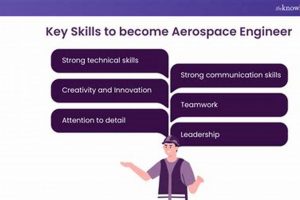
Tip 1: Emphasize Interdisciplinary Skills: The field increasingly demands proficiency beyond traditional engineering disciplines. Expertise in areas such as computer science, data analytics, and materials science enhances problem-solving capabilities and facilitates innovation.
Tip 2: Cultivate a Strong Foundation in Sustainable Technologies: Environmental considerations are becoming increasingly important. Develop a deep understanding of alternative fuels, lightweight materials, and efficient designs to contribute to a more sustainable future for air and space travel.
Tip 3: Embrace Digital Engineering Tools: Proficiency in simulation software, computational fluid dynamics (CFD), and digital twins is essential. These tools enable engineers to optimize designs, reduce development costs, and accelerate the time to market.
Tip 4: Focus on Autonomous Systems and Robotics: The integration of autonomy into aircraft and spacecraft is rapidly expanding. Develop expertise in areas such as sensor technology, artificial intelligence, and control systems to contribute to the development of self- systems.
Tip 5: Seek Opportunities in Space Exploration and Commercialization: The commercial space sector is experiencing rapid growth. Explore opportunities in areas such as satellite technology, space tourism, and resource extraction to contribute to the expansion of human presence beyond Earth.
Tip 6: Prioritize Lifelong Learning: The field is constantly evolving. Stay abreast of the latest advancements through continuous education, participation in industry conferences, and engagement with professional organizations.
Adopting these strategies positions individuals to not only navigate but also actively shape the advancements within this area. A proactive approach to skill development and a commitment to staying informed are essential for long-term success.
The subsequent sections delve into specific technologies and trends that are redefining the possibilities within air and space travel, providing a more in-depth exploration of the topics highlighted here.
1. Sustainable propulsion

Sustainable propulsion is not merely an option but an imperative component within the evolving trajectory of aerospace engineering. Environmental concerns, coupled with resource limitations, necessitate a shift away from traditional, fossil fuel-dependent propulsion systems toward more sustainable alternatives. This transition demands innovation across multiple fronts, from fuel sources to engine design.
- Electric Propulsion Systems
Electric propulsion, employing batteries or fuel cells, presents a viable alternative for smaller aircraft and urban air mobility solutions. The development of high-energy-density batteries and lightweight electric motors is crucial for extending the range and payload capacity of electric aircraft. Companies are actively developing electric vertical takeoff and landing (eVTOL) aircraft for urban transportation, aiming to reduce emissions and noise pollution in densely populated areas.
- Sustainable Aviation Fuels (SAF)
SAF represent a drop-in solution that can be used in existing aircraft engines without significant modifications. These fuels are derived from renewable sources, such as biomass, algae, and waste products. The widespread adoption of SAF is contingent upon scaling up production and reducing costs to compete with conventional jet fuel. Airlines are increasingly incorporating SAF into their fuel mix to reduce their carbon footprint and meet environmental targets.
- Hydrogen Propulsion
Hydrogen, either in liquid or gaseous form, offers a clean-burning alternative to fossil fuels, producing only water vapor as a byproduct. The challenges associated with hydrogen propulsion include the development of lightweight, high-capacity storage tanks and the modification of engine designs to accommodate hydrogen’s unique combustion characteristics. Several aerospace companies are actively researching and developing hydrogen-powered aircraft for long-haul flights.
- Hybrid-Electric Propulsion
Hybrid-electric systems combine electric propulsion with traditional gas turbines, offering a transitional pathway toward fully electric flight. These systems can improve fuel efficiency and reduce emissions compared to conventional aircraft, while also providing the range and power required for longer flights. Hybrid-electric aircraft are being developed for regional air travel, offering a balance between sustainability and performance.
The integration of sustainable propulsion technologies is a fundamental aspect of the aerospace sector’s future. Success requires collaborative efforts involving researchers, engineers, policymakers, and industry stakeholders to overcome technological and economic barriers. The continued development and deployment of these technologies will reshape air travel and contribute to a more environmentally responsible aerospace industry.
2. Advanced materials

The development and implementation of advanced materials are pivotal in shaping the trajectory of aerospace engineering. These materials offer enhanced performance characteristics, enabling the creation of lighter, stronger, and more efficient aircraft and spacecraft. Their integration addresses critical challenges related to fuel efficiency, structural integrity, and operational capabilities, thereby influencing the scope and feasibility of future aerospace endeavors.
- Composites
Composites, such as carbon fiber reinforced polymers (CFRP), offer a high strength-to-weight ratio compared to traditional metallic alloys. The Boeing 787 Dreamliner extensively utilizes CFRP in its fuselage and wings, resulting in significant weight savings and improved fuel efficiency. The adoption of composites reduces overall aircraft weight, leading to lower fuel consumption and decreased emissions.
- Titanium Alloys
Titanium alloys possess exceptional strength and corrosion resistance, making them suitable for high-stress components in aircraft engines and airframes. Their ability to withstand high temperatures and pressures contributes to improved engine performance and structural durability. Applications include turbine blades in jet engines, where high-temperature resistance is critical.
- Ceramic Matrix Composites (CMCs)
CMCs offer superior high-temperature resistance compared to metals, making them ideal for use in extreme environments, such as hypersonic vehicles and rocket engines. Their ability to maintain strength at elevated temperatures enhances the performance and lifespan of these critical components. The development of CMCs is essential for enabling the next generation of high-speed aircraft and space launch systems.
- Shape Memory Alloys (SMAs)
SMAs exhibit the ability to return to a predetermined shape after being deformed, offering potential applications in adaptive structures and deployable systems. Their use in morphing wings allows aircraft to optimize their aerodynamic profile for different flight conditions, improving efficiency and maneuverability. SMAs are also being explored for use in deployable solar arrays and antennas on spacecraft.
The incorporation of these advanced materials is instrumental in realizing the projected advancements. They enable lighter and more efficient designs, improved performance in extreme conditions, and the creation of innovative aerospace systems. Continued research and development in materials science are essential for pushing the boundaries of what is achievable, directly impacting the capabilities and sustainability of flight.
3. Autonomous systems

The integration of autonomous systems represents a paradigm shift within aerospace engineering, profoundly impacting design, operation, and future capabilities. The core relationship lies in the potential for increased efficiency, reduced operational costs, and enhanced safety through the automation of tasks previously performed by human operators. This advancement extends across both atmospheric and space-based applications, reshaping the landscape of air and space travel.
One illustrative example is the development and deployment of unmanned aerial vehicles (UAVs), or drones, for a multitude of purposes including surveillance, package delivery, and infrastructure inspection. These UAVs rely on autonomous navigation, obstacle avoidance, and decision-making algorithms to operate safely and effectively. Furthermore, autonomous capabilities are increasingly crucial in space exploration, enabling spacecraft to perform complex maneuvers, conduct scientific research, and maintain orbital positions without constant human intervention. The Mars rovers, for instance, autonomously navigate the Martian surface, collect samples, and transmit data back to Earth, extending the reach and scope of scientific discovery.
In conclusion, the implementation of autonomous systems is a defining characteristic of advancements in the realm of aerospace engineering. While challenges remain in ensuring reliability, security, and ethical considerations, the benefits of increased efficiency, reduced risk, and expanded operational capabilities solidify their importance. The continued progress in this area is poised to revolutionize air and space travel, ushering in a new era of unmanned exploration and autonomous operation.
4. Space commercialization
Space commercialization is an increasingly influential element shaping the trajectory of aerospace engineering. This trend, characterized by private companies’ growing involvement in space-related activities, has spurred innovation, reduced costs, and expanded access to space. Its impact on the future includes accelerated technological development, new business models, and a broader range of space-based services, fundamentally altering the aerospace landscape. The entry of private entities provides competition and investment that drives efficiency and speed of innovation. One key effect is cost reduction, making space activities more accessible.
Examples of this transformation are evident in various sectors. SpaceX’s reusable rockets have drastically reduced launch costs, opening opportunities for smaller companies and research institutions. Blue Origin’s focus on space tourism and orbital infrastructure signals a shift toward commercial space stations and lunar habitats. Satellite internet constellations, like Starlink, illustrate the potential for commercial ventures to provide global connectivity. These advancements require aerospace engineers with new skill sets, including expertise in reusable spacecraft design, efficient satellite communication systems, and in-space resource utilization. New business sectors arise, and novel approaches to longstanding challenges are implemented.
In conclusion, space commercialization is not merely a peripheral trend; it is a core driver of the future of aerospace engineering. It necessitates a paradigm shift in engineering education and practice, emphasizing innovation, entrepreneurialism, and adaptability. While challenges related to regulation, safety, and sustainability persist, the benefits of increased access to space, accelerated technological development, and expanded economic opportunities underscore its significance in shaping the future of the field. Continued collaboration between government agencies and private companies will be essential to realizing the full potential of space commercialization.
5. Digital engineering

Digital engineering is an integrating force reshaping processes, methodologies, and technologies within aerospace engineering. Its adoption marks a transition toward a more connected, data-driven, and efficient approach to design, development, and lifecycle management of aerospace systems. The relevance of digital engineering stems from its capacity to enhance collaboration, reduce risks, and accelerate innovation in response to escalating complexities and demands in this sector.
- Model-Based Systems Engineering (MBSE)
MBSE provides a structured, model-centric approach to systems engineering, replacing traditional document-based processes with digital models. These models serve as a single source of truth, facilitating communication and collaboration among stakeholders. Through the use of standardized modeling languages like SysML, MBSE enables the early detection of design flaws, reduces integration risks, and improves the overall quality of aerospace systems. This contrasts with older methods, where potential issues may not surface until late in the development cycle, leading to costly rework and delays. The adoption of MBSE allows engineers to predict and mitigate potential problems earlier in the process, leading to safer and more effective designs, shortening the design process and minimizing expenses.
- Simulation and Digital Twins
Simulation technologies, including computational fluid dynamics (CFD) and finite element analysis (FEA), enable engineers to virtually test and optimize designs before physical prototypes are built. Digital twins extend this concept by creating virtual replicas of physical assets, allowing for real-time monitoring, predictive maintenance, and performance optimization. In aerospace, digital twins can be used to monitor the structural health of aircraft, predict component failures, and optimize maintenance schedules. The ability to simulate performance reduces the need for physical testing, accelerating development cycles and reducing costs. Real-time insight facilitates predictive maintenance, thereby enhancing operational availability and reducing downtime.
- Advanced Manufacturing and Additive Manufacturing
Advanced manufacturing techniques, including additive manufacturing (3D printing), are transforming aerospace manufacturing by enabling the creation of complex geometries, reducing material waste, and improving production efficiency. Additive manufacturing allows for the creation of lightweight, high-performance components with tailored material properties. In the production of aircraft engines, for instance, 3D printing can be used to create complex turbine blades with internal cooling channels, improving engine efficiency and durability. The integration of advanced manufacturing reduces lead times, lowers production costs, and enables the creation of innovative designs that were previously impossible to manufacture using traditional methods.
- Data Analytics and Artificial Intelligence (AI)
Data analytics and AI technologies are playing an increasingly important role in aerospace engineering. By analyzing large datasets collected from sensors, simulations, and operational systems, engineers can identify trends, predict failures, and optimize performance. AI algorithms can be used to automate tasks such as flight control, trajectory optimization, and anomaly detection. The application of AI in air traffic management, for instance, can improve efficiency, reduce congestion, and enhance safety. The use of data analytics and AI enables engineers to gain insights that drive better decision-making, improve system performance, and reduce operational costs.
Collectively, these facets of digital engineering are driving a profound shift in the sector. The emphasis on modeling, simulation, advanced manufacturing, and data analytics allows organizations to optimize the design and development of aerospace systems. These technologies contribute to enhanced safety, and accelerated innovation, positioning digital engineering as central to sustaining competitiveness in this field. These trends reinforce digital engineering as a cornerstone for the industry.
6. Hypersonic Flight

Hypersonic flight, defined as travel at speeds exceeding Mach 5, constitutes a critical element of aerospace engineering’s projected advancements. It represents the next major technological leap in air and space transportation, promising significantly reduced travel times and new possibilities for both civilian and military applications. Its development influences numerous areas, from materials science and propulsion systems to aerodynamics and control systems. The pursuit of hypersonic capabilities directly impacts the skills and knowledge required of future aerospace engineers, necessitating expertise in fields such as high-temperature materials, scramjet engines, and advanced computational modeling. Its feasibility reshapes established norms, with global and societal influences to consider.
Examples of hypersonic flight’s potential impact are readily apparent. Commercial hypersonic aircraft could drastically reduce intercontinental travel times, enabling journeys that currently take many hours to be completed in a fraction of the time. Military applications include hypersonic missiles, which offer enhanced speed and maneuverability, and reusable hypersonic vehicles for rapid deployment of assets. The development of these technologies necessitates significant investment in research and development, as well as close collaboration between government agencies, private companies, and academic institutions. Recent testing of hypersonic vehicles, while often facing technical challenges, demonstrates the ongoing commitment to advancing this technology. Test flights often give further insight into development requirements.
In summary, hypersonic flight is more than simply faster travel; it is a catalyst for innovation across multiple disciplines within aerospace engineering. It presents significant technical hurdles, but the potential benefits in terms of reduced travel times, enhanced military capabilities, and new possibilities for space access make it a crucial area of focus. Overcoming these challenges will require a concerted effort from engineers, scientists, and policymakers alike, ensuring that hypersonic technology is developed responsibly and utilized for the benefit of society. The realization of hypersonic flight is not just an advancement; it is a key indicator of the trajectory of flight.
Frequently Asked Questions
This section addresses common inquiries concerning the long-term trajectory of the discipline. It provides concise answers to key questions regarding career prospects, technological advancements, and required skill sets.
Question 1: What are the primary areas of growth within the field?
Significant expansion is anticipated in sustainable propulsion, autonomous systems, space commercialization, and digital engineering. These areas address evolving global priorities and technological advancements.
Question 2: How crucial is sustainable propulsion to the industry?
Sustainable propulsion is a key element, driven by environmental concerns and resource limitations. It encompasses the development of electric, hybrid-electric, and hydrogen-powered aircraft, as well as the use of sustainable aviation fuels.
Question 3: What role do advanced materials play in advancement?
Advanced materials, such as composites, titanium alloys, and ceramic matrix composites, are vital for creating lighter, stronger, and more efficient aircraft and spacecraft. Their integration enhances performance and structural integrity.
Question 4: In what ways are autonomous systems impacting the field?
Autonomous systems are transforming the design, operation, and capabilities of aircraft and spacecraft. They offer increased efficiency, reduced operational costs, and enhanced safety through automation.
Question 5: Why is space commercialization significant?
Space commercialization, driven by private companies’ involvement, fosters innovation, reduces costs, and expands access to space. It creates new business models and opportunities.
Question 6: How is digital engineering reshaping the profession?
Digital engineering integrates model-based systems engineering, simulation, advanced manufacturing, and data analytics to optimize design, development, and lifecycle management of aerospace systems.
The advancement of the area requires a multifaceted approach, emphasizing sustainability, autonomy, commercialization, and digitalization. Understanding these key themes is crucial for professionals seeking long-term success.
The subsequent section provides concluding remarks, summarizing the trajectory of aerospace engineering and highlighting the key takeaways for prospective engineers and industry professionals.
The preceding exploration has highlighted several critical trends shaping the trajectory. Sustainable practices, autonomous capabilities, the commercialization of space, digital transformation, and hypersonic flight are each significant vectors influencing research, development, and the skills required of professionals. These areas represent not merely incremental improvements but fundamental shifts in how flight is conceived and executed. As such, the domain requires a proactive commitment to life-long learning and adaptability.
The continued growth and evolution of aerospace engineering depends on sustained investments in research, international collaboration, and a commitment to addressing the challenges that lie ahead. Understanding the technological, economic, and societal factors shaping this field will be essential for navigating the complexities of the 21st century and beyond, ensuring its continued success in contributing to global progress and innovation.