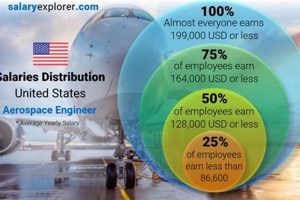
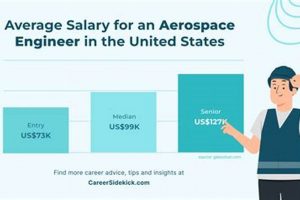
Compensation for professionals in the fields of aerospace and aeronautical engineering, while often competitive, can exhibit variance depending on specializations, experience levels, and geographical location. These disciplines, though related, involve distinct focuses: aeronautical engineering primarily addresses aircraft design and development within Earth’s atmosphere, while aerospace engineering broadens the scope to include spacecraft, satellites, and related systems operating beyond the atmosphere. These differences influence the types of projects engineers undertake and, consequently, their earning potential.
Understanding the nuances of compensation structures within these engineering fields is crucial for students considering career paths, for experienced professionals contemplating specialization shifts, and for companies seeking to attract and retain talent. Informed decisions regarding education, skills development, and geographical preferences can significantly impact lifetime earnings. Furthermore, historical shifts in the aerospace and aviation industries, influenced by technological advancements and economic factors, have shaped the demand for different engineering expertise and their associated remuneration.
Examining salary reports, analyzing job market trends, and considering factors such as specialization, geographical location, and level of education provide valuable insights into the earnings landscape within these professions. A comprehensive understanding of these influences is essential for accurately assessing potential career trajectories and making informed decisions regarding professional development. The subsequent sections will delve into these specific factors and offer a more detailed analysis of compensation within these related, yet distinct, engineering domains.
Insights into Earning Potential
This section provides key insights to help navigate the salary landscape in aerospace and aeronautical engineering. Understanding these factors is vital for making informed career decisions and maximizing earning potential.
Tip 1: Specialize Strategically: Concentrations in high-demand areas, such as autonomous systems, sustainable aviation, or advanced materials, can significantly enhance earning prospects. Research emerging trends and tailor education and skill development accordingly.
Tip 2: Pursue Advanced Education: A master’s degree or doctorate, particularly in a specialized area, often translates to higher starting salaries and increased opportunities for leadership roles. Consider the return on investment for advanced degrees in relation to career goals.
Tip 3: Gain Relevant Experience: Internships and co-op programs provide invaluable practical experience, making graduates more competitive in the job market. Seek opportunities that align with career aspirations and provide exposure to industry-standard practices.
Tip 4: Location Matters: Geographical location plays a significant role in salary levels. Areas with a high concentration of aerospace and defense companies or research institutions often offer higher compensation packages. Research regional salary benchmarks before accepting a position.
Tip 5: Negotiate Effectively: Research industry salary data and be prepared to negotiate compensation packages based on skills, experience, and market value. Emphasize accomplishments and quantify contributions to previous employers.
Tip 6: Obtain Professional Certifications: Certifications, such as Professional Engineer (PE) licensure, can enhance credibility and demonstrate competence, leading to increased earning potential and career advancement opportunities.
Tip 7: Stay Current with Technology: The aerospace and aviation industries are constantly evolving. Continuous professional development and staying abreast of new technologies are essential for maintaining a competitive edge and maximizing long-term earning potential.
By strategically focusing on specialization, education, experience, and location, and by actively managing career development, individuals can significantly influence their compensation trajectory within the aerospace and aeronautical engineering fields.
The concluding section will synthesize the key findings and provide a final perspective on navigating the salary differences between these two vital engineering disciplines.
1. Specialization's Impact

Specialization within aerospace and aeronautical engineering directly influences compensation levels. The demand for specific expertise dictates market value; therefore, engineers possessing specialized skills in burgeoning areas often command higher salaries. This causal relationship underscores the importance of strategic specialization in maximizing earning potential. For instance, professionals with expertise in autonomous flight systems, a critical area of development in both aviation and space exploration, are likely to receive more competitive offers than generalists. Similarly, specialists in areas such as composite materials, hypersonic propulsion, or satellite communication systems are often highly sought after and correspondingly well-compensated.
The selection of a specialization should align with both individual interests and market demands to ensure long-term career growth and financial stability. Examples of high-demand specializations include, but are not limited to, guidance, navigation, and control systems; space mission design; and cybersecurity for aerospace systems. The impact of specialization extends beyond initial salary offers, affecting career progression and access to leadership roles within the industry. Furthermore, engineers with unique and highly specialized skills are often better positioned to negotiate higher compensation packages and benefit from lucrative consulting opportunities.
In summary, specialization constitutes a significant determinant of compensation within aerospace and aeronautical engineering. Selecting a specialization strategically, based on market trends and individual aptitudes, is a crucial element in shaping a financially rewarding career. The ongoing evolution of technology and the expansion of the space industry necessitate continuous learning and skill development to maintain a competitive edge and capitalize on emerging opportunities. Successfully navigating this dynamic landscape requires a proactive approach to career planning and a commitment to cultivating expertise in high-demand areas.
2. Experience benchmarks

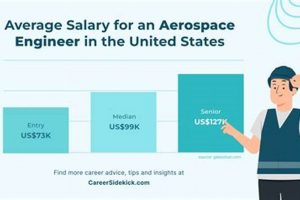
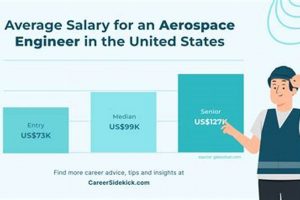
Experience benchmarks serve as critical markers in the compensation trajectory of aerospace and aeronautical engineers. Salary expectations and actual earnings are closely tied to years of experience, with distinct thresholds triggering significant increases in earning potential. These benchmarks provide a framework for both employees and employers to understand the relative value of expertise gained over time.
- Entry-Level (0-3 years)
Entry-level positions typically involve foundational tasks such as design support, testing, and data analysis. Compensation at this stage reflects the engineer’s initial skill set and contribution to project teams. Salary ranges are generally lower compared to more experienced colleagues, as the focus is on skill development and learning industry practices. For example, a recent graduate assisting with aircraft structural analysis would typically earn less than an engineer with five years of experience leading a similar project.
- Mid-Career (5-10 years)
Engineers in this phase assume greater responsibilities, often leading projects or specializing in specific areas. Compensation increases reflect their enhanced skills, project management capabilities, and contributions to organizational goals. A mid-career aerospace engineer managing satellite development or an aeronautical engineer leading a team designing new aircraft components would command a substantially higher salary compared to their entry-level counterparts. This period is often marked by promotions and opportunities for professional development.
- Senior-Level (10+ years)
Senior engineers typically hold leadership positions, guiding strategic decisions, mentoring junior staff, and overseeing complex projects. Their extensive experience and in-depth knowledge make them invaluable assets to their organizations. Consequently, their compensation reflects their expertise, leadership skills, and the impact they have on business outcomes. For example, a chief engineer overseeing the design and testing of an entire aircraft or a senior aerospace engineer managing a major satellite program would earn significantly more than engineers in earlier career stages.
- Specialized Expertise (Variable)
Regardless of overall years of experience, engineers possessing highly specialized skills, such as expertise in hypersonic flight, advanced materials, or autonomous systems, may command premium salaries. The scarcity of these skills, coupled with their high demand, drives up their market value. For instance, an engineer with five years of experience specializing in advanced propulsion systems could earn more than a generalist with ten years of experience. This highlights the importance of continuous learning and skill development in maximizing earning potential.
Experience benchmarks provide a valuable framework for understanding the trajectory of compensation within aerospace and aeronautical engineering. However, it is essential to recognize that individual salaries can vary based on factors such as specialization, location, education, and company size. Nevertheless, understanding these benchmarks allows engineers to strategically plan their careers and negotiate effectively for fair compensation that reflects their contributions and expertise.
3. Location dependencies
Geographical location exerts a significant influence on compensation levels within both aerospace and aeronautical engineering, contributing substantially to salary differentials. Varying costs of living, regional industry concentrations, and local demand for specific skill sets create disparities in earning potential across different locations.
- Cost of Living Adjustment
Salary structures often reflect the local cost of living. Metropolitan areas with higher living expenses, such as those on the West Coast of the United States, typically offer higher salaries to compensate for increased housing, transportation, and general expenses. Conversely, areas with a lower cost of living may feature lower average salaries, even for similar roles requiring comparable expertise. A direct correlation exists between the local cost of living and the minimum compensation necessary to attract and retain qualified engineering professionals.
- Industry Cluster Concentration
Regions with high concentrations of aerospace and aviation companies often exhibit higher average salaries. The presence of major employers, research institutions, and government agencies in certain areas, such as Seattle (Boeing), Los Angeles (SpaceX, Northrop Grumman), and Huntsville, Alabama (NASA’s Marshall Space Flight Center), creates competitive job markets and drives up demand for qualified engineers. These industry clusters foster innovation and attract talent, further contributing to the higher compensation levels.
- State and Local Tax Policies
State and local tax policies influence the net disposable income of engineers and can affect overall compensation expectations. Locations with lower state income taxes may be more attractive to candidates, allowing companies to potentially offer slightly lower gross salaries while still providing competitive take-home pay. Conversely, areas with higher taxes may require companies to offer higher gross salaries to maintain their attractiveness to potential employees.
- Demand for Specific Skills
Local demand for specific engineering skill sets influences salary levels. Areas with a strong focus on commercial aviation may have a higher demand for aeronautical engineers specializing in aircraft design and maintenance, leading to increased compensation for these professionals. Conversely, locations with a greater emphasis on space exploration may prioritize aerospace engineers with expertise in satellite systems or rocket propulsion, driving up their earning potential. These localized demands can shift over time, reflecting changes in industry trends and technological advancements.
In conclusion, geographical location is a critical factor in determining compensation within the aerospace and aeronautical engineering fields. The interplay of cost of living, industry concentration, tax policies, and localized skill demands creates a complex landscape of salary variations. Professionals seeking to maximize their earning potential should carefully consider these location-specific factors when evaluating job opportunities and planning their careers.
4. Industry Demand

Industry demand significantly influences compensation within aerospace and aeronautical engineering. Shifts in market priorities, technological advancements, and geopolitical factors directly impact the need for specific skill sets, thereby creating differentials in earning potential between the two fields and among specializations within each.
- Commercial Aviation Expansion
The growth of commercial aviation directly impacts the demand for aeronautical engineers specializing in aircraft design, maintenance, and air traffic management. Increased passenger volume and the proliferation of air routes drive the need for efficient, safe, and environmentally friendly aircraft. This translates into higher salaries for aeronautical engineers with expertise in aerodynamics, propulsion systems, and avionics. Conversely, periods of economic downturn or geopolitical instability can dampen demand in this sector, affecting compensation trends.
- Space Exploration and Development
Renewed interest in space exploration, driven by both government initiatives and private sector investment, creates significant demand for aerospace engineers specializing in spacecraft design, rocket propulsion, and satellite technology. Ambitious projects such as lunar missions, Mars exploration, and the development of space-based infrastructure contribute to a competitive job market and higher salaries for qualified aerospace engineers. Fluctuations in government funding and the success of private space ventures directly influence the stability and growth of this sector.
- Defense Spending and Government Contracts
Government defense spending significantly shapes the demand for both aerospace and aeronautical engineers. Contracts for military aircraft, missile systems, and surveillance technologies drive employment opportunities and influence compensation levels. Periods of increased defense spending, often triggered by geopolitical tensions or military conflicts, create a surge in demand for engineers specializing in areas such as weapons systems, radar technology, and cybersecurity. Conversely, budget cuts and shifts in defense priorities can lead to workforce reductions and salary stagnation.
- Emerging Technologies and Innovation
The rapid pace of technological innovation in areas such as autonomous systems, advanced materials, and sustainable aviation fuels creates a demand for engineers with specialized expertise. Companies that invest in research and development often seek engineers with cutting-edge skills, offering competitive salaries and benefits to attract top talent. Engineers who stay abreast of emerging technologies and adapt their skill sets accordingly are better positioned to capitalize on these opportunities and command higher compensation packages.
In summary, industry demand is a primary driver of compensation within aerospace and aeronautical engineering. Variations in demand for specific skill sets, influenced by factors such as commercial aviation expansion, space exploration initiatives, defense spending, and technological innovation, create differentials in earning potential. Engineers who strategically align their skills with market needs are best positioned to secure lucrative career opportunities and achieve long-term financial success.
5. Education Levels
The attainment of higher education directly influences compensation within aerospace and aeronautical engineering. Variations in academic qualifications, ranging from bachelor’s degrees to doctoral studies, correlate with disparities in salary levels and career advancement opportunities. The depth and breadth of knowledge acquired through advanced education are valued by employers and reflected in remuneration packages.
- Bachelor’s Degree (B.S.)
A Bachelor of Science degree serves as the foundational requirement for entry-level positions in both aerospace and aeronautical engineering. Graduates with a B.S. typically secure roles involving design support, testing, and data analysis. Compensation at this level reflects the basic engineering skills acquired during undergraduate studies. For instance, a graduate with a B.S. might assist in the development of aircraft components or contribute to the analysis of satellite performance data. While a B.S. provides access to initial employment, further educational attainment often becomes necessary for significant career advancement and higher earning potential.
- Master’s Degree (M.S.)
A Master of Science degree enhances specialization and provides in-depth knowledge in a specific area of aerospace or aeronautical engineering. Engineers with an M.S. often qualify for more advanced roles involving project management, research and development, and technical leadership. Earning potential increases significantly with an M.S. due to the enhanced expertise and skill set. For example, an engineer with an M.S. specializing in aerodynamics might lead a team optimizing aircraft wing design for improved fuel efficiency. The advanced coursework and research experience associated with an M.S. translate into a tangible benefit in terms of compensation.
- Doctoral Degree (Ph.D.)
A Doctor of Philosophy degree represents the highest level of academic achievement and prepares individuals for careers in research, academia, and high-level technical leadership. Ph.D. graduates possess specialized knowledge and research skills that are highly valued by employers seeking to innovate and advance the state of the art. Compensation for Ph.D. holders is typically higher than for those with lower degrees, reflecting their advanced expertise and ability to conduct independent research. For instance, a Ph.D. graduate might lead a research team developing new propulsion technologies for hypersonic aircraft or spearhead the design of innovative satellite communication systems. The research contributions and intellectual property generated by Ph.D. holders contribute significantly to their earning potential.
- Specialized Certifications and Continuing Education
Beyond formal degree programs, specialized certifications and continuing education play a role in enhancing earning potential. Certifications, such as Professional Engineer (PE) licensure, demonstrate competence and commitment to professional standards. Continuing education courses and workshops allow engineers to stay current with emerging technologies and industry best practices. These credentials and training opportunities can lead to increased responsibility, higher salaries, and improved career prospects. For example, an engineer obtaining a certification in project management might qualify for a leadership role overseeing complex engineering projects, leading to a corresponding increase in compensation.
In conclusion, education levels exert a clear influence on compensation within aerospace and aeronautical engineering. The attainment of advanced degrees and specialized certifications enhances expertise, improves career prospects, and leads to higher earning potential. Engineers seeking to maximize their compensation should consider pursuing advanced education and engaging in continuous professional development to remain competitive in the evolving job market.
6. Company Size
Company size correlates significantly with compensation levels in aerospace and aeronautical engineering. Larger organizations, characterized by greater revenue, broader project portfolios, and more complex organizational structures, typically offer higher salaries compared to smaller firms. This disparity arises due to several factors, including greater financial resources, economies of scale, and a higher demand for specialized expertise within larger entities. For example, a multinational aerospace corporation involved in both commercial and defense sectors will likely offer more competitive compensation packages than a small startup focusing solely on niche aviation components. The capacity to allocate greater resources to employee compensation is a direct consequence of increased revenue streams and diversified operations.
The organizational structure of larger companies often necessitates a wider range of engineering roles, from entry-level positions to highly specialized senior engineering and management roles. This creates internal career progression pathways that support higher earning potential over time. In contrast, smaller companies may have fewer opportunities for advancement, limiting long-term salary growth. Furthermore, larger companies frequently invest more heavily in employee benefits, including comprehensive healthcare, retirement plans, and professional development programs, which contribute to a more attractive overall compensation package. Consider, for example, that a major aerospace manufacturer might provide tuition reimbursement for advanced degrees and certifications, whereas a smaller firm may lack the financial resources to offer similar benefits. This holistic approach to employee compensation makes larger companies more competitive in attracting and retaining top engineering talent.
Understanding the impact of company size on compensation is crucial for engineers seeking to maximize their earning potential. While smaller companies may offer unique benefits such as a more collaborative work environment or the opportunity to gain experience across multiple disciplines, larger organizations generally provide more lucrative compensation packages and greater opportunities for long-term career advancement. Therefore, job seekers should carefully evaluate the size and financial stability of potential employers alongside other factors such as location, job responsibilities, and company culture, to make informed decisions that align with their career goals and financial aspirations. The inherent trade-offs between the benefits offered by companies of different sizes necessitate a thorough assessment to optimize career outcomes.
7. Specific Roles

The specific roles undertaken by aerospace and aeronautical engineers exert a direct influence on their respective salaries. Job titles and associated responsibilities carry predetermined compensation ranges, reflecting the skill sets, experience, and level of responsibility required. Therefore, understanding the nature of different roles is crucial for deciphering the financial landscape within these engineering disciplines. The variance in compensation stems from the distinct demands and contributions associated with each role, creating a clear cause-and-effect relationship. For instance, a design engineer responsible for creating new aircraft wings will likely earn a different salary compared to a maintenance engineer focused on inspecting and repairing existing aircraft structures. These variances are not arbitrary; they are a direct result of the specialized knowledge and responsibilities intrinsic to each role. This importance of roles is paramount to salary, as a more complex roles results in higher remuneration.
To illustrate further, consider the following examples. A structural analysis engineer performing finite element analysis on a new spacecraft component might command a higher salary than a systems engineer focused on integrating off-the-shelf components into an aircraft’s avionics suite. This is because structural analysis often requires advanced modeling skills and a deep understanding of material properties, while systems integration may involve a broader range of skills but less specialized knowledge. Additionally, engineers in management or leadership roles, such as project managers or chief engineers, typically earn higher salaries due to their added responsibilities in overseeing projects, managing teams, and making critical decisions. Conversely, roles focused on routine testing or quality control may offer lower compensation levels due to the more standardized nature of the work. This understanding is practical because if you choose your role, so the salary could be anticipated and be prepare during the work.
In conclusion, the specific roles undertaken by aerospace and aeronautical engineers form a crucial component of salary determination. The unique demands, skill sets, and responsibilities associated with different job titles directly influence earning potential. Recognizing this connection allows engineers to strategically pursue roles that align with their career goals and financial aspirations. While broader factors such as education, experience, and location also contribute to compensation, the specific role remains a primary determinant, highlighting its importance in navigating the complex salary landscape of these engineering fields. Further consideration must be made as to if the challenge of attaining a certain role will be worth the remuneration.
Frequently Asked Questions
This section addresses common inquiries regarding compensation differences within the aerospace and aeronautical engineering fields, providing clear and concise answers based on industry trends and data.
Question 1: What primary factors contribute to differing compensation levels between aerospace and aeronautical engineers?
Key factors include specialization, experience, geographical location, industry demand, level of education, company size, and the specific roles undertaken by engineers. These elements combine to create a complex salary landscape.
Question 2: Does pursuing an advanced degree, such as a master’s or doctorate, significantly impact earning potential in these fields?
Yes, advanced degrees generally lead to higher starting salaries and increased opportunities for leadership positions. The depth of knowledge and specialized skills acquired through advanced studies are valued by employers.
Question 3: How does geographical location influence compensation for aerospace and aeronautical engineers?
Geographical location affects salaries due to variations in the cost of living, industry concentrations, state and local tax policies, and regional demand for specific engineering skills. Metropolitan areas with higher living costs and strong aerospace industries typically offer higher salaries.
Question 4: Are there specific specializations within these fields that command higher salaries than others?
Specializations in high-demand areas, such as autonomous systems, sustainable aviation, advanced materials, and space mission design, often lead to increased earning prospects due to the scarcity of qualified professionals.
Question 5: What impact does company size have on the compensation packages offered to aerospace and aeronautical engineers?
Larger organizations generally offer more competitive compensation packages than smaller firms due to greater financial resources, more comprehensive benefits, and more structured career advancement pathways.
Question 6: How can an engineer maximize their earning potential throughout their career in these fields?
Strategies include specializing in high-demand areas, pursuing advanced education, gaining relevant experience through internships and co-op programs, relocating to areas with strong industry clusters, negotiating effectively, obtaining professional certifications, and staying current with emerging technologies.
Understanding these frequently asked questions provides a foundation for making informed career decisions and navigating the salary landscape in aerospace and aeronautical engineering effectively. Careful consideration of these factors can lead to a more financially rewarding and fulfilling career.
The following concluding section summarizes the key findings and offers a final perspective on this important topic.
Conclusion
The exploration of compensation structures within aerospace and aeronautical engineering reveals multifaceted determinants. While distinct career paths and specific roles are pivotal, factors such as specialization, geographic location, educational attainment, company size, and prevailing industry demands contribute significantly to salary differentials. Understanding these influences provides critical insights for navigating the earning potential within these demanding yet rewarding engineering disciplines.
In a constantly evolving technological landscape, professionals must remain informed and adaptive. Continuous skill development, strategic career planning, and a keen awareness of market trends are essential for maximizing earning potential and securing long-term financial success within aerospace and aeronautical engineering. Informed decision-making is paramount for both aspiring and established engineers seeking to thrive in these vital sectors.