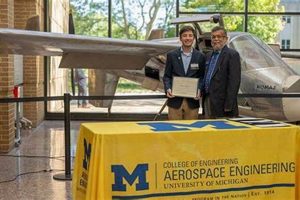
Institutions offering advanced study in flight vehicle design, spacecraft development, and related scientific fields provide a pathway for individuals seeking careers in the aerospace sector. These establishments typically feature specialized curricula encompassing aerodynamics, propulsion systems, structural analysis, and control theory. Examples include the Massachusetts Institute of Technology, Stanford University, and the California Institute of Technology.
Access to such educational opportunities is critical for the advancement of the aerospace industry, fostering innovation and producing a skilled workforce. Historically, the growth of these programs has paralleled significant milestones in aviation and space exploration, driving research and development in areas such as sustainable aviation fuels, advanced materials, and autonomous flight systems. The presence of these programs benefits not only the students directly involved but also regional economies through job creation and technological spillover.
The following sections will delve into specific aspects of these institutions, including program rankings, research opportunities, faculty expertise, and career outcomes for graduates. This will provide a comprehensive overview for prospective students and those interested in the overall landscape of advanced aerospace education.
Guidance for Selecting Advanced Aerospace Education
The selection of an appropriate program for the study of flight and space vehicle engineering necessitates careful consideration of numerous factors. The following tips provide guidance for prospective students navigating this complex decision-making process.
Tip 1: Assess Program Accreditation: Verify that the program holds accreditation from a recognized body, such as ABET (Accreditation Board for Engineering and Technology). Accreditation ensures the program meets established quality standards and industry expectations.
Tip 2: Evaluate Faculty Expertise: Examine the research interests and publications of the faculty. A strong faculty with diverse research experience indicates a vibrant academic environment and access to cutting-edge knowledge.
Tip 3: Investigate Research Opportunities: Determine the availability of research opportunities within the program. Participation in research projects provides valuable hands-on experience and strengthens a student’s profile for future employment or advanced studies.
Tip 4: Consider Location and Facilities: Evaluate the proximity of the program to aerospace industry hubs and the quality of the facilities, including laboratories, wind tunnels, and computational resources. These factors can significantly impact learning and networking opportunities.
Tip 5: Analyze Curriculum Depth and Breadth: Scrutinize the curriculum to ensure it covers core aerospace engineering principles while also offering opportunities for specialization in areas of interest, such as astrodynamics, propulsion, or autonomous systems.
Tip 6: Examine Career Placement Rates: Research the program’s track record in placing graduates in aerospace-related jobs. High placement rates indicate strong industry connections and the effectiveness of the program’s career services.
Tip 7: Review Alumni Network Strength: Investigate the strength and activity of the program’s alumni network. A robust alumni network can provide valuable mentoring, networking, and career opportunities for graduates.
These considerations are essential for making an informed decision regarding advanced aerospace education. Careful evaluation of program accreditation, faculty expertise, research opportunities, location, curriculum, placement rates, and alumni network strength will increase the likelihood of a successful and rewarding academic experience.
The subsequent sections will further explore the specific aspects of these educational institutions, providing a detailed analysis of leading programs and highlighting the opportunities available to aspiring aerospace engineers.
1. Accreditation Standards

Accreditation standards represent a critical benchmark for evaluating the quality and rigor of programs at institutions offering advanced education in flight vehicle design, spacecraft development, and related aerospace fields. These standards ensure that programs meet specific criteria deemed essential for producing competent and qualified aerospace engineers.
- ABET Accreditation
ABET (Accreditation Board for Engineering and Technology) accreditation is the primary standard for aerospace engineering programs in the United States. ABET accreditation signifies that a program has undergone rigorous evaluation and meets specific criteria related to curriculum content, faculty qualifications, facilities, and student outcomes. Completion of an ABET-accredited program is often a prerequisite for professional licensure and is highly valued by employers in the aerospace industry.
- Curriculum Content Requirements
Accreditation standards mandate specific curriculum requirements covering fundamental aerospace engineering principles. These typically include coursework in aerodynamics, propulsion, structures, materials, control systems, and design. The curriculum must provide students with a comprehensive understanding of these core areas and the ability to apply them to practical aerospace engineering problems. Accreditation ensures a minimum level of knowledge and skills across all graduates.
- Faculty Qualifications and Resources
Accreditation standards address faculty qualifications, requiring programs to employ faculty members with appropriate expertise and experience in aerospace engineering. Standards also assess the availability of adequate resources, including laboratory facilities, computational resources, and access to relevant software tools. These resources are essential for providing students with hands-on learning opportunities and for supporting faculty research activities.
- Continuous Improvement and Assessment
Accreditation standards emphasize continuous improvement and assessment. Programs are required to regularly assess student learning outcomes, solicit feedback from stakeholders, and make improvements to the curriculum and program structure based on assessment results. This continuous improvement process ensures that programs remain current with industry trends and technological advancements.
Adherence to accreditation standards is a crucial indicator of program quality for institutions offering aerospace engineering education. Choosing an accredited program provides students with assurance that they will receive a rigorous and relevant education, preparing them for successful careers in the aerospace industry. The absence of accreditation may raise concerns regarding program quality and could limit career opportunities for graduates.
2. Research Intensity

Institutions dedicated to advanced studies in flight vehicle design and space systems development exhibit varying degrees of research activity. This “Research Intensity” directly influences the educational environment and outcomes for students. A high level of research activity, indicated by substantial funding, numerous publications, and advanced laboratory facilities, attracts leading faculty and fosters a culture of innovation. For example, universities with significant NASA or Department of Defense funding often have a greater capacity to support cutting-edge research in areas such as hypersonics, advanced materials, and autonomous systems. The availability of these resources directly impacts the quality of education by providing students with opportunities to participate in groundbreaking projects and work alongside renowned experts. The cause-and-effect relationship is clear: increased research investment leads to an enriched educational experience and enhanced career prospects for graduates.
The practical significance of understanding research intensity lies in its implications for selecting an appropriate academic institution. Prospective students should consider the research output of faculty members, the availability of research assistant positions, and the presence of specialized research centers when evaluating different programs. Universities actively involved in collaborative research with industry partners provide students with valuable exposure to real-world engineering challenges and facilitate a smoother transition into the workforce. Furthermore, a strong research portfolio enhances the reputation of the institution and attracts top-tier students and faculty, creating a self-reinforcing cycle of academic excellence. For example, universities involved in the development of novel propulsion systems or advanced composite materials often attract students seeking specialization in these areas.
In summary, research intensity is a crucial component of institutions specializing in aerospace engineering. It directly impacts the quality of education, the availability of research opportunities, and the career prospects of graduates. By carefully evaluating the research landscape of different institutions, prospective students can make informed decisions that align with their academic and professional goals. The challenge lies in accurately assessing the true extent of research activity beyond publicly available metrics, requiring a thorough examination of faculty publications, research grants, and laboratory resources.
3. Faculty Expertise
The academic strength of institutions offering advanced study in flight vehicle design and space systems development is fundamentally linked to the expertise of their faculty. Faculty expertise significantly influences curriculum development, research opportunities, and student mentorship, collectively shaping the quality of education received.
- Subject Matter Specialization
Faculty expertise is characterized by in-depth knowledge within specific aerospace engineering disciplines. Professors specializing in areas such as aerodynamics, propulsion, astrodynamics, or materials science provide focused instruction and research guidance. For example, a professor with a background in hypersonic flight could lead research projects on advanced vehicle design, thereby enriching the student experience and contributing to the advancement of knowledge in that field. This level of specialization ensures that students receive instruction from experts at the forefront of their respective fields.
- Research Contributions and Publications
A significant indicator of faculty expertise is their body of research and publications in peer-reviewed journals and conferences. Publications demonstrate a faculty member’s active engagement in the field, contributing to the expansion of scientific knowledge and technological innovation. For example, faculty members who publish extensively on topics such as sustainable aviation fuels or autonomous flight control systems contribute to the university’s reputation and provide students with access to cutting-edge research opportunities. Publication records serve as a tangible measure of a faculty member’s impact on the broader aerospace engineering community.
- Industry Experience and Collaboration
Faculty expertise is often enhanced by practical experience gained through industry collaborations and consulting activities. Faculty members with experience in the aerospace industry bring real-world perspectives and practical problem-solving skills to the classroom. For example, professors who have worked on aircraft design at Boeing or spacecraft development at SpaceX can provide students with valuable insights into industry practices and challenges. These collaborations also facilitate research partnerships and internship opportunities for students.
- Teaching and Mentoring Skills
Beyond technical expertise, effective teaching and mentoring skills are essential components of faculty expertise. Faculty members who can effectively communicate complex concepts, inspire student curiosity, and provide personalized guidance contribute significantly to student learning and development. For example, a professor who actively engages students in problem-solving activities and provides individualized feedback on their work can foster a deeper understanding of aerospace engineering principles. Teaching awards and student evaluations often serve as indicators of a faculty member’s effectiveness in the classroom.
The collective expertise of the faculty forms the cornerstone of academic excellence at institutions offering flight and space vehicle engineering programs. Subject matter specialization, research contributions, industry experience, and teaching skills all contribute to a vibrant and intellectually stimulating learning environment, ultimately preparing graduates for successful careers in the aerospace industry.
4. Program Ranking
Program ranking serves as a widely recognized, albeit imperfect, metric for evaluating the relative quality of institutions offering advanced study in flight vehicle design, spacecraft development, and related aerospace fields. The impact of these rankings extends to prospective students, faculty recruitment, research funding, and overall institutional reputation. An understanding of the methodologies employed in ranking programs is crucial for interpreting and applying these metrics appropriately.
- Methodology Variations
Ranking methodologies vary significantly across different publications and organizations. Some rankings heavily weigh research output and citations, while others prioritize student selectivity, faculty resources, or alumni success. For example, U.S. News & World Report’s rankings rely on a combination of factors including peer assessment, faculty resources, student selectivity, and research activity. QS World University Rankings, conversely, place greater emphasis on academic reputation and employer reputation. The choice of methodology can substantially impact the relative position of different programs.
- Peer Reputation Assessment
Peer reputation assessment, often a component of program rankings, involves surveying academics and industry professionals to gauge their perceptions of program quality. This subjective measure can reflect historical strengths and perceived prestige, potentially lagging behind recent improvements or innovations within a program. Furthermore, peer assessment can be influenced by factors unrelated to program quality, such as institutional size or geographic location. While peer assessment offers valuable insights, its subjective nature necessitates cautious interpretation.
- Research Productivity Metrics
Research productivity metrics, such as the number of publications, citation rates, and research funding received, frequently contribute to program rankings. These metrics reflect the research intensity and scholarly impact of a program’s faculty. However, they may not fully capture the quality of teaching or the practical relevance of research. For instance, a program with a strong focus on applied research in collaboration with industry partners may not generate as many publications as a program emphasizing theoretical research. Therefore, research productivity metrics should be considered in conjunction with other indicators of program quality.
- Student Outcomes and Career Placement
Student outcomes, including graduation rates, career placement rates, and alumni salaries, provide valuable insights into the effectiveness of aerospace engineering programs. High placement rates in aerospace-related industries and competitive starting salaries for graduates suggest that a program effectively prepares students for professional success. However, these metrics may not fully capture the breadth of career paths pursued by aerospace engineering graduates, some of whom may choose to work in related fields such as software engineering or consulting. Furthermore, student outcomes can be influenced by external factors, such as economic conditions and geographic location.
In conclusion, program ranking provides a valuable, albeit incomplete, framework for assessing the relative strengths of institutions offering flight and space vehicle engineering programs. A comprehensive evaluation should consider the underlying methodology of the rankings, alongside other factors such as accreditation status, faculty expertise, research opportunities, and student outcomes. Relying solely on program rankings can lead to misinformed decisions. Therefore, prospective students should conduct thorough research and consult with advisors to identify programs that align with their individual academic and career goals.
5. Industry Connections
Institutions providing advanced aerospace engineering education significantly benefit from robust industry connections. These connections manifest in several forms, each contributing to a more comprehensive and relevant educational experience. Strong industry partnerships foster collaborative research endeavors, allowing faculty and students to engage in projects addressing real-world challenges faced by aerospace companies. The presence of industry advisory boards ensures curricula remain aligned with current industry needs and technological advancements. Furthermore, industry connections facilitate internship and co-op opportunities, enabling students to gain practical experience and apply theoretical knowledge in a professional setting. For example, a university with close ties to Boeing might offer students the chance to work on the design of new aircraft components or participate in flight testing programs. These experiences not only enhance students’ skill sets but also improve their employability upon graduation. The absence of strong industry ties can lead to a disconnect between academic instruction and the practical demands of the aerospace sector.
The effect of industry connections extends beyond individual student opportunities. Collaborative research projects often result in the development of new technologies and innovations that benefit both the university and its industry partners. These partnerships can also lead to increased funding for research programs, allowing universities to invest in state-of-the-art facilities and attract top-tier faculty. Moreover, industry involvement in curriculum development ensures that students are exposed to the latest industry practices and technologies, preparing them to contribute effectively from day one of their careers. For instance, partnerships with companies like SpaceX or Lockheed Martin can provide students with access to cutting-edge developments in space exploration and defense technologies. This exposure to real-world applications enhances the relevance of academic study and motivates students to pursue careers in the aerospace field.
In summary, industry connections represent a critical component of institutions offering advanced aerospace engineering education. These connections facilitate collaborative research, ensure curriculum relevance, and provide invaluable practical experience for students. Institutions with strong industry ties are better positioned to prepare graduates for successful careers in the aerospace sector and contribute to the advancement of aerospace technology. The challenge lies in fostering and maintaining these connections, requiring ongoing communication, collaboration, and a commitment to mutual benefit. The investment in building these partnerships is a vital aspect of ensuring that institutions provide a comprehensive and relevant education to future generations of aerospace engineers.
6. Geographic Location
Geographic location exerts a significant influence on institutions offering advanced studies in flight vehicle design and space systems development. Proximity to major aerospace industry hubs, government research facilities, and military installations creates a synergistic environment that enhances educational opportunities, research collaborations, and career prospects for graduates. The concentration of aerospace companies in regions such as Southern California, Florida’s Space Coast, and the Seattle metropolitan area fosters a direct connection between academic institutions and potential employers. This proximity facilitates internships, co-op programs, and collaborative research projects, providing students with invaluable hands-on experience and exposure to real-world engineering challenges. For example, universities located near NASA centers often benefit from research grants, access to specialized facilities, and opportunities for students to work alongside NASA engineers and scientists. The presence of these resources significantly elevates the quality and relevance of aerospace engineering programs.
The practical significance of understanding the relationship between geographic location and universities offering aerospace programs lies in its implications for prospective students. Choosing a program located near a thriving aerospace industry hub increases the likelihood of securing internships and employment opportunities upon graduation. Furthermore, these regions often boast a higher concentration of aerospace alumni, creating a valuable network for career advancement. Conversely, universities located in areas with limited aerospace activity may face challenges in attracting industry partners and providing students with access to practical training experiences. The effect of geographic location extends beyond immediate employment prospects. The presence of a vibrant aerospace ecosystem fosters a culture of innovation and provides students with access to a broader range of resources and opportunities. For instance, universities located in areas with a strong military presence may offer specialized programs in areas such as defense aerospace or unmanned aerial systems, catering to the specific needs of the local industry.
In summary, geographic location represents a crucial factor to consider when evaluating institutions offering advanced studies in flight vehicle design and space systems development. Proximity to aerospace industry hubs, government research facilities, and military installations enhances educational opportunities, research collaborations, and career prospects for graduates. While other factors such as program ranking and faculty expertise remain important, the strategic advantage conferred by geographic location cannot be overlooked. The challenge lies in accurately assessing the strength and relevance of local aerospace ecosystems and identifying programs that effectively leverage these resources to provide a comprehensive and career-oriented education. The convergence of academic excellence and industry presence creates an environment conducive to innovation and ensures a steady stream of qualified engineers to meet the evolving needs of the aerospace sector.
Frequently Asked Questions
This section addresses common inquiries regarding institutions offering advanced studies in flight vehicle design, spacecraft development, and related fields.
Question 1: What accreditation should be sought when evaluating an aerospace engineering program?
ABET (Accreditation Board for Engineering and Technology) accreditation is the gold standard for aerospace engineering programs in the United States. Programs with ABET accreditation meet rigorous standards for curriculum, faculty, and resources.
Question 2: How can the research intensity of an aerospace engineering program be determined?
Research intensity can be gauged by examining faculty publications, research funding levels, the presence of specialized research centers, and collaborations with industry partners. Universities with substantial research activity often provide more opportunities for students to participate in cutting-edge projects.
Question 3: What factors should be considered when assessing faculty expertise in an aerospace engineering program?
Factors to consider include faculty members’ subject matter specialization, research contributions (publications in peer-reviewed journals), industry experience, and teaching/mentoring skills. A diverse and accomplished faculty enhances the learning environment.
Question 4: How much weight should be given to program rankings when selecting an aerospace engineering program?
Program rankings can provide a general indication of program quality but should not be the sole determinant. Consider the methodology behind the rankings, as well as other factors such as accreditation, faculty expertise, and personal fit.
Question 5: What constitutes strong industry connections for an aerospace engineering program?
Strong industry connections are characterized by collaborative research projects, industry advisory boards, internship/co-op opportunities with reputable aerospace companies, and guest lectures from industry professionals. These connections enhance the practical relevance of the curriculum.
Question 6: Why is geographic location an important consideration when selecting an aerospace engineering program?
Proximity to major aerospace industry hubs, government research facilities, and military installations can significantly enhance internship and employment opportunities for graduates. A strategic location provides access to a broader range of resources and networking possibilities.
In summary, selecting an appropriate program requires a holistic evaluation encompassing accreditation, research intensity, faculty expertise, industry connections, and geographic location. Program rankings should be considered as one element of this comprehensive assessment.
The subsequent sections will provide further details on career pathways and future trends in aerospace engineering.
Universities That Have Aerospace Engineering
This exploration has illuminated key characteristics of institutions that offer advanced studies in flight vehicle design, spacecraft development, and related fields. Accreditation standards, research intensity, faculty expertise, program ranking, industry connections, and geographic location have been identified as critical determinants of program quality and student outcomes. A comprehensive evaluation of these factors enables prospective students to make informed decisions aligned with their individual academic and career aspirations.
The pursuit of excellence in aerospace engineering education demands a commitment to continuous improvement and adaptation to evolving industry needs. Institutions must prioritize maintaining rigorous academic standards, fostering collaborative research partnerships, and providing students with access to cutting-edge resources and practical experiences. The future of aerospace innovation depends on the cultivation of a highly skilled and knowledgeable workforce, prepared to address the complex challenges of the 21st century and beyond. Continued investment in these programs is therefore paramount.

![Best Ryerson Aerospace Engineering Programs [Guide] | Innovating the Future of Flight with Reliable Aviation Solutions](https://mixaerospace.com/wp-content/uploads/2026/04/th-380-300x200.jpg "Best Ryerson Aerospace Engineering Programs [Guide] Innovating the Future of Flight with Reliable Aviation Solutions")