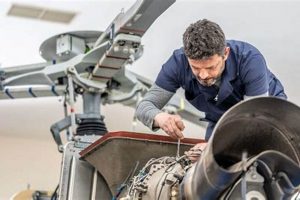
The practical application of principles related to the design, development, testing, and production of aircraft and spacecraft within a professional setting constitutes valuable expertise. This practical knowledge is typically gained through internships, co-operative education programs, research projects, or direct employment in the aerospace industry. For example, participating in the design and construction of a functional drone as part of an internship would provide foundational knowledge in this field.
Possessing a solid foundation in this area is crucial for career advancement and successful project outcomes within the field. It allows individuals to apply theoretical knowledge to real-world problems, troubleshoot technical challenges, and contribute effectively to team-based projects. Historically, this knowledge was often acquired through on-the-job training. However, structured educational programs and practical application opportunities have become increasingly important for developing well-rounded professionals in the aerospace sector.
The following discussion will delve into the specific skills and competencies developed through practical engagement, examine the various avenues for obtaining it, and explore how this proficiency impacts career trajectory and contributions to aerospace innovation.
Guidance for Cultivating Expertise in Aerospace Engineering
The following recommendations are designed to assist individuals in strategically developing a robust professional profile within the aerospace engineering domain. These suggestions emphasize practical engagement and continuous skill enhancement.
Tip 1: Seek Relevant Internship Opportunities: Engage in internships at aerospace companies or research institutions. These placements provide hands-on involvement in real-world projects, offering direct exposure to industry practices.
Tip 2: Participate in Collegiate Design Competitions: Join student organizations focused on aerospace engineering design competitions, such as the SAE Aero Design or AIAA Design/Build/Fly. These competitions foster teamwork, problem-solving, and the application of theoretical knowledge.
Tip 3: Pursue Research Experience: Contribute to faculty-led research projects related to aerospace engineering. Research experience allows for in-depth exploration of specific topics and the development of critical thinking and analytical skills.
Tip 4: Obtain Practical Certifications: Acquire industry-recognized certifications, such as those related to CAD software (e.g., CATIA, SolidWorks) or specific engineering analyses. These certifications demonstrate competency in valuable skills.
Tip 5: Develop Strong Communication Skills: Enhance written and verbal communication abilities through technical writing courses, presentations, and active participation in team meetings. Effective communication is essential for conveying technical information and collaborating with colleagues.
Tip 6: Embrace Continuous Learning: Stay current with advancements in aerospace technology through journals, conferences, and online courses. The aerospace field is constantly evolving, necessitating a commitment to lifelong learning.
Tip 7: Network with Professionals: Attend industry events and connect with aerospace engineers through professional organizations and online platforms. Networking can provide valuable insights, mentorship opportunities, and potential career pathways.
Adherence to these principles will facilitate the development of a competitive skillset, enhancing prospects for success in the aerospace engineering profession. Proactive engagement and dedication to continuous improvement are vital for long-term career growth.
The subsequent sections will explore the specific challenges and rewards associated with building a career in this dynamic field.
1. Practical Application

Practical application constitutes a cornerstone of developed proficiency within the aerospace engineering discipline. The ability to translate theoretical knowledge into tangible solutions is paramount. Direct engagement with real-world projects, testing environments, and development cycles solidifies understanding and exposes engineers to the complexities inherent in aerospace endeavors. Without practical application, theoretical knowledge remains abstract and lacks the context necessary for effective problem-solving. The development of an efficient propulsion system, for instance, requires not only a theoretical understanding of thermodynamics and fluid mechanics, but also the practical skill to design, fabricate, test, and refine the engine components.
A direct consequence of hands-on involvement is the development of troubleshooting skills. Encountering unexpected challenges during the testing or deployment phase necessitates the ability to identify root causes, devise effective solutions, and adapt designs accordingly. Consider the integration of advanced avionics systems in modern aircraft. While theoretical models can predict performance, actual integration often reveals unforeseen electromagnetic interference or software compatibility issues that require practical problem-solving to resolve. This capability differentiates experienced engineers from those with solely academic backgrounds, making practical experience a highly valued asset.
In summary, practical application serves as the vital link between theory and reality in aerospace engineering. It fosters adaptability, strengthens problem-solving capabilities, and ultimately enables the creation of reliable and efficient aerospace systems. Overcoming challenges related to design and testing contributes significantly to career advancement within the field, bridging the gap between concept and operational deployment.
2. Problem Solving

Within aerospace engineering, problem-solving is not merely a skill but a fundamental requirement, intertwined inextricably with practical field knowledge. Exposure to real-world challenges inherent in the design, construction, and operation of aircraft and spacecraft cultivates refined problem-solving abilities.
- Root Cause Analysis
Aerospace engineering expertise necessitates the ability to systematically identify the underlying causes of failures or deviations from expected performance. For example, if a satellite’s power output declines unexpectedly, experienced professionals employ diagnostic techniques and system knowledge to isolate the malfunctioning component, whether it be a solar panel, battery, or power regulation unit. This analytical approach ensures targeted solutions rather than superficial fixes.
- Optimization Techniques
Aerospace systems often involve competing performance criteria, demanding the application of optimization techniques. An experienced engineer, for instance, might need to maximize the payload capacity of a rocket while minimizing structural weight and fuel consumption. Solving this type of problem requires a deep understanding of structural mechanics, materials science, and propulsion systems, combined with the ability to apply mathematical optimization algorithms.
- Adaptive Design Modifications
Unforeseen challenges frequently arise during the development and testing phases of aerospace projects. The ability to adapt designs in response to these challenges is a crucial element of proficiency. Consider the development of a new aircraft wing design. Wind tunnel testing might reveal unexpected aerodynamic instabilities. An experienced engineer would use this data to modify the wing’s shape, control surfaces, or internal structure to mitigate the instability, ensuring safe and efficient flight characteristics.
- Risk Assessment and Mitigation
Aerospace projects involve inherent risks, and the ability to assess and mitigate these risks is paramount for preventing catastrophic failures. Experienced aerospace engineers employ techniques such as Failure Modes and Effects Analysis (FMEA) to identify potential failure points in a system, assess the likelihood and severity of these failures, and implement preventative measures. This proactive approach minimizes the probability of accidents and ensures the safety of personnel and equipment.
These facets of problem-solving, honed through direct participation in aerospace projects, underscore the significance of hands-on proficiency. The combination of theoretical understanding and practical experience enables engineers to effectively address the multifaceted challenges that arise in the design and operation of complex aerospace systems, ultimately contributing to safer, more efficient, and more reliable technologies.
3. Technical Proficiency

Technical proficiency forms the bedrock of practical expertise in aerospace engineering. It encompasses the specific skills and knowledge required to design, analyze, and implement aerospace systems. A robust command of technical principles, coupled with hands-on application, directly translates to the ability to address complex challenges and contribute effectively to aerospace projects.
- Aerodynamics and Fluid Mechanics
A fundamental understanding of airflow, lift, drag, and other aerodynamic principles is essential for designing efficient and stable aircraft and spacecraft. This knowledge is directly applied to the design of wing profiles, control surfaces, and propulsion systems. For instance, designing an efficient wing requires accurate modeling of airflow using computational fluid dynamics (CFD) software and validation through wind tunnel testing. Proficiency in this area directly impacts aircraft performance and fuel efficiency.
- Structures and Materials
Expertise in structural mechanics, materials science, and finite element analysis (FEA) is critical for ensuring the structural integrity and reliability of aerospace vehicles. Engineers must select appropriate materials, design structural components to withstand extreme loads and temperatures, and predict their long-term behavior. For example, designing the fuselage of an aircraft requires careful consideration of material properties, stress distribution, and fatigue resistance to ensure safe operation over its lifespan. Skills in FEA enable accurate simulation of structural behavior under various loading conditions.
- Propulsion Systems
A thorough understanding of various propulsion technologies, including jet engines, rocket engines, and electric propulsion systems, is essential for developing efficient and reliable power sources for aircraft and spacecraft. This proficiency involves knowledge of thermodynamics, combustion, fluid dynamics, and control systems. Designing a rocket engine, for example, requires optimizing combustion chamber geometry, nozzle design, and propellant flow rates to maximize thrust and efficiency while minimizing weight and complexity.
- Control Systems and Avionics
Proficiency in control systems engineering and avionics is crucial for ensuring the stability, maneuverability, and safe operation of aircraft and spacecraft. This expertise encompasses knowledge of feedback control theory, sensor systems, actuators, and software development. Developing an autopilot system for an aircraft, for instance, requires integrating sensors (such as accelerometers and gyroscopes), actuators (such as control surfaces), and software algorithms to maintain a stable flight path and respond to pilot inputs.
The interconnectedness of these technical competencies underscores the importance of comprehensive training. A holistic understanding of these elements, combined with practical aerospace engineering proficiency, equips engineers with the necessary skill set to address the multifaceted challenges inherent in the aerospace industry, contributing to innovation and ensuring the safety and reliability of aerospace systems.
4. Project Management
Within the realm of aerospace engineering, project management transcends mere organizational skills; it represents a critical competency essential for the successful execution of complex and often high-stakes endeavors. Possessing practical experience necessitates a robust understanding of project management principles, techniques, and tools. The following discussion outlines key facets of project management as they directly relate to, and are shaped by, proficiency in this sector.
- Scope Definition and Requirements Management
Aerospace projects are characterized by intricate specifications and stringent performance requirements. Establishing a clear scope and meticulously managing requirements are paramount. Practical expertise allows for the effective translation of abstract mission objectives into concrete, measurable, and achievable project deliverables. For example, in the development of a new satellite, an engineer with project management capabilities will be able to define the precise functionalities of each subsystem, allocate resources appropriately, and ensure that all components meet the overall mission requirements.
- Risk Management and Mitigation
Aerospace projects inherently involve a high degree of technical and financial risk. Proficiency in project management includes identifying potential risks, assessing their impact, and developing mitigation strategies. This encompasses everything from technical failures to budget overruns and schedule delays. For example, an experienced engineer might conduct a Failure Mode and Effects Analysis (FMEA) to identify potential weaknesses in a spacecraft’s design and implement redundancy measures to minimize the risk of mission failure. This process ensures that potential problems are identified and addressed proactively.
- Resource Allocation and Scheduling
Aerospace projects often involve numerous teams, specialized equipment, and limited resources. Effective project management requires the skillful allocation of resources and the creation of realistic schedules. Practical involvement provides the insight necessary to optimize resource utilization, minimize downtime, and ensure timely completion of project milestones. An example could be coordinating the activities of engineers, technicians, and manufacturing personnel to ensure that a new aircraft wing is designed, fabricated, and tested according to a predefined schedule and within budget constraints.
- Communication and Collaboration
Aerospace projects typically involve multidisciplinary teams working across different geographic locations. Effective communication and collaboration are essential for ensuring that all team members are aligned and working towards a common goal. This requires strong interpersonal skills, the ability to clearly communicate technical information, and the implementation of efficient communication channels. For example, a project manager overseeing the development of a new launch vehicle might use regular progress meetings, shared online platforms, and detailed documentation to ensure that engineers from different disciplines (e.g., propulsion, structures, avionics) are effectively coordinating their efforts.
In conclusion, mastery of project management principles significantly enhances practical aerospace experience, enabling engineers to navigate complex projects, manage risks effectively, and deliver successful outcomes. The ability to integrate technical expertise with project management skills is a distinguishing factor for professionals in this demanding field, increasing efficiency, and improving the likelihood of success in aerospace endeavors.
5. System Integration

System integration in aerospace engineering represents a critical phase where individual components and subsystems are combined to function as a cohesive unit. Practical knowledge acquired through aerospace experience is essential for navigating the complexities of this process. The successful integration of disparate systems determines the overall performance, reliability, and safety of aircraft and spacecraft.
- Interface Management
Aerospace vehicles consist of numerous interconnected systems, each with its own set of interfaces. Managing these interfaceselectrical, mechanical, datais crucial for ensuring compatibility and preventing malfunctions. Practical proficiency enables engineers to define interface requirements clearly, verify compliance through testing, and troubleshoot integration issues that arise. For example, integrating a new radar system into an existing aircraft requires careful consideration of power requirements, data communication protocols, and physical mounting constraints. Experience in this area is vital for avoiding costly integration errors and delays.
- Testing and Validation
Comprehensive testing is an integral part of system integration. Experienced engineers develop and execute test plans to verify that the integrated system meets performance requirements and operates safely under various conditions. This includes component-level testing, system-level testing, and flight testing (for aircraft). For instance, integrating a new autopilot system in an aircraft requires extensive flight testing to validate its stability, accuracy, and robustness in different flight regimes. Practical involvement in testing provides valuable insights into system behavior and identifies potential weaknesses that might not be apparent during design.
- Troubleshooting and Problem Resolution
System integration invariably uncovers unforeseen issues and challenges. The ability to diagnose problems, identify root causes, and implement effective solutions is a crucial aspect of practical proficiency. This requires a deep understanding of the individual systems involved and their interactions. For example, integrating a new communication system into a spacecraft might reveal unexpected electromagnetic interference (EMI) issues. An experienced engineer would use diagnostic tools and techniques to identify the source of the interference and implement shielding or filtering measures to mitigate it.
- Configuration Management
Aerospace systems often undergo multiple iterations and modifications throughout their lifecycle. Maintaining accurate configuration control is essential for ensuring that all components are compatible and that the system functions as intended. Practical proficiency involves implementing configuration management processes to track changes, manage versions, and prevent unauthorized modifications. For example, in the development of a new software release for an aircraft’s flight control system, configuration management ensures that the correct version of the software is installed on each aircraft and that any changes are properly documented and tested.
These facets of system integration highlight the indispensable role of practical insight in aerospace engineering. A robust knowledge base coupled with hands-on participation results in optimized outcomes in safety. Through effective processes, professionals are able to ensure safety, reliability, and success in development and operation.
6. Safety Protocols

Adherence to stringent protocols is inextricably linked to proficient practice in aerospace engineering. The design, development, testing, and operation of aircraft and spacecraft involve inherent risks, making the implementation and enforcement of comprehensive safety measures paramount. Proficiency in this field directly correlates with a deep understanding and rigorous application of these protocols. The cause-and-effect relationship is clear: lapses in safety protocols can lead to catastrophic failures, while diligent adherence significantly reduces the likelihood of accidents and ensures the well-being of personnel and the public. Safety protocols are not merely procedural guidelines; they are an integral component of aerospace engineering expertise, shaping every stage of a project from initial design to final deployment. For example, the Challenger disaster highlighted the critical importance of adhering to established launch protocols and the potentially devastating consequences of neglecting safety considerations. Similarly, rigorous testing and inspection procedures are essential for identifying and mitigating potential defects in aircraft components before they lead to in-flight failures.
The practical significance of understanding and implementing safety protocols extends beyond preventing accidents. It also encompasses regulatory compliance, risk management, and the maintenance of public trust. Aerospace engineers must be familiar with a wide range of regulations and standards set by organizations such as the Federal Aviation Administration (FAA) and the European Aviation Safety Agency (EASA). Adherence to these regulations is not only a legal requirement but also a critical factor in ensuring the safety and reliability of aerospace products and services. Furthermore, effective risk management involves identifying potential hazards, assessing their likelihood and severity, and implementing control measures to mitigate those risks. This requires a proactive approach to safety, with engineers continuously evaluating and improving safety protocols based on new information and lessons learned from past incidents. By prioritizing safety, aerospace engineers contribute to the public’s confidence in air travel and space exploration.
In summary, the integration of strict protocols into aerospace engineering practice is not optional, but an essential element of the field. Challenges in implementing effective safety protocols include maintaining a culture of safety across all levels of an organization, adapting to evolving technologies and regulations, and balancing safety considerations with performance and cost constraints. However, by prioritizing safety and continuously striving to improve safety protocols, aerospace engineers can mitigate risks, prevent accidents, and ensure the continued progress and success of the industry. The effectiveness of these protocols is directly proportional to their understanding and application, linking back to the initial concept of a safe environment.
7. Continuous Learning
Within the dynamic field of aerospace engineering, continuous learning is not merely an option but an indispensable element for maintaining expertise and fostering innovation. The rapid advancements in technology, materials, and methodologies necessitate a constant pursuit of knowledge and skill development to effectively contribute to the industry.
- Adaptation to Technological Advancements
The aerospace sector experiences frequent technological breakthroughs. Aerospace engineering professionals must proactively engage with emerging technologies, such as additive manufacturing, advanced composites, and artificial intelligence, to remain competitive. For example, an engineer specializing in aircraft structures needs to understand the properties and applications of newly developed lightweight materials to optimize designs and enhance performance. This adaptation requires ongoing training, research, and exploration of novel approaches, thus solidifying an expert understanding.
- Regulatory Compliance and Safety Standards
Aerospace engineering is subject to stringent regulatory requirements and safety standards. These regulations and standards are continually updated to reflect new technologies, lessons learned from past incidents, and evolving best practices. Continuous learning ensures that engineers remain informed about the latest regulatory changes and safety protocols, enabling them to design and operate aerospace systems in compliance with all applicable requirements. For instance, staying abreast of updates to FAA regulations regarding unmanned aerial vehicle (UAV) operations is crucial for engineers involved in the development and deployment of drone technology.
- Specialization and Skill Enhancement
Aerospace engineering encompasses a wide range of specializations, including aerodynamics, propulsion, structures, and control systems. Continuous learning allows engineers to deepen their expertise in specific areas of interest and acquire new skills to enhance their career prospects. For example, an engineer specializing in propulsion systems might pursue advanced training in combustion modeling or turbomachinery design to further develop their skills and contribute to the development of more efficient and environmentally friendly aircraft engines. Hands-on workshops or courses can provide applicable knowledge.
- Problem Solving and Innovation
Complex challenges are a constant in aerospace engineering. Continuous learning equips engineers with the knowledge and skills necessary to tackle these challenges effectively and drive innovation. By staying abreast of the latest research findings, engineering techniques, and technological advancements, engineers can develop creative solutions to improve aircraft performance, enhance safety, and reduce environmental impact. Participation in conferences, seminars, and online forums fosters collaboration and exposes engineers to diverse perspectives and approaches. Knowledge is key to creating successful projects and innovations.
These elements of continuous learning collectively contribute to the ongoing development of aerospace engineering expertise. Through proactive engagement with emerging technologies, regulatory updates, specialized training, and collaborative problem-solving, aerospace engineers can remain at the forefront of their field, driving innovation and ensuring the continued progress and safety of air and space travel. Hands-on experience is made better by expanding it through continuous learning.
Frequently Asked Questions
The following addresses prevalent inquiries concerning the acquisition, relevance, and application of verifiable proficiency in the field of aerospace engineering. The information provided is intended to offer clarity and guidance regarding this crucial aspect of professional development.
Question 1: How does practical engagement differ from theoretical knowledge in aerospace engineering?
Theoretical knowledge provides the foundational principles, while practical application allows for the integration and application of these principles to real-world situations. Engagement enables the development of problem-solving skills, the ability to troubleshoot complex issues, and an understanding of the constraints and limitations encountered in real-world scenarios.
Question 2: What constitutes valid aerospace engineering experience for entry-level positions?
Acceptable forms include internships at aerospace companies, participation in collegiate design competitions (e.g., SAE Aero Design), involvement in research projects, and relevant co-operative education programs. Demonstrated contributions to the design, analysis, or testing of aerospace systems are highly valued.
Question 3: How does participation in collegiate design competitions enhance practical skillsets?
These competitions require students to apply theoretical knowledge to the design, construction, and testing of aerospace vehicles. Participants gain hands-on proficiency in areas such as aerodynamics, structural analysis, propulsion systems, and control systems. Teamwork, project management, and problem-solving skills are also developed.
Question 4: Why is knowledge of industry-standard software critical to aerospace engineering experience?
Aerospace engineers rely on specialized software tools for design, analysis, and simulation. Familiarity with software packages such as CATIA, SolidWorks, ANSYS, and MATLAB is essential for performing engineering tasks efficiently and effectively. Demonstrated competence in these tools is a valuable asset in the job market.
Question 5: What are the long-term career benefits of acquiring extensive aerospace engineering experience early in one’s career?
Early engagement provides a competitive advantage in the job market, accelerates career advancement, and enables individuals to contribute more effectively to aerospace projects. Proficiency fosters a deeper understanding of engineering principles, cultivates problem-solving skills, and builds a strong professional network.
Question 6: How can one effectively demonstrate acquired competence to potential employers?
Competence is demonstrable through detailed project descriptions in resumes, portfolios showcasing design work, letters of recommendation from professors or supervisors, and targeted responses during interviews. Quantifiable achievements and specific examples of problem-solving are particularly effective.
In conclusion, the acquisition of practical knowledge through diverse avenues is crucial for success in the aerospace engineering field. Demonstrated skills and relevant participation are valuable assets in navigating the competitive professional landscape.
The subsequent segment will explore case studies illustrating the impact of practical capabilities on specific aerospace projects.
Conclusion
The preceding discussion has illuminated the multifaceted nature of aerospace engineering experience, emphasizing its criticality in bridging the gap between theoretical knowledge and practical application. Competencies such as problem-solving, technical proficiency, project management, system integration, adherence to safety protocols, and continuous learning have been identified as essential components of a well-rounded professional profile. The acquisition of verifiable proficiency through internships, design competitions, research projects, and continuous skill development has been shown to be a determining factor in career advancement and contribution to innovation within the aerospace sector.
Given the ongoing evolution of aerospace technology and the increasing complexity of aerospace systems, the cultivation of practical knowledge remains paramount. Individuals pursuing careers in this field are encouraged to actively seek opportunities to apply their theoretical knowledge in real-world settings, to embrace continuous learning, and to prioritize safety in all their endeavors. The future of aerospace innovation depends on the expertise and dedication of skilled professionals equipped with the necessary skills to address the challenges and opportunities that lie ahead.