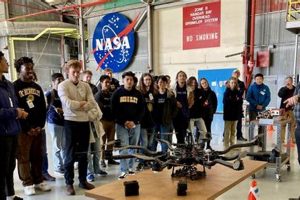
The opportunity to pursue the design, development, and testing of aircraft and spacecraft in an international setting presents a unique educational pathway. This option allows students to gain academic knowledge of flight principles and propulsion systems while simultaneously immersing themselves in a different culture. For example, one might study advanced aerodynamics in Germany or specialize in satellite technology in France.
Engaging in academic pursuits internationally yields numerous advantages. It fosters cross-cultural understanding, enhances adaptability, and broadens perspectives, qualities highly valued by employers in the increasingly globalized aerospace sector. Exposure to diverse engineering practices and design philosophies can lead to innovative solutions and a more holistic approach to problem-solving. Furthermore, it provides access to specialized resources, research opportunities, and collaborations not always available domestically, potentially leading to significant career advancement. This also contributes to a more internationally connected community.
The following sections will delve into various aspects related to this global education pathway. This includes identifying suitable programs, securing funding opportunities, navigating visa requirements, and understanding the potential career trajectories that may arise from such an experience. It also examines the specific skills and competencies students can expect to develop during their time studying and working abroad.
Guidance for International Aerospace Engineering Studies
The subsequent guidance assists students considering academic pursuits outside their home country within the field of aerospace engineering. Prudent planning and execution are paramount for a successful and rewarding experience.
Tip 1: Research Program Accreditation. Ensure the academic institution and its aerospace engineering programs hold recognized accreditation within the host country. Accreditation signifies adherence to established quality standards and facilitates degree recognition.
Tip 2: Assess Curriculum Specificity. Scrutinize the curriculum offered to ascertain its alignment with individual career aspirations. Some programs may emphasize specific areas, such as propulsion, avionics, or structural design. Carefully evaluate the course content and available specializations.
Tip 3: Investigate Research Opportunities. Determine the availability of research projects and facilities within the host institution. Active involvement in research enhances practical skills and expands theoretical understanding. Prioritize institutions with robust research infrastructure.
Tip 4: Explore Internship Possibilities. Investigate potential internship placements with aerospace companies or research organizations in the host country. Practical experience gained through internships significantly enhances employability upon graduation.
Tip 5: Examine Language Proficiency Requirements. Ascertain the required level of language proficiency for academic success and daily life in the host country. Enroll in language courses, if necessary, to achieve the requisite fluency prior to commencing studies.
Tip 6: Secure Adequate Funding. Develop a comprehensive financial plan encompassing tuition fees, living expenses, and travel costs. Explore scholarship opportunities, grants, and student loan options to secure sufficient funding for the duration of studies.
Tip 7: Understand Visa and Immigration Regulations. Thoroughly research and comply with all visa and immigration requirements stipulated by the host country. Begin the application process well in advance of the intended departure date to avoid delays.
Successful international study requires meticulous planning, dedication, and adaptability. Adhering to these guidelines increases the likelihood of a fulfilling and academically enriching experience.
The following sections will explore the potential career paths available upon completion of international aerospace engineering programs.
1. Accreditation Verification

Accreditation verification is a critical step for students considering aerospace engineering studies outside their home country. It serves as a fundamental benchmark, ensuring the chosen program meets internationally recognized quality standards, thereby safeguarding the value and transferability of the earned degree.
- Program Recognition and Degree Validity
Accreditation signifies that a program has undergone rigorous evaluation by an independent body and meets established criteria for curriculum content, faculty qualifications, and resource availability. Without proper accreditation, the resulting degree may not be recognized by employers or licensing boards in the student’s home country or other international jurisdictions. This can significantly limit career opportunities and hinder professional advancement. Example: A degree from a non-accredited institution might not qualify an individual to sit for professional engineering licensure exams in certain regions.
- Facilitating Credit Transfer
Accreditation simplifies the process of transferring academic credits earned abroad to institutions within the student’s home country or other educational systems. Accredited programs often have established articulation agreements with other universities, making credit transfer more seamless and predictable. Conversely, credits earned from non-accredited programs may not be accepted, potentially requiring students to repeat coursework. Example: A student pursuing a dual degree program between a US university and a foreign institution will typically require both programs to be accredited to ensure full credit transfer.
- Ensuring Curriculum Quality and Relevance
Accreditation bodies typically mandate specific curriculum standards to ensure graduates possess the necessary knowledge and skills for successful practice in the aerospace engineering profession. This includes coverage of core subjects like aerodynamics, propulsion, structural analysis, and control systems. Accredited programs are regularly reviewed to maintain relevance to industry trends and technological advancements. Example: Accreditation may require that a program incorporate computational fluid dynamics (CFD) software training to align with current industry practices.
- Promoting Employer Confidence
Employers, particularly those in highly regulated industries like aerospace, often prioritize graduates from accredited programs. Accreditation provides a level of assurance regarding the quality of education received and the competence of graduates. Hiring managers may view degrees from non-accredited institutions with skepticism, potentially impacting employment prospects. Example: Aerospace companies involved in manufacturing aircraft components for international export often require that their engineering staff hold degrees from accredited institutions.
In conclusion, verification of program accreditation is non-negotiable when considering aerospace engineering studies abroad. It ensures degree validity, facilitates credit transfer, maintains curriculum quality, and fosters employer confidence, all of which are essential for a successful and rewarding career in the global aerospace sector. Failing to prioritize accreditation may result in significant academic and professional disadvantages.
2. Curriculum Alignment

Curriculum alignment represents a cornerstone of a successful “aerospace engineering abroad” experience. It involves ensuring the coursework and academic focus of an international program directly correlate with the student’s career goals and the prevailing standards within the global aerospace industry. Misalignment can lead to wasted time and resources, hindering professional development. For instance, a program heavily focused on theoretical astrophysics may not adequately prepare a student aspiring to work in aircraft design, despite both fields existing within aerospace engineering. Therefore, the selection of a program with a curriculum that aligns with specific aspirations is paramount.
The importance of curriculum alignment manifests in several practical aspects. First, it directly impacts skill acquisition. Aligned curricula provide students with the specific knowledge and competencies demanded by potential employers. Second, it influences internship opportunities. Companies are more likely to offer placements to students whose academic background directly supports the skills required for the role. For example, a student from a program with a strong emphasis on composite materials may be more competitive for an internship involving aircraft structural design. Third, it enhances networking opportunities. Aligned curricula often involve faculty with relevant industry connections, facilitating valuable mentorship and career guidance. A program renowned for its expertise in flight control systems, for instance, might attract guest lecturers from leading avionics manufacturers, providing students with direct access to industry professionals.
In conclusion, curriculum alignment is a critical factor in maximizing the benefits of “aerospace engineering abroad.” Carefully evaluating program offerings and ensuring they align with specific career aspirations is crucial for achieving academic success and securing meaningful employment in the competitive global aerospace sector. Students should actively seek programs that provide a direct pathway to their desired professional outcomes, considering not only the institution’s reputation but also the detailed course content and opportunities for specialization. The impact of curriculum alignment extends beyond academic performance, significantly shaping future career prospects.
3. Research Engagement

Research engagement forms a critical component of an aerospace engineering education, particularly when pursued abroad. Active participation in research projects provides students with invaluable hands-on experience, fosters innovation, and enhances their understanding of complex aerospace concepts. This engagement serves as a bridge between theoretical knowledge and practical application, preparing students for the challenges of the aerospace industry.
- Access to Specialized Facilities
Studying abroad often grants access to research facilities not readily available domestically. Universities and research institutions in certain countries may possess state-of-the-art wind tunnels, propulsion testing centers, or satellite development labs. This exposure allows students to work with cutting-edge technology and contribute to advanced research projects. For example, a student studying in Germany might gain access to the German Aerospace Center’s (DLR) extensive facilities for aerodynamic testing, while a student in France could participate in research related to Ariane rocket development. The practical experience gained is invaluable for career advancement.
- Collaboration with International Experts
International research opportunities facilitate collaboration with leading experts in specific areas of aerospace engineering. Students have the chance to work alongside researchers from diverse backgrounds, gaining exposure to different perspectives and approaches to problem-solving. This collaborative environment fosters innovation and expands students’ professional networks. For instance, a student working on a joint project between a US university and a Japanese aerospace company might contribute to research on advanced composite materials for aircraft structures, benefiting from the expertise of both teams. These collaborations can lead to publications and future career opportunities.
- Development of Independent Research Skills
Active participation in research cultivates essential independent research skills, including experimental design, data analysis, and scientific writing. Students learn to formulate research questions, develop methodologies, interpret results, and communicate findings effectively. These skills are highly valued by employers in the aerospace industry, as they demonstrate a student’s ability to conduct independent investigations and contribute to innovative solutions. For example, a student involved in a research project on alternative jet fuels might be responsible for designing experiments to measure fuel efficiency, analyzing the data collected, and writing a report summarizing the findings. This experience prepares them for research-oriented roles in the industry.
- Enhancement of Career Prospects
Significant research engagement during “aerospace engineering abroad” directly enhances career prospects. Employers often prioritize candidates with a strong research background, as it demonstrates a commitment to innovation and a capacity for independent learning. Research experience can lead to publications in peer-reviewed journals and presentations at international conferences, further bolstering a student’s resume. The skills and knowledge gained through research are directly applicable to a wide range of roles in the aerospace industry, including design engineering, research and development, and project management. Furthermore, connections made during research projects can lead to valuable networking opportunities and potential job offers.
In summary, research engagement is an indispensable component of studying aerospace engineering in an international setting. It not only enhances academic understanding but also equips students with the practical skills, international collaborations, and career prospects necessary to thrive in the global aerospace sector. The access to specialized facilities, collaboration with international experts, development of independent research skills, and enhancement of career prospects collectively underscore the importance of actively seeking research opportunities during studies abroad.
4. Internship Opportunities

Internship opportunities represent a pivotal element within the framework of aerospace engineering studies conducted abroad. These practical experiences serve as a critical bridge, connecting theoretical academic knowledge with the realities of professional practice in the global aerospace sector. Participation in internships provides students with the opportunity to apply learned principles, develop practical skills, and gain firsthand exposure to industry standards and practices. Without relevant internship experience, graduates may encounter difficulty transitioning into professional roles, lacking the practical competence and contextual understanding valued by employers. For example, an aerospace engineering student studying in the UK might intern at a company like Rolls-Royce, gaining experience in jet engine design and testing. This experience would provide invaluable insights and skills not attainable through coursework alone.
The importance of internship opportunities extends beyond basic skill development. These experiences often facilitate networking opportunities with industry professionals, potentially leading to future employment prospects. Interns can build relationships with engineers, managers, and researchers, gaining valuable mentorship and insights into career pathways. Furthermore, international internships expose students to diverse engineering cultures and approaches to problem-solving, enhancing their adaptability and cross-cultural communication skills. Consider a student studying in France who interns at Airbus. They would gain experience working in a multinational team, learning about different manufacturing processes and design philosophies compared to those prevalent in their home country. Such international exposure is increasingly valued in a globalized industry.
In summary, the availability and quality of internship opportunities represent a key determinant of the overall value of aerospace engineering studies abroad. These experiences provide practical skills, networking opportunities, and international exposure, all of which are essential for career success in the global aerospace sector. Students should prioritize programs that offer robust internship programs and actively seek out placements that align with their career goals. Overlooking the importance of internships may significantly hinder a graduate’s ability to compete effectively in the job market. This proactive consideration is an investment in future professional success.
5. Language Proficiency
Language proficiency represents a critical, often underestimated, component of successful aerospace engineering studies in an international setting. While technical expertise forms the core of engineering competence, the ability to effectively communicate in the language of the host country significantly impacts academic performance, professional integration, and overall quality of life. Limited language skills can impede understanding of lectures, participation in group projects, and access to research opportunities. In essence, language proficiency acts as a gateway to fully engaging with the educational experience and leveraging the unique resources available abroad. For instance, a student studying in Germany without sufficient German language skills may struggle to comprehend lectures delivered in German or to effectively collaborate with local research teams, despite the availability of excellent aerospace engineering programs. This limitation undermines the potential benefits of studying abroad.
The practical applications of language proficiency extend beyond the academic sphere. Internship placements, a crucial aspect of aerospace engineering education, often require strong communication skills in the local language. Interaction with colleagues, understanding technical documentation, and participation in meetings all necessitate fluency. Consider a student interning at a French aerospace company. Even if some internal communication occurs in English, the ability to understand and converse in French is essential for fully integrating into the team, understanding safety protocols, and contributing effectively to projects. Moreover, the ability to speak the local language facilitates cultural immersion, enhancing the overall experience and fostering valuable cross-cultural communication skills, highly valued by multinational aerospace companies. These skills can be a significant differentiator in a competitive job market.
In conclusion, language proficiency is not merely an ancillary skill but an integral element of aerospace engineering studies abroad. It directly affects academic success, professional integration, and cultural immersion. While some programs offer courses in English, relying solely on this option can limit access to opportunities and hinder overall development. Students should prioritize language acquisition prior to or during their studies, recognizing it as an investment that significantly enhances their educational experience and career prospects in the global aerospace sector. Neglecting language proficiency represents a significant challenge that can limit the benefits of studying abroad and impede future professional success.
6. Funding Acquisition
Securing sufficient financial resources constitutes a fundamental prerequisite for pursuing aerospace engineering studies internationally. The expenses associated with tuition, living costs, travel, and visa requirements often exceed the financial capacity of many students, necessitating proactive funding acquisition strategies.
- Scholarship Programs and Grants
Scholarship programs and grants, offered by governments, universities, and private organizations, represent a primary source of funding for international students. These awards are typically merit-based or need-based, requiring a competitive application process. Examples include the Fulbright Program, the Erasmus+ Program, and scholarships offered by specific aerospace companies or professional organizations. Successful applicants often demonstrate exceptional academic achievement, relevant research experience, and a clear commitment to the field of aerospace engineering. The availability and eligibility criteria for these scholarships vary significantly, necessitating thorough research and proactive application strategies.
- Student Loan Options
Student loan options, provided by banks and financial institutions, offer a means of financing educational expenses when scholarship and grant funding is insufficient. These loans typically require repayment with interest, commencing after graduation. International students may face challenges in securing loans from institutions in their home country or the host country, due to residency requirements and credit history considerations. Government-backed loan programs may offer more favorable terms and conditions. Careful consideration of interest rates, repayment schedules, and potential debt burden is crucial before accepting student loan financing. Example: A student from India studying aerospace engineering in the United States might explore loan options from Indian banks specializing in education loans for overseas studies.
- University Funding and Assistantships
Universities offering aerospace engineering programs may provide funding opportunities in the form of tuition waivers, research assistantships, or teaching assistantships. These positions typically require students to contribute to research projects or assist with teaching responsibilities in exchange for financial support. Competition for these positions is often intense, requiring a strong academic record and relevant research experience. International students should proactively inquire about funding opportunities when applying to universities and demonstrate their qualifications through a well-crafted application. Example: A graduate student pursuing a PhD in aerospace engineering in Germany might secure a research assistantship at a university’s aerospace research institute, receiving a stipend and tuition waiver in exchange for contributing to research projects.
- External Funding and Sponsorships
External funding and sponsorships, obtained from aerospace companies, research organizations, or private donors, can provide significant financial support for international students. These opportunities often require students to demonstrate exceptional potential and a clear alignment with the sponsor’s interests. Students might participate in competitions, apply for research grants, or seek sponsorship for specific projects. Example: An aerospace engineering student might participate in a design competition sponsored by Boeing, with the winning team receiving a cash prize and potential internship opportunities. Securing external funding requires proactive networking, persuasive communication, and a well-defined project proposal.
Effective funding acquisition strategies are paramount for enabling students to pursue aerospace engineering studies abroad. A comprehensive approach, encompassing scholarship applications, student loan exploration, university funding inquiries, and external sponsorship pursuits, maximizes the likelihood of securing sufficient financial resources. Proactive planning and diligent execution are essential for mitigating financial constraints and unlocking the opportunities offered by international aerospace engineering education.
Frequently Asked Questions
The following questions address common inquiries and concerns regarding pursuing aerospace engineering education in international settings. These responses aim to provide clarity and inform decision-making for prospective students.
Question 1: Is accreditation of international aerospace engineering programs equivalent to domestic accreditation?
Accreditation standards vary across countries. Recognition of an international program’s accreditation may require evaluation by relevant domestic accreditation bodies to ensure comparability.
Question 2: What are the primary challenges faced by students studying aerospace engineering abroad?
Common challenges include language barriers, cultural adjustments, differing academic systems, and navigating international visa and immigration procedures.
Question 3: How does the curriculum in international aerospace engineering programs differ from domestic programs?
Curricular differences may arise due to variations in national standards, industry focus, and research priorities. Students should carefully review course content and specializations offered.
Question 4: What career opportunities are available to graduates of international aerospace engineering programs?
Graduates may pursue careers in aerospace companies, research institutions, government agencies, and related industries, both in their home country and internationally. Career paths often depend on specialization and language proficiency.
Question 5: How can international students prepare for the application process to aerospace engineering programs abroad?
Preparation involves researching program requirements, obtaining necessary academic transcripts, preparing standardized test scores (e.g., TOEFL, IELTS), and securing letters of recommendation. A well-crafted statement of purpose is also essential.
Question 6: What is the impact of international experience on employability in the aerospace sector?
International experience, including studying abroad, is often viewed favorably by employers in the global aerospace sector. It demonstrates adaptability, cross-cultural communication skills, and a broader perspective on engineering practices.
Thorough research, proactive planning, and a clear understanding of the challenges and opportunities are crucial for a successful and rewarding experience studying aerospace engineering internationally.
The subsequent section will summarize the key benefits and considerations associated with pursuing aerospace engineering education in a global context.
Conclusion
The preceding exploration of “aerospace engineering abroad” illuminates a complex landscape of opportunity and challenge. Key determinants of success include rigorous program accreditation, alignment of curriculum with specific career goals, active engagement in research, strategic pursuit of internship opportunities, demonstrable language proficiency, and proactive funding acquisition. Each factor contributes significantly to the overall value and ultimate return on investment in international education within this demanding field.
Careful consideration of these elements is paramount for prospective students. The decision to pursue aerospace engineering studies in an international setting demands meticulous planning and a clear understanding of both the potential benefits and inherent risks. Those who undertake this endeavor with thorough preparation and unwavering dedication stand to gain a distinct competitive advantage in the increasingly globalized aerospace sector. The future of aerospace innovation depends on engineers with broad perspectives and cross-cultural competence; “aerospace engineering abroad” can be a crucial pathway towards developing those qualities.