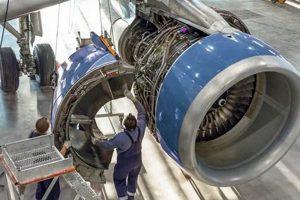
Advanced academic study focusing on the design, development, testing, and production of aircraft and spacecraft is a postgraduate pursuit. This educational path involves specialized coursework and research related to aerodynamics, propulsion, materials science, and control systems pertinent to flight vehicles. For example, one might focus on computational fluid dynamics to optimize wing design or investigate new composite materials for improved structural performance in extreme environments.
Pursuing this advanced qualification provides opportunities for career advancement and specialized knowledge acquisition. Historically, such specialized education has been pivotal in driving innovation in aviation and space exploration, contributing to safer, more efficient, and more capable aerospace systems. Graduates often find employment in research and development, design engineering, project management, and related fields within the aerospace industry and government agencies.
The subsequent sections will delve into specific curricular components, explore potential research avenues, and outline career prospects for individuals with this specialized educational background. These areas will provide a more in-depth understanding of the skills and knowledge gained, and their application within the broader aerospace sector.
Strategies for Success in Advanced Aerospace Studies
The following outlines essential guidance for prospective and current graduate students specializing in the engineering of flight vehicles and related technologies.
Tip 1: Establish a strong foundation in mathematics and physics. Advanced coursework relies heavily on principles of calculus, differential equations, linear algebra, and classical mechanics. Consistent review and reinforcement of these fundamentals are critical for comprehension and application.
Tip 2: Select a research area aligned with professional aspirations. Identify specific areas of interest within the aerospace domain, such as propulsion systems, autonomous flight control, or advanced materials. A focused research direction enhances expertise and improves career prospects.
Tip 3: Cultivate effective communication skills. Graduate studies necessitate presenting research findings, writing technical reports, and collaborating with peers. Invest in honing both written and oral communication abilities to effectively disseminate knowledge.
Tip 4: Engage in independent learning and exploration. The dynamic nature of aerospace requires continuous learning beyond the curriculum. Explore current research papers, attend industry conferences, and participate in relevant online forums to stay abreast of advancements.
Tip 5: Seek mentorship from experienced faculty and professionals. Guidance from established experts in the field can provide invaluable insights into research methodologies, career pathways, and industry trends. Actively seek opportunities to connect with and learn from mentors.
Tip 6: Develop strong analytical and problem-solving capabilities. Aerospace challenges often require innovative solutions and critical thinking. Practice applying theoretical knowledge to real-world problems through simulations, case studies, and experimental projects.
Tip 7: Prioritize time management and organizational skills. Graduate studies demand efficient allocation of time across coursework, research, and personal responsibilities. Implement effective scheduling and prioritization strategies to maintain productivity and well-being.
These recommendations emphasize proactive engagement, continuous learning, and strategic planning as essential elements for achieving success in advanced aerospace studies.
The subsequent discussion will examine current trends shaping the field and their implications for future aerospace engineers.
1. Aerodynamics

Aerodynamics, the study of air in motion, is a foundational discipline within the realm of advanced flight vehicle technology. A comprehensive understanding of aerodynamic principles is essential for students pursuing a masters-level education in this field. It dictates performance characteristics, stability, and efficiency of flight vehicles ranging from commercial aircraft to high-speed spacecraft.
- Computational Fluid Dynamics (CFD)
CFD is an integral tool for simulating airflow around complex geometries. It allows engineers to predict aerodynamic forces, optimize wing designs for reduced drag and increased lift, and analyze flow phenomena such as turbulence and boundary layer separation. The application of CFD is essential in designing efficient and safe aircraft; for example, simulations are used extensively to optimize wing profiles for commercial airliners, reducing fuel consumption and improving overall performance.
- Boundary Layer Theory
The boundary layer, a thin layer of air adjacent to a vehicle’s surface, significantly influences drag and heat transfer. Understanding boundary layer behavior is critical for designing effective drag reduction strategies and thermal protection systems. An application can be found in the design of re-entry vehicles, where managing the boundary layer is crucial for dissipating extreme heat generated during atmospheric entry.
- Supersonic and Hypersonic Aerodynamics
As flight speeds increase beyond the speed of sound, compressibility effects become dominant. Studying supersonic and hypersonic aerodynamics is vital for designing high-speed aircraft, missiles, and spacecraft. Shock wave formation, wave drag, and high-temperature gas dynamics are key considerations. This knowledge is applied in the design of supersonic aircraft such as the Concorde and in the development of hypersonic vehicles for space access.
- Experimental Aerodynamics
Wind tunnel testing provides empirical data to validate theoretical models and CFD simulations. Experimental aerodynamics involves conducting wind tunnel experiments to measure aerodynamic forces, visualize flow patterns, and assess the performance of aircraft components. This is crucial for validating designs before flight, and examples include wind tunnel testing of scale models of new aircraft designs to ensure stable flight characteristics.
The integration of these aerodynamic facets, from theoretical understanding to computational modeling and experimental validation, forms a cornerstone of the curriculum for postgraduate flight vehicle engineering. Mastery of these principles allows graduates to contribute to the design and optimization of next-generation flight systems.
2. Propulsion Systems

The design and operation of propulsion systems are central to the engineering of flight vehicles, rendering its study fundamental within a master’s-level program focused on advanced flight vehicle technology. Propulsion systems directly influence the performance, range, and operational capabilities of aircraft and spacecraft, demanding specialized knowledge in thermodynamics, fluid mechanics, and combustion.
- Rocket Propulsion
Rocket propulsion encompasses the design, analysis, and optimization of chemical and electric rocket engines used for spacecraft propulsion. A critical component involves understanding combustion processes, nozzle design, and propellant management. Examples include the development of high-efficiency rocket engines for orbital maneuvering and interplanetary missions. Mastery in this area is vital for students aiming to contribute to space exploration and satellite deployment technologies.
- Gas Turbine Engines
Gas turbine engines power the vast majority of commercial and military aircraft. A focused study includes thermodynamics, compressor and turbine design, and combustion chamber optimization for maximizing efficiency and minimizing emissions. Developments in gas turbine technology, such as increased bypass ratios and advanced materials, directly impact aircraft fuel efficiency and environmental impact. Students can learn about the principles and design of these engines.
- Air-Breathing Propulsion
Air-breathing propulsion systems, including ramjets and scramjets, are essential for high-speed flight within the atmosphere. Study involves understanding supersonic combustion, inlet design for efficient air capture, and nozzle performance at high Mach numbers. Practical applications include the development of hypersonic cruise missiles and future high-speed transport aircraft. A degree in aerospace engineering enables professionals to contribute to these advances.
- Electric Propulsion
Electric propulsion systems use electrical energy to accelerate a propellant, offering high specific impulse for long-duration space missions. Research areas involve ion thrusters, Hall effect thrusters, and electrospray propulsion. Examples include orbit raising maneuvers for geostationary satellites and deep-space exploration missions. A master’s degree equips engineers with the ability to design and analyze these innovative propulsion technologies.
These facets of propulsion systems exemplify the depth and breadth of knowledge required for students pursuing advanced qualifications in flight vehicle technology. These topics emphasize the need for graduates who can contribute to the development of more efficient, reliable, and environmentally conscious propulsion systems for aerospace applications. Advanced studies provide the fundamental knowledge needed to successfully innovate in this critical area.
3. Control Engineering

Control engineering forms an indispensable component of advanced education in flight vehicle technology. Its application is crucial for ensuring the stability, maneuverability, and overall performance of aircraft, spacecraft, and related systems. The design and implementation of sophisticated control systems are necessitated by the complex dynamics and operational environments inherent in flight. Without robust control mechanisms, achieving precise trajectory control, maintaining stable flight attitudes, and effectively managing system disturbances would be unattainable. For example, the development of autopilot systems in commercial aircraft directly relies on control engineering principles to maintain altitude, heading, and airspeed, thereby enhancing safety and reducing pilot workload.
Further illustrating its practical significance, consider the guidance, navigation, and control (GNC) systems employed in spacecraft. These systems utilize feedback control loops, sensors, and actuators to execute orbital maneuvers, maintain spacecraft orientation, and perform precise targeting for scientific instruments. In the absence of such control systems, spacecraft would be rendered incapable of fulfilling their mission objectives. The successful landing of the Mars rovers, for instance, depended heavily on sophisticated control algorithms that compensated for atmospheric disturbances and ensured accurate touchdown. Moreover, the development of advanced flight control laws for high-performance military aircraft demands intricate control methodologies to maximize maneuverability and survivability.
In summary, the integration of control engineering principles is paramount for the successful design and operation of flight vehicles. A thorough understanding of feedback control, system dynamics, and control system design methodologies empowers aerospace engineers to address the challenges associated with flight control, navigation, and guidance. By mastering these concepts, graduates are equipped to contribute to advancements in autonomy, performance optimization, and safety within the aerospace sector, as control engineering ensures safe and reliable operations of complex aircrafts and spacecraft.
4. Materials Science

The selection and application of materials are paramount to the successful design and operation of aerospace vehicles. Pursuing advanced studies in flight vehicle technology necessitates a comprehensive understanding of materials science principles, as material properties directly influence structural integrity, weight, performance, and overall mission feasibility. For instance, the development of high-strength, lightweight composites has enabled significant improvements in aircraft fuel efficiency and payload capacity. The implementation of titanium alloys in critical structural components of spacecraft enhances resistance to extreme temperatures and corrosive environments. Therefore, a mastery of materials science forms a crucial element in the curriculum.
Specific topics within materials science that are particularly relevant to aerospace engineering include: the study of advanced alloys, composite materials, ceramics, and polymers. Emphasis is placed on understanding the mechanical, thermal, and chemical behavior of these materials under diverse operating conditions. Examination of failure mechanisms, such as fatigue and corrosion, is critical for ensuring structural reliability and extending service life. Exploration of novel material processing techniques, such as additive manufacturing, provides opportunities for creating complex geometries and optimizing material properties for specific aerospace applications. The integration of these materials topics into the masters curriculum facilitates the design of innovative flight systems.
In conclusion, materials science is an indispensable component of flight vehicle technology. A thorough grounding in the principles of materials science allows graduates to contribute to the development of safer, more efficient, and higher-performing aerospace vehicles. Continued innovation in materials research and development holds the key to overcoming current limitations and enabling future advancements in space exploration and aviation, requiring a fundamental grasp of material characteristics for optimal applications.
5. Orbital Mechanics

The study of orbital mechanics is a cornerstone of a rigorous masters program in aerospace engineering, providing the theoretical foundation for understanding and predicting the motion of spacecraft and satellites. A comprehensive grasp of orbital mechanics enables engineers to design mission trajectories, analyze satellite orbits, and optimize spacecraft maneuvers, affecting mission duration, fuel consumption, and scientific data collection. The principles of celestial mechanics, gravitational forces, and Kepler’s laws are integral components of the curriculum.
The practical significance of orbital mechanics is evident in numerous space missions. For example, the trajectory design for interplanetary missions, such as those to Mars or Jupiter, hinges on precise calculations of orbital transfers and gravitational assists. The placement and maintenance of communication satellites in geostationary orbit necessitate continuous monitoring and adjustment of orbital parameters to ensure consistent coverage. Furthermore, orbital mechanics plays a critical role in collision avoidance strategies, whereby tracking and predicting the trajectories of space debris are essential for safeguarding operational satellites. Understanding of orbital mechanics is thus pivotal for professionals contributing to space exploration, satellite communications, and space situational awareness.
Challenges within orbital mechanics include accurately modeling perturbations, such as atmospheric drag and solar radiation pressure, which can significantly alter satellite orbits over time. Advanced techniques, like numerical integration and optimal control theory, are employed to mitigate these effects and improve trajectory predictions. Ultimately, proficiency in orbital mechanics is essential for graduates seeking to contribute to the design, analysis, and operation of space-based systems, providing the mathematical and analytical tools required for successful mission outcomes.
6. Systems Design

The discipline of Systems Design is a critical component of advanced aerospace engineering education. It provides a structured framework for integrating various engineering disciplines into a cohesive and functional aerospace vehicle or system, ensuring that individual components operate in concert to achieve overall mission objectives.
- Requirements Definition and Analysis
This facet involves translating high-level mission goals into specific, quantifiable system requirements. These requirements dictate performance parameters, operational constraints, and interfaces between subsystems. For example, the design of a communication satellite requires detailed analysis of bandwidth needs, power requirements, and orbital parameters to define the necessary specifications for each component. This initial phase is crucial for establishing a clear roadmap for the subsequent design and development process, guaranteeing that the final product meets all performance criteria.
- System Architecture and Integration
This aspect entails defining the overall structure of the system, partitioning functionalities into distinct subsystems, and specifying the interfaces between them. The architecture dictates how components interact to achieve the system’s goals. As an illustration, the design of an aircraft’s flight control system involves integrating sensors, actuators, and control algorithms to ensure stable and responsive flight. The choice of architecture dictates the system’s complexity, maintainability, and potential for future upgrades, thereby significantly influencing its lifecycle cost and operational effectiveness.
- Verification and Validation
Verification ensures that the system meets the specified requirements, while validation confirms that the system fulfills its intended purpose in the operational environment. Rigorous testing and simulation are employed to identify and correct design flaws. For example, before launch, a satellite undergoes extensive testing in simulated space conditions to verify its ability to withstand thermal stress, vacuum, and radiation. This phase is vital for mitigating risks and ensuring mission success, as undetected failures can have catastrophic consequences.
- Trade-off Analysis and Optimization
Systems Design often necessitates making trade-offs between competing design objectives, such as performance, cost, weight, and reliability. Optimization techniques are employed to identify the best design solution that satisfies all constraints. In the design of a propulsion system, engineers may need to balance fuel efficiency with thrust output, selecting materials and configurations that provide the best overall performance for the intended mission profile. Effective trade-off analysis requires a thorough understanding of the system’s interdependencies and the ability to quantify the impact of design decisions on overall system performance.
These interconnected facets of Systems Design collectively underscore the importance of a holistic, interdisciplinary approach to engineering advanced aerospace systems. Professionals with a masters degree in aerospace engineering must possess a strong understanding of Systems Design principles to effectively lead and contribute to the development of complex aerospace projects, ensuring that they are not only technically sound but also meet the evolving needs of the aerospace industry.
Frequently Asked Questions
The following addresses common inquiries regarding advanced study in aerospace engineering. The intent is to provide clarity and comprehensive information for prospective graduate students.
Question 1: What are the typical prerequisites for admission to a graduate program focusing on flight vehicle technology?
Generally, a bachelor’s degree in aerospace engineering, mechanical engineering, or a closely related field is required. Strong performance in undergraduate coursework related to mathematics, physics, and engineering fundamentals is typically expected. Some programs may also require GRE scores and letters of recommendation.
Question 2: What are the core subject areas covered within a curriculum focused on advanced studies in flight vehicle engineering?
The curriculum typically encompasses advanced topics in aerodynamics, propulsion, control systems, materials science, orbital mechanics, and systems design. Specialized coursework may also include computational fluid dynamics, finite element analysis, and advanced composite materials.
Question 3: What research opportunities are available for students pursuing advanced study in aerospace engineering?
Research opportunities often align with faculty expertise and may include areas such as hypersonic flight, autonomous systems, advanced propulsion concepts, and novel materials for aerospace applications. Participation in research projects provides invaluable experience in problem-solving, data analysis, and technical communication.
Question 4: What career paths are typically pursued by graduates with a masters degree in aerospace engineering?
Graduates often find employment in research and development, design engineering, project management, and consulting roles within the aerospace industry and government agencies. Specific positions may include aerospace engineer, propulsion engineer, structural engineer, and systems engineer.
Question 5: How does a masters degree in aerospace engineering enhance career prospects within the field?
An advanced degree provides specialized knowledge and advanced skills that are highly valued by employers. It demonstrates a commitment to professional development and can lead to increased responsibilities, higher salaries, and opportunities for leadership roles.
Question 6: What are the key skills and competencies gained through a masters program specializing in flight vehicle technology?
Graduates develop expertise in analytical problem-solving, advanced modeling and simulation techniques, experimental design, and technical communication. They also gain the ability to work effectively in interdisciplinary teams and contribute to innovative solutions for complex aerospace challenges.
In summary, obtaining a masters degree provides specialized expertise and opens opportunities for career advancement within the aerospace sector.
The following section will address future trends and innovations in the aerospace engineering field.
Conclusion
This exposition has illuminated the multifaceted aspects of pursuing advanced academic qualifications centered on flight vehicle technologies. The study encompasses a diverse range of disciplines, from aerodynamics and propulsion to materials science and systems design. Rigorous mastery of these concepts equips graduates with the expertise necessary to address the complex challenges inherent in the aerospace sector.
The demand for skilled professionals possessing specialized knowledge continues to grow. It is an investment that positions individuals at the forefront of innovation, driving advancements in aviation, space exploration, and related technological domains. The future of aerospace engineering relies on the continued pursuit of advanced education and the development of expertise in this critical field.

![Is Caltech Aerospace Engineering Ranking Worth It? [2024] | Innovating the Future of Flight with Reliable Aviation Solutions](https://mixaerospace.com/wp-content/uploads/2026/05/th-337-300x200.jpg "Is Caltech Aerospace Engineering Ranking Worth It? [2024] Innovating the Future of Flight with Reliable Aviation Solutions")