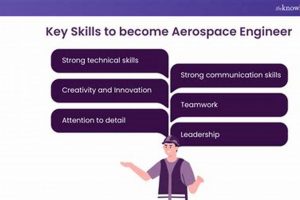
Aerospace engineering encompasses a wide spectrum of disciplines, reflecting the complex nature of designing, developing, and testing aircraft and spacecraft. This field necessitates focused expertise, leading to various concentrations for professionals seeking to contribute to specific aspects of aerospace technology. These specialized paths enable engineers to deepen their knowledge and skills in targeted areas. For example, an engineer may concentrate on aerodynamics, propulsion systems, or structural mechanics within the broader aerospace domain.
Specialization within this discipline is crucial for several reasons. It fosters innovation by allowing engineers to become experts in their respective domains, pushing the boundaries of current technological capabilities. Furthermore, concentrated expertise enhances efficiency and effectiveness in research, design, and development processes. Historically, the need for specialization has grown alongside the increasing complexity of aerospace vehicles and the demand for improved performance, safety, and sustainability.
The following sections will explore some of the prominent specializations within aerospace engineering, offering insights into their scope, challenges, and opportunities. These areas include, but are not limited to, aerodynamics, propulsion, structures, control systems, avionics, and astronautics. Each specialization plays a vital role in the overall success of aerospace endeavors.
This section provides guidance for individuals considering focused study within the field. Careful consideration of interests, skills, and career aspirations is paramount when selecting a specialization.
Tip 1: Assess Foundational Knowledge. A robust understanding of core aerospace principlessuch as fluid dynamics, thermodynamics, and structural analysisis essential. A solid foundation enables more effective adaptation to advanced concepts within any specialized area.
Tip 2: Research Emerging Technologies. Investigate rapidly evolving areas like hypersonic flight, autonomous systems, and advanced materials. Early engagement with emerging technologies can provide a competitive advantage.
Tip 3: Identify Personal Interests. Align specialization choices with genuine passions. Enthusiasm for a particular subject enhances motivation and facilitates deeper learning. For example, an interest in space exploration might lead to a specialization in astronautics.
Tip 4: Consider Career Trajectory. Examine potential career paths associated with each specialization. Research industry demands and long-term growth prospects. A specialization in avionics, for instance, may offer diverse opportunities in both military and commercial aviation.
Tip 5: Pursue Relevant Internships. Gain practical experience through internships or research opportunities within chosen areas. Hands-on involvement provides valuable insights and networking connections. Working on a project involving computational fluid dynamics can solidify understanding of aerodynamic principles.
Tip 6: Develop Cross-Disciplinary Skills. Cultivate skills applicable across multiple specializations, such as programming, data analysis, and project management. A well-rounded skillset increases adaptability and collaborative potential.
Tip 7: Seek Mentorship. Connect with experienced professionals in relevant fields. Mentors can offer valuable guidance, career advice, and industry insights. Seek out faculty members or alumni with expertise in your areas of interest.
Selecting the right path requires careful planning, research, and self-reflection. By thoughtfully considering these tips, aspiring aerospace engineers can make informed decisions that align with their individual goals and contribute meaningfully to the advancement of aerospace technology.
The following sections will further explore the diverse range of specializations to solidify the reader’s understanding.
1. Aerodynamics

Aerodynamics, the study of air in motion and its interaction with solid objects, constitutes a foundational pillar within aerospace engineering. Its importance stems from its direct influence on aircraft and spacecraft performance characteristics, including lift, drag, stability, and control. These performance parameters directly affect flight efficiency, range, and maneuverability. Consequently, specialized knowledge in aerodynamics is vital for professionals designing and optimizing aerospace vehicles.
The connection between aerodynamics and specialized aspects of aerospace engineering is evident in various applications. For instance, the design of aircraft wings relies heavily on aerodynamic principles to generate sufficient lift at varying speeds and altitudes. Computational Fluid Dynamics (CFD), a tool heavily used by aerodynamics specialists, allows for the simulation and analysis of airflow patterns around complex geometries, enabling engineers to optimize designs for reduced drag and improved efficiency. Furthermore, the development of high-speed aircraft, such as supersonic or hypersonic vehicles, presents significant aerodynamic challenges related to shockwave formation and thermal management, necessitating specialized expertise in compressible flow and heat transfer.
A comprehensive understanding of aerodynamic principles is essential for effective design, analysis, and optimization in aerospace engineering. It enables informed decisions regarding vehicle shape, control surface design, and overall performance. This understanding is critical for addressing the complex challenges associated with both atmospheric and space flight, playing a vital role in the advancement of aerospace technology and capabilities.
2. Propulsion Systems
Propulsion systems constitute a critical area of specialization within aerospace engineering, directly influencing vehicle performance, range, and mission capabilities. Effective propulsion is the fundamental enabler for both atmospheric and space flight. The design, development, and optimization of propulsion systems require specialized knowledge in thermodynamics, fluid mechanics, combustion, and materials science. Consequently, engineers focused on propulsion systems play a central role in advancing aerospace technology. Without effective propulsion, advancements in other areas like aerodynamics or structural design become largely irrelevant, underscoring the fundamental dependency.
The impact of specialized propulsion knowledge is evident in numerous aerospace applications. For example, the development of high-efficiency jet engines for commercial aircraft has dramatically reduced fuel consumption and operational costs. Similarly, the design of rocket engines for space launch vehicles demands sophisticated understanding of combustion processes and nozzle design to maximize thrust and specific impulse. The ongoing research into advanced propulsion concepts, such as hypersonic air-breathing engines and electric propulsion systems, highlights the continual need for specialized expertise in this domain. Practical applications also include the development and use of solid-rocket boosters for shuttle launches, demonstrating the impact of advanced propulsion specialization.
In summary, propulsion systems represent a vital specialization within aerospace engineering. Their effectiveness is directly tied to the capabilities and success of flight. The challenges associated with developing efficient, reliable, and high-performance propulsion systems continue to drive innovation and demand focused expertise in related scientific and engineering disciplines. Advances in propulsion technologies remain paramount to achieving future aerospace objectives, including faster air travel, more efficient space access, and interplanetary exploration.
3. Structural Analysis

Structural analysis constitutes a critical specialization within aerospace engineering. It addresses the determination of stresses, strains, and deformations within aerospace vehicles and components subjected to various loads and environmental conditions. This specialized knowledge is essential to ensure the structural integrity, safety, and longevity of aircraft and spacecraft. Without accurate structural analysis, catastrophic failures can occur, jeopardizing missions and human lives.
- Finite Element Analysis (FEA)
FEA, a computational technique, forms a cornerstone of modern structural analysis. It involves discretizing a complex structure into smaller elements and solving equations to approximate the behavior of each element under load. This method allows engineers to simulate and predict the structural response of aircraft wings, fuselage sections, and engine components, accounting for complex geometries and material properties. For example, FEA is used extensively in the design of composite aircraft structures to optimize material layup and predict potential failure modes. The results are analyzed to make design changes ensuring structural integrity, safety and longevity.
- Material Selection and Characterization
The selection of appropriate materials is integral to structural analysis. Aerospace engineers must consider factors such as strength-to-weight ratio, fatigue resistance, corrosion resistance, and thermal properties. Specialized knowledge of material behavior under extreme conditions is crucial. For instance, in the design of hypersonic vehicles, materials capable of withstanding high temperatures and thermal stresses are required. The selection and characterization process heavily relies on rigorous testing and analysis to ensure that the chosen materials meet the performance and safety requirements.
- Load Analysis and Failure Criteria
Accurate determination of loads acting on an aerospace structure is fundamental. This includes aerodynamic loads, inertial loads, thermal loads, and pressure loads. Engineers must also apply appropriate failure criteria, such as yield strength, ultimate tensile strength, and fracture toughness, to assess the structural integrity under these loads. Consider the design of landing gear, where impact loads during landing must be accurately predicted and accounted for to prevent structural failure. Sophisticated load analysis techniques and failure criteria are essential for ensuring the structural reliability of aerospace vehicles.
- Structural Health Monitoring (SHM)
SHM involves the integration of sensors and data analysis techniques to continuously monitor the structural condition of aerospace vehicles. This allows for early detection of damage or degradation, enabling proactive maintenance and preventing catastrophic failures. For example, SHM systems can be used to monitor the growth of cracks in aircraft fuselage, providing timely alerts for necessary repairs. This aspect of structural analysis enhances safety and reduces maintenance costs by enabling condition-based maintenance strategies.
These facets of structural analysis are inherently linked to the wider scope. Each facet contributes to the overall objective of ensuring safe, efficient, and reliable operation of aerospace vehicles. The specialization’s emphasis on rigorous analysis and prediction underscores its importance in advancing aerospace technology and minimizing the risks associated with flight.
4. Control Systems

Control systems represent a crucial specialization within aerospace engineering, concerned with the design, implementation, and analysis of systems that govern the behavior of aerospace vehicles. The precise and reliable control of aircraft, spacecraft, and unmanned aerial vehicles (UAVs) is paramount for mission success and safety. This necessitates specialized knowledge in areas such as feedback control theory, dynamics, and sensor technologies.
- Flight Control Systems
Flight control systems are responsible for maintaining stability and executing pilot commands in aircraft. These systems utilize sensors to measure parameters such as airspeed, altitude, and attitude, and then employ actuators to manipulate control surfaces, such as ailerons, elevators, and rudders. Modern flight control systems often incorporate advanced control algorithms, such as model predictive control or adaptive control, to optimize performance and robustness in the presence of disturbances. An example is the fly-by-wire system in modern aircraft, which replaces mechanical linkages with electronic signals, enabling greater control authority and improved safety features.
- Guidance, Navigation, and Control (GNC) Systems
GNC systems are essential for spacecraft and missiles, providing the capability to navigate through space, reach designated targets, and maintain desired orientations. These systems integrate sensors such as inertial measurement units (IMUs), star trackers, and GPS receivers, along with sophisticated navigation algorithms and control laws. The Apollo program’s GNC system, which enabled precise lunar landings and safe return to Earth, stands as a testament to the capabilities of this specialized area. Another example can be found in the guidance systems for intercontinental ballistic missiles.
- Autonomous Control Systems
Autonomous control systems enable aerospace vehicles to operate without direct human intervention. These systems rely on advanced algorithms for perception, decision-making, and control, allowing vehicles to perform complex tasks in dynamic and uncertain environments. Autonomous control systems are increasingly important for UAVs, enabling applications such as surveillance, reconnaissance, and package delivery. An example is the autonomous flight control system in advanced drones, which allows them to navigate and avoid obstacles without human input.
- Attitude Control Systems
Attitude control systems are vital for spacecraft, ensuring that they maintain the correct orientation in space. This is crucial for tasks such as pointing scientific instruments, communicating with ground stations, and generating power from solar panels. These systems utilize sensors to measure spacecraft attitude and employ actuators, such as reaction wheels or thrusters, to make adjustments. An example of a critical application is the attitude control system for the James Webb Space Telescope, which must maintain extremely precise pointing to capture high-resolution images of distant galaxies.
The facets of control systems significantly enhance overall aerospace specialization. The continuous improvement and innovation in areas such as flight control, GNC, autonomous systems, and attitude control not only contribute to safer, more efficient, and reliable aerospace operations but also open possibilities in autonomous exploration and space missions, demonstrating the importance of specialized areas in advancing future aerospace goals.
5. Avionics

Avionics, a portmanteau of aviation and electronics, represents a crucial specialization within aerospace engineering. It encompasses the electronic systems used on aircraft, satellites, and spacecraft, which are essential for controlling, monitoring, and communicating during flight and space missions. These systems are integral to the safe and efficient operation of aerospace vehicles, necessitating highly specialized knowledge and skills.
- Navigation Systems
Navigation systems provide precise positional data and guidance for aerospace vehicles. These systems integrate sensors, such as GPS receivers, inertial measurement units (IMUs), and radar altimeters, along with sophisticated algorithms to determine the vehicle’s location, velocity, and attitude. Modern navigation systems enable automated flight paths, precision approaches, and collision avoidance. The integration of these features helps to ensure the safety and precision of flight. These specialized navigation components and techniques are essential for autonomous systems, contributing to advanced operational efficiency and safety.
- Communication Systems
Communication systems facilitate the exchange of information between aerospace vehicles and ground stations or other vehicles. These systems employ various radio frequencies and modulation techniques to transmit voice, data, and video signals. Reliable communication is critical for air traffic control, weather updates, and emergency situations. Satellite communication systems, for example, enable global connectivity for aircraft, ensuring continuous communication even over remote oceanic regions. Sophisticated coding and encryption technologies are employed to protect communications from interference or interception, further increasing the safety and privacy of flight operations.
- Electronic Warfare Systems
Electronic warfare systems provide aerospace vehicles with the capability to detect, identify, and counter enemy electronic threats. These systems include radar warning receivers, jammers, and electronic countermeasures (ECMs). They are crucial for military aircraft operating in hostile environments, enhancing survivability and mission effectiveness. An example includes systems that can detect and disrupt incoming missile guidance systems, therefore protecting the aircraft from attack. Electronic warfare systems exemplify a specific area within avionics requiring specialized knowledge of signal processing, radar technology, and threat assessment.
- Display Systems
Display systems present critical information to pilots and mission operators in a clear and intuitive manner. These systems utilize high-resolution screens, head-up displays (HUDs), and synthetic vision systems to provide real-time data on aircraft performance, navigation, and environmental conditions. Advanced display systems enhance situational awareness, reduce pilot workload, and improve decision-making. The incorporation of augmented reality (AR) technologies further enhances the pilots ability to visualize the surrounding environment, especially under adverse weather conditions. Such systems depend on specialized expertise in human-machine interface design and data visualization techniques.
Avionics significantly enhances overall aerospace specialization with continual advancements in flight and mission operations. Improvements in communication and navigation contribute to safer, more efficient, and reliable aerospace systems. These specialized areas highlight ongoing innovation and contribute to the future advancement of aerospace goals.
6. Astronautics

Astronautics, the science and engineering of space travel and exploration, represents a distinct and vital component within the broader landscape of aerospace engineering specializations. Its prominence stems from the unique challenges associated with operating vehicles and systems in the extreme environment of space. Consequently, astronautics necessitates a highly specialized skill set and knowledge base that draws upon, and extends, the principles established in other aerospace engineering disciplines. The cause-and-effect relationship is clear: the pursuit of space exploration drives the need for advanced solutions in areas such as propulsion, materials science, and life support, which in turn, fuels innovation across the entire aerospace engineering spectrum.
The practical significance of understanding astronautics lies in its direct impact on space mission success. Consider the Apollo program, a prime example of the integration of multiple aerospace specializations under the umbrella of astronautics. The program required advancements in propulsion systems for achieving lunar orbit, thermal protection systems for withstanding re-entry, and life support systems for sustaining astronauts in the vacuum of space. Similarly, contemporary missions to Mars necessitate the development of radiation shielding technologies, autonomous navigation systems, and closed-loop life support systems, all representing specialized applications of fundamental aerospace engineering principles within the astronautics domain. These examples underscore the critical interdependency between astronautics and other aerospace engineering specializations.
In conclusion, astronautics serves as both a beneficiary and a driver of innovation within aerospace engineering. Its focus on the unique demands of space exploration necessitates the application and advancement of diverse specialized knowledge. From propulsion and materials science to control systems and life support, astronautics integrates and extends the boundaries of aerospace engineering. Recognizing this interconnectedness is essential for future progress in space exploration and for the continued evolution of aerospace engineering as a whole.
Frequently Asked Questions
This section addresses common queries and misconceptions related to the various focused disciplines within aerospace engineering. The following questions and answers aim to provide clarity and guidance for individuals seeking to understand or pursue specialized careers in this field.
Question 1: What defines a specific “area of specialization” within aerospace engineering?
An area of specialization in aerospace engineering represents a concentration of expertise in a particular aspect of aerospace vehicle design, development, or operation. It entails a deeper understanding of the underlying principles and technologies within that area, often requiring advanced coursework, research, or practical experience.
Question 2: Why is specialization important in aerospace engineering?
Specialization is vital due to the increasing complexity of aerospace systems. No single engineer can possess comprehensive expertise across all aspects of aircraft and spacecraft design. Focused specialization allows engineers to become experts in their respective domains, fostering innovation and enhancing the efficiency of aerospace projects.
Question 3: How does one choose a specialization in aerospace engineering?
Selection of a specialization should be based on individual interests, aptitudes, and career goals. Students should consider their strengths in core aerospace subjects, research emerging technologies, and explore internship opportunities to gain practical experience in different areas.
Question 4: Is it possible to switch specializations later in one’s aerospace engineering career?
While challenging, switching specializations is possible with additional education, training, and experience. Demonstrating a commitment to learning new skills and a willingness to adapt to new challenges is essential for a successful transition.
Question 5: What are the career prospects associated with different areas of specialization in aerospace engineering?
Career prospects vary depending on the specific specialization and industry demand. Fields such as avionics, autonomous systems, and advanced materials are currently experiencing strong growth due to technological advancements and increasing demand for more efficient and sustainable aerospace vehicles.
Question 6: How important is continuing education and professional development in aerospace engineering specializations?
Continuing education and professional development are critical for staying current with advancements in technology and maintaining a competitive edge. Aerospace engineers should actively participate in conferences, workshops, and professional organizations to expand their knowledge and skills throughout their careers.
In summary, understanding specialization in the field is critical for those planning to pursue a specific career path, or planning for long-term growth.
Please proceed to the next section that highlights challenges and future research
Areas of Specialization in Aerospace Engineering
This article has explored the diverse landscape of focused expertise within aerospace engineering, highlighting the critical role of specializations in advancing the field. Key areas such as aerodynamics, propulsion, structural analysis, control systems, avionics, and astronautics demand concentrated knowledge and skills to ensure the safe, efficient, and innovative design and operation of aerospace vehicles. The significance of these specializations is amplified by the growing complexity of aerospace systems and the increasing demand for sustainable and high-performance solutions.
Continued investment in research and education across these specialized domains is essential for maintaining a competitive edge and addressing the evolving challenges of aerospace technology. Aspiring aerospace engineers are encouraged to carefully consider their interests and aptitudes when selecting a specialization, recognizing that focused expertise is paramount for contributing to future breakthroughs in air and space travel.