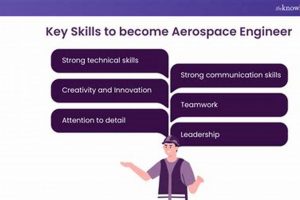
A concentrated academic path combines the principles of aircraft and spacecraft design and manufacturing with the broader field of mechanical systems. This interdisciplinary approach equips individuals with expertise applicable to diverse engineering challenges. For example, a student might learn about fluid dynamics in the context of both jet propulsion and hydraulic systems.
This specialized education fosters a versatile skillset, enhancing career prospects in industries ranging from aerospace to automotive and beyond. The historical context of these fields reveals a growing convergence, with advancements in materials science and computational modeling benefiting both aerospace and mechanical engineering applications. This allows a better understanding of complex systems and the design of more efficient and innovative technologies.
The following sections delve into specific career paths, skill development, and the curriculum structure associated with this comprehensive engineering program. Subsequent sections will discuss potential research opportunities and the impact of this academic choice on long-term professional development.
Guidance for Pursuing an Aerospace and Mechanical Engineering Double Major
Navigating the demands of a dual degree in aerospace and mechanical engineering requires diligent planning and strategic execution. The following guidance offers insights into optimizing academic performance and professional preparedness.
Tip 1: Prioritize Foundational Knowledge: Establish a firm grasp of fundamental principles in mathematics, physics, and computer science. These disciplines underpin both aerospace and mechanical engineering concepts; a strong foundation streamlines comprehension of advanced topics.
Tip 2: Strategic Course Sequencing: Coordinate course selection to leverage synergies between the two disciplines. For instance, completing introductory thermodynamics prior to aerospace propulsion can provide a more cohesive understanding of energy transfer principles.
Tip 3: Seek Interdisciplinary Projects: Actively pursue projects that integrate aerospace and mechanical engineering principles. Design projects involving robotics, autonomous systems, or advanced materials offer valuable practical experience.
Tip 4: Develop Simulation Proficiency: Master industry-standard simulation software such as ANSYS, MATLAB, and SolidWorks. Proficiency in these tools is crucial for analyzing complex systems and validating design solutions.
Tip 5: Cultivate Strong Communication Skills: Hone written and oral communication skills through technical report writing and presentations. Effective communication is essential for collaborating within engineering teams and conveying complex information to stakeholders.
Tip 6: Network Strategically: Engage with industry professionals through internships, conferences, and professional organizations such as AIAA and ASME. Networking expands career opportunities and provides valuable insights into industry trends.
Tip 7: Maintain a Balanced Curriculum: Ensure a balanced distribution of coursework across both disciplines to avoid overwhelming focus on one area. A well-rounded academic profile demonstrates versatility and adaptability.
Consistent application of these strategies contributes to enhanced academic performance, professional development, and career readiness for individuals pursuing an aerospace and mechanical engineering double major.
The subsequent section will address common challenges encountered during the pursuit of this dual degree and strategies for overcoming them.
1. Curriculum Integration

Curriculum Integration is crucial for students pursuing an aerospace and mechanical engineering double major. This approach ensures that the knowledge and skills acquired in one discipline reinforce and complement those learned in the other, creating a more comprehensive and efficient educational experience. The careful alignment of course content mitigates redundancy and highlights the synergies between these distinct yet related engineering fields.
- Fluid Dynamics Synergy
A well-integrated curriculum leverages the common ground of fluid dynamics. While aerospace students apply these principles to aerodynamics and propulsion, mechanical engineering students use them in thermal systems and fluid machinery. A unified approach to teaching fluid dynamics allows students to see how the same fundamental laws govern diverse applications, enriching their understanding.
- Materials Science Interdependence
Both aerospace and mechanical engineering rely heavily on materials science. Curriculum integration involves examining the properties and applications of various materials in both fields. For example, the study of composite materials can be presented in a way that highlights their use in aircraft structures (aerospace) and lightweight automotive components (mechanical), fostering a deeper appreciation for material selection criteria.
- Control Systems Overlap
Control systems are essential in both aerospace and mechanical engineering, used in areas like flight control and robotics. Integrated curricula demonstrate the shared theoretical foundations, like feedback control and stability analysis, while also addressing the unique challenges of each domain, such as atmospheric disturbances in aerospace and mechanical vibrations in machinery.
- Thermodynamics Applications
Thermodynamics is fundamental to both fields. An integrated curriculum emphasizes energy conversion principles applicable to both aerospace propulsion systems (e.g., gas turbines, rocket engines) and mechanical power generation systems (e.g., internal combustion engines, steam turbines). This approach helps students develop a unified understanding of thermodynamic cycles and their optimization in various engineering contexts.
By intentionally designing a curriculum that emphasizes the overlap and interdependence of core concepts, students pursuing a double major in aerospace and mechanical engineering gain a competitive advantage. This integrated approach fosters a more holistic understanding of engineering principles, preparing graduates for innovative problem-solving and leadership roles across a range of industries.
2. Multidisciplinary Skills

The pursuit of a double major in aerospace and mechanical engineering necessitates the development of a broad range of skills that extend beyond the traditional boundaries of each discipline. These multidisciplinary skills are crucial for addressing complex engineering challenges that demand integrated solutions.
- Advanced Materials Synthesis and Characterization
This skillset enables engineers to design and fabricate materials with tailored properties for specific applications. For example, developing lightweight, high-strength composites for aircraft structures requires expertise in polymer chemistry, materials science, and manufacturing processes. This directly affects fuel efficiency and aircraft performance.
- Computational Modeling and Simulation
Proficiency in computational tools such as finite element analysis (FEA) and computational fluid dynamics (CFD) is essential for simulating and optimizing engineering designs. In aerospace, CFD can be used to predict aerodynamic performance, while FEA assesses structural integrity under various loads. Mechanical engineers utilize these skills for thermal analysis and machine design, reflecting the versatility of these methods.
- Control Systems Design and Implementation
Designing and implementing control systems requires a blend of theoretical knowledge and practical experience. This includes expertise in feedback control, signal processing, and embedded systems programming. Applications range from flight control systems in aircraft to robotic automation in manufacturing plants. Proficiency in this area contributes to the development of safer, more efficient, and autonomous systems.
- Systems Engineering and Project Management
Managing complex engineering projects requires a systems-level perspective and strong project management skills. This includes the ability to define requirements, allocate resources, manage risks, and coordinate multidisciplinary teams. Successful implementation of large-scale aerospace or mechanical engineering projects hinges on effective systems engineering principles.
The convergence of these skills empowers graduates to tackle intricate engineering problems, contributing to innovation in both aerospace and mechanical engineering fields. This comprehensive skill set positions individuals for leadership roles and facilitates the development of groundbreaking technologies.
3. Career Versatility

The combination of aerospace and mechanical engineering provides graduates with a uniquely broad skillset, translating into exceptional career versatility across multiple industries. This advantage stems from the comprehensive knowledge base acquired, encompassing both specialized and fundamental engineering principles.
- Aerospace Industry Roles
Graduates find opportunities in aircraft design and manufacturing, spacecraft development, and propulsion systems engineering. They may work on projects ranging from commercial airliners to satellites, contributing to the advancement of air and space travel. For example, roles may include designing the aerodynamic surfaces of a new aircraft or developing propulsion systems for space exploration.
- Mechanical Engineering Applications
The mechanical engineering component opens doors to careers in fields such as automotive engineering, manufacturing, and robotics. Tasks can involve designing and optimizing mechanical systems, developing automated manufacturing processes, or creating robotic solutions for diverse applications. Consider the design of engine components for automobiles or the development of robotic arms for assembly lines.
- Cross-Disciplinary Opportunities
The combination of these disciplines fosters unique roles at the intersection of aerospace and mechanical engineering. Examples include developing drone technology, designing and manufacturing advanced materials for aerospace applications, or creating simulation software for engineering analysis. This adaptability highlights the value of this interdisciplinary education.
- Research and Development
Both aerospace and mechanical engineering fields benefit from ongoing research and development efforts. Graduates may pursue careers in academic or industrial research, contributing to the advancement of knowledge and the development of new technologies. Work might involve experimental testing of new materials or theoretical modeling of complex engineering systems.
The career versatility stemming from an aerospace and mechanical engineering double major empowers graduates to pursue a wider range of opportunities, adapting their skills to evolving industry needs and contributing to innovation across multiple sectors. The convergence of these fields creates a foundation for sustained professional growth and leadership.
4. Systems Engineering
Systems Engineering is integral to the successful implementation of projects undertaken by individuals with expertise in both aerospace and mechanical engineering. This holistic approach focuses on defining customer needs and required functionality early in the development cycle, documenting requirements, and then proceeding with design synthesis and system validation while considering the complete problem. The interconnectedness of subsystems within aerospace and mechanical systems necessitates a comprehensive understanding of how changes in one area can affect the entire system. For example, modifications to an aircraft’s wing design (aerospace) will have direct implications for stress distribution throughout the airframe (mechanical), demanding integrated analysis and coordinated design efforts. This exemplifies how Systems Engineering is not merely a procedural overlay but rather a fundamental component of the problem-solving approach.
Practical applications of Systems Engineering within this context are manifold. In the design of a robotic arm for space station maintenance, a Systems Engineering approach dictates that the mechanical arm’s structural integrity, control systems, power requirements, and interaction with the external environment must be considered concurrently. Similarly, the development of a new generation of jet engines requires a systems-level understanding of aerodynamics, thermodynamics, materials science, and control systems to optimize performance and minimize environmental impact. Without Systems Engineering, there is a risk of sub-optimization of individual components or subsystems, ultimately leading to compromised overall system performance and increased development costs.
In summary, Systems Engineering provides the framework that allows engineers with backgrounds in aerospace and mechanical engineering to effectively manage complexity, ensure interoperability, and deliver integrated solutions that meet performance, reliability, and cost targets. Challenges include managing ambiguous requirements, integrating diverse teams, and mitigating unforeseen technical risks. However, the application of rigorous Systems Engineering principles remains essential for navigating these challenges and achieving success in the development of advanced aerospace and mechanical systems.
5. Simulation Expertise

Simulation expertise is a cornerstone skill for individuals pursuing a double major. The capacity to model and analyze complex systems before physical implementation is critical for optimizing designs, predicting performance, and mitigating potential failures. This expertise reduces development time and costs while enhancing system reliability and safety.
- Computational Fluid Dynamics (CFD)
CFD simulations allow engineers to model fluid flow around aircraft wings, through engine components, or within hydraulic systems. Aerospace applications include aerodynamic analysis and propulsion system design. Mechanical applications encompass thermal management and fluid machinery optimization. For example, CFD is used to optimize airfoil shapes for reduced drag and increased lift or to design efficient cooling systems for high-performance electronics. Accurate simulations lead to improved performance and fuel efficiency.
- Finite Element Analysis (FEA)
FEA enables engineers to assess the structural integrity of components and systems under various loading conditions. This is crucial for designing lightweight yet robust aerospace structures and mechanical components. Aerospace engineers use FEA to ensure aircraft wings can withstand aerodynamic forces, while mechanical engineers analyze the stresses in engine parts or machine tools. Accurate FEA results in safer, more reliable designs that minimize material usage and weight.
- System-Level Modeling
System-level modeling involves simulating the interactions between different components and subsystems within a larger system. This allows engineers to predict the overall performance and behavior of complex systems. Aerospace examples include modeling the dynamics of a spacecraft attitude control system, while mechanical examples include simulating the behavior of an entire manufacturing plant. Such modeling helps identify potential bottlenecks and optimize system-wide performance.
- Hardware-in-the-Loop (HIL) Simulation
HIL simulation integrates physical hardware components with simulated environments to test control systems and software in realistic conditions. This is vital for aerospace applications such as testing flight control systems and mechanical applications such as testing engine control units. For example, HIL simulation can be used to test an aircraft’s autopilot system by connecting the physical autopilot computer to a simulated aircraft model, allowing engineers to identify and correct any software or hardware issues before actual flight testing.
The ability to effectively utilize simulation tools is essential for engineers engaged in the design, analysis, and optimization of complex aerospace and mechanical systems. Simulation expertise allows students to explore a wider range of design options, identify potential problems early in the design process, and ultimately create safer, more efficient, and more reliable products.
6. Design Optimization
Design Optimization, a critical facet of engineering, plays a pivotal role for professionals with a background in both aerospace and mechanical engineering. It involves the systematic process of identifying the best possible design solution from a set of alternatives, subject to specific constraints and objectives. This practice is integral to enhancing the performance, efficiency, and reliability of engineered systems.
- Aerodynamic Efficiency and Fuel Consumption
In aerospace engineering, design optimization directly influences aerodynamic efficiency. For instance, optimizing an aircraft’s wing geometry reduces drag, leading to lower fuel consumption and increased range. Utilizing computational fluid dynamics (CFD) simulations, engineers analyze airflow patterns and iteratively refine wing designs to minimize resistance and maximize lift. This process directly affects the aircraft’s economic viability and environmental footprint.
- Structural Integrity and Weight Reduction
Mechanical engineers apply design optimization principles to enhance structural integrity while minimizing weight. In automotive engineering, optimizing chassis designs ensures structural stability during collisions while reducing overall vehicle mass, improving fuel efficiency and handling. Finite element analysis (FEA) is employed to simulate stress distributions and identify areas where material can be reduced without compromising structural safety.
- Thermal Management and Heat Dissipation
Efficient thermal management is crucial in both aerospace and mechanical systems. Design optimization techniques are used to enhance heat dissipation in electronic components and engines. For example, optimizing heat sink designs in spacecraft electronics prevents overheating and ensures reliable operation in extreme environments. Similarly, optimizing engine cooling systems in automobiles prevents engine damage and prolongs operational life. CFD and thermal analysis software are utilized to model heat transfer and optimize cooling solutions.
- Control Systems Performance and Stability
Design optimization is vital for achieving optimal control systems performance and stability in both aerospace and mechanical applications. Aerospace engineers optimize control algorithms for aircraft flight control systems to enhance stability and maneuverability. Mechanical engineers optimize control strategies for robotic systems to improve accuracy and responsiveness. Simulation and modeling tools are employed to analyze system dynamics and optimize control parameters.
The facets of Design Optimization demonstrate its widespread applicability across aerospace and mechanical engineering domains. A comprehensive understanding of these principles, coupled with proficiency in simulation and analysis tools, is crucial for individuals with a double major to engineer innovative and efficient solutions that meet the evolving demands of these industries.
7. Research Opportunities
The pursuit of a dual degree significantly enhances access to diverse and impactful research endeavors. The interdisciplinary nature of this academic path allows students to explore a wide spectrum of research areas, bridging the gap between theoretical concepts and practical applications in both fields. Participation in research projects cultivates critical thinking, problem-solving abilities, and innovationskills highly valued in both academic and industrial settings.
For example, students might engage in research focused on developing lightweight composite materials for aircraft structures, a project integrating materials science (mechanical) with aerospace design principles. Alternatively, research could involve the design and control of robotic systems for space exploration, combining robotics (mechanical) with spacecraft engineering (aerospace). These examples highlight the synergistic potential of the dual degree, providing unique opportunities to contribute to cutting-edge advancements. Moreover, involvement in research often leads to publications in peer-reviewed journals and presentations at conferences, enhancing a graduate’s academic profile and career prospects.
In conclusion, the availability of extensive research opportunities is a significant benefit for students pursuing an aerospace and mechanical engineering double major. These experiences provide invaluable hands-on training, fostering creativity and technical proficiency. While challenges such as balancing research with demanding coursework exist, the skills and knowledge gained through research are essential for success in these dynamic and competitive fields, preparing students for leadership roles in both academia and industry.
Frequently Asked Questions Regarding an Aerospace and Mechanical Engineering Double Major
The following addresses common inquiries about this academic path, providing clarity on requirements, benefits, and career prospects.
Question 1: Is an aerospace and mechanical engineering double major significantly more demanding than a single major in either field?
Yes, the curriculum encompasses a broader range of coursework, requiring more dedication and efficient time management skills. The course load is typically heavier, potentially extending the time required for graduation.
Question 2: What are the primary advantages of pursuing an aerospace and mechanical engineering double major?
The combination creates a versatile skill set applicable to a wider array of engineering challenges. Graduates possess expertise relevant to diverse industries, enhancing career opportunities and adaptability to evolving technological demands.
Question 3: Are there specific admission requirements or prerequisites for an aerospace and mechanical engineering double major?
Admission criteria vary by institution. Typically, a strong foundation in mathematics, physics, and related sciences is essential. Consult the specific program requirements of the intended university.
Question 4: What career paths are commonly pursued by graduates with an aerospace and mechanical engineering double major?
Career opportunities span aerospace, automotive, manufacturing, and related sectors. Potential roles include design engineering, research and development, systems integration, and project management. The breadth of knowledge facilitates entry into specialized or cross-disciplinary positions.
Question 5: How does an aerospace and mechanical engineering double major prepare individuals for advanced research or graduate studies?
The extensive curriculum fosters a deep understanding of fundamental engineering principles and advanced concepts. This provides a solid foundation for pursuing graduate degrees in either aerospace or mechanical engineering, as well as interdisciplinary fields.
Question 6: What key skills are developed through an aerospace and mechanical engineering double major program?
Students cultivate analytical thinking, problem-solving capabilities, computer-aided design proficiency, and project management expertise. Effective communication and teamwork skills are also emphasized, preparing graduates for collaborative work environments.
In summary, a double major offers considerable advantages, but requires significant commitment and strategic planning.
The next section delves into real-world applications and case studies demonstrating the impact of this educational path.
Aerospace and Mechanical Engineering Double Major
This exposition has explored the breadth and depth of an aerospace and mechanical engineering double major. It is established that this rigorous academic path demands significant dedication, strategic planning, and a commitment to mastering a diverse range of engineering principles. The advantages of this program manifest in enhanced career versatility, multidisciplinary skill sets, and a preparedness for both industrial and research endeavors. The curriculum necessitates a comprehensive understanding of core concepts, simulation expertise, and an appreciation for systems-level design.
The decision to pursue an aerospace and mechanical engineering double major should not be taken lightly. However, for individuals possessing a passion for engineering innovation and a desire to tackle complex challenges, this path provides a solid foundation for a successful and impactful career. Continued advancements in technology and engineering methodologies ensure that the need for versatile, well-rounded engineers will only increase, solidifying the enduring significance of this interdisciplinary approach.