The pursuit of a career focused on the design, development, testing, and production of aircraft and spacecraft requires a strong foundation in mathematics, science, and engineering principles. This endeavor encompasses a broad range of specializations, from aerodynamics and propulsion systems to structural mechanics and control systems. Success hinges on a rigorous academic preparation and a dedication to continuous learning and innovation within a rapidly evolving technological landscape.
A focus on the creation of innovative aerial and space vehicles offers numerous advantages. It contributes to advancements in air travel, space exploration, and national defense. Furthermore, it stimulates economic growth by fostering technological breakthroughs and creating high-skilled employment opportunities. Historically, this field has been pivotal in pushing the boundaries of human achievement and shaping our understanding of the universe.
The pathway to this profession involves several key stages. These include obtaining a relevant educational background, acquiring practical experience through internships or research opportunities, developing essential technical skills, and cultivating the personal attributes necessary for success. The following sections will delve into these critical aspects in greater detail.
Guidance for Aspiring Professionals in Aerospace Engineering
The following recommendations serve as a pragmatic guide for individuals seeking a successful career in aerospace engineering. Adherence to these principles will enhance preparedness and increase the likelihood of achieving professional objectives.
Tip 1: Prioritize a Robust Educational Foundation: Obtain a Bachelor of Science degree in aerospace engineering or a closely related field, such as mechanical engineering or physics. Emphasize courses in mathematics, physics, aerodynamics, propulsion, and structural analysis. Advanced degrees, such as a Master of Science or Ph.D., can further specialize expertise and open doors to research-oriented roles.
Tip 2: Secure Practical Experience Through Internships: Actively seek internships at aerospace companies, government agencies (e.g., NASA), or research laboratories. Hands-on experience provides invaluable insights into real-world engineering challenges and allows for the application of theoretical knowledge.
Tip 3: Develop Proficiency in Computer-Aided Design (CAD) Software: Master industry-standard CAD software packages (e.g., CATIA, SolidWorks, AutoCAD) for designing and modeling aircraft and spacecraft components. Proficiency in finite element analysis (FEA) software is also highly beneficial for structural simulations and analysis.
Tip 4: Cultivate Strong Analytical and Problem-Solving Skills: Aerospace engineering demands rigorous analytical capabilities. Develop the ability to identify, analyze, and solve complex engineering problems using critical thinking and systematic approaches. Practice applying theoretical knowledge to practical scenarios.
Tip 5: Enhance Communication and Teamwork Abilities: Effective communication is crucial for collaborating with engineers, technicians, and other stakeholders. Develop strong written and oral communication skills, and learn to work effectively in multidisciplinary teams.
Tip 6: Maintain a Continuous Learning Mindset: The aerospace industry is constantly evolving. Stay abreast of the latest technological advancements by reading industry publications, attending conferences, and pursuing continuing education opportunities. Specialization in a niche area can further enhance career prospects.
Tip 7: Consider Professional Certification: Pursuing professional certifications, such as the Professional Engineer (PE) license, can demonstrate competence and commitment to the profession. This often requires passing a rigorous examination and meeting specific experience requirements.
Following these guidelines provides a solid framework for aspiring aerospace engineers. The emphasis on education, practical experience, and continuous professional development is paramount to long-term success and contribution to this dynamic field.
The subsequent section will address the career opportunities and prospects within the aerospace engineering sector.
1. Rigorous Academic Education

A foundation of rigorous academic education is indispensable for individuals aspiring to the field of aerospace engineering. It provides the theoretical framework and analytical skills necessary to address the complex challenges inherent in the design, development, and operation of aircraft and spacecraft. This education forms the bedrock upon which practical experience and specialized knowledge are built.
- Mathematics Proficiency
A deep understanding of calculus, differential equations, linear algebra, and numerical methods is essential. These mathematical tools are used extensively in modeling aerodynamic forces, analyzing structural stresses, and designing control systems. For example, finite element analysis, a crucial method for predicting the structural integrity of aircraft components, relies heavily on linear algebra and numerical solutions to partial differential equations.
- Physics Principles
A strong grounding in classical mechanics, thermodynamics, electromagnetism, and fluid mechanics is critical. These principles govern the behavior of aircraft and spacecraft in flight. For example, understanding Bernoulli’s principle is fundamental to designing efficient airfoil shapes for aircraft wings. Similarly, the principles of thermodynamics are crucial for designing efficient propulsion systems, such as jet engines and rocket engines.
- Aerospace Engineering Core Courses
Specific aerospace engineering courses, such as aerodynamics, propulsion, structural analysis, and control systems, provide specialized knowledge essential for the profession. Aerodynamics coursework explores the behavior of air flowing around aircraft, while propulsion courses cover the principles of jet and rocket propulsion. Structural analysis focuses on ensuring the integrity and safety of aircraft and spacecraft structures, and control systems engineering develops methods to maintain stability and control during flight.
- Computational Skills
Proficiency in programming languages like Python, MATLAB, and C++ is becoming increasingly important. These languages are used for data analysis, simulation, and modeling in aerospace engineering. For instance, computational fluid dynamics (CFD) software, which simulates airflow around aircraft, requires strong programming skills to set up and analyze the simulations. Similarly, control systems engineers use programming to implement flight control algorithms.
The facets outlined above represent the fundamental components of a rigorous academic education. Successful completion of an accredited aerospace engineering program signifies mastery of these core competencies, enabling graduates to effectively contribute to the field. The combination of robust theoretical knowledge and practical skills acquired through such programs is essential for navigating the complexities of aerospace engineering projects and contributing to technological advancements in the industry. This knowledge base is subsequently enhanced through practical experience and continuous professional development.
2. Practical Experience Acquisition

The pursuit of a career in aerospace engineering is critically dependent on the acquisition of practical experience. This experience serves as a bridge between theoretical knowledge gained through academic study and the real-world application of engineering principles. Without practical application, the value of theoretical understanding is significantly diminished. This component of professional development is arguably the primary differentiator between a knowledgeable graduate and a competent, contributing engineer. The ability to translate equations and concepts into tangible solutions and designs is essential for success in the aerospace sector.
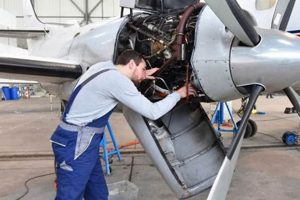
Practical experience takes various forms, most notably internships, co-op programs, and research opportunities. Internships at aerospace companies, government agencies like NASA, or research institutions provide exposure to the design, testing, and manufacturing processes of aircraft and spacecraft. Examples include participation in wind tunnel testing to validate aerodynamic performance, involvement in structural analysis projects using finite element analysis software, or contribution to the development of flight control systems. These experiences provide invaluable insights into the challenges and realities of aerospace engineering, fostering a deeper understanding of the practical considerations that must be accounted for in any engineering endeavor. Furthermore, such experiences often facilitate the development of essential soft skills, such as teamwork, communication, and problem-solving in a professional environment. Involvement in university-led research projects involving aircraft design or rocket propulsion offers similar benefits.
The successful integration of practical experience with a solid academic foundation is paramount for aspiring aerospace engineers. While theoretical knowledge provides the framework, practical experience provides the context and application. Overcoming the inherent challenges of translating theory into practice, such as dealing with real-world constraints, uncertainty, and incomplete data, are critical components of professional growth. The capacity to learn from mistakes, adapt to changing circumstances, and work effectively in collaborative teams is significantly enhanced through practical engagement. Ultimately, consistent investment in practical experience acquisition contributes to a more complete and effective skillset, essential for long-term success and impactful contribution to the broader field of aerospace engineering. The transition from novice to expert is not solely dependent on theoretical understanding but significantly influenced by practical application.
3. Technical Proficiency Development

Technical proficiency development is a cornerstone of a successful trajectory in aerospace engineering. It represents the continuous acquisition and refinement of specialized skills, tools, and knowledge required to address the intricate challenges encountered in the design, analysis, and implementation of aerospace systems. These proficiencies dictate the effectiveness with which an engineer can contribute to projects and drive innovation within the field.
- Computer-Aided Design (CAD) and Modeling Expertise
Mastery of CAD software (e.g., CATIA, SolidWorks, AutoCAD) is indispensable for creating detailed 3D models and engineering drawings of aerospace components and systems. This proficiency extends beyond basic modeling to include advanced techniques such as parametric design, surface modeling, and assembly management. For instance, an aerospace engineer might use CATIA to design a complex aircraft wing structure, considering aerodynamic performance, structural integrity, and manufacturing constraints. The ability to translate conceptual designs into precise digital models is paramount for effective collaboration and efficient manufacturing.
- Computational Fluid Dynamics (CFD) and Finite Element Analysis (FEA)
CFD and FEA are powerful simulation tools that enable engineers to analyze the behavior of fluids and structures under various operating conditions. Proficiency in CFD software (e.g., ANSYS Fluent, OpenFOAM) allows for the prediction of aerodynamic forces, heat transfer, and fluid-structure interactions. FEA software (e.g., ANSYS Mechanical, Abaqus) enables the analysis of stress, strain, and deformation in aerospace structures. For example, an engineer could use CFD to simulate airflow around an aircraft fuselage to optimize its aerodynamic performance and reduce drag. Similarly, FEA could be used to analyze the structural integrity of a rocket nozzle under extreme thermal and pressure loads. These simulations provide critical insights for design optimization and validation.
- Programming and Scripting Languages
Proficiency in programming languages such as Python, MATLAB, and C++ is essential for data analysis, simulation, and control system development. Python is widely used for data processing, automation, and machine learning applications. MATLAB is a powerful tool for numerical computation, simulation, and algorithm development. C++ is often used for real-time control systems and high-performance computing applications. For example, an engineer might use Python to analyze flight test data to evaluate aircraft performance or develop custom scripts to automate repetitive tasks. MATLAB can be used to simulate the behavior of a flight control system and optimize its parameters. C++ is often used to implement embedded software for aircraft avionics systems.
- Materials Science and Manufacturing Processes
A strong understanding of materials science and manufacturing processes is crucial for selecting appropriate materials and designing manufacturable aerospace components. This includes knowledge of the properties of various materials (e.g., metals, composites, ceramics) and the manufacturing techniques used to fabricate aerospace structures (e.g., machining, welding, additive manufacturing). For example, an engineer might need to select a specific type of aluminum alloy for an aircraft fuselage based on its strength-to-weight ratio, corrosion resistance, and cost. Furthermore, knowledge of additive manufacturing techniques can enable the creation of complex and lightweight aerospace components, optimizing performance and reducing manufacturing costs.
The facets detailed above collectively underscore the importance of technical proficiency development for an aspiring aerospace engineer. They demonstrate that academic knowledge must be supplemented with practical skills and expertise to effectively contribute to the aerospace industry. The continuous pursuit of technical expertise is essential to remain competitive and adapt to the evolving demands of this dynamic field. As technology advances, engineers must be proactive in acquiring new skills and embracing innovative approaches to problem-solving.
4. Analytical Skill Enhancement

Analytical skill enhancement is integral to the development of competent aerospace engineers. This facet is not merely a desirable attribute but a fundamental requirement for success in a field characterized by complex systems, rigorous performance standards, and stringent safety regulations. The ability to dissect complex problems, identify underlying causes, and formulate effective solutions constitutes a core competency for professionals in this domain. Deficiencies in analytical capabilities directly impede an engineer’s capacity to design, test, and troubleshoot aerospace systems effectively.
The analytical process begins with problem definition and data collection, followed by critical evaluation of available information. For example, when encountering an anomaly during flight testing, an aerospace engineer must meticulously analyze flight data, sensor readings, and system parameters to identify the root cause of the issue. This often necessitates the application of statistical analysis, mathematical modeling, and simulation techniques. The accuracy and efficiency of this analytical process directly impact the timely resolution of the problem and the overall safety of the aircraft. Similarly, in the design phase, analytical skills are crucial for optimizing aerodynamic performance, ensuring structural integrity, and minimizing weight. Engineers must evaluate various design options, assess their trade-offs, and make informed decisions based on sound analytical reasoning.
In conclusion, the cultivation of strong analytical skills is non-negotiable for aspiring aerospace engineers. This skill set directly influences the ability to address complex technical challenges, make informed decisions, and contribute to the advancement of the field. While theoretical knowledge and practical experience are undoubtedly important, analytical proficiency provides the critical lens through which these elements are effectively applied. Ongoing investment in analytical skill development is essential for maintaining competence and driving innovation in the aerospace sector.
5. Continuous Learning Commitment

The aerospace engineering landscape is characterized by relentless technological advancement and evolving regulatory standards. Consequently, a continuous learning commitment is not merely beneficial, but fundamentally necessary for sustained competence and professional growth. Failure to engage in ongoing learning results in professional stagnation and diminished ability to contribute meaningfully to the field. The rapid emergence of new materials, propulsion systems, avionics, and manufacturing techniques necessitates a proactive approach to knowledge acquisition.
The commitment manifests in several ways, including active participation in professional development courses, attendance at industry conferences and workshops, engagement with technical publications, and pursuit of advanced degrees or certifications. For example, an engineer specializing in aircraft structures might pursue continuing education courses on composite materials or additive manufacturing techniques to remain current with industry best practices. Similarly, staying informed about evolving aviation regulations, such as those pertaining to unmanned aerial vehicles (UAVs), is crucial for engineers involved in their design and operation. The advent of sustainable aviation fuels (SAF) and electric propulsion systems also necessitates a continuous learning approach to understand their implications on aircraft design and performance.
In summary, the commitment to continuous learning is inextricably linked to long-term success in aerospace engineering. The field’s dynamic nature demands a proactive approach to knowledge acquisition and skill development. Maintaining currency with technological advancements and regulatory changes ensures that engineers remain effective, innovative, and capable of addressing the complex challenges facing the aerospace industry. The consequences of neglecting continuous learning extend beyond individual career prospects, potentially impacting the safety, efficiency, and environmental sustainability of aerospace systems.
Frequently Asked Questions Regarding a Career in Aerospace Engineering
The following addresses common inquiries and misconceptions pertaining to the path to becoming an aerospace engineer. The information is intended to provide clear and concise answers to assist aspiring professionals in making informed decisions.
Question 1: Is a Master’s degree necessary to pursue a career as an aerospace engineer?
While a Bachelor’s degree is typically the minimum requirement for entry-level positions, a Master’s degree can significantly enhance career prospects and open doors to more specialized roles, particularly in research and development. Furthermore, some advanced positions may require a Master’s or Doctoral degree.
Question 2: What are the most important skills for an aerospace engineer to possess?
Critical skills include a strong foundation in mathematics and physics, proficiency in computer-aided design (CAD) and simulation software, analytical problem-solving abilities, effective communication skills, and the capacity to work collaboratively in multidisciplinary teams. Adaptability and a commitment to continuous learning are also essential.
Question 3: Are internships essential for gaining employment in the aerospace industry?
Internships provide invaluable practical experience and exposure to real-world engineering challenges. They are highly recommended, as they demonstrate a candidate’s ability to apply theoretical knowledge and contribute to engineering projects. Many employers prioritize candidates with prior internship experience.
Question 4: What is the typical career progression for an aerospace engineer?
Entry-level positions typically involve assisting senior engineers with design, analysis, and testing tasks. With experience, engineers can progress to roles with greater responsibility, such as project lead, technical specialist, or engineering manager. Further career advancement may involve pursuing management roles or specializing in a specific area of expertise.
Question 5: What are the most common areas of specialization within aerospace engineering?
Common areas of specialization include aerodynamics, propulsion, structural analysis, control systems, avionics, and space systems engineering. Each specialization requires a focused understanding of specific engineering principles and applications.
Question 6: Is it possible to transition into aerospace engineering from a different engineering discipline?
While a degree in aerospace engineering is preferred, individuals with strong backgrounds in related fields, such as mechanical engineering, electrical engineering, or physics, can transition into aerospace engineering roles. This typically requires acquiring additional knowledge and skills through coursework, professional development, or on-the-job training.
In summary, becoming a successful aerospace engineer demands rigorous education, continuous skill development, and a proactive approach to career advancement. The information provided offers a starting point for understanding the complexities of this challenging and rewarding profession.
The subsequent section will provide a consolidated checklist to aid in planning your career as an aerospace engineer.
Achieving a Career in Aerospace Engineering
This exploration has detailed the multifaceted pathway for how to be a aerospace engineer. It necessitates a commitment to academic rigor, practical experience, continuous skill development, and unwavering dedication to the profession’s evolving demands. Mastery of fundamental principles, proficiency in specialized software, and a proactive approach to learning are essential components of a successful career.
The aerospace field presents significant challenges and opportunities for innovation. A persistent focus on excellence, coupled with a dedication to advancing the boundaries of aerospace technology, remains paramount. The future of air and space travel relies on the expertise and dedication of skilled professionals equipped to meet the demands of this dynamic sector.