Aerospace engineering, a multifaceted discipline, encompasses numerous specialized areas of focus. These areas represent concentrations of knowledge and skill within the broader field, allowing engineers to develop expertise in specific aspects of aircraft and spacecraft design, development, and operation. Examples include aerodynamics, which studies the motion of air and its interaction with solid objects; propulsion, focusing on the systems that generate thrust for flight; and structural engineering, concerned with the integrity and strength of aerospace vehicles.
The specialization inherent in these areas is critical for advancing the field. By concentrating efforts on distinct aspects of aerospace technology, engineers can achieve deeper understanding and develop innovative solutions to complex challenges. This specialization has contributed to significant advancements in aircraft efficiency, spacecraft capabilities, and overall aerospace safety. Historically, the increasing complexity of aerospace systems has necessitated this division of labor and fostered the growth of distinct expertises.
This article will delve into some of the key areas of specialization within this engineering discipline. Exploration of these divisions will provide a deeper appreciation for the breadth and depth of knowledge required to design, build, and operate the sophisticated aerospace vehicles of today and tomorrow. The discussion will highlight the principles, applications, and recent advancements in several prominent concentrations.
Gaining expertise within the different focus areas requires a strategic approach to education and career development. Aspiring engineers should consider these recommendations to maximize their potential for success in their chosen area.
Tip 1: Focus Early on Foundational Knowledge: A strong understanding of mathematics, physics, and computer science is essential, regardless of chosen specialization. A robust foundation will enable effective application of advanced concepts later in your career.
Tip 2: Pursue Relevant Coursework and Research: Select courses and research opportunities that align with areas of interest. For instance, students interested in propulsion should focus on thermodynamics, fluid mechanics, and combustion.
Tip 3: Seek Internships and Co-op Programs: Practical experience is invaluable. Internships and co-op programs provide exposure to real-world engineering challenges and allow students to apply their knowledge in a professional setting. Focus on opportunities related to targeted areas of specialization.
Tip 4: Specialize Through Advanced Degrees: A Master’s or Doctoral degree allows for in-depth study and research in a specific area. This is highly beneficial for those seeking leadership roles or working on cutting-edge technologies.
Tip 5: Network with Professionals: Attend industry conferences, join professional organizations (e.g., AIAA), and connect with engineers working in the desired fields. Networking provides valuable insights and opens doors to potential career opportunities.
Tip 6: Develop Strong Analytical and Problem-Solving Skills: Aerospace engineering is inherently complex. Cultivating strong analytical and problem-solving skills is vital for addressing design challenges, troubleshooting issues, and optimizing system performance.
Tip 7: Embrace Continuous Learning: The field is constantly evolving. Stay updated on the latest advancements by reading technical publications, attending workshops, and pursuing continuing education opportunities. This ensures skills remain relevant and competitive.
By strategically focusing on foundational knowledge, pursuing relevant experiences, and engaging with the aerospace community, engineers can maximize their potential within their chosen specialized areas. This proactive approach will pave the way for impactful contributions to the advancement of aerospace technology.
The concluding sections will further address the ongoing development and future trends within these important divisions.
1. Aerodynamics

Aerodynamics, as a crucial specialization within aerospace engineering, focuses on the study of air and its interaction with moving objects, especially aircraft and spacecraft. Its principles govern lift, drag, and stability, directly influencing vehicle performance and efficiency. This field requires a profound understanding of fluid dynamics, pressure distribution, and boundary layer behavior.
- Airfoil Design and Optimization
Airfoil design is fundamental to achieving efficient lift generation. This involves selecting and modifying the shape of wings and control surfaces to minimize drag and maximize lift at various speeds and angles of attack. Computational Fluid Dynamics (CFD) simulations and wind tunnel testing are commonly used to optimize airfoil performance, resulting in enhanced aircraft fuel efficiency and maneuverability.
- Boundary Layer Control
The boundary layer, a thin layer of air adjacent to the vehicle’s surface, significantly impacts drag. Aerodynamicists develop techniques, such as suction or blowing, to control boundary layer behavior and prevent flow separation, thereby reducing drag and improving overall efficiency. Laminar flow control technologies, though complex, represent a key area of research aiming to minimize frictional drag.
- Supersonic and Hypersonic Aerodynamics
At supersonic and hypersonic speeds, air compressibility becomes significant, leading to the formation of shock waves. Understanding and managing these shock waves is critical for the design of high-speed aircraft and spacecraft. This involves specialized aerodynamic shapes, such as sharp leading edges, and the application of advanced CFD techniques to accurately model and predict airflow behavior at extreme speeds and temperatures.
- Wind Tunnel Testing and CFD
Wind tunnel experiments and CFD simulations are indispensable tools for aerodynamic analysis and design. Wind tunnels provide a controlled environment for testing scale models, while CFD enables detailed numerical simulations of airflow around complex geometries. Both methods offer valuable insights into aerodynamic performance and are often used in conjunction to validate designs and optimize vehicle shapes.
These facets demonstrate that aerodynamics is more than just a theoretical science; it is a practical discipline that drives innovation across aerospace engineering. From enhancing aircraft efficiency to enabling hypersonic flight, its contributions are essential to advancing the capabilities and performance of all aerial and space vehicles, making it a cornerstone specialization.
2. Propulsion Systems
Propulsion systems represent a critical domain within the broader spectrum of aerospace engineering. These systems are responsible for generating the thrust necessary to overcome drag and achieve sustained flight or space travel, acting as the fundamental enabling technology for aerial and space vehicles. The efficacy and reliability of propulsion directly correlate with a vehicle’s operational range, payload capacity, and overall mission success. Consequently, advancements in propulsion technology frequently dictate the progress of aerospace capabilities.
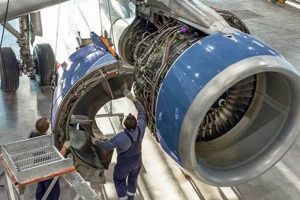
Various specializations within aerospace engineering contribute directly to the design, analysis, and optimization of propulsion systems. Aerodynamicists, for example, play a crucial role in shaping engine inlets and nozzles to maximize airflow efficiency and minimize drag. Materials scientists develop advanced alloys and composites capable of withstanding the extreme temperatures and stresses within engine components. Control systems engineers design the electronic controls that govern engine operation, ensuring stable and responsive performance across a wide range of operating conditions. Combustion specialists study the chemical reactions within the engine to optimize fuel efficiency and reduce emissions. A jet engine exemplifies this interdisciplinary collaboration; it requires aerodynamic design for efficient airflow, material science for high-temperature turbine blades, control systems for stable operation, and combustion engineering for maximizing thrust while minimizing fuel consumption and pollutant emissions. The Space Shuttle Main Engine (SSME), with its complex cryogenic fuel systems and high-performance combustion, illustrates this integration on a grand scale.
In conclusion, propulsion systems are inextricably linked to the various subdisciplines of aerospace engineering. The successful development of these systems necessitates a coordinated effort from specialists across multiple domains, highlighting the integrated nature of the field. Challenges remain in improving fuel efficiency, reducing emissions, and developing propulsion systems capable of operating at hypersonic speeds. Continued research and development in these areas are essential to maintaining progress in aerospace technology and expanding the horizons of flight and space exploration.
3. Structural Analysis

Structural analysis, a cornerstone of aerospace engineering, is the process of evaluating the integrity and behavior of aerospace vehicle components under various loading conditions. It ensures that aircraft and spacecraft structures can withstand the stresses encountered during flight, launch, and operation, maintaining safety and performance. Its impact reverberates through numerous specialized engineering disciplines.
- Finite Element Analysis (FEA)
Finite Element Analysis (FEA) is a numerical technique used to predict how a structure will react to real-world forces, vibration, heat, fluid flow, and other physical effects. By dividing a complex structure into smaller, simpler elements, FEA allows engineers to simulate its behavior under a wide range of conditions. For example, FEA can be used to analyze the stress distribution in an aircraft wing during flight, identifying areas that may be prone to failure. This informs design decisions, materials selection, and manufacturing processes, contributing to safer and more reliable aerospace vehicles.
- Material Selection and Testing
The selection of appropriate materials is integral to structural analysis. Aerospace engineers must consider factors such as strength, weight, stiffness, fatigue resistance, and corrosion resistance when choosing materials for airframes, engine components, and other structural elements. Extensive testing, including tensile testing, fatigue testing, and fracture mechanics testing, is conducted to characterize the mechanical properties of materials and ensure that they meet stringent performance requirements. The use of lightweight composites, such as carbon fiber reinforced polymers, has become increasingly prevalent in aerospace structures, requiring sophisticated analytical techniques to predict their behavior under complex loading.
- Load Analysis and Prediction
Accurately predicting the loads that an aerospace structure will experience during its operational life is critical for structural analysis. These loads can arise from aerodynamic forces, engine thrust, inertial forces, thermal stresses, and other sources. Load analysis involves developing mathematical models and simulations to estimate the magnitude and distribution of these loads. For example, engineers use computational fluid dynamics (CFD) to calculate the aerodynamic forces acting on an aircraft wing during flight, which are then used as input for structural analysis. Furthermore, understanding dynamic loads during maneuvers, turbulence, or landing events is crucial for ensuring structural integrity.
- Structural Health Monitoring (SHM)
Structural Health Monitoring (SHM) involves the use of sensors and data analysis techniques to continuously monitor the condition of aerospace structures. SHM systems can detect damage, such as cracks or delaminations, before they lead to catastrophic failure. These systems often employ non-destructive testing (NDT) methods, such as ultrasonic testing or eddy current testing, to inspect structures for defects. SHM data can be used to improve maintenance schedules, extend the service life of aerospace vehicles, and enhance overall safety. Modern SHM systems increasingly rely on advanced signal processing and machine learning algorithms to automatically detect and classify damage.
These interconnected facets of structural analysis underscore its pivotal role within aerospace engineering’s network of specializations. Whether predicting structural behavior through FEA, carefully selecting appropriate materials, accurately forecasting operational loads, or continuously monitoring structural health, this discipline ensures the safety, reliability, and longevity of aerospace vehicles, making it an indispensable area of expertise.
4. Control Systems

Control systems constitute an essential subfield of aerospace engineering, acting as the nervous system for flight vehicles and spacecraft. Their primary function is to regulate the behavior of these complex machines, ensuring stability, precise navigation, and accurate execution of maneuvers. The performance of control systems directly impacts the safety, efficiency, and overall mission success of aerospace operations. For instance, autopilots in commercial aircraft use control systems to maintain altitude, heading, and airspeed, reducing pilot workload and improving fuel efficiency. Similarly, spacecraft utilize sophisticated control systems to maintain their orientation in space, enabling accurate pointing of scientific instruments and efficient communication with ground stations.
The design and implementation of control systems in aerospace applications require expertise in several other subfields. Aerodynamics provides data on the aerodynamic forces and moments acting on a vehicle, which are crucial for designing controllers that can counteract disturbances and maintain stability. Propulsion systems provide the thrust needed to execute maneuvers, and control systems must be integrated with the propulsion system to regulate engine performance and achieve desired accelerations. Structural analysis ensures that the vehicle’s structure can withstand the forces generated by the control system actuators. Avionics integration combines sensors, computers, and actuators into a functional control system, enabling closed-loop feedback control. Fly-by-wire systems in modern aircraft, which replace mechanical linkages with electronic signals, exemplify this integration, offering enhanced maneuverability and stability.
In summary, control systems represent a vital integration point within aerospace engineering. Their effective design demands a comprehensive understanding of aerodynamics, propulsion, structures, and avionics. Challenges remain in developing control systems that can adapt to changing conditions, cope with uncertainties, and operate reliably in harsh environments. Continued research and development in advanced control algorithms, robust sensors, and fault-tolerant architectures are essential for pushing the boundaries of aerospace technology and enabling future missions.
5. Materials Science

Materials science is inextricably linked to aerospace engineering, functioning as a foundational element that underpins advancements across numerous specializations within the field. The selection, development, and application of materials with specific properties are critical to achieving the performance, safety, and longevity demanded of aerospace vehicles. These materials must withstand extreme conditions, including high temperatures, intense stresses, and corrosive environments.
- High-Temperature Alloys for Propulsion Systems
The efficiency of jet engines and rocket engines is directly related to the operating temperature. Materials science plays a crucial role in developing high-temperature alloys, such as nickel-based superalloys and ceramic matrix composites, that can withstand the extreme heat and stress within engine turbines and combustion chambers. These materials enable higher operating temperatures, leading to increased engine thrust and improved fuel efficiency. For example, single-crystal turbine blades, grown from nickel-based superalloys, exhibit exceptional creep resistance at high temperatures, extending the lifespan of engine components.
- Lightweight Composites for Airframes
Reducing the weight of an aircraft or spacecraft is essential for improving fuel efficiency and increasing payload capacity. Materials science provides lightweight composite materials, such as carbon fiber reinforced polymers (CFRPs) and aluminum-lithium alloys, that offer high strength-to-weight ratios. These materials are used extensively in airframe structures, including wings, fuselage sections, and control surfaces. The Boeing 787 Dreamliner, for instance, incorporates a significant amount of CFRP in its airframe, resulting in improved fuel efficiency and reduced operating costs.
- Thermal Protection Systems for Spacecraft
Spacecraft re-entering the Earth’s atmosphere experience extreme aerodynamic heating, requiring effective thermal protection systems (TPS) to prevent structural damage. Materials science provides specialized materials, such as ceramic tiles and ablative materials, that can withstand these extreme temperatures. Ceramic tiles, like those used on the Space Shuttle, provide excellent thermal insulation and protect the underlying structure from heat. Ablative materials, which vaporize upon heating, dissipate heat away from the spacecraft surface. The design and selection of TPS materials are critical for ensuring the safe re-entry of spacecraft.
- Radiation-Resistant Materials for Space Applications
Spacecraft operating in Earth orbit or beyond are exposed to high levels of radiation, which can degrade the performance of electronic components and structural materials. Materials science plays a crucial role in developing radiation-resistant materials, such as specialized polymers and shielding materials, that can protect sensitive equipment and ensure the long-term reliability of spacecraft. These materials are used in the construction of satellite housings, electronic components, and other critical systems. Understanding the interaction of radiation with materials is essential for designing spacecraft that can withstand the harsh space environment.
These examples demonstrate the critical role of materials science in enabling advancements across diverse specializations within aerospace engineering. Whether it is developing high-temperature alloys for more efficient engines, creating lightweight composites for stronger and more efficient airframes, devising thermal protection systems for spacecraft re-entry, or ensuring the reliability of spacecraft in the face of radiation, material selection and innovation are essential elements for continued progress within this complex and demanding field.
6. Avionics Integration

Avionics integration, the systematic amalgamation of electronic systems within aerospace vehicles, stands as a critical nexus connecting several fundamental areas of specialization within aerospace engineering. This integration is not merely the assembly of components, but rather a carefully orchestrated synthesis where the performance of each sub-system is optimized in concert with others to achieve overall vehicle objectives. The effectiveness of avionics integration directly impacts flight safety, operational efficiency, and mission success, making it a linchpin of modern aerospace design.
The dependence on avionics integration extends to a broad spectrum of areas. Aerodynamics, for example, relies on integrated sensors to provide real-time data for flight control systems, enhancing stability and maneuverability. Similarly, propulsion systems require precise electronic control to optimize fuel consumption and thrust output. Structural health monitoring systems utilize avionics to detect potential failures before they become catastrophic. Communications systems, including navigation and surveillance equipment, are fundamentally dependent on integrated electronics. Consider the advanced flight control systems in modern commercial aircraft like the Airbus A350 or Boeing 787. These systems seamlessly integrate sensor data, flight management computers, and actuator controls to provide enhanced stability, fuel efficiency, and safety. In military aircraft, avionics systems often include advanced radar, electronic warfare systems, and weapon delivery controls, requiring a high degree of integration and coordination to achieve mission objectives.
In summary, avionics integration represents an indispensable element for contemporary aerospace vehicle design. It requires a systems-level perspective, coordinating the functionality of disparate systems into a cohesive whole. The complexity of modern avionics systems presents significant engineering challenges, demanding expertise in areas ranging from electronics and software engineering to systems architecture and cybersecurity. Ongoing research and development efforts focus on improving the reliability, security, and adaptability of avionics systems to meet the ever-evolving demands of air and space travel.
Frequently Asked Questions about Specializations
This section addresses common inquiries regarding the various areas of focused expertise within this engineering discipline.
Question 1: Why is specialization necessary within aerospace engineering?
The complexity of aerospace systems requires specialized knowledge. No single engineer can possess comprehensive expertise across all areas, thus specialization allows for in-depth understanding and innovation within specific domains.
Question 2: How do specializations contribute to advancements in the field?
Focused expertise enables engineers to develop innovative solutions to specific challenges, leading to improvements in aircraft performance, spacecraft capabilities, and overall aerospace safety. This specialization fosters efficiency and targeted research.
Question 3: What are some examples of common specialized areas within aerospace engineering?
Common specializations include aerodynamics, propulsion, structural analysis, control systems, materials science, and avionics integration. Each area addresses a distinct aspect of aerospace vehicle design and operation.
Question 4: How does one typically pursue a specialization within aerospace engineering?
Specialization often begins with focused coursework during undergraduate studies, followed by advanced degrees (Master’s or Ph.D.) and research experience in a specific area of interest. Professional experience and certifications can further enhance expertise.
Question 5: Is it possible to transition between specializations within aerospace engineering?
While challenging, transitions are possible with additional education, training, and experience. Foundational knowledge in related fields can facilitate such career shifts. Cross-functional project experience is also beneficial.
Question 6: What are the emerging areas of specialization within aerospace engineering?
Emerging areas include autonomous systems, space resource utilization, hypersonics, electric propulsion, and advanced composite materials. These areas reflect evolving technological demands and offer significant opportunities for specialization.
Specialized knowledge remains vital for the continued advancement of this complex field. Understanding the various focuses and the paths to specialization can aid aspiring engineers in pursuing impactful careers.
The following section will address the future of specialization in aerospace engineering.
The Enduring Significance of Specialization
This article has explored the diverse landscape of the specialized areas within aerospace engineering, demonstrating their crucial role in advancing the field. From aerodynamics and propulsion to structural analysis, control systems, materials science, and avionics integration, each concentration represents a distinct body of knowledge and skill essential for the design, development, and operation of modern aerospace vehicles.
As aerospace technology continues to evolve, the need for specialized expertise will only intensify. Continued innovation requires dedicated engineers focused on pushing the boundaries of knowledge within their specific domains. The pursuit of deeper understanding within the divisions detailed in this article remains paramount for ensuring future progress and maintaining leadership in aerospace innovation.