The field encompasses the design, development, testing, and production of aircraft and spacecraft. It integrates principles of aerodynamics, propulsion, materials science, structural analysis, and control systems to create machines capable of flight within and beyond Earth’s atmosphere. This discipline requires a strong foundation in mathematics, physics, and computer science to solve complex engineering problems.
Its significance lies in enabling air travel, space exploration, and defense capabilities. Advancements in this area have led to faster, more efficient air transport, satellite technology for communication and observation, and the exploration of other planets. The evolution of this engineering branch has been marked by groundbreaking innovations, from the Wright brothers’ first powered flight to the development of reusable spacecraft.
Subsequent discussions will delve into the specific specializations within this discipline, the challenges faced by professionals in this sector, and the future trends shaping its trajectory. Detailed examinations of key technologies and ongoing research initiatives will further illuminate its complexities and potential.
Guidance on Understanding Aerospace Engineering
Gaining a solid understanding of aerospace engineering requires a focused approach. The following tips are designed to provide direction for those seeking to comprehend the fundamentals and complexities of this multifaceted field.
Tip 1: Establish a Strong Foundation in Core Sciences: A thorough understanding of physics, particularly mechanics, thermodynamics, and electromagnetism, is essential. Mathematics, including calculus, differential equations, and linear algebra, forms the analytical framework for problem-solving.
Tip 2: Familiarize Yourself with Aerodynamics: Aerodynamics is central to the design of aircraft and spacecraft. Studying fluid dynamics, boundary layer theory, and airfoil design provides insights into lift, drag, and stability.
Tip 3: Explore Propulsion Systems: Comprehend the principles behind various propulsion systems, such as jet engines, rocket engines, and electric propulsion. Investigate combustion processes, nozzle design, and the performance characteristics of each system.
Tip 4: Investigate Materials Science: Understanding the properties of different materials, including metals, composites, and ceramics, is crucial for selecting the appropriate materials for aerospace structures. Consider factors such as strength, weight, and resistance to extreme temperatures and pressures.
Tip 5: Study Structural Analysis: Learn how to analyze the stresses and strains on aerospace structures under various loading conditions. Finite element analysis (FEA) is a valuable tool for simulating and predicting structural behavior.
Tip 6: Understand Control Systems: Grasp the principles of feedback control and its application in aircraft and spacecraft. Investigate autopilot systems, stability augmentation, and trajectory control.
Tip 7: Stay Current with Technological Advancements: The aerospace industry is constantly evolving. Staying informed about new materials, propulsion systems, and control technologies through journals, conferences, and online resources is paramount.
Adhering to these guidelines will facilitate a comprehensive grasp of aerospace engineering principles, enabling a more nuanced appreciation of the challenges and opportunities within the field.
The subsequent sections will build upon this foundation by exploring specific applications and future directions in aerospace engineering.
1. Aerodynamics

Aerodynamics, a branch of fluid dynamics concerning the study of air flow, serves as a foundational pillar within aerospace engineering. The principles of aerodynamics directly dictate the design and performance characteristics of both aircraft and spacecraft. Effective aerodynamic design minimizes drag, maximizes lift, and ensures stable flight. Without a thorough understanding of aerodynamic principles, the development of efficient and reliable flying vehicles would be unattainable.
Consider the design of an aircraft wing. Aerodynamic analysis is crucial to determining the optimal airfoil shape to generate lift at various speeds and angles of attack. Computational Fluid Dynamics (CFD) simulations are routinely employed to predict airflow patterns around the wing, allowing engineers to refine the design for enhanced performance. Similarly, in spacecraft design, understanding aerodynamic forces during atmospheric reentry is critical to prevent overheating and ensure controlled descent. The Space Shuttle, for instance, was designed with specific aerodynamic features to manage the extreme heat and forces encountered during its return to Earth.
In conclusion, the relationship between aerodynamics and aerospace engineering is inseparable. The aerodynamic properties of a design directly impact its functionality and effectiveness. Ongoing research focuses on improving aerodynamic efficiency, reducing noise pollution from aircraft, and developing new control surfaces. The pursuit of these advancements remains a central focus within the broader scope of aerospace engineering.
2. Propulsion
Propulsion systems are integral to the functionality and performance of all aerospace vehicles. Efficient and reliable propulsion is fundamental to achieving sustained flight, orbital maneuvers, and deep-space exploration. The design and implementation of these systems are core competencies within aerospace engineering.
- Rocket Propulsion
Rocket propulsion involves the expulsion of high-speed exhaust to generate thrust, enabling spacecraft to overcome gravitational forces and operate in the vacuum of space. Chemical rockets, utilizing liquid or solid propellants, are commonly employed for launch and orbital maneuvers. Ion propulsion, which accelerates charged particles using electric fields, offers high efficiency for long-duration missions. These systems are critical for space exploration and satellite deployment.
- Jet Propulsion
Jet propulsion, primarily used in aircraft, involves the acceleration of air through a nozzle to create thrust. Turbojet engines, turbofan engines, and turboprop engines are variations tailored for different speed and altitude regimes. The design of these engines focuses on maximizing thrust-to-weight ratio and minimizing fuel consumption. Jet propulsion enables air travel, cargo transport, and military aviation.
- Propellant Chemistry and Materials
The selection of propellants and materials is crucial for the performance and safety of propulsion systems. Propellants must provide high energy density and efficient combustion characteristics. Materials must withstand extreme temperatures and pressures within the engine. Research in advanced materials and propellant chemistry continues to drive improvements in propulsion system efficiency and durability. These advancements directly impact the range, payload capacity, and operational lifespan of aerospace vehicles.
- Combustion and Nozzle Design
The combustion process within a propulsion system is a complex interplay of chemical reactions and fluid dynamics. Optimizing combustion efficiency is paramount for maximizing thrust and minimizing emissions. Nozzle design focuses on efficiently converting thermal energy into kinetic energy, directing the exhaust flow to generate thrust. Computational modeling and experimental testing are used to refine combustion chamber and nozzle designs, improving overall propulsion system performance.
The integration of these facets of propulsion with other aerospace engineering disciplines, such as aerodynamics, structures, and control systems, results in the development of advanced aerospace vehicles. Ongoing research and development in propulsion technologies are essential for enabling future advancements in air travel, space exploration, and national defense.
3. Materials

Materials science is an indispensable component of aerospace engineering, impacting nearly every aspect of vehicle design and performance. The selection and application of materials directly influence structural integrity, weight, thermal resistance, and overall operational capabilities of aircraft and spacecraft.
- High-Strength Alloys
High-strength alloys, such as aluminum, titanium, and steel alloys, are fundamental to aerospace structures. These materials offer a favorable strength-to-weight ratio, enabling the construction of lightweight yet robust airframes and engine components. For instance, aluminum alloys are commonly used in aircraft fuselages and wings due to their corrosion resistance and ease of manufacturing. Titanium alloys, known for their high-temperature strength, are utilized in jet engine components subject to extreme heat and stress.
- Composite Materials
Composite materials, including carbon fiber reinforced polymers (CFRP) and fiberglass, have revolutionized aerospace engineering. These materials provide exceptional strength-to-weight ratios, allowing for the creation of lighter and more fuel-efficient aircraft. CFRP, in particular, is employed in aircraft wings and fuselage structures due to its high stiffness and resistance to fatigue. The Boeing 787 Dreamliner, for example, incorporates a significant proportion of CFRP in its airframe, resulting in improved fuel efficiency and reduced emissions.
- Thermal Protection Systems
Thermal protection systems (TPS) are critical for spacecraft re-entering Earth’s atmosphere. These systems are designed to withstand extreme temperatures generated by aerodynamic heating, preventing the spacecraft from burning up. Materials like ceramic tiles and ablative materials are used to dissipate heat and protect the underlying structure. The Space Shuttle, for instance, utilized a TPS consisting of thousands of individual ceramic tiles to safeguard against reentry temperatures exceeding 1,600 degrees Celsius.
- Advanced Ceramics and Coatings
Advanced ceramics and coatings play an increasingly important role in high-temperature aerospace applications. Ceramic matrix composites (CMCs) offer high-temperature strength and resistance to oxidation, making them suitable for jet engine turbine blades and exhaust nozzles. Thermal barrier coatings (TBCs) are applied to engine components to reduce heat transfer and improve engine efficiency. These materials and coatings enable engines to operate at higher temperatures, resulting in increased thrust and reduced fuel consumption.
The continuous development and application of advanced materials are essential for pushing the boundaries of aerospace engineering. Ongoing research focuses on creating lighter, stronger, and more heat-resistant materials to enable the next generation of aircraft and spacecraft. The integration of these materials into aerospace designs is paramount for achieving improved performance, enhanced safety, and greater operational capabilities.
4. Structures

The structural integrity of aerospace vehicles is paramount for safe and reliable operation. Structures, within the realm of aerospace engineering, encompass the design, analysis, and construction of airframes, spacecraft bodies, and associated components capable of withstanding the extreme loads and environments encountered during flight and space travel.
- Load Analysis and Stress Calculation
Accurate prediction and analysis of loads acting on aerospace structures are fundamental. This involves considering static loads due to gravity, dynamic loads from maneuvers and turbulence, and thermal loads from aerodynamic heating. Stress calculations are then performed to determine the internal forces and stresses within the structure, ensuring that they remain below the material’s yield strength. Aircraft wings, for example, undergo rigorous load analysis to guarantee their ability to withstand bending and torsional forces during flight. Finite element analysis (FEA) is a commonly employed tool for simulating these complex loading scenarios.
- Material Selection and Fatigue Resistance
The choice of materials for aerospace structures is guided by their strength-to-weight ratio, resistance to corrosion, and fatigue properties. Aluminum alloys, titanium alloys, and composite materials are frequently used due to their favorable characteristics. Fatigue resistance is particularly critical, as aerospace structures are subjected to repeated loading cycles during their operational lifespan. Regular inspections and non-destructive testing (NDT) techniques are implemented to detect and address fatigue cracks before they lead to structural failure. Aircraft fuselages, for instance, are designed with specific attention to fatigue resistance, incorporating features like crack stoppers to prevent crack propagation.
- Structural Design and Optimization
Structural design involves determining the optimal configuration of structural components to minimize weight while maximizing strength and stiffness. This includes selecting appropriate cross-sectional shapes, stiffening elements, and joining methods. Optimization techniques are employed to refine the design based on various performance criteria, such as minimizing weight, maximizing buckling resistance, and minimizing stress concentrations. Spacecraft structures, for example, are carefully designed to withstand the launch loads and the vacuum environment of space. Lightweight truss structures are often used to support solar panels and other payload components.
- Structural Testing and Validation
Comprehensive structural testing is essential to validate the design and analysis predictions. This involves subjecting prototype structures to simulated flight loads and environmental conditions to verify their performance and identify potential weaknesses. Static testing, fatigue testing, and vibration testing are commonly performed. Full-scale aircraft and spacecraft structures are often tested in specialized facilities to ensure their structural integrity. The results of these tests are used to refine the design and analysis models, providing confidence in the structural safety and reliability of the aerospace vehicle.
These structural considerations are vital components of the broader field. The capacity to accurately predict, analyze, and manage the structural behavior of aerospace vehicles underpins their ability to perform safely and reliably across a diverse range of operational environments. Continuous advancements in structural design, materials science, and testing methodologies remain integral to the progress of aerospace engineering.
5. Control Systems

Control systems constitute a critical element of aerospace engineering. They govern the stability, maneuverability, and overall performance of aircraft and spacecraft. These systems utilize feedback mechanisms to adjust flight parameters in response to changing conditions or pilot commands, ensuring precise control and safe operation. Without sophisticated control systems, modern flight would be unfeasible due to inherent instabilities and the complexity of managing flight dynamics.
The implementation of control systems varies depending on the specific aerospace vehicle. In aircraft, control systems manage aerodynamic surfaces such as ailerons, elevators, and rudders to control roll, pitch, and yaw, respectively. Autopilot systems utilize sensors and algorithms to maintain desired altitude, heading, and speed, reducing pilot workload and enabling automated flight. In spacecraft, control systems manage attitude control using reaction wheels, thrusters, or control moment gyros to orient the spacecraft in space and maintain stability during maneuvers. The Apollo missions, for instance, relied heavily on control systems for precise trajectory control during lunar orbit and landing.
In conclusion, the relationship between control systems and aerospace engineering is integral. The effectiveness of control systems directly impacts the safety, efficiency, and performance of aerospace vehicles. Ongoing advancements in control theory, sensor technology, and computational algorithms continue to drive improvements in aerospace control systems, enabling more autonomous and sophisticated flight capabilities. Future developments in areas like adaptive control and artificial intelligence promise to further enhance the performance and robustness of aerospace control systems, addressing challenges posed by increasingly complex flight environments.
6. Spacecraft Design

Spacecraft design represents a specialized and critical subset of aerospace engineering. It extends the principles of aircraft design into the unique environment of space, addressing challenges posed by vacuum, radiation, extreme temperatures, and the absence of aerodynamic lift. The efficacy of spacecraft design directly dictates mission success, influencing factors such as data acquisition, communication capabilities, and the longevity of operational life. The development of a spacecraft necessitates a comprehensive understanding of orbital mechanics, propulsion systems capable of operating in a vacuum, and materials that can withstand the harsh conditions of space. For instance, the James Webb Space Telescope required meticulous design to deploy its sunshield and mirrors precisely, illustrating the complex engineering required.
The practical application of spacecraft design principles involves a multidisciplinary approach. Thermal management systems are essential to regulate temperature within the spacecraft, preventing overheating or freezing of sensitive components. Power systems, such as solar panels or radioisotope thermoelectric generators, supply the energy necessary for operation. Communication systems enable the transmission of data and commands between the spacecraft and ground stations. Structural design ensures the spacecraft can withstand the stresses of launch and the prolonged exposure to space. The International Space Station serves as a prime example, showcasing the integration of these elements to support long-duration human presence in space.
In summary, spacecraft design constitutes a vital component of aerospace engineering, demanding specialized knowledge and innovative solutions. Its importance lies in enabling space exploration, scientific discovery, and the provision of essential services such as communication and Earth observation. Ongoing advancements in materials science, propulsion technology, and autonomous control systems will continue to drive improvements in spacecraft design, facilitating more ambitious and complex space missions in the future.
7. Avionics

Avionics, an abbreviation for aviation electronics, constitutes an indispensable segment within the broader discipline of aerospace engineering. It encompasses the design, development, and implementation of electronic systems used on aircraft, spacecraft, and satellites. The functionality of many aerospace vehicles is intrinsically dependent upon sophisticated avionics systems for navigation, communication, flight control, and various other critical operations. Failure within these systems can have catastrophic consequences, underscoring the importance of robust design, rigorous testing, and adherence to stringent safety standards. Commercial airliners, military aircraft, and space probes all rely heavily on advanced avionics to perform their designated tasks. Consider the Boeing 787 Dreamliner, which incorporates extensive avionics systems to enhance fuel efficiency, improve passenger comfort, and streamline flight operations. Understanding avionics is crucial to comprehending the operational capabilities and limitations of modern aerospace vehicles.
Avionics systems perform a wide range of functions. Navigation systems provide accurate positioning and guidance, utilizing technologies such as GPS, inertial navigation systems (INS), and radio navigation aids. Communication systems facilitate voice and data exchange between the aircraft or spacecraft and ground stations. Flight control systems automate many aspects of flight, enhancing stability and reducing pilot workload. Sensor systems gather data about the surrounding environment, providing information for weather forecasting, terrain avoidance, and other critical tasks. Weather radar systems, for example, enable pilots to detect and avoid hazardous weather conditions. Military aircraft utilize sophisticated avionics for target acquisition, electronic warfare, and weapons delivery. Spacecraft employ complex avionics for attitude control, orbit determination, and data collection from scientific instruments. The practical applications of avionics are thus extensive and diverse.
In summary, avionics plays a crucial role in modern aerospace engineering, enabling the safe and efficient operation of aircraft and spacecraft. The continuous advancement of microelectronics, sensor technology, and software engineering drives innovation in avionics systems, leading to improved performance, enhanced reliability, and increased functionality. Challenges remain in areas such as reducing size and weight, improving resistance to electromagnetic interference, and ensuring cybersecurity. Addressing these challenges is essential to maintaining the technological superiority and operational effectiveness of aerospace vehicles in the future.
Frequently Asked Questions About Aerospace Engineering
This section addresses common inquiries regarding the nature, scope, and implications of aerospace engineering, providing clear and concise responses based on established principles and practices within the field.
Question 1: What fundamental principles underpin aerospace engineering?
Aerospace engineering fundamentally relies on the integration of physics, mathematics, and computer science to address challenges related to flight within and beyond Earth’s atmosphere. Core principles include aerodynamics, propulsion, structures, materials science, and control systems. These principles govern the design, development, and operation of aircraft and spacecraft.
Question 2: How does aerospace engineering differ from aeronautical engineering?
While often used interchangeably, aeronautical engineering primarily focuses on aircraft operating within Earth’s atmosphere. Aerospace engineering encompasses both atmospheric and space-based flight, including the design and development of spacecraft, satellites, and related technologies. The distinction lies in the operational environment and the challenges associated with each domain.
Question 3: What are the primary specializations within aerospace engineering?
Specializations within aerospace engineering include aerodynamics, propulsion, structural analysis, control systems, materials science, avionics, and spacecraft design. Each specialization focuses on a specific aspect of aerospace vehicle development, requiring specialized knowledge and skills. Engineers may concentrate on one or more specializations throughout their careers.
Question 4: What role does computer-aided design (CAD) play in aerospace engineering?
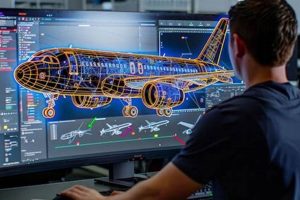
Computer-aided design (CAD) and computer-aided engineering (CAE) tools are indispensable in aerospace engineering. These tools enable engineers to create detailed 3D models of aircraft and spacecraft, perform simulations to analyze performance and structural integrity, and optimize designs for efficiency and reliability. CAD and CAE significantly reduce design time and improve the accuracy of engineering calculations.
Question 5: How does aerospace engineering contribute to technological advancements?
Aerospace engineering is a driver of technological innovation, leading to advancements in materials science, propulsion systems, control systems, and communication technologies. These advancements often have applications beyond aerospace, contributing to improvements in other industries such as automotive, energy, and medicine. The pursuit of solutions to aerospace challenges frequently results in breakthroughs that benefit society as a whole.
Question 6: What are the ethical considerations in aerospace engineering?
Ethical considerations in aerospace engineering include ensuring the safety and reliability of aircraft and spacecraft, minimizing environmental impact, and adhering to professional standards of conduct. Engineers have a responsibility to prioritize safety, protect the public, and act with integrity in all aspects of their work. These ethical considerations are paramount in maintaining public trust and confidence in the aerospace industry.
Aerospace engineering encompasses a broad range of disciplines, demanding a commitment to rigorous analysis, ethical practice, and continuous learning. Its contributions extend beyond the aerospace industry, impacting various sectors through technological innovation.
The next section will discuss future trends and emerging technologies within aerospace engineering.
Aerospace Engineering Defined
This exposition has clarified “aerospace engineering what is it” as a multifaceted engineering discipline concerned with the design, development, and testing of vehicles operating in both the atmosphere and outer space. Core elements include aerodynamics, propulsion, materials science, structural analysis, control systems, spacecraft design, and avionics. Each component necessitates specialized expertise and contributes to the overall performance and safety of aerospace vehicles.
The continued advancement of this field is essential for progress in air transportation, space exploration, and national security. Further research and development are needed to address evolving challenges and to realize the full potential of aerospace technologies. Understanding its principles remains crucial for engineers and scientists dedicated to shaping the future of flight and space travel.