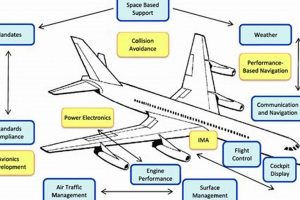
A culminating academic work in the field, this document represents the synthesis of extensive research, critical analysis, and innovative problem-solving. It demonstrates a candidate’s mastery of aerospace engineering principles and their ability to contribute original knowledge to the discipline. As an example, such a document might present a novel design for a more efficient aircraft wing or an improved method for predicting satellite orbital decay.
The completion of this significant endeavor serves as a crucial step towards professional recognition and advancement within the aerospace industry. It not only showcases an individual’s technical competence but also their ability to independently manage a complex project, communicate findings effectively, and contribute to the advancement of engineering practices. Historically, these documents have been instrumental in documenting breakthroughs and shaping the trajectory of technological development within the field.
The following sections will delve into the specific elements that constitute a strong scholarly paper, the research methodologies typically employed, and the potential impact such a project can have on the broader aerospace community. Furthermore, considerations regarding topic selection, research design, and effective writing strategies will be addressed to guide prospective researchers.
Essential Considerations for a Successful Scholarly Paper
The completion of a rigorous academic paper is a significant undertaking. The following guidelines are designed to assist in the development and execution of a successful project.
Tip 1: Define a Specific and Manageable Research Question. The scope of the inquiry must be clearly delimited. A broad, ill-defined question leads to unfocused research and a weak final product. Instead, focus on a specific aspect of aerospace engineering, such as improving the aerodynamic efficiency of a particular aircraft component or optimizing the trajectory of a specific type of satellite mission.
Tip 2: Conduct a Thorough Literature Review. A comprehensive understanding of existing research is crucial. This involves identifying key publications, understanding current debates, and identifying gaps in the knowledge that the project can address. Neglecting this step can lead to the unintentional duplication of prior work or the misinterpretation of established findings.
Tip 3: Employ Rigorous Research Methodologies. The chosen methodologies, whether computational modeling, experimental testing, or statistical analysis, must be appropriate for the research question and executed with precision. The methods must be thoroughly documented and justified. For example, when using computational fluid dynamics (CFD), the mesh resolution, turbulence model, and boundary conditions should be carefully selected and validated.
Tip 4: Emphasize Data Validity and Reliability. The data used in the analysis must be accurate and trustworthy. In experimental work, calibration and error analysis are essential. In computational simulations, validation against experimental data or established benchmarks is required. Questionable data compromises the integrity of the entire project.
Tip 5: Present Findings Clearly and Concisely. The presentation of results must be clear, logical, and supported by evidence. Use appropriate figures, tables, and statistical summaries to illustrate key findings. Avoid ambiguity and strive for objectivity in the interpretation of the results. All figures and tables must be properly labeled and referenced within the text.
Tip 6: Adhere to Strict Ethical Standards. Ensure all research is conducted ethically, with appropriate attribution and respect for intellectual property. Plagiarism is unacceptable and will result in serious consequences. All sources must be properly cited using a consistent citation style.
Tip 7: Seek Feedback from Experts. Regularly consult with faculty advisors and other subject matter experts. Incorporating their feedback can significantly improve the quality and rigor of the research. Be open to constructive criticism and willing to revise the work based on expert input.
These guidelines represent critical aspects for the successful completion of the document. By adhering to these principles, the individual can increase the likelihood of producing a high-quality piece of work that makes a meaningful contribution to the field.
The subsequent discussion will focus on strategies for disseminating the results of the research to the broader aerospace community, including publication opportunities and conference presentations.
1. Original research contribution

The hallmark of any credible scholarly output is the presence of an original research contribution. Within the context of aerospace engineering, this contribution distinguishes a routine exercise from a valuable addition to the existing body of knowledge. It signifies that the student has not merely synthesized existing information, but has generated new insights, data, or methodologies relevant to the field.
- Novelty of Approach
This facet pertains to the introduction of a new method, technique, or perspective to address an existing problem in aerospace engineering. For instance, a contribution might involve applying a previously unused machine learning algorithm to optimize aircraft flight control systems. The implications are significant, as it could lead to more efficient, robust, and adaptive control strategies.
- Empirical Validation of Existing Theories
Here, the contribution lies in providing empirical evidence to either support or refute existing theoretical models within aerospace engineering. An example could be conducting wind tunnel experiments to validate computational fluid dynamics (CFD) simulations of hypersonic flow over a newly designed aircraft. The findings could refine existing models and improve the accuracy of future simulations.
- Development of New Technologies
This facet focuses on the creation of entirely new technologies or the significant improvement of existing ones relevant to aerospace applications. This might involve developing a novel material with superior strength-to-weight ratio for use in spacecraft structures. The potential impact is substantial, as it could enable the construction of lighter, more durable, and more efficient spacecraft.
- Interdisciplinary Application
This relates to the innovative integration of concepts or techniques from other disciplines into aerospace engineering research. For example, applying principles of bio-inspired design to create more aerodynamic aircraft wings. The benefits are multifaceted, potentially leading to novel solutions that transcend traditional aerospace engineering boundaries.
These facets collectively underscore the importance of originality in scholarly output. An effort lacking a genuine contribution risks being merely a recapitulation of established knowledge. The inclusion of one or more of these facets ensures that the project not only meets the academic requirements but also has the potential to advance the state-of-the-art in aerospace engineering.
2. Rigorous methodology

A credible scholarly work in aerospace engineering necessitates a rigorous methodology. This is not merely a procedural checklist; it represents the foundation upon which the validity and reliability of the research rests. The direct consequence of employing a weak or flawed methodology is compromised findings, potentially leading to inaccurate conclusions and a lack of impact on the field. The methodology is the framework by which the research question is approached, investigated, and ultimately answered. Therefore, its rigor is paramount.
The selection and application of suitable methodologies are critically important. For instance, in computational fluid dynamics (CFD) studies, the choice of turbulence model, mesh resolution, and boundary conditions directly affects the accuracy of the simulations. If an inappropriate turbulence model is selected or the mesh is insufficiently refined, the results may deviate significantly from reality. Similarly, in experimental studies, precise calibration of instruments and careful control of experimental parameters are essential to minimize systematic errors. The absence of these measures undermines the validity of the data collected and the conclusions drawn from it. Statistical methods must also be employed appropriately. For instance, correlation does not equal causation, and inappropriately applying statistical tests will lead to fallacious conclusions.
In summary, the connection between rigorous methodology and the quality of a scholarly endeavor in aerospace engineering is undeniable. It is the foundation of trust in the findings and a prerequisite for its potential impact on the field. Without a meticulously designed and executed methodology, the study is unlikely to contribute meaningfully to the existing body of knowledge and may even introduce inaccuracies that could hinder future research. A robust approach ensures the credibility and value of the work, ultimately enhancing the candidate’s credentials and contributing to the advancement of aerospace engineering principles.
3. In-depth analysis
The rigorous exploration of underlying principles and implications represents a core requirement for a successful academic output in aerospace engineering. This analysis extends beyond superficial observations, delving into the intricate details and interdependencies within a given research area. Its presence signifies a mastery of the subject matter and the capacity to critically evaluate and synthesize complex information.
- Comprehensive Literature Review
A thorough review of existing publications forms the foundation for insightful analysis. This involves not only summarizing previous findings but also identifying gaps, contradictions, and limitations within the existing body of knowledge. For instance, an analysis of computational fluid dynamics (CFD) simulations of transonic flow would require a detailed examination of various turbulence models and their applicability to different flow regimes. This step ensures that the research builds upon established knowledge while also contributing new perspectives or methodologies.
- Critical Evaluation of Data
Data analysis extends beyond mere presentation; it involves a rigorous assessment of the data’s validity, reliability, and limitations. Statistical methods must be applied appropriately, and potential sources of error must be carefully considered. An effort focused on composite materials, for example, would necessitate a detailed analysis of the material’s mechanical properties under various loading conditions, including considerations for environmental factors and manufacturing variability. Conclusions must be supported by the data and acknowledge any uncertainties or biases.
- Multifaceted Interpretation of Results
The implications of research findings must be explored from multiple angles. This involves considering the broader context of the research and identifying potential applications or limitations. A study on a novel propulsion system, for example, should not only assess its performance characteristics but also consider its environmental impact, cost-effectiveness, and compatibility with existing aerospace infrastructure. A comprehensive interpretation provides a balanced view of the research’s potential and limitations.
- Comparative Analysis of Methodologies
When multiple methodologies are employed, a comparative analysis is essential to identify the strengths and weaknesses of each approach. This allows for a more nuanced understanding of the research findings and helps to guide future research efforts. For instance, a project comparing different methods for trajectory optimization would require a detailed analysis of the computational cost, accuracy, and robustness of each method. This comparison provides valuable insights into the trade-offs involved and informs the selection of appropriate methodologies for specific applications.
The components described are not isolated elements but rather interconnected facets of a holistic analytical approach. Their integration within the scholarly work demonstrates a deep understanding of the research area and the ability to critically evaluate complex information, a skill that is indispensable for contributing meaningfully to the field of aerospace engineering. This capability facilitates advancements and ensures that research efforts build upon a solid foundation of knowledge and informed perspectives.
4. Clear, precise writing
The quality of writing is paramount in an aerospace engineering scholarly paper. This aspect extends beyond grammatical correctness and encompasses clarity, conciseness, and precision in communicating complex technical information. The effectiveness of research hinges on the ability to articulate methodologies, findings, and conclusions in a manner that is readily understood by the target audience. A paper characterized by ambiguous language or convoluted sentence structures diminishes the impact of even the most innovative research.
- Objective Language and Terminology
The use of objective language is crucial for conveying unbiased information. Technical terminology must be defined clearly and used consistently throughout the document. For example, when discussing aircraft aerodynamics, terms such as “lift coefficient,” “drag coefficient,” and “Reynolds number” must be precisely defined and used appropriately to avoid ambiguity. The goal is to ensure that readers with expertise in aerospace engineering can accurately interpret the information presented.
- Logical Structure and Organization
A well-structured paper follows a logical progression, guiding the reader through the research process from problem statement to conclusions. Each section, paragraph, and sentence should contribute to the overall narrative. For instance, the methodology section should clearly outline the steps taken to conduct the research, providing sufficient detail for others to replicate the work. Similarly, the results section should present the findings in a clear and organized manner, using tables and figures to illustrate key data points. A disorganized document obscures the research and hinders understanding.
- Conciseness and Avoidance of Jargon
While technical terminology is necessary, the overuse of jargon or unnecessarily complex language should be avoided. Conciseness is valued; extraneous words and phrases detract from the clarity of the message. For example, instead of writing “the experimental apparatus was utilized for the purpose of conducting a series of tests,” a more concise formulation would be “the experimental apparatus was used to conduct a series of tests.” Direct and straightforward language enhances readability and ensures that the key information is easily accessible.
- Effective Visual Aids
Figures, tables, and diagrams are essential tools for presenting complex data in a clear and concise manner. These visual aids should be well-designed, properly labeled, and integrated seamlessly into the text. For example, a graph depicting the performance of different aircraft wing designs should include clear axis labels, a descriptive title, and a legend explaining the different data series. Visual aids enhance understanding and allow readers to quickly grasp the key findings of the research.
The connection between these aspects of writing and the overall success of an aerospace engineering scholarly paper is undeniable. A document characterized by clarity, precision, and conciseness effectively communicates the research findings, enhances the credibility of the work, and increases its potential impact on the field. Conversely, poor writing can obscure the research, diminish its value, and hinder its dissemination to the broader aerospace community.
5. Scholarly significance

In the context of an aerospace engineering scholarly paper, significance refers to the contribution made to the existing body of knowledge and its potential impact on future research, development, or engineering practice. A paper lacking demonstrable significance represents a missed opportunity to advance the field and may be deemed insufficient to warrant academic recognition. This attribute directly influences the paper’s reception within the academic and professional community, affecting its potential for publication, citation, and practical application. For example, a thesis presenting a minor refinement to an existing algorithm without demonstrating substantial improvements in performance or applicability would likely possess limited scholarly significance. Conversely, one introducing a novel design paradigm for hypersonic vehicles, supported by rigorous analysis and simulations, would represent a substantial contribution and garner significant attention.
The assessment of scholarly significance is multifaceted, encompassing several key considerations. One is the originality of the research question and its potential to address a pressing challenge in aerospace engineering. Another is the rigor of the methodology employed and the validity of the results obtained. Furthermore, the clarity and effectiveness of the communication of the research findings play a crucial role in conveying their significance to the broader community. Practical applications serve as a tangible demonstration of scholarly merit. For instance, a new method for predicting the structural integrity of aircraft wings that is subsequently adopted by aerospace manufacturers demonstrates direct and substantial practical significance. Similarly, the development of a more efficient propulsion system that reduces fuel consumption and emissions carries significant implications for environmental sustainability and economic efficiency within the aviation industry.
In conclusion, the presence of demonstrable merit is not merely a desirable attribute of an aerospace engineering scholarly paper; it is a fundamental requirement for its success and impact. It demands a clear understanding of the existing literature, a rigorous approach to research, and a capacity for critical analysis and synthesis. While challenges such as limited resources or unforeseen technical difficulties may arise during the research process, a focus on significance should remain paramount. By addressing relevant and impactful questions and communicating the findings effectively, the individual can ensure that their scholarly work makes a lasting contribution to the advancement of aerospace engineering.
Frequently Asked Questions
The following questions address common inquiries regarding the creation and assessment of a culminating academic document in the field of aerospace engineering.
Question 1: What constitutes an acceptable topic?
An acceptable topic demonstrates relevance to current challenges or emerging trends within aerospace engineering. The chosen subject should permit a focused investigation and contribute meaningfully to the existing body of knowledge. Broad or overly theoretical topics may prove difficult to manage within the constraints of a typical academic timeframe.
Question 2: How much original research is required?
The expectation for originality varies by institution and degree level; however, a genuine contribution is essential. This may involve developing a novel methodology, validating existing theories through experimentation, or providing new insights into established phenomena. A mere synthesis of existing literature is generally insufficient.
Question 3: What methodologies are considered appropriate?
The methodologies employed must align with the research question and be executed with rigor. Common approaches include computational modeling, experimental testing, and statistical analysis. The chosen methods must be justified and documented comprehensively to ensure reproducibility and validity of results. Deviation from established best practices requires strong justification.
Question 4: What are the typical length and formatting requirements?
Length and formatting requirements are typically specified by the academic institution or department. Adherence to these guidelines is mandatory. Common elements include a title page, abstract, introduction, literature review, methodology section, results section, discussion section, conclusion, and bibliography. Deviation from specified formatting guidelines may result in penalties.
Question 5: What criteria are used to evaluate the document?
Evaluation criteria typically include originality, methodology, analysis, clarity of writing, and significance. A successful document demonstrates a thorough understanding of the research area, employs rigorous methodologies, provides insightful analysis, and communicates findings effectively. The overall contribution to the field is a primary consideration.
Question 6: What are the common pitfalls to avoid?
Common pitfalls include selecting an overly broad topic, failing to conduct a thorough literature review, employing inappropriate methodologies, presenting data inaccurately, and neglecting to adhere to formatting guidelines. Plagiarism is strictly prohibited and will result in severe consequences. Proactive consultation with faculty advisors is essential to mitigate these risks.
The completion of a successful scholarly paper necessitates careful planning, rigorous execution, and adherence to established academic standards. Consultation with faculty advisors and diligent attention to detail are crucial for maximizing the potential impact of the work.
The following section will explore strategies for presenting and defending the project to a panel of experts.
Conclusion
The present discussion has elucidated the multifaceted nature of the “aerospace engineering dissertation,” emphasizing its role as a culmination of scholarly endeavor and a critical step toward professional advancement. The defining features – originality, methodological rigor, in-depth analysis, clarity of communication, and scholarly significance – have been examined in detail, underscoring their interconnectedness and collective impact on the quality and value of the work. Common questions and potential pitfalls have also been addressed to offer guidance to prospective researchers.
The “aerospace engineering dissertation” represents more than a mere academic exercise; it is a testament to an individual’s capacity to contribute meaningfully to a field that shapes the future of air and space travel. It is incumbent upon aspiring aerospace engineers to approach this endeavor with diligence, intellectual honesty, and a commitment to advancing the boundaries of knowledge, ensuring that their work leaves a lasting and positive impact on the world.