One field focuses on the design, development, and testing of aircraft and spacecraft. The other concentrates on the theory, design, development, and application of computer systems. For example, the first might work on improving fuel efficiency in airplanes, while the second could develop software for autonomous drone navigation.
These disciplines represent pivotal areas in modern technological advancement. Aerospace advancements drive exploration and connectivity, while computational progress fuels automation and information processing. Historically, the space race propelled aerospace innovation, while the digital revolution spurred advancements in computing.
A deeper understanding of the core principles, skill sets required, and career paths available within each domain provides crucial insight for prospective students and industry observers alike. The following sections will explore these aspects in more detail, highlighting key differences and potential areas of overlap.
Careful consideration of personal aptitude and career goals is paramount when choosing between these technical fields. A structured approach to self-assessment and exploration can provide clarity.
Tip 1: Evaluate Core Interests. A genuine interest in mathematics and physics often aligns well with aerospace, while a passion for logic and problem-solving frequently complements computer science.
Tip 2: Assess Technical Aptitude. Strength in spatial reasoning may favor aerospace. Conversely, proficiency in abstract thinking and algorithmic processes could indicate a preference for computing.
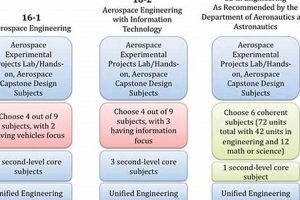
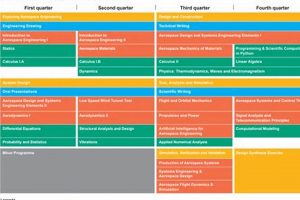
Tip 3: Research Curriculum Differences. Aerospace curricula typically include aerodynamics, propulsion, and structural analysis. Computer science programs emphasize data structures, algorithms, and software engineering.
Tip 4: Explore Internship Opportunities. Gaining practical experience through internships in either field provides invaluable insights into day-to-day work and industry demands.
Tip 5: Consider Career Trajectory. Aerospace roles often involve designing and testing physical systems. Computer science careers frequently revolve around developing and implementing software solutions.
Tip 6: Examine Industry Trends. Emerging trends in both fields, such as autonomous systems and data analytics, influence job market demands and future opportunities.
Tip 7: Network with Professionals. Engaging with professionals in aerospace and computer science can offer valuable perspectives on career paths and industry realities.
In summary, a thorough evaluation of interests, aptitudes, curriculum, experience, and industry trends is essential for making an informed decision regarding these distinct yet impactful engineering disciplines.
The subsequent sections will delve further into specific skills and career outcomes associated with each field, providing a more detailed comparison.
1. Core Disciplines

The fundamental knowledge domains that underpin both fields define their distinct approaches to problem-solving and technological advancement. A clear understanding of these core disciplines provides critical insight into the inherent differences between aerospace engineering and computer science.
- Aerodynamics
This branch of physics studies the motion of air and other gaseous fluids and their interaction with objects, such as aircraft wings and control surfaces. It is central to understanding lift, drag, and stability in flight, influencing aircraft design and performance. For instance, computational fluid dynamics (CFD) simulates airflow around an aircraft to optimize its shape and reduce fuel consumption, directly impacting the efficiency of aerospace vehicles.
- Propulsion
Propulsion encompasses the principles and technologies used to generate thrust for aircraft and spacecraft. It includes the study of jet engines, rocket engines, and other propulsion systems. Examples include the development of more efficient turbofan engines for commercial airliners and the design of solid-propellant rocket motors for space launch vehicles. Advances in propulsion directly impact the range, speed, and payload capacity of aerospace vehicles.
- Algorithms and Data Structures
Algorithms are step-by-step procedures for solving problems, while data structures are methods for organizing and storing data. They are fundamental to software development and computer science. For example, search algorithms enable efficient retrieval of information from databases, while sorting algorithms arrange data in a specific order for analysis. The efficiency of these algorithms directly impacts the performance and scalability of computer systems.
- Software Engineering
Software engineering is a systematic approach to the design, development, testing, and maintenance of software applications. It emphasizes principles such as modularity, reusability, and maintainability to create robust and reliable software. Examples include the development of operating systems, database management systems, and application software. Proper software engineering practices are crucial for ensuring the quality and functionality of software systems.
These distinct areas of expertise shape the research directions and career paths within each field. Aerospace engineering focuses on the physical world, manipulating forces and materials to achieve flight, while computer science focuses on the logical world, manipulating information to solve problems. These fundamental differences in core disciplines highlight the divergent yet complementary nature of these two technical fields.
2. Required Skillsets

The distinct challenges presented in aerospace engineering and computer science necessitate specific skill sets. These required capabilities shape the training and career trajectories of professionals in each domain. An objective comparison reveals the fundamentally different cognitive and practical proficiencies demanded by each field.
- Mathematical Proficiency
Both fields require a strong foundation in mathematics, but the emphasis differs. Aerospace engineering relies heavily on calculus, differential equations, and linear algebra to model physical systems and solve engineering problems. For instance, calculating the trajectory of a spacecraft or analyzing the stress on an aircraft wing involves complex mathematical models. Computer science, while also requiring mathematical skills, often prioritizes discrete mathematics, logic, and probability theory for algorithm design and data analysis. These differences highlight the differing analytical needs of each discipline.
- Problem-Solving Abilities
Aerospace engineering often involves solving complex, multidisciplinary problems related to flight and space exploration. This requires an ability to analyze complex systems, identify critical issues, and develop innovative solutions. For example, designing a more efficient aircraft engine or developing a new type of spacecraft requires strong problem-solving skills. Computer science focuses on developing algorithmic solutions to computational problems. This involves breaking down complex tasks into smaller, manageable steps and designing efficient algorithms to solve them. Debugging software code or optimizing database performance requires strong problem-solving skills specific to the digital realm.
- Programming Expertise
While programming is a core skill for computer scientists, it also plays an increasing role in aerospace engineering. Aerospace engineers use programming languages such as MATLAB and Python for simulations, data analysis, and control systems. Developing software for flight control systems or simulating aerodynamic performance requires programming proficiency. Computer scientists, on the other hand, require deep expertise in a wide range of programming languages and software development tools. They develop software applications, operating systems, and other software systems that are used in various industries, including aerospace. The depth and breadth of programming expertise differ significantly between the two fields.
- Systems Thinking
Both fields require systems thinking, but the application differs. Aerospace engineers must understand how different components of an aircraft or spacecraft interact with each other and with the environment. They need to consider the entire system when designing and optimizing individual components. Computer scientists must understand how different software components interact with each other and with the hardware they run on. They need to consider the entire system when designing and developing software applications. This holistic perspective is crucial for ensuring the overall performance and reliability of complex systems in both disciplines.
In summary, while both aerospace engineering and computer science demand strong analytical and problem-solving skills, the specific areas of emphasis and the types of tools employed differ considerably. Aerospace engineering emphasizes the physical world and the application of physical principles, while computer science emphasizes the logical world and the manipulation of information. These distinctions in required skillsets reflect the fundamental differences in the goals and methodologies of the two fields.
3. Industry Applications

The practical utilization of knowledge and skills cultivated within aerospace engineering and computer science differs significantly, leading to distinct industry applications. Aerospace engineering principles are applied in the design, manufacturing, and maintenance of aircraft, spacecraft, satellites, and related systems. This includes the development of commercial airliners, military aircraft, and space exploration vehicles. Computer science expertise is crucial for software development, data analysis, cybersecurity, and artificial intelligence across diverse sectors, ranging from finance to healthcare. The demand for each discipline correlates directly with specific industry needs; for example, increased satellite deployment drives demand for aerospace engineers, while the growth of e-commerce fuels the need for computer scientists skilled in cybersecurity and data analytics.
Aerospace applications are evident in areas such as flight control systems, navigation systems, and propulsion systems, often requiring stringent safety standards and regulatory compliance. Examples include the development of autonomous flight systems, the creation of more efficient jet engines, and the design of spacecraft for deep-space exploration. Concurrently, computer science contributes to industries through applications like cloud computing, data mining, and machine learning, which enable more efficient operations and enhanced decision-making processes. Real-world applications include fraud detection in the financial sector, personalized medicine in healthcare, and supply chain optimization in logistics. The prevalence of each field in an industry is often a function of the industry’s dependence on physical systems versus information processing.
In conclusion, understanding the industry applications of aerospace engineering and computer science highlights the distinct roles each plays in the modern economy. The former focuses on physical infrastructure and transportation, while the latter emphasizes data processing and technological infrastructure. The choice between the two fields should be informed by considering the specific industry trends and opportunities aligned with an individual’s skill set and career aspirations. Furthermore, the increasing convergence of these disciplines, for example, in autonomous aircraft and advanced robotics, suggests a potential for interdisciplinary collaboration and innovation in the future.
4. Career Pathways

Career pathways directly reflect the divergent skill sets and industry applications of aerospace engineering versus computer science. Aerospace engineers find opportunities in aircraft design, spacecraft development, propulsion systems, and related fields. Computer scientists are employed in software engineering, data science, cybersecurity, and artificial intelligence. The choice between these fields significantly influences the types of roles and responsibilities an individual will undertake. A consequence of selecting aerospace engineering is a higher likelihood of working with physical systems and hardware. Conversely, a computer science background leads to opportunities involving software, algorithms, and data.
The importance of understanding career pathways stems from its impact on long-term career satisfaction and professional growth. Aerospace engineering careers often require extensive knowledge of physics, materials science, and aerodynamics. For example, an aerospace engineer might work on designing the next generation of fuel-efficient aircraft wings or developing a new satellite communication system. These roles demand a strong understanding of engineering principles and often involve hands-on work with complex systems. Computer science careers, on the other hand, often require expertise in programming languages, data structures, and software development methodologies. For instance, a computer scientist might develop a new algorithm for image recognition or design a secure system for online banking. These roles demand strong problem-solving skills and often involve working with abstract concepts and complex software systems.
In conclusion, understanding the available career pathways is crucial for making an informed decision between aerospace engineering and computer science. The distinct roles and responsibilities associated with each field dictate the specific skills, knowledge, and experiences required for success. Careful consideration of personal interests, aptitudes, and career goals is essential for navigating these divergent paths. The increasingly interconnected nature of these fields, especially in areas like autonomous systems and robotics, suggests that interdisciplinary skills will be highly valued in the future. Therefore, a strategic approach to career planning, coupled with a willingness to adapt to emerging technologies, is vital for long-term career success in either aerospace engineering or computer science.
5. Future Trends

Anticipated advancements will significantly reshape both aerospace engineering and computer science, impacting the required skill sets, research focus, and industry applications of each field. Understanding these emerging trends is crucial for prospective students and professionals navigating these dynamic disciplines.
- Autonomous Systems
The development and deployment of autonomous systems represent a significant convergence point. Self-flying aircraft, autonomous spacecraft navigation, and drone-based delivery systems all require sophisticated software and hardware integration. These advancements necessitate expertise in areas such as artificial intelligence, sensor fusion, and real-time control systems, blurring the lines between traditional aerospace and computer science roles. For example, the development of robust collision avoidance systems for unmanned aerial vehicles requires engineers with expertise in both aerodynamics and machine learning.
- Advanced Materials and Manufacturing
Innovations in materials science and manufacturing processes are transforming aerospace engineering. Lightweight composites, additive manufacturing (3D printing), and smart materials offer the potential to create more efficient, durable, and customizable aircraft and spacecraft. The design and control of these manufacturing processes rely heavily on computer modeling, simulation, and automation. For instance, the use of 3D printing to create complex engine components requires engineers with expertise in both materials science and computer-aided design (CAD) software.
- Quantum Computing
Quantum computing holds the potential to revolutionize several aspects of computer science and potentially aerospace engineering, particularly in areas such as optimization, cryptography, and materials design. Quantum algorithms could be used to optimize aircraft routing, simulate complex aerodynamic flows, and design new materials with unprecedented properties. While still in its early stages, the development of quantum computing hardware and software represents a significant area of research and investment that will likely impact both fields. For example, quantum simulations could accelerate the discovery of new high-temperature superconductors for use in advanced propulsion systems.
- Big Data and Analytics
The increasing availability of data from sensors, simulations, and experiments is creating new opportunities for data-driven decision-making in both fields. Aerospace engineers can use big data analytics to optimize aircraft performance, predict maintenance needs, and improve flight safety. Computer scientists can develop algorithms to process and analyze this data, creating new insights and improving system efficiency. For example, predictive maintenance algorithms can analyze sensor data from aircraft engines to detect potential failures before they occur, reducing downtime and improving safety.
In summary, future trends are driving a convergence between aerospace engineering and computer science, creating new opportunities for interdisciplinary collaboration and innovation. A deep understanding of both fields, coupled with a willingness to adapt to emerging technologies, will be essential for success in the rapidly evolving landscape of engineering and technology. The development of robust, autonomous systems exemplifies this convergence, requiring expertise in both physical systems (aerospace) and computational intelligence (computer science).
Frequently Asked Questions
This section addresses common queries regarding the distinctions and similarities between aerospace engineering and computer science, offering clarity for prospective students and professionals.
Question 1: What are the fundamental differences in the core curriculum?
Aerospace engineering curricula emphasize aerodynamics, propulsion, structural analysis, and flight dynamics. Computer science programs focus on algorithms, data structures, software engineering, and computer architecture. The core curriculum reflects the distinct focus on physical systems versus computational systems.
Question 2: Which field offers better job security?
Job security is contingent upon various economic factors and industry trends. Both fields generally offer strong employment prospects. The demand for aerospace engineers fluctuates with government spending and the commercial aviation sector. Computer science careers are consistently in demand due to the pervasive role of technology across all industries.
Question 3: What is the earning potential in each field?
Salaries vary based on experience, location, and specialization. Generally, both aerospace engineers and computer scientists earn competitive salaries. Specialization in high-demand areas, such as artificial intelligence or advanced materials, can significantly increase earning potential in either field.
Question 4: Which field requires more mathematics?
Both fields demand strong mathematical skills, but the specific areas of emphasis differ. Aerospace engineering relies heavily on calculus, differential equations, and linear algebra to model physical phenomena. Computer science emphasizes discrete mathematics, logic, and statistical analysis for algorithm design and data analysis.
Question 5: Can skills from one field be applied to the other?
Yes, there is increasing overlap and potential for cross-application of skills. Computer science principles are increasingly utilized in aerospace engineering for simulations, control systems, and data analysis. Conversely, aerospace engineering principles can inform the design of more efficient and reliable computer hardware and cooling systems.
Question 6: What are the primary research areas in each field?
Aerospace engineering research focuses on areas such as advanced propulsion systems, hypersonic flight, space exploration technologies, and sustainable aviation. Computer science research encompasses artificial intelligence, machine learning, cybersecurity, quantum computing, and distributed systems.
In summary, while both aerospace engineering and computer science represent distinct disciplines with unique challenges and opportunities, both offer rewarding career paths for individuals with a passion for technology and innovation. A thorough evaluation of personal interests, aptitudes, and career goals is essential for making an informed decision.
The next article section will explore the historical context of “aerospace engineering vs computer science”.
Conclusion
This exploration of aerospace engineering vs computer science has illuminated key distinctions in core disciplines, required skill sets, industry applications, and career pathways. The analysis underscores the importance of understanding these differences for informed academic and professional decision-making. While aerospace engineering focuses on the design and development of physical systems related to flight and space, computer science emphasizes the creation and implementation of computational solutions across diverse industries.
Prospective students and professionals are encouraged to carefully consider their individual strengths, interests, and career aspirations when navigating these distinct yet impactful fields. The evolving technological landscape necessitates a forward-thinking approach, recognizing the increasing convergence of aerospace engineering vs computer science in areas such as autonomous systems and advanced robotics. Continued investment in both disciplines is vital for fostering innovation and addressing the complex challenges of the future.