A Bachelor of Science in a discipline that combines aeronautical and astronautical engineering principles. It equips individuals with a foundation in mathematics, science, and engineering, focusing on the design, development, and testing of aircraft and spacecraft. For instance, graduates may work on projects ranging from improving aircraft fuel efficiency to designing satellites for space exploration.
This field of study is pivotal in advancing air and space travel, national defense, and scientific discovery. The skill set acquired benefits society through technological advancements, economic growth, and the expansion of human knowledge. Its roots can be traced back to the early 20th century with the advent of flight and has evolved significantly with advancements in propulsion, materials science, and computer technology.
The subsequent sections will delve into the core curriculum, career prospects, and ongoing research shaping the future trajectory of this dynamic and demanding specialization.
Guidance for Pursuing the Academic Path
The following recommendations are intended to assist individuals considering a technical undergraduate degree focused on the design and development of aircraft and spacecraft. Diligent preparation and strategic planning are crucial for success in this rigorous field.
Tip 1: Strengthen Foundational Skills: A solid understanding of mathematics, physics, and computer science is essential. Focus on calculus, differential equations, linear algebra, Newtonian mechanics, thermodynamics, and programming languages such as Python or MATLAB. Example: Prioritize advanced coursework in these areas during high school and early undergraduate years.
Tip 2: Cultivate Problem-Solving Abilities: This discipline demands strong analytical and critical-thinking skills. Engage in activities that promote problem-solving, such as participating in math and science competitions, working on engineering design projects, and actively seeking solutions to complex challenges. Example: Join a robotics club or participate in a design competition focused on aerospace applications.
Tip 3: Gain Practical Experience: Seek opportunities to apply theoretical knowledge to real-world scenarios. Internships at aerospace companies, research positions at universities, and participation in hands-on projects provide invaluable practical experience. Example: Apply for internships at companies involved in aircraft manufacturing, satellite development, or space exploration.
Tip 4: Develop Strong Communication Skills: Effective communication is vital for collaborating with engineers, scientists, and other professionals. Practice written and oral communication skills through coursework, presentations, and technical writing assignments. Example: Actively participate in class discussions and seek opportunities to present technical findings to an audience.
Tip 5: Maintain a High Level of Academic Rigor: The curriculum is demanding and requires sustained effort and dedication. Prioritize academic excellence and maintain a strong grade point average. Example: Dedicate sufficient time to studying and completing assignments, and seek assistance from professors or teaching assistants when needed.
Tip 6: Specialize Strategically: This specialization offers diverse areas of focus, such as aerodynamics, propulsion, structures, and control systems. Identify specific interests early on and tailor coursework and research activities accordingly. Example: If interested in propulsion, consider taking courses in thermodynamics, fluid mechanics, and combustion.
Tip 7: Stay Current with Industry Trends: The aerospace field is constantly evolving, with new technologies and innovations emerging regularly. Stay informed about industry trends through professional publications, conferences, and networking events. Example: Subscribe to industry journals and attend aerospace conferences to learn about the latest advancements.
By focusing on these key areas, prospective students can greatly improve their chances of success in a challenging and rewarding field. A strong foundation, practical experience, and effective communication skills are essential for navigating the complexities of this academic path and achieving a fulfilling career.
The subsequent sections will elaborate on specific career paths and advanced studies that are available upon completion of the undergraduate program.
1. Aerodynamics

Aerodynamics forms a cornerstone of studies towards an undergraduate degree focused on the design and development of aircraft and spacecraft. This branch of fluid dynamics specifically addresses the motion of air and other gaseous fluids and their interaction with solid objects, a phenomenon directly impacting the performance and stability of vehicles operating within the atmosphere and beyond. Understanding aerodynamic principles allows engineers to predict and control the forces acting on an aircraft or spacecraft, enabling optimized designs for lift, drag, and maneuverability. Without a firm grasp of aerodynamics, the development of efficient and safe aerospace vehicles would be fundamentally impossible.
The practical implications of aerodynamics are evident in numerous aerospace applications. Aircraft wing design, for example, relies heavily on aerodynamic principles to generate lift and minimize drag. The shape of an aircraft fuselage is carefully considered to reduce air resistance and improve fuel efficiency. Spacecraft design incorporates aerodynamic considerations for atmospheric reentry, where aerodynamic forces can be harnessed for deceleration and heat dissipation. Furthermore, computational fluid dynamics (CFD), a powerful tool based on aerodynamic theories, is routinely employed to simulate and analyze airflow around complex aerospace structures, enabling iterative design improvements and performance optimization.
In summary, aerodynamics is not merely a theoretical concept but a foundational science essential for the practical realization of aerospace engineering projects. The ability to apply aerodynamic principles effectively is a critical competency for graduates in this field. Challenges in aerodynamics often involve complex flow phenomena, such as turbulence and shock waves, requiring sophisticated modeling and experimental techniques. Advancements in this area will continue to drive innovation in aircraft and spacecraft design, contributing to safer, more efficient, and more capable aerospace systems.
2. Propulsion Systems
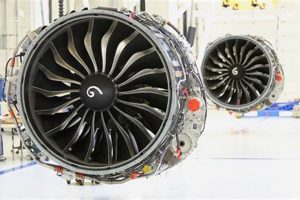
Propulsion systems represent a critical component within the curriculum of a Bachelor of Science in Engineering focused on the aerospace sector. These systems, encompassing the technologies that generate thrust to move aircraft and spacecraft, are directly responsible for enabling flight within the atmosphere and navigation through space. The study of propulsion delves into thermodynamics, fluid mechanics, combustion, and materials science, applying these principles to the design, analysis, and operation of various engine types. The performance characteristics of propulsion systems directly affect the range, payload capacity, and overall mission effectiveness of aerospace vehicles. A deficiency in understanding propulsion principles can lead to inefficient designs, compromising vehicle performance and safety.
Examples of propulsion system applications in aerospace include gas turbine engines for aircraft, rocket engines for spacecraft, and electric propulsion for satellite station-keeping. Gas turbine engines, such as turbofans and turbojets, utilize the Brayton cycle to convert fuel energy into thrust, propelling aircraft at subsonic and supersonic speeds. Rocket engines, employing the combustion of propellants, generate the high exhaust velocities necessary for overcoming Earth’s gravity and maneuvering in the vacuum of space. Electric propulsion systems, relying on electromagnetic fields to accelerate ionized propellants, offer high specific impulse for long-duration space missions. The selection and design of the appropriate propulsion system for a specific application necessitate a detailed analysis of mission requirements, performance goals, and environmental constraints.
In conclusion, the understanding of propulsion systems is fundamentally intertwined with the broader goals of undergraduate engineering studies specializing in the aerospace domain. The ability to analyze, design, and optimize propulsion systems is essential for graduates entering the aerospace industry, contributing to advancements in air travel, space exploration, and national defense. Challenges in propulsion include improving fuel efficiency, reducing emissions, and developing innovative technologies for future aerospace applications. Addressing these challenges requires a comprehensive understanding of the underlying scientific principles and engineering practices, highlighting the importance of a thorough academic grounding in propulsion systems within the field.
3. Structural Analysis

Structural analysis is a critical discipline within an undergraduate engineering degree focused on aircraft and spacecraft. It directly addresses the behavior of aerospace vehicle components under various loading conditions, ensuring structural integrity and preventing catastrophic failures. A solid understanding of structural analysis principles is essential for designing safe, reliable, and lightweight aerospace structures. Failure to properly analyze structural loads and stresses can lead to component deformation, crack propagation, and, ultimately, structural failure, jeopardizing both the vehicle and its occupants.
The connection between structural analysis and the undergraduate engineering degree manifests through the application of fundamental engineering mechanics principles, including statics, dynamics, and materials science. For instance, finite element analysis (FEA) software is routinely used to model and simulate the behavior of complex aerospace structures under diverse loading scenarios, such as aerodynamic forces, engine thrust, and landing impacts. The design of aircraft wings, fuselages, and landing gear relies heavily on structural analysis to optimize weight, strength, and stiffness. Similarly, spacecraft structures must withstand the extreme stresses of launch, space vacuum, and temperature fluctuations, necessitating rigorous structural analysis techniques.
In conclusion, structural analysis is not merely a theoretical exercise; it is a practical necessity for ensuring the safety and performance of aircraft and spacecraft. The comprehension of structural analysis principles, coupled with proficiency in FEA tools, is a fundamental requirement for graduates seeking to contribute to the aerospace engineering profession. Challenges often involve complex geometries, nonlinear material behavior, and transient loading conditions, demanding advanced analytical and computational techniques. These challenges highlight the importance of a comprehensive education in structural analysis within the engineering curriculum, contributing to the development of safer and more efficient aerospace vehicles.
4. Flight Dynamics

Flight dynamics constitutes a core element within a Bachelor of Science in Engineering, specifically tailored to the aerospace domain. It is the study of an aircraft’s motion through the air, encompassing its stability, control, and performance characteristics. An understanding of flight dynamics is crucial for designing aircraft that are both safe and capable of meeting their operational requirements. The design choices related to wing geometry, control surface size, and engine placement directly impact an aircraft’s handling qualities and its ability to perform maneuvers effectively. Neglecting flight dynamics during the design phase can result in aircraft that are unstable, difficult to control, or unable to achieve their intended mission objectives. For instance, improperly designed control surfaces can lead to control reversal at high speeds, rendering the aircraft uncontrollable.
The principles of flight dynamics find practical application throughout the aerospace industry. During aircraft design, engineers employ computational models and wind tunnel testing to analyze and predict an aircraft’s flight characteristics. These analyses are used to refine the aircraft’s design, ensuring that it meets stability and control requirements. In flight testing, pilots and engineers gather data on an aircraft’s performance, validating the design and identifying any areas for improvement. Flight simulators, based on flight dynamics models, are used to train pilots and develop flight control systems. The development of advanced flight control systems, such as fly-by-wire systems, relies heavily on flight dynamics to provide precise and responsive control of the aircraft. Furthermore, the investigation of aircraft accidents often involves a detailed analysis of flight dynamics to determine the cause of the accident and prevent similar occurrences in the future.
In conclusion, flight dynamics is an indispensable discipline within the field of engineering with a focus on aircraft and spacecraft. Its importance stems from its direct impact on aircraft safety, performance, and handling qualities. The application of flight dynamics principles extends across the entire lifecycle of an aircraft, from initial design to flight testing and accident investigation. Challenges in flight dynamics include the accurate modeling of complex aerodynamic phenomena, the development of robust control systems, and the mitigation of adverse flight conditions. Addressing these challenges requires a thorough understanding of the fundamental principles of flight dynamics and the ability to apply these principles to real-world engineering problems.
5. Control engineering

Control engineering is integral to an undergraduate education focused on aircraft and spacecraft, providing the theoretical framework and practical tools for designing and implementing systems that govern the behavior of aerospace vehicles. The ability to precisely manage altitude, attitude, speed, and trajectory is paramount for safe and effective operation, making control engineering a core competency for aerospace engineers. The absence of robust control systems would render flight unstable, maneuverability unpredictable, and mission objectives unattainable. Consider, for example, the development of autopilot systems, which rely heavily on feedback control algorithms to maintain desired flight paths and attitudes, even in turbulent conditions.
Practical applications of control engineering extend across diverse areas within aerospace. In aircraft, control systems govern flight surfaces, engine thrust, and navigation, enabling pilots or automated systems to maintain stable flight, execute precise maneuvers, and navigate to intended destinations. Similarly, in spacecraft, control systems manage attitude, orbit, and trajectory, ensuring proper orientation for communication, scientific data collection, and orbital maneuvers. Modern advancements, such as fly-by-wire systems and autonomous drones, are further evidence of the growing importance of control engineering in the aerospace field. These systems rely on sophisticated algorithms and sensors to enhance vehicle performance, improve safety, and enable new mission capabilities.
In summary, control engineering serves as a critical link between theoretical design and practical operation within the realm of aerospace engineering. Understanding its principles and applications is essential for aerospace engineers seeking to develop innovative and reliable aerospace vehicles. Challenges in control engineering involve the design of robust systems that can handle uncertainties, disturbances, and changing environmental conditions. Addressing these challenges requires a deep understanding of feedback control theory, system modeling, and sensor technology, underlining the importance of a thorough academic foundation in control engineering for aerospace specialization.
6. Materials Science

Materials science holds a pivotal position within an undergraduate engineering degree focused on aircraft and spacecraft. The selection, characterization, and application of appropriate materials are fundamental to achieving structural integrity, performance objectives, and operational longevity in aerospace vehicles. The following points detail the essential considerations.
- Lightweighting and Strength
Aerospace applications demand materials that minimize weight while maximizing strength and stiffness. High strength-to-weight ratio materials, such as aluminum alloys, titanium alloys, composites (carbon fiber reinforced polymers), and advanced ceramics, are employed to reduce structural mass, thereby enhancing fuel efficiency, payload capacity, and maneuverability. The selection process involves evaluating tensile strength, yield strength, fatigue resistance, and creep resistance under relevant operating conditions. For example, composite materials are extensively used in aircraft wings and fuselages due to their high strength-to-weight ratio and corrosion resistance. Improper material selection can lead to structural failure under flight loads.
- Thermal Management
Aerospace vehicles encounter extreme temperature variations during flight, requiring materials capable of withstanding thermal stress and maintaining their properties at elevated temperatures. Heat-resistant alloys, such as nickel-based superalloys and ceramic matrix composites, are used in engine components and thermal protection systems (TPS) to mitigate thermal degradation. The thermal expansion coefficient, thermal conductivity, and specific heat capacity are critical parameters in material selection for thermal management. For example, the Space Shuttle’s TPS utilized ceramic tiles to protect the vehicle from the extreme heat generated during atmospheric reentry. Inadequate thermal protection can result in structural damage or loss of functionality.
- Corrosion Resistance
Aerospace materials are exposed to corrosive environments, including atmospheric moisture, salt spray, and exhaust gases. Corrosion can significantly weaken structural components and lead to premature failure. Corrosion-resistant materials, such as stainless steels, aluminum alloys with protective coatings, and titanium alloys, are employed to minimize corrosion damage. Surface treatments, such as anodizing and painting, provide additional protection. The selection process considers the electrochemical properties of the material and its susceptibility to various forms of corrosion, including galvanic corrosion, pitting corrosion, and stress corrosion cracking. For instance, aluminum alloys used in aircraft structures are typically anodized to enhance their corrosion resistance. Unprotected materials can experience rapid degradation, compromising structural integrity.
- Durability and Fatigue Resistance
Aerospace structures are subjected to cyclic loading during flight, leading to fatigue damage over time. Materials with high fatigue resistance are essential for ensuring the long-term durability of aerospace vehicles. Fatigue testing is used to characterize the material’s response to repeated stress cycles and determine its fatigue life. Factors influencing fatigue resistance include material composition, microstructure, surface finish, and operating temperature. For example, turbine blades in jet engines are subjected to high-cycle fatigue due to the centrifugal forces and thermal stresses. Selection of materials with suitable fatigue properties and implementation of appropriate inspection techniques are crucial for preventing catastrophic failures.
The integration of materials science principles within an undergraduate engineering degree focused on aircraft and spacecraft is therefore paramount. It equips graduates with the knowledge and skills necessary to select, design, and analyze materials for aerospace applications, contributing to the development of safer, more efficient, and more durable aerospace vehicles. Proper knowledge and application of materials science is non-negotiable for aerospace engineering designs and manufacturing.
7. Spacecraft Design
Spacecraft design, a critical area of focus within a Bachelor of Science in Engineering focused on aircraft and spacecraft, entails the integrated application of multiple engineering disciplines to conceive, develop, and implement functional space-bound vehicles. This specialization demands a comprehensive understanding of diverse subsystems, their interdependencies, and the operational environment of space.
- Mission Objectives and Requirements Definition
The design process commences with a clear articulation of mission objectives and requirements. These specifications, encompassing parameters such as orbital altitude, payload capacity, mission duration, and scientific objectives, directly influence subsequent design decisions. For instance, a satellite designed for Earth observation at low Earth orbit (LEO) will necessitate different design considerations compared to a deep-space probe intended for interstellar exploration. A thorough understanding of mission requirements is fundamental to selecting appropriate subsystems and optimizing spacecraft performance within the constraints of available resources and technology. The definition stage is an imperative starting point for proper implementation during the spacecraft design process.
- Subsystem Integration and Interdependency
Spacecraft are complex systems composed of interconnected subsystems, including power generation, propulsion, communication, thermal control, and attitude determination and control. Each subsystem must function reliably and efficiently, while also interacting seamlessly with other subsystems. For example, the power subsystem must provide sufficient energy to operate all other subsystems, while the thermal control system must maintain the spacecraft within acceptable temperature limits. A failure in one subsystem can potentially cascade through the entire system, leading to mission failure. Thus, understanding subsystem interdependencies is critical to designing robust and fault-tolerant spacecraft architectures. Proper evaluation and counter-measures are imperative for the mitigation of risk during the mission.
- Environmental Considerations and Radiation Hardening
The space environment presents a multitude of challenges to spacecraft design, including vacuum, extreme temperatures, micrometeoroid impacts, and ionizing radiation. These factors can degrade material properties, disrupt electronic systems, and compromise overall performance. Spacecraft designers must implement protective measures, such as radiation shielding, thermal insulation, and micrometeoroid debris shields, to mitigate the effects of the space environment. Radiation hardening of electronic components is essential to prevent single-event upsets (SEUs) and other radiation-induced failures. The consequences of neglecting environmental considerations can range from premature degradation to catastrophic failure, especially in long-duration missions. The implementation of environmental controls during design is crucial for mission success.
- Testing and Validation
Rigorous testing and validation procedures are indispensable for ensuring the reliability and performance of spacecraft. These procedures encompass a range of tests, including thermal vacuum tests, vibration tests, electromagnetic compatibility (EMC) tests, and functional performance tests. The testing process aims to simulate the harsh conditions of space and verify that the spacecraft meets its performance requirements. Data obtained from testing is used to refine the design, identify potential weaknesses, and implement corrective measures. A comprehensive testing program is essential to minimize the risk of in-orbit failures and maximize mission success. This iterative process of refining and testing is mandatory prior to orbital launch.
The aforementioned facets highlight the intricate relationship between spacecraft design and an engineering curriculum focused on aircraft and spacecraft. A comprehensive understanding of these principles is crucial for individuals aspiring to contribute to the development of space-faring technologies, thereby enabling scientific discovery, technological innovation, and the exploration of the cosmos. These applications of spacecraft design can push boundaries in the modern aerospace engineering world.
Frequently Asked Questions
The following addresses common inquiries concerning undergraduate education focused on the design and development of aircraft and spacecraft. The information provided intends to offer clarity and guidance to prospective students and those seeking a deeper understanding of this field.
Question 1: What foundational knowledge is essential for success in undergraduate engineering studies specializing in the aerospace domain?
A robust foundation in mathematics (calculus, differential equations, linear algebra), physics (mechanics, thermodynamics, electromagnetism), and computer science (programming, data structures) is indispensable. Proficiency in these areas will provide a solid basis for understanding the complex engineering principles encountered in the curriculum.
Question 2: What career paths are typically available to graduates with an undergraduate degree focused on the design and development of aircraft and spacecraft?
Graduates are well-positioned to pursue careers in various sectors, including aerospace manufacturing, research and development, government agencies, and consulting firms. Specific roles may include aerospace engineer, design engineer, systems engineer, test engineer, and research scientist. Further specialization through graduate studies can lead to advanced research or management positions.
Question 3: Is prior experience in aerospace or related fields necessary to succeed in the undergraduate program?
While prior experience or exposure to aerospace concepts can be beneficial, it is not a prerequisite for success. The undergraduate curriculum is designed to provide a comprehensive introduction to the field, assuming no prior knowledge. However, a strong aptitude for mathematics and science, coupled with a genuine interest in aerospace, is highly recommended.
Question 4: What are the key differences between aeronautical and astronautical engineering within the degree?
Aeronautical engineering focuses primarily on the design, development, and operation of aircraft within the Earth’s atmosphere. Astronautical engineering, on the other hand, deals with the design, development, and operation of spacecraft and related technologies for space exploration and utilization. While there is overlap between the two fields, the undergraduate degree provides a broad foundation applicable to both.
Question 5: What role does software proficiency play in the undergraduate degree focusing on aircraft and spacecraft?
Software proficiency is essential for various tasks, including computer-aided design (CAD), computational fluid dynamics (CFD), finite element analysis (FEA), and programming for control systems and data analysis. Familiarity with software tools such as MATLAB, Simulink, ANSYS, and SolidWorks is highly advantageous. Furthermore, strong coding skills in languages like Python and C++ are increasingly valuable.
Question 6: Are there opportunities for hands-on experience or research during the undergraduate years?
Many undergraduate programs offer opportunities for hands-on experience through laboratory courses, design projects, internships, and research collaborations with faculty. These experiences provide valuable practical skills and allow students to apply theoretical knowledge to real-world engineering challenges. Participation in student organizations, such as AIAA (American Institute of Aeronautics and Astronautics), can also provide valuable networking and learning opportunities.
In summary, the degree requires a strong academic foundation, a dedication to problem-solving, and a willingness to adapt to a constantly evolving technological landscape. Individuals possessing these qualities will be well-prepared for a successful career in the aerospace field.
The subsequent section will explore the ethical and societal implications associated with advancements in the aerospace field.
Conclusion
The preceding sections have detailed the scope and significance of undergraduate studies in aerospace engineering, underscoring the fundamental knowledge domains, career prospects, and pervasive applications intrinsic to this discipline. The exploration has illuminated that the BSE Aerospace Engineering curriculum provides a comprehensive education, equipping graduates with the requisite expertise to contribute meaningfully to advancements in aeronautics, astronautics, and associated technological spheres.
In light of the challenges and opportunities facing the aerospace sector, continued investment in education and research remains paramount. The cultivation of innovative solutions to complex problems, ranging from sustainable air travel to the exploration of space, hinges upon a well-prepared and highly skilled workforce. Further advancements in BSE Aerospace Engineering programs are thus essential to drive progress and maintain global leadership in this strategically important field.
![Top MS Aerospace Engineering in Germany [Guide] | Innovating the Future of Flight with Reliable Aviation Solutions](https://mixaerospace.com/wp-content/uploads/2026/05/th-183-300x200.jpg "Top MS Aerospace Engineering in Germany [Guide] Innovating the Future of Flight with Reliable Aviation Solutions")