Examining the typical routines and responsibilities within the aerospace field provides valuable insight into the multifaceted nature of this profession. For example, one might observe a specialist engaged in designing aircraft components, analyzing test data, or collaborating with a team to improve fuel efficiency.
Understanding the activities of these professionals is vital for students considering career paths, for businesses seeking to innovate in the aviation sector, and for the public aiming to comprehend the advancements shaping modern flight and space exploration. Historically, observing established engineers has been a pivotal element in mentoring and knowledge transfer within the industry.
Therefore, this exploration will delve into the common tasks, the problem-solving techniques, the collaborative interactions, and the continuous learning that constitutes the professional landscape for those dedicated to advancing air and space technology.
Insights for Aspiring Aerospace Engineers
Gaining a realistic understanding of the daily experiences within this challenging field is crucial for individuals pursuing a career in aerospace engineering. The following observations offer practical guidance.
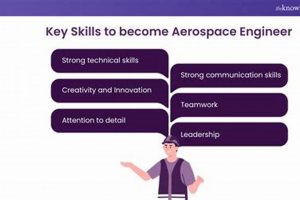
Tip 1: Prioritize Continuous Learning: Aerospace engineering is in constant evolution. Staying current on emerging technologies, materials, and software is imperative. Participation in workshops, conferences, and online courses is highly beneficial.
Tip 2: Cultivate Strong Analytical Skills: A significant portion of time is spent analyzing data, interpreting simulations, and troubleshooting complex problems. Honing skills in mathematics, physics, and computer programming is essential.
Tip 3: Master Communication and Collaboration: Aerospace projects are inherently collaborative. Effective communication with team members, clients, and regulatory bodies is critical for success. This includes written reports, presentations, and technical discussions.
Tip 4: Develop Proficiency in CAD and Simulation Software: Familiarity with industry-standard Computer-Aided Design (CAD) and simulation tools (e.g., ANSYS, MATLAB) is expected. Hands-on experience with these platforms is invaluable.
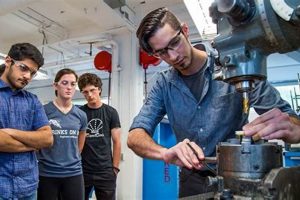
Tip 5: Seek Opportunities for Hands-on Experience: Internships, co-op programs, and research projects provide practical exposure to real-world engineering challenges. These experiences complement academic studies and enhance employability.
Tip 6: Focus on Systems Thinking: Aerospace systems are complex and interconnected. Developing the ability to understand how individual components interact within the larger system is vital for effective design and problem-solving.
Tip 7: Embrace Problem-Solving: A substantial amount of time involves overcoming technical hurdles. Approaching challenges with a systematic, analytical, and persistent mindset is key to finding innovative solutions.
These recommendations highlight the importance of ongoing education, practical skill development, and strong interpersonal abilities for success in this demanding but rewarding field.
With these insights, prospective aerospace engineers can better prepare for the daily realities and effectively contribute to the ongoing advancements in air and space technology.
1. Analysis

Analysis forms a cornerstone of the professional activities undertaken by an aerospace engineer. It is integral to every stage of the lifecycle, from conceptual design to post-flight evaluation, shaping critical decisions and ensuring the safety and efficiency of air and space vehicles.
- Structural Integrity Assessment
Aerospace engineers routinely analyze structural designs to ensure they can withstand the forces encountered during flight or space travel. This involves finite element analysis (FEA) to model stress distribution, fatigue analysis to predict lifespan, and modal analysis to identify vibration modes. For example, an engineer might analyze the wing structure of a new aircraft to confirm it can withstand the aerodynamic loads at maximum speed without deformation or failure. The results directly influence material selection, component geometry, and overall airframe design.
- Aerodynamic Performance Evaluation
A significant portion of time is dedicated to analyzing aerodynamic performance, including lift, drag, and stability characteristics. Computational fluid dynamics (CFD) simulations are used to model airflow around aircraft or spacecraft, providing insights into pressure distribution, turbulence, and boundary layer behavior. For instance, an engineer could use CFD to analyze the performance of a new wing profile at different angles of attack and flight speeds. The analysis informs design modifications to optimize fuel efficiency, maneuverability, and overall flight performance.
- Propulsion System Analysis
Aerospace engineers analyze the performance of propulsion systems, including jet engines, rocket engines, and electric propulsion systems. This involves thermodynamic analysis, combustion modeling, and nozzle flow analysis to optimize thrust, fuel consumption, and emissions. For example, an engineer might analyze the performance of a new rocket engine design, evaluating combustion efficiency, nozzle expansion ratio, and specific impulse. These analyses are critical for maximizing performance and ensuring reliable operation.
- Data Analysis and Interpretation
The analysis of flight test data, wind tunnel data, and simulation results is a recurring task. Engineers scrutinize vast amounts of data to identify trends, validate models, and troubleshoot anomalies. For instance, an engineer might analyze flight test data to verify the performance of a new autopilot system, comparing actual flight parameters to predicted values. This process helps improve system reliability, optimize control algorithms, and ensure compliance with regulatory requirements.
These facets of analysis exemplify its pervasive influence on the daily tasks and responsibilities. Effective analysis is paramount for achieving safety, efficiency, and innovation. From ensuring structural integrity to optimizing aerodynamic performance, it drives progress in aerospace engineering and ultimately shapes the future of air and space travel.
2. Design

Design is a central activity integral to the role of an aerospace engineer. It encompasses the conception, development, and refinement of components, systems, and entire vehicles, heavily influencing the trajectory of aerospace projects.
- Conceptual Design and Modeling
Conceptual design involves the initial stages of creating a new aerospace system. This may include sketching preliminary layouts, defining system requirements, and conducting trade studies to evaluate different design options. For instance, an aerospace engineer might spend a portion of the day creating initial designs for a new unmanned aerial vehicle (UAV), considering factors such as payload capacity, range, and aerodynamic efficiency. These initial designs are often created using CAD software to produce 3D models for further analysis and refinement.
- Component and System Design
This facet involves detailed design of specific components or subsystems within an aircraft or spacecraft. This could include designing a new wing structure, a propulsion system, or a flight control system. For example, an engineer might focus on designing a lightweight yet robust wing rib structure using composite materials, taking into account aerodynamic loads and manufacturing constraints. This requires in-depth knowledge of material properties, manufacturing processes, and structural analysis techniques.
- Integration and Interface Design
Aerospace engineers are also responsible for integrating different components and systems into a cohesive whole. This involves designing interfaces, ensuring compatibility, and managing system interactions. For example, an engineer might work on integrating a new navigation system into an existing aircraft, ensuring that it communicates properly with other avionics systems and that it meets all safety and performance requirements. This requires an understanding of system architecture, data communication protocols, and integration testing procedures.
- Iterative Design and Optimization
Design is rarely a linear process; it often involves iterative refinement and optimization based on analysis, testing, and feedback. Aerospace engineers continuously evaluate their designs, identify areas for improvement, and implement changes to enhance performance, reduce weight, or improve manufacturability. For example, an engineer might use CFD simulations to evaluate the aerodynamic performance of a wing design and then modify the wing shape to reduce drag or increase lift. This iterative process continues until the design meets all specified requirements and performance goals.
These design activities form a significant portion of what constitutes the daily schedule for specialists. Design activities span the spectrum from initial concept to refined optimization, directly impacting the performance, safety, and efficiency of aerospace vehicles.
3. Testing

Testing is an indispensable element of an aerospace engineer’s daily workflow. It serves as the empirical validation of theoretical designs and simulations, bridging the gap between conceptualization and functional reality. Without rigorous testing, the inherent risks associated with flight and space exploration would become unacceptable. This element directly influences safety, performance, and reliability, fundamentally shaping the developmental trajectory of aerospace systems. For instance, the cyclical testing of a new composite material destined for aircraft construction might reveal unexpected stress fractures under simulated flight conditions. This discovery would mandate redesigns and further material analysis, altering subsequent design phases and preventing potential catastrophic failures in operational service. The process of repeatedly applying stress and monitoring the outcome is a cornerstone of how testing informs the entire design cycle.
Testing is not limited to physical components; it encompasses software and integrated systems. Aerospace engineers devote considerable time to designing test protocols, executing tests, and analyzing results from simulations and physical experiments. These tests range from component-level assessments to full-scale system integrations. An engineer might spend a day overseeing wind tunnel testing of a scale model aircraft, meticulously monitoring aerodynamic forces and flow patterns. Or, they may be engaged in ‘hardware-in-the-loop’ testing, where simulated flight conditions are fed to an aircraft’s flight control computer, allowing for real-time performance evaluation of the software’s responsiveness and stability. The findings from these testing sessions directly inform necessary adjustments and improvements to flight control algorithms.
Testing is a fundamental process for verifying system compliance with stringent regulatory standards and performance specifications. The daily incorporation of testing as an element helps guarantee safety and efficacy in deployed aeronautical and astronautical assets. The challenges with this integration often involve effectively capturing the real-world intricacies of complex systems, or dealing with the high cost of creating appropriate simulation equipment for high-performance testing. Continuous methodological improvement in testing will remain a cornerstone of advancement in this field.
4. Collaboration
Collaboration is an intrinsic aspect of professional practice. The complexity inherent in modern aerospace projects necessitates a high degree of interdisciplinary interaction. Daily activities frequently involve working with specialists from various fields, including aerodynamics, structural engineering, propulsion, avionics, and software development. A prime example is the development of a new aircraft wing design. Aerodynamicists provide the optimal shape for lift and drag characteristics, structural engineers ensure the design can withstand flight loads, and manufacturing engineers determine the most efficient and cost-effective production methods. Without effective collaboration, inconsistencies and design flaws can arise, leading to delays, increased costs, and compromised performance.
Real-world aerospace engineering scenarios highlight the practical significance of collaboration. Consider the design and integration of a new satellite system. Aerospace engineers collaborate with electrical engineers to integrate power systems, communications engineers to establish data links, and orbital mechanics specialists to determine the optimal trajectory. Coordination is also crucial with external stakeholders such as regulatory agencies, suppliers, and customers. Effective communication and shared understanding among these diverse groups are critical for successful mission execution. Project managers employ collaboration tools and methodologies to ensure all team members are aligned on project goals, timelines, and technical specifications.
The importance of collaboration extends beyond technical expertise. Effective teamwork fosters innovation, facilitates problem-solving, and improves decision-making. Diverse perspectives contribute to a more comprehensive understanding of complex issues and lead to more creative solutions. While challenges in collaboration may arise from differences in expertise, communication styles, or organizational structures, these can be mitigated through clear communication channels, well-defined roles and responsibilities, and a culture of mutual respect. Therefore, cultivating strong collaborative skills is essential for aerospace engineers to effectively contribute to the advancement of air and space technology.
5. Innovation

The pursuit of innovation defines the trajectory of aerospace engineering. It permeates daily routines, shaping the problem-solving approaches and strategic decision-making processes employed by professionals in this field.
- Research and Development
A significant portion of time is dedicated to research and development (R&D) activities. This involves exploring new technologies, materials, and designs that can improve the performance, safety, and efficiency of air and space vehicles. For instance, an aerospace engineer might spend a day conducting research on advanced composite materials to reduce the weight of aircraft structures, or exploring new propulsion systems such as electric propulsion or hypersonic engines. This work frequently leads to iterative design improvements, patent applications, and conference presentations.
- Creative Problem Solving
Aerospace engineers encounter complex challenges that require creative problem-solving skills. Daily activities often involve brainstorming new solutions, developing novel approaches to overcome technical hurdles, and adapting existing technologies to meet evolving requirements. An engineer might, for example, devise a new method for mitigating icing on aircraft wings using innovative heating systems or develop a more efficient way to deploy a satellite antenna in orbit. This necessitates a deep understanding of engineering principles and a willingness to think outside conventional boundaries.
- Technology Integration
Innovation frequently involves integrating new technologies into existing systems. This requires careful evaluation of compatibility, performance, and reliability, as well as the ability to adapt designs to accommodate new components. For example, an aerospace engineer might be tasked with integrating a new sensor system into an existing aircraft to improve situational awareness or with upgrading the avionics system to enhance navigation capabilities. This integration process demands a thorough understanding of system architecture and the ability to troubleshoot compatibility issues.
- Continuous Improvement
The pursuit of innovation is an ongoing process, driven by a commitment to continuous improvement. Aerospace engineers regularly evaluate existing designs and processes, seeking opportunities to enhance performance, reduce costs, or improve safety. This may involve analyzing flight data to identify areas for optimization, conducting simulations to assess the impact of design changes, or implementing lean manufacturing principles to streamline production processes. This focus on continuous improvement fuels the long-term advancement of aerospace technology.
These aspects highlight how innovation is interwoven into the professional lives of aerospace engineers. From conducting fundamental research to integrating cutting-edge technologies, the pursuit of innovation shapes their daily activities and drives progress in the field. This commitment ensures the continued advancement of air and space travel.
Frequently Asked Questions about Activities in Aerospace Engineering
This section addresses common inquiries regarding the daily experiences within the aerospace engineering profession, offering clarity on prevalent misconceptions and providing a more comprehensive understanding of the role.
Question 1: What is the primary focus of an aerospace engineer’s daily tasks?
The focus varies depending on the engineer’s specialization and project phase. Tasks may include design, analysis, testing, collaboration with team members, research, and documentation. A significant portion of time is typically allocated to problem-solving and ensuring projects adhere to stringent safety and regulatory standards.
Question 2: Is a significant amount of travel required for this role?
The extent of travel depends on the specific position. Some roles may involve travel to test facilities, manufacturing sites, or client locations. Other positions, primarily focused on design or analysis, may require minimal travel. The prevalence of remote collaboration tools has also reduced the need for frequent travel.
Question 3: To what extent is mathematics used on a daily basis?
Mathematics is a fundamental tool used routinely by aerospace engineers. From basic calculations to complex simulations, mathematical principles underpin the design, analysis, and optimization of aerospace systems. Proficiency in calculus, differential equations, linear algebra, and statistics is crucial for success in this field.
Question 4: What is the typical work-life balance experienced by professionals?
Work-life balance can fluctuate depending on project deadlines and organizational culture. Periods of intense activity may require longer hours, while less demanding phases allow for more flexibility. Maintaining a healthy work-life balance necessitates effective time management, prioritization, and open communication with supervisors.
Question 5: Is prior experience necessary for entry-level aerospace engineering positions?
While not always mandatory, prior experience gained through internships, co-op programs, or research projects is highly beneficial. Practical experience demonstrates an understanding of real-world engineering challenges and enhances employability. Academic projects and extracurricular activities related to aerospace engineering can also strengthen a candidate’s profile.
Question 6: How much interaction with software and technology can be expected?
Aerospace engineers interact extensively with various software tools and technologies. This includes CAD software for design, CAE software for analysis, simulation tools for performance evaluation, and programming languages for algorithm development. Familiarity with industry-standard software packages is crucial for effective execution of daily tasks.
In summary, a comprehensive understanding of the multifaceted aspects of aerospace engineering can be gained by addressing frequently raised questions. Insight into daily responsibilities, required skill sets, and expectations within the field is invaluable.
The following section explores future trends and emerging technologies that will shape the field.
A Day in the Life of an Aerospace Engineer
This exploration has elucidated the diverse and demanding nature of an aerospace engineer’s daily experience. The role encompasses rigorous analysis, innovative design, meticulous testing, effective collaboration, and a commitment to continuous improvement. These elements collectively contribute to the advancement of air and space technology.
As technology evolves, the responsibilities and challenges faced by these professionals will undoubtedly expand. Continued dedication to education, skill development, and collaborative practices will be paramount for those seeking to shape the future of aerospace engineering and contribute to the ongoing exploration of our planet and beyond.