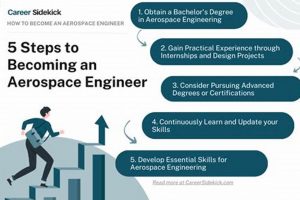
Disciplines within the broader field of engineering address flight within and beyond Earth’s atmosphere. One area focuses on the design, development, and testing of aircraft and spacecraft. A related area concentrates on the science and technology of spaceflight, including the development of spacecraft, satellites, and launch vehicles. The distinction lies primarily in the operating environment: one largely concerns the Earth’s atmosphere, while the other deals with outer space.
The study and advancement of these fields are crucial for technological progress in areas ranging from commercial aviation to space exploration. Innovations driven by research in these areas have yielded advancements in materials science, propulsion systems, and control systems, benefiting diverse sectors such as transportation, communication, and national security. Historically, both have evolved in tandem, with progress in one area often fueling innovation in the other.
The following sections will delve into the specific curricula, career paths, and research opportunities associated with each of these specialized branches of engineering, highlighting the nuances that differentiate them and demonstrating how each contributes to the advancement of flight and space-related technologies. A detailed examination will explore common misconceptions and clarify the unique challenges and rewards presented by each specialization.
Guidance on Differentiating Specializations
The following guidance provides insights into understanding the distinct focuses of two closely related engineering disciplines, assisting prospective students and professionals in making informed decisions regarding career paths and educational pursuits. Careful consideration of individual interests and skills is crucial for successful navigation of these specialized areas.
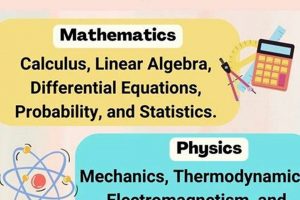
Tip 1: Curricular Focus Analysis: Evaluate the course offerings of respective degree programs. Programs emphasizing aerodynamics, aircraft design, and flight mechanics typically lean towards one specialization, while those prioritizing orbital mechanics, spacecraft propulsion, and satellite systems align more closely with the other.
Tip 2: Research Orientation: Investigate the research activities of faculty members within relevant departments. Faculty expertise often reflects the program’s core strengths. Identifying faculty working on aircraft-related projects versus those focused on space missions offers valuable insight.
Tip 3: Industry Alignment: Research the types of companies that actively recruit graduates from each program. Companies like Boeing and Airbus frequently hire graduates with backgrounds more grounded in atmospheric flight, while companies like SpaceX and NASA contractors seek those with expertise in space-related technologies.
Tip 4: Project-Based Learning: Examine the types of capstone projects offered to students. Projects involving the design and construction of unmanned aerial vehicles or advanced flight control systems demonstrate a focus on atmospheric applications. Conversely, projects related to satellite communication systems or mission planning highlight a space-oriented curriculum.
Tip 5: Professional Certifications: Understand the relevant professional certifications and licenses applicable to each field. While both specializations benefit from general engineering licensure, certain specialized certifications may be more valuable in one area than the other, reflecting the specific skills and knowledge required.
Tip 6: Consider Career Goals: Define long-term career aspirations. A desire to work on the design of commercial airliners suggests a more traditional path. Conversely, ambitions of contributing to manned space missions or the development of advanced satellite technologies point toward a more space-focused education.
By carefully considering these factors, individuals can gain a clearer understanding of the distinct characteristics of each field, enabling a more informed choice of specialization and a greater likelihood of achieving professional success.
The subsequent sections will provide a deeper analysis of the common misconceptions surrounding these fields, ultimately providing a balanced perspective on the unique challenges and rewards offered by each.
1. Atmospheric flight

The domain of atmospheric flight stands as a foundational element within the larger context. This encompasses the study of aerodynamics, aircraft design, flight dynamics, and the integration of various systems necessary for sustained and controlled movement within Earth’s atmosphere. Its significance stems from the pervasive need for efficient and safe air transportation, as well as the diverse applications of aerial vehicles in reconnaissance, surveillance, and environmental monitoring. The engineering principles governing atmospheric flight are critical for the design and operation of both commercial and military aircraft.
The relationship is one of inclusion, where atmospheric flight represents a significant sub-discipline, while the remaining sub-discipline focuses on space flight. For instance, the development of a new aircraft wing requires deep understanding of aerodynamic principles. These principles govern lift generation, drag reduction, and stability control. Similarly, the design of a flight control system relies on an understanding of flight dynamics to ensure stable and responsive aircraft handling. Companies such as Boeing and Airbus devote considerable resources to researching and implementing advancements in atmospheric flight technologies.
In summary, atmospheric flight constitutes a critical aspect; it dictates fundamental engineering challenges related to aircraft design and operation within the Earth’s atmosphere. Understanding its core principles is vital for engineers working on aerial vehicles and is a key distinguishing factor between the two disciplines. While both require a foundation in physics and mathematics, the application of these principles diverges considerably when moving beyond atmospheric considerations to the realm of space flight.
2. Spacecraft design

Spacecraft design is a central element of the field dealing with spaceflight. It is the process of conceptualizing, planning, and engineering vehicles intended for operation in the vacuum of space. Spacecraft design distinguishes itself from that applied to atmospheric vehicles by focusing on the challenges unique to the space environment, such as radiation exposure, thermal management in the absence of convection, and the need for autonomous operation. Understanding these specific requirements is fundamental to differentiating between the two disciplines.
- Structural Integrity and Mass Optimization
Spacecraft structures must withstand launch stresses and the extreme temperature variations of space. This necessitates the use of lightweight, high-strength materials and advanced structural analysis techniques. For example, the James Webb Space Telescope utilizes beryllium for its mirrors due to its high stiffness-to-weight ratio and thermal stability. The discipline places a strong emphasis on minimizing mass to improve payload capacity and mission duration. These constraints differ significantly from those in aircraft design, where aerodynamic forces and material fatigue are primary concerns.
- Thermal Management Systems
Spacecraft rely on radiative heat transfer to dissipate heat generated by electronic components and solar radiation. Effective thermal management involves designing radiators, insulation layers, and heat pipes to maintain optimal operating temperatures. The International Space Station, for instance, uses large radiator panels to reject waste heat into space. These systems are absent in typical aircraft designs, which benefit from convective cooling provided by airflow.
- Power Generation and Storage
Spacecraft primarily rely on solar panels for power generation, supplemented by batteries or radioisotope thermoelectric generators (RTGs) for periods of darkness or when operating far from the sun. Designing efficient and reliable power systems is crucial for long-duration missions. The Juno spacecraft, which explores Jupiter, utilizes large solar arrays to operate in the faint sunlight of the outer solar system. Aircraft typically use engine-driven generators for electrical power.
- Guidance, Navigation, and Control (GN&C) Systems
Spacecraft GN&C systems are designed for precise orbital maneuvers and attitude control. These systems employ sensors, actuators, and sophisticated algorithms to maintain the desired orientation and trajectory. The Dawn spacecraft, which visited the asteroids Vesta and Ceres, used ion propulsion and advanced GN&C techniques to navigate between the two celestial bodies. While aircraft also employ GN&C systems, the algorithms and sensors are tailored for atmospheric flight and navigation relative to the Earth’s surface.
These facets of spacecraft design highlight the specialized knowledge and skills required to engineer vehicles for the space environment. This expertise contrasts with the emphasis on aerodynamics and atmospheric flight mechanics found in the other field. The differences are crucial for determining the appropriate educational and career path for individuals interested in the broader aerospace field. The following sections will explore additional differences in orbital mechanics and propulsion systems, further clarifying the distinction.
3. Orbital mechanics

Orbital mechanics, a cornerstone of spaceflight, establishes a critical link to specialization within the broader field. This scientific discipline, rooted in celestial mechanics and astrodynamics, governs the motion of spacecraft and other celestial bodies under the influence of gravitational forces. An understanding of orbital mechanics is paramount for mission planning, spacecraft trajectory design, and satellite constellation deployment, directly influencing the capabilities and limitations of space-based activities. For instance, accurate calculations derived from orbital mechanics enable precision targeting for planetary probes, efficient transfer orbits between celestial bodies, and the maintenance of satellites in geosynchronous orbit. A practical example is the trajectory design for the Mars rovers, which requires precise calculations to account for gravitational forces, atmospheric drag during entry, and the relative positions of Earth and Mars. The successful deployment and operation of the Global Positioning System (GPS) relies heavily on the principles of orbital mechanics to ensure accurate positioning data.
Furthermore, the design and analysis of propulsion systems for spacecraft are intricately linked to orbital mechanics. The amount of propellant required for a specific mission is directly dependent on the orbital maneuvers necessary to achieve the desired trajectory. For example, a mission to a distant planet like Jupiter necessitates a significant change in velocity (delta-v), requiring a powerful and efficient propulsion system. Engineers apply principles of orbital mechanics to optimize these trajectories, minimizing fuel consumption and maximizing payload capacity. The design of interplanetary trajectories using gravity assist maneuvers, where a spacecraft uses the gravity of a planet to alter its speed and direction, represents a sophisticated application of orbital mechanics. Understanding perturbations to orbits, caused by factors such as solar radiation pressure and the non-spherical shape of celestial bodies, is crucial for maintaining the long-term stability of satellite orbits. This is especially important for communication satellites that need to maintain a precise position relative to ground stations.
In summary, orbital mechanics forms an indispensable component of that part of the discipline focusing on space activities, dictating mission feasibility, propulsion requirements, and long-term operational stability. Challenges in this field include accounting for the complexities of multi-body gravitational interactions and accurately predicting the effects of space weather on satellite trajectories. These principles represent a fundamental divergence, differentiating that part of the discipline and emphasizing the theoretical foundations necessary for success in space-related engineering endeavors.
4. Materials science

Materials science plays a critical role across both atmospheric and space-based engineering efforts. The selection and development of appropriate materials directly impact the performance, safety, and longevity of aircraft and spacecraft. Within the atmospheric engineering realm, materials must withstand aerodynamic stresses, temperature variations, and environmental corrosion, leading to the adoption of lightweight, high-strength alloys and composite materials. In contrast, spacecraft materials contend with the vacuum of space, extreme temperature fluctuations, and intense radiation, necessitating specialized materials capable of maintaining structural integrity and functionality under these extreme conditions. The development of high-temperature alloys for jet engines, for example, has been crucial in improving fuel efficiency and performance in aircraft, while the design of radiation-resistant materials is essential for protecting sensitive electronics on satellites. Therefore, materials science forms a foundational pillar, influencing design choices, and ensuring the reliability and effectiveness of both aircraft and spacecraft.
In atmospheric contexts, advanced aluminum alloys, titanium, and carbon fiber composites are commonly employed to minimize weight while maintaining structural integrity. These materials enable aircraft to achieve higher speeds, greater fuel efficiency, and increased payload capacity. For instance, the Boeing 787 Dreamliner utilizes a significant amount of carbon fiber reinforced polymer in its fuselage and wings, resulting in substantial weight savings compared to traditional aluminum designs. In space applications, materials such as beryllium, specialized ceramics, and multi-layered insulation (MLI) are chosen for their ability to withstand extreme temperatures, radiation exposure, and micrometeoroid impacts. The James Webb Space Telescope, for example, utilizes beryllium mirrors for their lightweight and thermal stability, ensuring precise optical performance in the cold vacuum of space. Similarly, MLI is used to insulate spacecraft from the sun’s intense heat and the deep cold of space. These applications demonstrate how materials science is carefully adapted to the specific demands of each environment.
In summary, materials science serves as a key differentiating factor, influencing design and capabilities across the two engineering paths. The distinct challenges presented by atmospheric flight versus spaceflight lead to divergent materials selection and development strategies. Challenges in this field include the ongoing search for materials with improved strength-to-weight ratios, higher temperature resistance, and enhanced radiation shielding properties. Continued advancements in materials science are essential for enabling future aerospace innovations, from more efficient airliners to more ambitious space exploration missions.
5. Propulsion systems

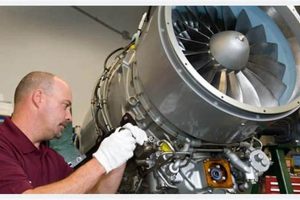
Propulsion systems constitute a critical divergence point. The requirements and operating environments dictate distinct design philosophies and technologies. In atmospheric vehicles, air-breathing engines, such as turbojets, turbofans, and ramjets, leverage atmospheric oxygen for combustion. These engines offer high thrust-to-weight ratios and fuel efficiency at specific altitudes and speeds. The design of such engines requires expertise in thermodynamics, fluid mechanics, and combustion. By contrast, spacecraft propulsion necessitates self-contained systems that carry both fuel and oxidizer. Rocket engines, including chemical rockets, electric propulsion systems, and nuclear propulsion concepts, represent the primary means of propulsion in the vacuum of space. Chemical rockets, while providing high thrust, are limited by their specific impulse (a measure of fuel efficiency). Electric propulsion systems, such as ion thrusters, offer significantly higher specific impulse but produce very low thrust, making them suitable for long-duration missions.
The selection of a propulsion system is dictated by mission requirements. Aircraft operating within the atmosphere benefit from air-breathing engines optimized for specific flight regimes. Commercial airliners, for example, employ high-bypass turbofan engines to maximize fuel efficiency during cruise. Military aircraft may utilize turbojets or turbofans with afterburners to achieve supersonic speeds. Spacecraft intended for interplanetary travel or orbit maintenance require propulsion systems capable of operating in the vacuum of space and providing the necessary velocity changes (delta-v). Examples include the use of chemical rockets for launch and orbital insertion, and electric propulsion systems for long-duration interplanetary missions. The Dawn spacecraft, for example, utilized ion propulsion to travel between Vesta and Ceres, demonstrating the effectiveness of this technology for deep-space exploration.
In summary, propulsion systems present a fundamental point of divergence, leading to distinct engineering specializations. Challenges include improving the efficiency and performance of both air-breathing and rocket engines, developing novel propulsion concepts for future space missions, and mitigating the environmental impact of propulsion systems. Continued advancements in propulsion technology are crucial for enabling more efficient air travel, expanding access to space, and facilitating ambitious space exploration endeavors. These differences necessitate distinct areas of expertise and contribute significantly to the divergence observed.
Frequently Asked Questions
The following section addresses common inquiries regarding the distinctions between these closely related engineering fields, providing clarification and guidance for prospective students and professionals.
Question 1: Is one field more difficult or prestigious than the other?
Neither field inherently possesses greater difficulty or prestige. Both demand a strong foundation in mathematics and physics, and the challenges encountered are unique to each specialization. Perceived prestige is often subjective and influenced by current technological trends and individual career goals.
Question 2: Can a degree in one field easily transition to a career in the other?
While a solid foundation in fundamental engineering principles allows for some career mobility, direct transitions are not always seamless. Specialized knowledge, such as orbital mechanics, spacecraft propulsion, or advanced aerodynamics, may be necessary for specific roles. Additional coursework or professional development activities may be required.
Question 3: Which field offers better job prospects and higher salaries?
Job market demands and salary expectations fluctuate based on economic conditions, technological advancements, and geographic location. Both fields offer competitive salaries and diverse career opportunities. Researching current industry trends and consulting salary surveys can provide more specific insights.
Question 4: Are there any overlapping areas where both fields collaborate?
Yes, significant overlap exists in areas such as materials science, structural analysis, and control systems. Many projects require collaborative efforts from engineers with expertise in both atmospheric and space-related disciplines, particularly in the design of reusable launch vehicles and hypersonic aircraft.
Question 5: Which field is more theoretical versus practical?
Both fields incorporate theoretical and practical aspects. The space specialization typically requires a deeper understanding of celestial mechanics and astrodynamics. However, both rely on practical application through design projects, simulations, and experimental testing.
Question 6: What are some typical career paths for graduates of each field?
Graduates specializing in the atmospheric realm often find employment in aircraft design, flight testing, and air traffic control systems. Those specializing in space-related activities pursue careers in spacecraft design, mission planning, and satellite operations. However, career paths are diverse and depend on individual interests and skills.
In conclusion, selecting the appropriate specialization requires careful consideration of individual interests, skills, and career aspirations. Both fields offer challenging and rewarding opportunities for engineers passionate about flight and space exploration.
The subsequent section will provide a summary of key differentiating factors, consolidating the information presented and offering a final perspective on the comparison.
Concluding Assessment
The exploration of aerospace engineering vs astronautical engineering reveals substantive distinctions in focus, curriculum, and application. One addresses flight within the Earth’s atmosphere, emphasizing aerodynamics and aircraft design. The other concerns the design, development, and operation of vehicles and systems in outer space, requiring expertise in orbital mechanics and spacecraft propulsion. Though sharing foundational principles, each demands specialized knowledge to meet the unique challenges of its respective domain.
Understanding these differences is crucial for guiding aspiring engineers toward fulfilling and impactful careers. As technology advances and the boundaries of flight and space exploration continue to expand, the demand for skilled professionals in both disciplines will undoubtedly persist. Further research and engagement with the specific nuances of each field remain essential for informed decision-making and successful contribution to the future of aerospace technology.