Aerospace engineering is a multidisciplinary field that integrates principles from mechanical, electrical, and materials science to design, develop, and test aircraft and spacecraft. Educational institutions offering programs in this area provide students with a rigorous curriculum covering aerodynamics, propulsion, structural analysis, and control systems. As an example, a university might offer a Bachelor of Science degree in Aerospace Engineering, which prepares graduates for careers in the aerospace industry.
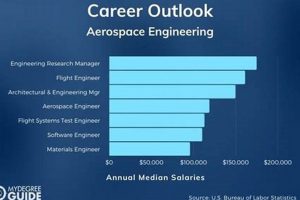
Pursuing a degree in this discipline provides individuals with the opportunity to contribute to advancements in air travel, space exploration, and defense technologies. The skills acquired are highly sought after, leading to careers with competitive salaries and opportunities for innovation. Historically, institutions pioneering aeronautical studies have played a vital role in shaping the aerospace sector through research and development, often partnering with government agencies and private companies.
This article will explore a range of higher education establishments that provide comprehensive programs in this area, detailing specific degree offerings, research opportunities, and notable faculty within their respective departments. The information will assist prospective students in identifying institutions that align with their academic and career aspirations in this dynamic and technologically advanced field.
Guidance for Selecting Institutions Offering Aerospace Engineering Programs
The selection of an appropriate academic institution for aerospace engineering studies necessitates careful consideration of various factors. This section provides guidance to assist prospective students in making informed decisions.
Tip 1: Assess Program Accreditation. Accreditation by organizations such as ABET (Accreditation Board for Engineering and Technology) ensures that the program meets established quality standards and provides a solid foundation in engineering principles. Graduates from accredited programs often find it easier to obtain professional licensure and are viewed favorably by employers.
Tip 2: Examine Faculty Expertise. Research the faculty members within the aerospace engineering department. Their expertise, research interests, and professional affiliations can significantly impact the learning experience. Look for faculty actively involved in cutting-edge research and those with industry experience.
Tip 3: Evaluate Research Opportunities. Investigate the availability of research opportunities for undergraduate and graduate students. Participation in research projects provides valuable hands-on experience, enhances problem-solving skills, and can lead to publications and conference presentations. Access to specialized facilities, such as wind tunnels or composite materials labs, is also a key consideration.
Tip 4: Consider Location and Industry Connections. The location of the institution and its proximity to aerospace industry hubs can influence internship and job prospects. Institutions with strong ties to companies like Boeing, Lockheed Martin, or SpaceX often provide students with networking opportunities and access to practical, real-world experience.
Tip 5: Review Curriculum and Specializations. Analyze the program curriculum and determine if it aligns with your specific interests within aerospace engineering, such as aerodynamics, propulsion, or astrodynamics. Some institutions offer specialized tracks or concentrations that allow students to focus their studies on a particular area.
Tip 6: Analyze Available Resources and Facilities. Consider the institution’s resources and facilities, including access to modern laboratories, advanced software, and computing resources. A well-equipped learning environment can significantly enhance the educational experience and prepare students for the demands of the industry.
Tip 7: Investigate Capstone Project Opportunities. Review the capstone project requirements and the types of projects students have undertaken in the past. A challenging and relevant capstone project provides an opportunity to apply acquired knowledge to solve complex engineering problems.
Tip 8: Assess Career Services and Alumni Network. Evaluate the institution’s career services, including internship placement assistance, resume workshops, and career fairs. A strong alumni network can also provide valuable mentorship and job opportunities after graduation.
Careful consideration of these factors, including program accreditation, faculty expertise, research opportunities, industry connections, curriculum specializations, resources, capstone project opportunities, and career services, will facilitate the selection of an academic institution that aligns with individual goals and aspirations.
The following section will offer a detailed look at specific institutions renowned for their aerospace engineering programs, showcasing the application of these guiding principles.
1. Program Accreditation

Program accreditation serves as a critical benchmark for evaluating the quality and rigor of aerospace engineering programs offered by various institutions. Accreditation, particularly from organizations like ABET (Accreditation Board for Engineering and Technology), signifies that a program meets specific standards for curriculum, faculty qualifications, facilities, and student outcomes. The absence of accreditation may indicate deficiencies in these areas, potentially impacting the educational experience and career prospects for graduates.
The connection between program accreditation and the value of selecting a college for aerospace engineering is direct. A program lacking accreditation might not adequately prepare students for professional licensure or certification, which are often prerequisites for employment in the aerospace industry. Furthermore, many employers prioritize graduates from accredited programs, viewing them as having received a more standardized and comprehensive education. For instance, government agencies like NASA or the Department of Defense frequently require engineers to hold degrees from ABET-accredited institutions for specific positions.
Consequently, when considering options for aerospace engineering education, verifying program accreditation is essential. This verification provides assurance that the institution has undergone external evaluation and meets established industry standards. Accreditation enhances the credibility of the institution and the value of the degree earned, contributing significantly to a graduate’s success in the competitive aerospace field.
2. Faculty Research
Faculty research constitutes a crucial component in the evaluation of establishments that offer aerospace engineering programs. The depth and breadth of faculty research initiatives serve as an indicator of the institution’s commitment to advancing the field and providing students with access to cutting-edge knowledge and technologies. Institutions with strong faculty research programs typically attract and retain highly qualified faculty members, who in turn, enhance the quality of education and research opportunities available to students. For example, an institution where faculty are actively involved in NASA-funded research on advanced propulsion systems is likely to offer students opportunities to participate in these projects, gaining invaluable practical experience.
The connection between faculty research and the overall quality of aerospace engineering programs extends beyond direct student involvement. Faculty research contributes to the development of new courses and curriculum updates, ensuring that students are exposed to the latest advancements in the field. Furthermore, research activities often lead to collaborations with industry partners, creating opportunities for internships, co-op programs, and post-graduation employment. For instance, a university with faculty engaged in research on autonomous aircraft systems may have partnerships with aerospace companies developing drone technology, thereby providing students with direct pathways to industry careers. These research-backed experiences are extremely valuable in career placement.
In summary, the level and focus of faculty research directly impact the quality and relevance of aerospace engineering programs. Institutions that prioritize and support faculty research are better positioned to provide students with a comprehensive education, access to cutting-edge technologies, and opportunities for professional development. Evaluating the faculty research portfolio is therefore an essential step in assessing the strengths of various educational establishments that deliver aerospace engineering programs, ultimately shaping the future of this dynamic field.
3. Industry Partnerships

Industry partnerships are a cornerstone of effective aerospace engineering programs at various academic institutions. These collaborations represent a symbiotic relationship, providing tangible benefits to both the educational institution and the participating industry entities. The presence of strong industry connections often signifies a program’s relevance to the current needs and future directions of the aerospace sector. Universities that actively cultivate these partnerships demonstrate a commitment to ensuring their curricula remain aligned with industry standards, thus enhancing the employability of their graduates. For example, a partnership might involve a collaboration on research and development projects, where students gain invaluable experience working alongside industry professionals on real-world engineering challenges.
The practical implications of robust industry partnerships are multifaceted. Such collaborations frequently result in internship and co-op opportunities for students, allowing them to apply theoretical knowledge in a professional setting. These experiences provide a competitive advantage upon graduation, demonstrating practical skills and industry-specific knowledge sought after by employers. Furthermore, industry partners may contribute to curriculum development, providing insights into emerging technologies and industry best practices. This ensures that students are learning the most relevant and up-to-date information. A specific instance would be an aerospace company providing access to its facilities for student tours, workshops, or hands-on training sessions, exposing students to the latest manufacturing processes and technological advancements.
In conclusion, industry partnerships are a vital component of what distinguishes exceptional aerospace engineering programs. These collaborations enhance the educational experience by providing practical training, exposure to cutting-edge technologies, and direct pathways to employment. Institutions that prioritize and nurture these relationships are better positioned to equip students with the skills and knowledge necessary to succeed in the dynamic and demanding aerospace industry. Evaluating the strength and scope of industry partnerships is therefore a critical step in selecting an academic institution for aerospace engineering studies, and can also contribute to innovation.
4. Curriculum Focus

The curriculum focus of an aerospace engineering program profoundly influences its ability to effectively prepare students for careers in the aerospace industry. The specific areas of emphasis within a program directly dictate the knowledge and skills that graduates acquire. A curriculum heavily focused on theoretical principles, without adequate practical application, may leave students ill-prepared for the challenges of real-world engineering design and problem-solving. Conversely, a curriculum excessively focused on narrow specializations might limit graduates’ adaptability and versatility in a rapidly evolving technological landscape. For instance, an establishment emphasizing astrodynamics and satellite design may produce graduates highly skilled in those specific areas, while neglecting fundamental knowledge of aerodynamics or propulsion, thereby reducing their overall marketability in the broader aerospace sector. Therefore, institutions must maintain a balanced curriculum.
Consider an institution that structures its curriculum around project-based learning, incorporating hands-on experiences such as designing and building unmanned aerial vehicles or participating in rocketry competitions. Such practical application allows students to solidify theoretical concepts and develop crucial teamwork, communication, and problem-solving skills. Furthermore, a curriculum incorporating exposure to industry-standard software tools and simulation platforms prepares students for immediate contributions upon entering the workforce. Institutions that actively solicit feedback from industry advisory boards are more likely to offer curricula that reflect current industry trends and employer needs. This dynamic engagement enhances the relevance and value of the educational experience, leading to improved employment outcomes for graduates.
In conclusion, the curriculum focus stands as a critical determinant of the quality and effectiveness of aerospace engineering programs. A well-designed curriculum strikes a balance between theoretical foundations and practical applications, incorporating industry-relevant skills and technologies. Institutions must continuously adapt their curricula to reflect advancements in the aerospace field and meet the evolving needs of employers. A comprehensive evaluation of the curriculum focus is therefore essential for prospective students seeking to identify institutions that will best prepare them for successful careers in aerospace engineering.
5. Location Advantage

The geographic location of an institution offering aerospace engineering programs presents a significant advantage, influencing student opportunities and program quality. Proximity to aerospace industry hubs, research facilities, and government agencies creates a synergistic ecosystem. This adjacency fosters collaborations, provides access to internships and employment, and enhances the overall educational experience. The presence of major aerospace companies in a region, such as Boeing in Seattle or Lockheed Martin in Denver, directly benefits local universities by offering students opportunities for practical application of their studies through co-ops and research partnerships.
Institutions situated near government research centers, like NASA’s various facilities across the United States, often benefit from increased funding for research projects and collaborative initiatives. Students gain exposure to cutting-edge technologies and contribute to advancements in the field. Moreover, a location near major transportation hubs, such as international airports, can provide easier access for guest lecturers from industry, industry events, and opportunities for students to participate in specialized training programs. The interplay between academic rigor and practical industry experience is significantly enhanced by location.
In conclusion, the location of an aerospace engineering program is a critical factor in determining its value and potential impact on a student’s career trajectory. Institutions located near industry clusters, research facilities, and transportation hubs provide students with unmatched opportunities for professional development, networking, and employment. This locational advantage strengthens the educational experience and improves long-term career prospects for graduates, highlighting its importance in choosing between aerospace engineering programs. The location can enable more practical experiences.
Frequently Asked Questions About Aerospace Engineering Programs
This section addresses common inquiries regarding aerospace engineering programs at higher education institutions, providing clarity on key aspects relevant to prospective students.
Question 1: What distinguishes an accredited aerospace engineering program from a non-accredited one?
Accredited programs, typically by ABET, meet established standards for curriculum, faculty qualifications, and student outcomes. Accreditation signifies a commitment to quality and ensures graduates are adequately prepared for professional licensure and industry expectations. Non-accredited programs may not meet these standards, potentially impacting career prospects.
Question 2: How important is faculty research experience when selecting an aerospace engineering college?
Faculty research expertise is a significant indicator of program quality. Institutions with active research programs often offer students opportunities to participate in cutting-edge projects, gaining valuable practical experience and contributing to advancements in the field. Research activities also enhance curriculum development and industry collaborations.
Question 3: What role do industry partnerships play in aerospace engineering education?
Industry partnerships are crucial for providing students with practical experience through internships, co-op programs, and collaborative research projects. These partnerships also ensure that the curriculum aligns with current industry needs, increasing graduates’ employability and relevance in the job market.
Question 4: What is the typical curriculum structure for an undergraduate aerospace engineering program?
A typical undergraduate curriculum includes core courses in mathematics, physics, and engineering fundamentals, followed by specialized courses in aerodynamics, propulsion, structural analysis, and control systems. Many programs also incorporate design projects and hands-on laboratory experiences.
Question 5: How does the location of a college impact its aerospace engineering program?
Location matters. Colleges situated near aerospace industry hubs, research facilities, or government agencies offer students increased access to internships, networking opportunities, and potential employment. Proximity to these resources enhances the educational experience and career prospects.
Question 6: What career paths are available to graduates with an aerospace engineering degree?
Graduates can pursue diverse career paths in aircraft design, spacecraft development, propulsion systems, satellite technology, and related fields. Opportunities exist in the aerospace industry, government agencies, research institutions, and consulting firms.
Careful consideration of these questions and answers can aid prospective students in making informed decisions about where to pursue aerospace engineering studies.
The following section will provide a comprehensive overview of specific institutions known for their exceptional aerospace engineering programs.
Concluding Remarks
This exploration of “what colleges have aerospace engineering” underscores several critical factors for prospective students. These include program accreditation, faculty expertise, industry partnerships, curriculum focus, and geographical location. Institutions demonstrating strength in these areas provide students with a robust educational foundation and enhanced career prospects within the aerospace industry.
The selection of a higher learning establishment for aerospace engineering requires careful consideration of individual academic and professional aspirations. Further research and direct engagement with university representatives are strongly encouraged. The future of the aerospace sector rests on the next generation of engineers; therefore, investing in a rigorous and relevant education remains paramount.