![Top Aerospace Engineering Colleges in Michigan [Guide]](data:image/svg+xml;base64,PHN2ZyB4bWxucz0iaHR0cDovL3d3dy53My5vcmcvMjAwMC9zdmciIHdpZHRoPSI0NzQiIGhlaWdodD0iNTYiIHZpZXdCb3g9IjAgMCA0NzQgNTYiPjxyZWN0IHdpZHRoPSIxMDAlIiBoZWlnaHQ9IjEwMCUiIHN0eWxlPSJmaWxsOiNjZmQ0ZGI7ZmlsbC1vcGFjaXR5OiAwLjE7Ii8+PC9zdmc+ "Top Aerospace Engineering Colleges in Michigan [Guide] Innovating the Future of Flight with Reliable Aviation Solutions")
Institutions within the state of Michigan that offer programs of study specifically focused on the design, development, and testing of aircraft and spacecraft constitute a segment of higher education focused on flight. These programs typically include coursework in aerodynamics, propulsion, structures, and control systems. An example would be a four-year Bachelor of Science degree program specializing in the aforementioned disciplines.
The availability of specialized education in aeronautics and astronautics within the state is critical for fostering innovation and meeting the workforce demands of the aerospace industry. The existence of such programs provides a pathway for individuals to contribute to advancements in air travel, space exploration, and national defense, strengthening the state’s economic competitiveness and technological leadership. Historically, Michigan has played a significant role in automotive manufacturing, and aerospace engineering education is partially facilitated by the State’s pre-existing engineering expertise.
The subsequent sections will discuss specific academic institutions within the state that offer relevant curricula, highlight their program strengths, and outline potential career paths for graduates in these fields.
Guidance for Aspiring Aerospace Engineers in Michigan
This section presents crucial considerations for individuals selecting an aerospace engineering program within the state. Prudent planning can significantly enhance educational outcomes and career prospects.
Tip 1: Assess Program Accreditation. Verify that the prospective program holds accreditation from ABET (Accreditation Board for Engineering and Technology). Accreditation ensures adherence to established quality standards and enhances graduate employability.
Tip 2: Evaluate Research Opportunities. Investigate the availability of undergraduate research opportunities. Active participation in research projects provides invaluable hands-on experience and strengthens applications for graduate studies or industry positions.
Tip 3: Examine Faculty Expertise. Scrutinize the faculty profiles, considering their research specializations, industry experience, and teaching methodologies. Aligning interests with faculty expertise maximizes mentorship and learning opportunities.
Tip 4: Explore Internship Programs. Determine the program’s connections with aerospace companies and government agencies for internship placements. Internships provide practical experience and facilitate networking within the industry.
Tip 5: Analyze Curriculum Rigor. Evaluate the curriculum’s breadth and depth, ensuring coverage of essential topics such as aerodynamics, propulsion, structures, and control systems. Specialization options should align with career aspirations.
Tip 6: Consider Location and Cost. Factor in the location of the college and the associated cost of attendance, including tuition, fees, and living expenses. Explore available financial aid options and scholarship opportunities.
Tip 7: Investigate Design-Build-Fly Opportunities. Active participation in Design-Build-Fly projects (often sponsored by organizations like the American Institute of Aeronautics and Astronautics – AIAA) offers a significant advantage by applying theoretical knowledge to real-world engineering challenges.
Proactive engagement with these considerations facilitates informed decision-making and optimizes the selection of an appropriate program. Understanding program accreditation, research, faculty, curriculum, and internship opportunities will prepare students for a successful career.
The concluding section will summarize the key information and highlight the overall importance of aerospace engineering education in the state of Michigan.
1. ABET Accreditation

ABET (Accreditation Board for Engineering and Technology) accreditation constitutes a critical benchmark for evaluating the quality and rigor of engineering programs, including those focused on aerospace engineering. For prospective students considering aerospace engineering colleges in Michigan, the presence of ABET accreditation is a paramount consideration.
- Ensuring Program Quality
ABET accreditation signifies that an aerospace engineering program meets defined standards concerning curriculum content, faculty qualifications, laboratory resources, and student outcomes assessment. This assurance is essential for students to develop the competencies required for successful careers in the aerospace industry.
- Facilitating Professional Licensure
Graduation from an ABET-accredited aerospace engineering program is often a prerequisite for pursuing professional engineering licensure. Licensure may be required for certain engineering roles, particularly those involving public safety or the design of critical infrastructure. Thus, accreditation is integral to career advancement.
- Enhancing Employer Recognition
Employers in the aerospace industry often prioritize hiring graduates from ABET-accredited programs. Accreditation signals that graduates have received a standardized education and possess the fundamental knowledge and skills expected of entry-level engineers. This heightened recognition can improve job prospects.
- Promoting Continuous Improvement
The ABET accreditation process requires aerospace engineering colleges in Michigan to engage in continuous self-assessment and improvement efforts. Programs must regularly evaluate their curriculum, teaching methods, and student outcomes and implement changes based on these assessments. This ongoing commitment to improvement ensures that the program remains current and relevant.
Therefore, when evaluating aerospace engineering colleges in Michigan, prospective students should prioritize programs with ABET accreditation. This accreditation represents a commitment to quality and provides graduates with a competitive advantage in the job market and the broader engineering profession.
2. Research Facilities

Advanced research facilities constitute a critical component of comprehensive aerospace engineering programs. Within Michigan’s academic institutions, these facilities serve as the nexus for theoretical knowledge application and practical engineering development. The presence of well-equipped laboratories, wind tunnels, computational resources, and specialized testing equipment directly impacts the quality of education and the potential for innovation within these programs. For example, a university with a state-of-the-art wind tunnel enables students to conduct aerodynamic analyses and validate design concepts, experiences unavailable in institutions lacking such resources. A cause-and-effect relationship exists: enhanced research facilities translate to more robust research output and a more capable workforce.
The availability of research facilities directly influences the scope and depth of research conducted within the institution. Universities with advanced composite materials laboratories, for instance, can contribute to the development of lighter and stronger aircraft structures. Those equipped with advanced propulsion testing facilities can engage in research focused on increasing engine efficiency and reducing emissions. Such research not only advances the state-of-the-art but also provides students with opportunities to participate in cutting-edge projects. These opportunities are a key element in preparing graduates for roles within leading aerospace companies and government research agencies.
Ultimately, the investment in and maintenance of robust research facilities by aerospace engineering colleges in Michigan directly correlate with the quality of education, the level of innovation, and the competitiveness of graduates in the aerospace job market. While challenges may exist concerning funding and resource allocation, prioritizing research infrastructure is paramount to ensuring the continued growth and success of aerospace engineering programs within the state.
3. Faculty Expertise

The caliber of faculty within aerospace engineering colleges in Michigan directly determines the quality of education, research output, and overall reputation of the institution. Faculty expertise, encompassing specialized knowledge, research experience, and industry connections, serves as the cornerstone upon which students build their understanding of complex aerospace principles. For example, a professor with a background in computational fluid dynamics can guide students in simulating airflow around aircraft wings, providing practical experience in aerodynamic design. Conversely, a lack of faculty expertise can limit the depth and breadth of the curriculum, hindering student development.
The presence of experienced faculty fosters a research-intensive environment, enabling students to engage in cutting-edge projects. For instance, a faculty member specializing in satellite propulsion can mentor students in designing and testing advanced rocket engines, leading to publications in reputable journals and presentations at international conferences. Such involvement not only enhances students’ research skills but also strengthens their credentials for graduate studies and industry positions. Moreover, faculty with strong ties to aerospace companies and government agencies can facilitate internships and job placements, bridging the gap between academia and the professional world. As a result, institutions benefit from increases in research funding and higher placement rates for their graduating students.
Ultimately, the commitment of aerospace engineering colleges in Michigan to recruiting and retaining faculty with diverse expertise directly impacts the success of their students and the advancement of aerospace technology within the state. While challenges may exist in attracting top-tier talent due to competition from industry and other academic institutions, prioritizing faculty development and creating a supportive research environment are essential for maintaining a competitive edge. Neglecting this investment compromises the program’s academic standing and hinders the preparation of future aerospace engineers.
4. Industry Partnerships

Relationships between aerospace engineering colleges in Michigan and relevant industrial entities are crucial for program enhancement and graduate preparation. These partnerships serve as conduits for knowledge transfer, resource sharing, and experiential learning, fostering a symbiotic relationship that benefits both academia and industry.
- Internship and Co-op Programs
Industry partnerships facilitate internship and cooperative education (co-op) programs, providing students with hands-on experience in real-world aerospace settings. Students gain practical skills, apply theoretical knowledge, and develop professional networks. For example, a partnership with an aerospace manufacturer might involve students working on design projects or contributing to testing and analysis, resulting in improved industry readiness for the college’s graduates.
- Sponsored Research and Development
Companies often collaborate with aerospace engineering colleges on research and development projects, providing funding, equipment, and expertise. This collaboration enables universities to pursue innovative research, develop new technologies, and contribute to advancements in the field. A specific case might involve a company sponsoring research into novel propulsion systems or advanced materials, thereby accelerating technological progress while equipping students with valuable research experience.
- Curriculum Development and Advisory Boards
Industry representatives serve on advisory boards and contribute to curriculum development, ensuring that academic programs align with industry needs and trends. This collaboration helps keep the curriculum current and relevant, preparing students for the challenges they will face in their careers. Input from companies on required skill sets can directly affect the course content of an aerospace engineering degree, increasing the relevance of education.
- Equipment and Software Donations
Companies frequently donate equipment and software to aerospace engineering colleges, providing students with access to state-of-the-art tools and technologies. This exposure enhances students’ skills and prepares them to use the same tools and technologies employed in the industry. This type of support can result in a direct improvement in student competence using industry-standard technologies.
These industry partnerships are essential for fostering innovation, enhancing educational quality, and ensuring that aerospace engineering colleges in Michigan produce graduates who are well-prepared to contribute to the industry’s continued growth and success. Neglecting these partnerships can lead to educational programs lagging behind current industry practices.
5. Specialized Curricula

Specialized curricula within aerospace engineering colleges in Michigan represent a focused approach to education, allowing students to delve into specific areas of the field beyond the foundational knowledge provided in general engineering programs. These focused curricula are vital for preparing graduates for the increasingly specialized roles within the aerospace industry.
- Astrodynamics and Space Systems
This specialization focuses on orbital mechanics, spacecraft attitude control, and mission design. Students study celestial mechanics, satellite navigation, and space mission planning. A practical example is designing trajectories for interplanetary missions, requiring a deep understanding of gravitational forces and spacecraft propulsion. Specialization allows universities in Michigan to cater to the growing space exploration sector.
- Aerodynamics and Fluid Mechanics
This area emphasizes the study of air flow around aircraft and spacecraft. Students learn about boundary layer theory, computational fluid dynamics (CFD), and wind tunnel testing. An application of this specialization is in the design of more efficient aircraft wings, where minimizing drag is crucial for fuel economy. The curricula can then lead to graduate research in aeronautical engineering.
- Propulsion Systems
This specialization concentrates on the design and analysis of jet engines, rocket engines, and other propulsion technologies. Students study thermodynamics, combustion, and heat transfer. An example is the design of hybrid rocket engines that combine solid and liquid propellants for improved performance.
- Aerospace Structures and Materials
This area focuses on the structural integrity and material properties of aircraft and spacecraft. Students learn about stress analysis, finite element methods (FEM), and composite materials. A real-world application is in designing lightweight and durable aircraft fuselages using advanced composite materials. Michigan is expected to lead on the new generation of aerospace structures.
The availability and quality of these specialized curricula within aerospace engineering colleges in Michigan are significant factors in attracting talented students and preparing them for successful careers in the ever-evolving aerospace sector. They are the core to Michigan’s reputation as a high-tech state.
6. Location Accessibility
Location accessibility, in the context of aerospace engineering colleges in Michigan, encompasses the ease with which prospective students, faculty, and industry partners can physically reach and engage with the institution. This accessibility is a multifactorial consideration involving proximity to population centers, transportation infrastructure, and relevant industry hubs. Location accessibility is a critical component of an institution’s ability to attract a diverse student body, recruit qualified faculty, and foster collaborations with aerospace companies.
For example, an aerospace engineering college located near a major airport or industrial complex offering internships may provide students with greater opportunities for practical experience and professional networking. This accessibility translates to enhanced learning outcomes and improved career prospects. Conversely, a college situated in a remote area with limited transportation options may struggle to attract students and faculty, thereby hindering its ability to deliver a high-quality aerospace engineering education. The presence of major highways, public transportation, and readily available air travel directly improves access for both domestic and international students, resulting in higher enrollment rates and a more diverse student body. This directly improves the university’s ability to compete with similar programs across the country.
In summary, location accessibility is a significant determinant of the overall effectiveness and competitiveness of aerospace engineering colleges in Michigan. The strategic positioning of these institutions within accessible areas contributes to student recruitment, faculty attraction, industry collaboration, and the ultimate success of the program. Overcoming geographical challenges through strategic planning and resource allocation is essential for maximizing the educational and economic impact of aerospace engineering education within the state.
7. Financial Resources

Financial resources are a fundamental determinant of the quality and scope of aerospace engineering programs offered within Michigan. These resources encompass various sources, including state and federal funding, tuition revenue, alumni donations, and industry partnerships. A robust financial base directly enables colleges to invest in advanced research facilities, attract and retain highly qualified faculty, provide scholarships and financial aid to students, and develop specialized curricula. For example, adequate funding may permit the acquisition of a wind tunnel or the establishment of a computational fluid dynamics laboratory, facilitating cutting-edge research and enhancing the educational experience.
The availability of financial aid packages significantly impacts the accessibility of aerospace engineering education for students from diverse socioeconomic backgrounds. Scholarships, grants, and loan programs can alleviate the financial burden of tuition and living expenses, enabling talented individuals to pursue their academic goals regardless of their financial circumstances. Conversely, limited financial resources can lead to higher tuition costs, reduced financial aid availability, and deferred investments in crucial infrastructure, potentially hindering the competitiveness of aerospace engineering programs. For example, a lack of funding may force a university to delay upgrades to its propulsion testing facilities, limiting students’ exposure to current technologies.
In conclusion, financial resources play a vital role in shaping the landscape of aerospace engineering education in Michigan. Sustained investment in these programs is essential for ensuring their continued excellence, accessibility, and relevance to the evolving needs of the aerospace industry. Addressing funding challenges through strategic planning, fundraising initiatives, and advocacy for public support is paramount to maintaining Michigan’s position as a hub for aerospace innovation and workforce development.
Frequently Asked Questions
This section addresses common inquiries regarding aerospace engineering education within the state of Michigan, providing factual and objective answers to assist prospective students and stakeholders.
Question 1: What criteria should be considered when selecting an aerospace engineering program?
Factors warranting consideration include ABET accreditation, research facilities, faculty expertise, industry partnerships, specialized curricula, location accessibility, and available financial resources. Prioritization should align with individual academic and career objectives.
Question 2: Is ABET accreditation essential for aerospace engineering programs?
ABET accreditation is considered highly desirable. Graduation from an ABET-accredited program can improve employment prospects and facilitate professional licensure.
Question 3: What career opportunities are available for graduates of aerospace engineering programs in Michigan?
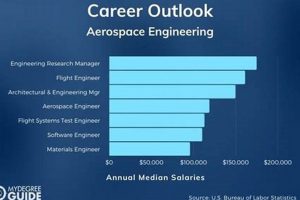
Career paths may include aerospace engineering, design engineering, research and development, systems engineering, and project management, within both the private and public sectors.
Question 4: Are internship opportunities readily available for aerospace engineering students in Michigan?
The availability of internship opportunities varies depending on the specific institution and its relationships with aerospace companies and government agencies. Inquiring about industry partnerships during the application process is recommended.
Question 5: What are the typical admission requirements for aerospace engineering programs?
Admission requirements generally include a strong academic record in mathematics and science, standardized test scores (if applicable), and letters of recommendation. Specific requirements are institution-dependent.
Question 6: What is the average cost of attending an aerospace engineering program in Michigan?
The cost of attendance varies significantly depending on the institution (public or private), residency status, and available financial aid. Information regarding tuition, fees, and living expenses can be obtained directly from the respective colleges.
Prospective students are encouraged to conduct thorough research and contact individual institutions directly for the most accurate and up-to-date information. The selection of an aerospace engineering program is a significant decision that warrants careful consideration.
The subsequent section will summarize the preceding information and reiterate the significance of aerospace engineering education in Michigan.
Conclusion
This exposition has detailed critical elements pertaining to aerospace engineering colleges in michigan. Program quality, research capabilities, faculty expertise, industry collaborations, specialized curricula, location, and financial considerations are determinants of educational efficacy and graduate preparedness. The confluence of these factors shapes the landscape of aerospace engineering education within the state.
Investment in aerospace engineering education in Michigan is paramount to sustaining innovation and meeting workforce demands within the aerospace sector. Continued emphasis on program enhancement and strategic partnerships is crucial for ensuring the state’s competitiveness and leadership in this technologically advanced field. Prioritized development translates into a stronger economy for the future.