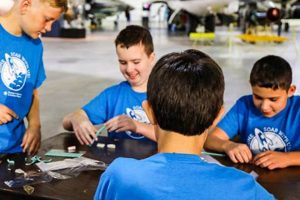
A structured work experience, typically lasting several weeks to a few months during the summer season, provides opportunities for those pursuing degrees in the design, development, and production of aircraft and spacecraft. This type of program allows participants to apply classroom knowledge in real-world scenarios, gaining practical skills and industry exposure relevant to their field of study. These programs often involve working on specific projects under the guidance of experienced engineers.
Participation offers significant advantages for career development. It facilitates the acquisition of valuable technical skills, enhances problem-solving abilities, and provides networking opportunities with professionals in the aerospace sector. Historically, such experiences have served as crucial stepping stones for securing full-time employment after graduation, often leading to offers from the organizations where the internship was completed. These programs also provide a valuable insight into the operational dynamics and culture of the aerospace industry.
The following sections will delve into the specific types of opportunities available, strategies for securing a placement, the skills and qualifications sought by employers, and the long-term career implications of such participation.
Securing Opportunities
The pursuit of practical experience is crucial for students aiming to enter the aerospace sector. Strategic preparation and a targeted approach significantly enhance the likelihood of securing a valuable placement. The following guidelines are intended to optimize a candidate’s prospects.
Tip 1: Cultivate a Strong Academic Foundation: A solid understanding of fundamental engineering principles, particularly in areas such as aerodynamics, propulsion, and materials science, is paramount. Employers prioritize candidates who demonstrate a mastery of core concepts.
Tip 2: Develop Relevant Technical Skills: Proficiency in industry-standard software packages, such as CAD (Computer-Aided Design), CAM (Computer-Aided Manufacturing), and simulation tools, is highly advantageous. Acquiring skills in programming languages like Python or MATLAB, frequently used for data analysis and modeling, can also differentiate a candidate.
Tip 3: Build a Compelling Resume: The resume should clearly articulate academic achievements, relevant coursework, and any prior experience, including participation in engineering clubs, personal projects, or research activities. Emphasize quantifiable results and technical accomplishments.
Tip 4: Network Actively: Attend industry conferences, career fairs, and university-hosted events to connect with potential employers. Engaging with professionals in the aerospace field provides opportunities to learn about available placements and demonstrate genuine interest.
Tip 5: Tailor Application Materials: Generic applications are unlikely to succeed. Customize cover letters and resumes to align with the specific requirements and culture of each organization. Highlight relevant skills and experiences that directly address the employer’s needs.
Tip 6: Prepare for Technical Interviews: Expect to be challenged with technical questions related to aerospace engineering principles and problem-solving scenarios. Practice answering common interview questions and be prepared to discuss specific projects or experiences in detail.
Tip 7: Seek Mentorship and Guidance: Connect with professors, advisors, or alumni who have experience in the aerospace industry. Their insights and advice can be invaluable in navigating the application process and making informed decisions.
By adhering to these guidelines, students can significantly enhance their competitiveness and increase their chances of securing a placement, thereby laying a strong foundation for a successful career in aerospace engineering.
The subsequent sections will further examine the skills and qualifications employers seek, strategies for optimizing a profile, and the impact of such experience on career trajectory.
1. Application Timeline

The application timeline represents a critical factor in securing a summer internship within the aerospace engineering domain. The cyclical nature of academic calendars and industry hiring practices dictates a specific window of opportunity for student applicants. A failure to adhere to the established schedule substantially diminishes the likelihood of securing a desirable placement. For example, many large aerospace corporations begin accepting applications as early as September or October for positions commencing the following summer. Delayed application submissions often result in missed deadlines and a depleted pool of available opportunities.
A proactive approach to the application process necessitates diligent monitoring of company websites, career services platforms, and professional networking sites. Early application submissions not only increase the chances of consideration but also provide applicants with a greater selection of available roles and locations. The timeline also impacts preparation; ample time allows for refinement of resumes, cover letters, and interview skills. Conversely, a rushed application process often leads to errors and a less compelling presentation of qualifications.
Understanding and respecting the application timeline is therefore paramount. The early bird catches the worm. Failing to meet deadlines may result in missing career-defining events. Successful applicants recognize the strategic importance of early action and invest the necessary time and effort to prepare comprehensive and timely submissions. This diligence distinguishes them from competitors and significantly enhances their prospects for success in the competitive aerospace industry.
2. Technical Skillsets

Technical skillsets constitute a core requirement for securing and succeeding in practical summer programs for aerospace engineering undergraduates. Proficiency in relevant technical domains directly impacts a candidate’s ability to contribute meaningfully to engineering projects and contributes to the overall value derived from the practical opportunity. The effect of possessing a robust technical foundation is evident in the tasks interns are assigned; those with demonstrable skills in areas such as CAD software, computational analysis tools, or programming languages are often entrusted with more complex and impactful responsibilities.
Consider, for example, an intern at a major aerospace manufacturer tasked with optimizing the aerodynamic performance of a new aircraft wing design. Mastery of computational fluid dynamics (CFD) software is essential for conducting simulations, analyzing airflow patterns, and identifying areas for improvement. Without this skillset, the intern’s contributions would be limited. Another case involves a program participant at a space exploration company developing control algorithms for a robotic rover. Proficiency in programming languages like Python or C++ is crucial for writing, testing, and debugging the software that governs the rover’s movements and data acquisition. The practical significance of these abilities is that participants can directly contribute to project outcomes.
In conclusion, the cultivation of strong technical competencies forms an integral part of preparation for, and successful participation in, practical experiences. Challenges in acquiring these abilities may limit available roles and impede the degree of contribution. The acquisition of robust skills is a crucial factor that bridges the gap between theoretical knowledge and practical application, allowing them to apply their academic background to real-world engineering challenges, and contributing to the overall advancement of the aerospace field.
3. Project Exposure

Project exposure serves as a cornerstone of summer placements for aerospace engineering undergraduates. The degree and nature of project involvement directly influences the educational and professional value derived from the experience. A well-structured opportunity provides interns with hands-on participation in real-world engineering challenges, fostering the application of theoretical knowledge and the development of practical skills. Conversely, limited or superficial engagement restricts the opportunity for meaningful learning and skill acquisition. For example, an intern assigned to assist in the design of a new aircraft engine component gains invaluable experience in CAD software, materials selection, and thermal analysis. Active involvement in such projects fosters a deeper understanding of engineering principles and enhances problem-solving capabilities.
In contrast, an intern primarily tasked with administrative duties or data entry receives minimal exposure to core engineering functions. While such tasks may provide insights into the operational aspects of the organization, they fail to cultivate the technical expertise necessary for a successful career in aerospace engineering. Furthermore, project engagement enhances a student’s professional network, allowing them to interact with experienced engineers and learn from their expertise. This interaction can lead to valuable mentorship opportunities and future career prospects. Consider a scenario where an intern actively contributes to a research project focused on developing advanced composite materials for spacecraft. Their involvement not only expands their knowledge of materials science but also establishes connections with researchers and engineers in the field.
Meaningful project involvement in these placement programs is crucial for bridging the gap between academic theory and practical application. While administrative or observational roles may provide some value, active participation in engineering projects fosters the development of technical skills, enhances problem-solving abilities, and expands professional networks. The absence of robust participation limits the overall effectiveness of the experience and hinders the intern’s preparation for a successful career in the aerospace sector.
4. Networking Opportunities
Networking opportunities represent an integral component of the practical experiences offered to aerospace engineering students during the summer months. Participation facilitates connections with established professionals, peers, and potential future employers, which in turn fosters career development. The structured interactions facilitated during placements often lead to invaluable relationships and informational interviews that can shape future career paths.
The benefits derived extend beyond immediate opportunities. For example, a student working on a project with experienced engineers gains direct access to mentorship and insights into industry practices. Attending company events or industry conferences as part of the internship provides access to a broader network of professionals, often leading to job offers or collaborations on future projects. Failure to leverage these opportunities limits the potential for long-term career advancement.
The ability to connect and engage with professionals within the aerospace field is essential for long-term career success. Exposure to industry leaders and peer interaction enables knowledge sharing, exposes engineers to evolving trends, and facilitates opportunities for collaboration. Effective networking can lead to future career guidance, job referrals, and even opportunities for collaboration on research or design projects. The active cultivation of these connections represents a significant advantage for students entering the competitive aerospace industry.
5. Mentorship Availability
Mentorship availability during practical summer engagements for aerospace engineering undergraduates represents a critical factor influencing the overall efficacy and long-term career trajectory of participants. The presence of experienced professionals willing to provide guidance and support significantly enhances the learning experience and skill development of students. This structured support mechanism provides valuable insights and navigation strategies within the industry.
- Guidance on Technical Challenges
Mentors provide invaluable support in navigating complex technical challenges encountered during placement projects. They offer insights based on their own experience, assisting interns in problem-solving and decision-making processes. For example, a mentor might guide an intern through the intricacies of finite element analysis or advise on the selection of appropriate materials for a specific application. This support is crucial for fostering independent thinking and skill development.
- Career Path Navigation
Mentors offer guidance and insights into various career paths within the aerospace industry, helping interns identify their interests and develop a career plan. They can provide information about different roles, required qualifications, and potential opportunities. This guidance proves particularly valuable for students who are uncertain about their career goals. A mentor might advise an intern on whether to pursue graduate studies, seek a specific type of engineering position, or consider a career in research or management.
- Networking Support
Mentors facilitate networking opportunities by introducing interns to other professionals within their organization and the broader industry. This networking support allows interns to expand their professional contacts and learn from a diverse range of experiences. A mentor might invite an intern to attend industry events, participate in meetings, or shadow senior engineers. These connections can lead to future job opportunities and collaborations.
- Feedback and Skill Development
Mentors provide constructive feedback on interns’ performance, helping them identify areas for improvement and develop essential skills. This feedback can be invaluable for enhancing technical proficiency, communication skills, and teamwork abilities. A mentor might review an intern’s design work, provide feedback on presentations, or offer guidance on effective team collaboration. This iterative process of feedback and development is essential for cultivating competent and confident aerospace engineers.
The integration of robust support systems into placements offered to aerospace engineering students amplifies the value. The presence of qualified mentors, able to provide guidance, assistance, and career advice, significantly enhances the opportunity. Practical experience offers career direction. Absence of mentorship undermines the efficacy of the training opportunity.
6. Company Culture
The organizational environment significantly influences the value and effectiveness of participation for aerospace engineering students. The prevailing attitudes, values, and practices within an aerospace company directly impact an intern’s experience and opportunities for learning and professional development. A supportive and inclusive culture fosters collaboration, knowledge sharing, and innovation, whereas a rigid or hierarchical environment may stifle creativity and limit exposure to diverse perspectives. The effect of the former is a more enriching and transformative experience for the student.
For instance, an organization that promotes open communication and encourages interns to contribute their ideas, regardless of their level of experience, fosters a sense of belonging and empowers them to take initiative. Conversely, a company with a culture of secrecy or limited access to senior engineers may restrict interns’ ability to learn and contribute meaningfully. Consider a specific example: a student participating in an internship at a company known for its innovative culture may have the opportunity to work on cutting-edge research projects, collaborate with leading experts in the field, and even present their findings at industry conferences. This type of experience can significantly enhance their technical skills, expand their professional network, and boost their confidence. This illustrates the practical benefits and professional development opportunity.
Therefore, careful consideration of potential employers’ environments is crucial for aerospace engineering students seeking placement. Aligning personal values and career aspirations with the culture of an organization can lead to a more fulfilling and impactful experience, fostering future contributions to the aerospace sector. Prioritizing cultural compatibility is vital for both the student’s personal growth and the future success of the organization.
7. Location Considerations

Geographical placement exerts considerable influence on the practical experiences of aerospace engineering students. The concentration of aerospace companies and research institutions in specific regions directly affects the availability and nature of opportunities. For example, proximity to NASA facilities, major aerospace manufacturers, or military research centers can provide access to specialized projects and mentorship not available elsewhere. This geographical dependence highlights the strategic importance of location when selecting relevant summer programs. A student interested in propulsion systems might prioritize locations near engine manufacturers, while those focused on spacecraft design might seek placement near spaceports or satellite development facilities. This selection process demonstrates a direct correlation between location and specific career interests.
Furthermore, location impacts the overall living experience during participation. Factors such as cost of living, housing availability, and access to transportation can significantly influence the daily lives of interns. A high cost of living in certain metropolitan areas may necessitate careful budgeting or necessitate securing subsidized housing, whereas remote locations may present challenges related to transportation and access to amenities. These practical considerations underscore the need for students to thoroughly research and assess the living conditions associated with each location before accepting a placement. The integration of personal preferences and logistical realities ultimately shapes the practical significance of the location.
In summary, location serves as a critical determinant of the type, availability, and overall experience associated with the practical experiences offered to aerospace engineering students. Strategic evaluation of geographical factors, including industry concentration and cost of living, is essential for students to maximize the value of their time, contribute meaningfully to chosen projects, and improve overall effectiveness of such experience.
Frequently Asked Questions
This section addresses common inquiries regarding the availability, suitability, and preparation for related practical experience. Understanding these answers will assist potential candidates in making informed decisions.
Question 1: When is the optimal time to apply for positions?
The optimal application period typically falls between September and December for positions commencing the following summer. Early application submissions maximize the chances of consideration due to rolling admissions policies at many organizations.
Question 2: What technical skills are most highly valued by employers?
Employers frequently prioritize proficiency in CAD software (e.g., CATIA, SolidWorks), computational analysis tools (e.g., ANSYS, MATLAB), and programming languages (e.g., Python, C++). Specific requirements may vary depending on the nature of the placement.
Question 3: How crucial is prior research experience?
Prior research experience, while not always mandatory, demonstrates a commitment to the field and enhances a candidate’s competitiveness. Participation in research projects showcases analytical skills, problem-solving abilities, and a proactive approach to learning.
Question 4: Are opportunities restricted to specific geographical locations?
Opportunities are often concentrated in regions with a high density of aerospace companies and research institutions, such as California, Texas, and Florida. However, placements may also be available in other locations depending on the specific needs of individual organizations.
Question 5: What is the typical duration of a program?
The duration typically ranges from ten to twelve weeks, aligning with the summer academic break. Some organizations may offer longer placements depending on project requirements and intern availability.
Question 6: How are internships typically compensated?
The majority of programs offer paid positions, with compensation rates varying based on factors such as location, company size, and intern qualifications. Unpaid roles are less common, but may exist in certain research or non-profit settings.
Preparation for these opportunities is essential for career advancement. Candidates should consider the information in this section to best take advantage of available programs.
The subsequent section will focus on advanced preparation strategies.
Summer Internship for Aerospace Engineering Students
The preceding exploration has illuminated several critical facets relevant to summer internship for aerospace engineering students. These include strategic application timelines, the cultivation of essential technical skills, the value of meaningful project exposure, the importance of robust networking, and the availability of mentorship. Furthermore, careful consideration of company culture and geographical location has been emphasized as integral components of a successful practical engagement.
The sustained emphasis on acquiring practical experiences underscores the imperative for aspiring aerospace engineers to strategically position themselves for success. Active participation in these programs not only enhances technical proficiencies but also fosters the development of professional networks and a deeper understanding of the industry landscape. The commitment to pursuing such opportunities represents a crucial step towards a fulfilling and impactful career in the aerospace sector.
![Best Top Aerospace Engineering Programs of [Year] Guide | Innovating the Future of Flight with Reliable Aviation Solutions](https://mixaerospace.com/wp-content/uploads/2026/05/th-27-300x200.jpg "Best Top Aerospace Engineering Programs of [Year] Guide Innovating the Future of Flight with Reliable Aviation Solutions")