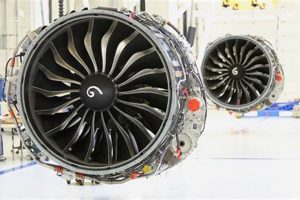
The selection of a specific field of study within higher education focusing on the design, development, and testing of aircraft and spacecraft represents a significant commitment. This academic pursuit prepares individuals for careers in both the aeronautical and astronautical industries. A typical example involves a student undertaking a four-year bachelor’s degree program with a curriculum heavily based in mathematics, physics, and specialized engineering subjects.
The importance of this specialized education stems from its direct contribution to advancements in air travel, space exploration, and national defense. Professionals with expertise in this discipline are instrumental in designing more efficient and safer aircraft, developing innovative propulsion systems, and creating cutting-edge spacecraft. Historically, this area of study evolved from early interests in flight and has grown exponentially with the advent of space travel, leading to substantial economic and technological benefits.
The following sections will delve deeper into specific career paths available after acquiring this academic background, the curriculum typically involved in the program, and the skills students are expected to develop. Furthermore, potential research opportunities and future trends within this dynamic field will be discussed.
Guidance for Success in Aerospace Engineering Studies
Achieving excellence within a rigorous academic program focused on aircraft and spacecraft design demands dedication and strategic planning. The following advice provides guidance for students pursuing this challenging field.
Tip 1: Cultivate a Strong Mathematical Foundation: A deep understanding of calculus, differential equations, and linear algebra is essential. Students should prioritize mastering these concepts early in their academic career, as they form the basis for advanced aerospace engineering coursework. For example, the analysis of aerodynamic forces relies heavily on partial differential equations.
Tip 2: Embrace Computational Tools: Proficiency in software such as MATLAB, SolidWorks, and ANSYS is crucial. These tools are employed for modeling, simulation, and analysis of aerospace systems. Actively seek opportunities to enhance computational skills through independent projects or specialized training workshops.
Tip 3: Engage in Hands-on Experience: Participation in projects involving design, fabrication, and testing provides invaluable practical skills. Joining student organizations focused on rocketry, unmanned aerial vehicles (UAVs), or satellite design can significantly supplement classroom learning and allows students to apply their knowledge in a real-world context.
Tip 4: Seek Mentorship from Faculty and Industry Professionals: Establishing relationships with experienced faculty members and industry experts provides valuable guidance and insight. Attend office hours, participate in research opportunities, and actively seek feedback on academic and professional goals. Their experience can provide significant advantages in navigating the complexities of the field.
Tip 5: Develop Strong Communication Skills: The ability to clearly and effectively communicate technical information is vital. Hone writing and presentation skills through coursework, group projects, and public speaking opportunities. Effectively conveying complex ideas is paramount in a collaborative engineering environment.
Tip 6: Stay Current with Industry Advancements: The aerospace industry is constantly evolving. Regularly read industry journals, attend conferences, and follow relevant news sources to remain informed about the latest technological developments. This proactive approach ensures adaptability and competitiveness in the job market.
Effective implementation of these strategies will contribute significantly to academic success and future career prospects in aerospace engineering. Diligence and a proactive approach are essential for navigating the challenges and reaping the rewards of this demanding yet rewarding field.
The subsequent discussion will explore the specific skills acquired during academic studies and their direct applicability to various roles within the aerospace sector.
1. Aerodynamics Expertise

Aerodynamics constitutes a foundational pillar within the field of aerospace engineering. A robust understanding of aerodynamic principles is indispensable for the design and optimization of aircraft and spacecraft, influencing performance, stability, and overall efficiency.
- Lift and Drag Generation
The generation of lift, the force that opposes gravity, and the minimization of drag, the force that opposes motion, are central concerns in aerodynamics. The contour of an aircraft wing, for example, is meticulously designed to maximize lift while reducing drag. Aerospace engineers apply computational fluid dynamics (CFD) simulations and wind tunnel testing to refine these designs, directly impacting fuel efficiency and flight characteristics.
- Boundary Layer Phenomena
The boundary layer, a thin layer of air adjacent to the surface of an aerospace vehicle, profoundly affects drag and heat transfer. Understanding and managing boundary layer separation is crucial to preventing stall, a condition where lift is abruptly lost. Specialized courses within aerospace engineering programs focus on boundary layer theory and control techniques, employing methods like vortex generators to delay separation.
- Compressible Flow Effects
At high speeds, approaching or exceeding the speed of sound, air becomes compressible, leading to complex phenomena such as shock waves. The design of supersonic and hypersonic vehicles requires specialized knowledge of compressible flow. Courses in gas dynamics and high-speed aerodynamics provide the theoretical and computational tools to analyze and mitigate the effects of compressibility, enabling the development of efficient supersonic transports and reentry vehicles.
- Aerodynamic Stability and Control
Maintaining stability and control of an aircraft or spacecraft is paramount for safe operation. Understanding aerodynamic forces and moments, and their effect on vehicle dynamics, is essential for designing effective control surfaces. Aerospace engineering curricula include courses in flight dynamics and control, equipping students with the knowledge to design autopilot systems and analyze the stability characteristics of aerospace vehicles.
The facets of aerodynamic expertise outlined above are critical to the practical application of aerospace engineering principles. A mastery of these concepts enables aerospace engineers to develop cutting-edge technologies, improve the performance of existing designs, and ensure the safe and efficient operation of aerospace vehicles. Without a deep understanding of aerodynamics, progress in the field would be severely limited, highlighting its integral role in this demanding and crucial discipline.
2. Propulsion Systems Knowledge

Propulsion systems knowledge is inextricably linked to aerospace engineering. This area focuses on the principles and technologies that enable aircraft and spacecraft to generate thrust and sustain flight. Understanding these systems is essential for any student aspiring to a career in the design, development, or operation of aerospace vehicles.
- Thermodynamics and Combustion
A thorough understanding of thermodynamics and combustion processes is fundamental to analyzing and designing efficient propulsion systems. This involves studying energy transfer, fluid mechanics, and chemical reactions that occur within engines. For example, the design of a gas turbine engine requires careful consideration of thermodynamic cycles to maximize power output and minimize fuel consumption. Aerospace engineering curricula include courses that provide a robust foundation in these areas, enabling students to model and optimize engine performance.
- Engine Cycle Analysis
Engine cycle analysis involves the study of different engine configurations, such as turbojets, turbofans, ramjets, and rockets, to determine their performance characteristics. Each engine type has unique advantages and disadvantages depending on the application. For instance, ramjets are efficient at high speeds, while rockets are essential for space travel. Aerospace engineering students learn to analyze these cycles using thermodynamic principles and computational tools, allowing them to select the appropriate engine for a specific mission profile.
- Rocket Propulsion
Rocket propulsion involves the use of chemical propellants or other energy sources to generate thrust for spacecraft. This area encompasses the study of solid-propellant rockets, liquid-propellant rockets, and advanced propulsion concepts such as electric propulsion. Understanding rocket propulsion is crucial for designing launch vehicles, satellites, and interplanetary probes. Aerospace engineering programs offer specialized courses that cover rocket engine design, propellant chemistry, and nozzle aerodynamics, preparing students for careers in the space industry.
- Electric Propulsion
Electric propulsion utilizes electrical energy to accelerate a propellant, generating thrust with high efficiency, albeit at low thrust levels. These systems are particularly suitable for long-duration space missions, such as interplanetary travel or station-keeping of satellites. Types of electric propulsion include ion thrusters, Hall-effect thrusters, and pulsed plasma thrusters. Aerospace engineering students gain exposure to these technologies through advanced courses and research opportunities, contributing to the development of future space exploration capabilities.
The diverse range of topics encompassed by propulsion systems knowledge highlights its critical role within aerospace engineering. Students specializing in this area are equipped with the theoretical and practical skills necessary to contribute to advancements in air and space travel, impacting areas such as fuel efficiency, mission range, and overall vehicle performance.
3. Spacecraft Dynamics Understanding

Spacecraft dynamics constitutes a specialized and crucial domain within the aerospace engineering discipline. It focuses on the study of forces and torques acting upon spacecraft and their resultant motion in space. A comprehensive understanding of these dynamics is indispensable for mission success, influencing trajectory design, attitude control, and overall spacecraft performance.
- Orbital Mechanics
Orbital mechanics, a fundamental aspect of spacecraft dynamics, involves the analysis of spacecraft trajectories under the influence of gravitational forces. Kepler’s laws of planetary motion and Newton’s law of universal gravitation form the theoretical underpinnings. For example, calculating the transfer orbit between Earth and Mars requires a precise understanding of orbital mechanics to minimize propellant consumption and mission duration. Aerospace engineering curricula incorporate dedicated courses in orbital mechanics, equipping students with the skills to design and analyze spacecraft trajectories for a wide range of missions.
- Attitude Determination and Control
Maintaining a desired orientation, or attitude, is critical for spacecraft operations, particularly for tasks such as Earth observation, communication, and scientific data acquisition. Attitude determination involves estimating the spacecraft’s orientation using sensors like star trackers, gyroscopes, and accelerometers. Attitude control, on the other hand, entails the use of actuators, such as reaction wheels or thrusters, to maintain or change the spacecraft’s orientation. Aerospace engineering programs emphasize the integration of sensor data with control algorithms to achieve precise attitude control, essential for maximizing the effectiveness of space missions.
- Spacecraft Stability
Ensuring the stability of a spacecraft is paramount for preventing uncontrolled tumbling or oscillations that can compromise mission objectives. Stability analysis involves assessing the spacecraft’s response to disturbances and designing control systems to maintain stability. Factors such as mass distribution, aerodynamic forces (in low Earth orbit), and solar radiation pressure can influence spacecraft stability. Aerospace engineering courses cover the principles of rigid body dynamics and control theory, enabling students to analyze and mitigate potential instability issues.
- Perturbation Analysis
In reality, spacecraft orbits are subject to various perturbations, or deviations from ideal Keplerian orbits, due to factors such as atmospheric drag, non-spherical gravitational fields, and solar radiation pressure. Perturbation analysis involves quantifying these effects and incorporating them into trajectory predictions. For instance, predicting the long-term orbit of a satellite in low Earth orbit requires accounting for atmospheric drag, which gradually slows down the satellite and causes its orbit to decay. Aerospace engineering students learn to use numerical methods and analytical techniques to model and compensate for orbital perturbations, ensuring accurate trajectory predictions for long-duration missions.
These facets of spacecraft dynamics are integral components of the knowledge base acquired through a major in aerospace engineering. Proficiency in these areas prepares graduates for careers in mission design, spacecraft operations, and related fields, contributing to the continued advancement of space exploration and utilization.
4. Materials Science Competence

Materials science competence represents a cornerstone of aerospace engineering education and practice. The design and construction of aircraft and spacecraft are fundamentally limited by the properties of the materials employed. Cause-and-effect relationships are paramount: the selection of a specific material directly dictates the structural integrity, weight, and operational lifespan of an aerospace vehicle. Without a thorough understanding of materials science, aerospace engineers are unable to effectively address the challenges posed by extreme temperatures, high stresses, and corrosive environments inherent in flight and space exploration.
The practical significance of this competence is illustrated by numerous examples. The development of high-temperature alloys for turbine blades in jet engines enables higher operating temperatures, leading to increased efficiency and thrust. Similarly, the use of lightweight composite materials in aircraft structures reduces weight, improving fuel economy and payload capacity. Consider the Space Shuttle program: the selection and implementation of thermal protection system (TPS) materials were critical to ensuring the vehicle’s survival during reentry into the Earth’s atmosphere. Failures in materials selection or application can have catastrophic consequences, underscoring the importance of rigorous materials testing and analysis in aerospace engineering.
In conclusion, materials science competence is not merely a supplementary skill, but an integral component of proficiency in aerospace engineering. The ability to select, characterize, and apply materials effectively is essential for designing safe, efficient, and reliable aerospace systems. Addressing ongoing challenges, such as developing materials with improved strength-to-weight ratios and resistance to extreme environments, remains a central focus within the field, directly impacting the future of air and space travel.
5. Structural Analysis Proficiency

Structural analysis proficiency forms a critical component within the framework of aerospace engineering education. This area focuses on assessing the ability of aerospace vehicles and their components to withstand various loads and environmental conditions, ensuring structural integrity and flight safety. Attainment of this proficiency is essential for any aspiring aerospace engineer.
- Stress Analysis and Material Behavior
Stress analysis involves determining the distribution of internal stresses within a structure under applied loads. This requires a thorough understanding of material behavior, including elastic, plastic, and failure characteristics. For example, analyzing the stress concentration around a hole in an aircraft fuselage is critical to preventing fatigue cracks. Aerospace engineering curricula include courses that cover stress-strain relationships, failure theories, and experimental stress analysis techniques, preparing students to assess the structural integrity of aerospace components.
- Finite Element Analysis (FEA)
Finite element analysis (FEA) is a powerful computational tool used to simulate the behavior of complex structures under various loading conditions. FEA software allows engineers to discretize a structure into smaller elements and solve for stresses, strains, and displacements. For instance, FEA can be used to analyze the aerodynamic loads on an aircraft wing or the thermal stresses in a spacecraft heat shield. Aerospace engineering students receive training in FEA software and learn to interpret the results, enabling them to design and optimize structural components for aerospace applications.
- Buckling Analysis
Buckling analysis focuses on determining the critical load at which a structural member will suddenly deform or collapse due to compressive stresses. Buckling is a common failure mode in thin-walled aerospace structures, such as aircraft fuselages and rocket bodies. Aerospace engineers must be proficient in buckling analysis techniques to ensure the stability of these structures. Courses in structural stability cover the theory of buckling and provide practical methods for calculating critical buckling loads.
- Vibration Analysis
Vibration analysis involves studying the dynamic response of structures to oscillating forces. Aerospace vehicles are subjected to vibrations from various sources, such as engine noise, aerodynamic turbulence, and control system oscillations. Excessive vibrations can lead to fatigue damage and structural failure. Aerospace engineering programs include courses in structural dynamics and vibration control, equipping students with the knowledge to analyze and mitigate vibration problems in aerospace structures.
The mastery of these facets of structural analysis equips graduates of aerospace engineering programs with the skills necessary to design safe, reliable, and efficient aerospace vehicles. Expertise in structural analysis directly contributes to the advancement of aerospace technology, enabling the development of innovative designs and the exploration of new frontiers in air and space travel.
Frequently Asked Questions about Aerospace Engineering Studies
The following questions address common inquiries regarding academic studies focused on the design, development, and analysis of aircraft and spacecraft. The responses provide factual information intended to clarify misconceptions and offer a comprehensive understanding of this field.
Question 1: What are the core academic disciplines incorporated within an aerospace engineering curriculum?
A comprehensive aerospace engineering curriculum typically integrates fluid dynamics, thermodynamics, structural analysis, materials science, control systems, and orbital mechanics. Furthermore, mathematics, physics, and computer science serve as foundational pillars for advanced coursework.
Question 2: What career paths are typically pursued by graduates with an aerospace engineering degree?
Graduates frequently pursue roles in aircraft design, spacecraft development, propulsion systems, research and development, and government agencies such as NASA. Opportunities also exist in areas like consulting, project management, and academia.
Question 3: Is advanced mathematics a prerequisite for success in aerospace engineering?
A strong foundation in calculus, differential equations, linear algebra, and numerical methods is essential. These mathematical tools are employed extensively in modeling, simulation, and analysis of aerospace systems.
Question 4: What are some of the key software tools utilized in aerospace engineering practice?
Commonly used software includes MATLAB for numerical computation and simulation, SolidWorks and CATIA for computer-aided design (CAD), and ANSYS for finite element analysis (FEA). Proficiency in these tools is highly valued by employers.
Question 5: What is the typical duration of a bachelor’s degree program in aerospace engineering?
A bachelor’s degree program typically requires four years of full-time study. The curriculum comprises a combination of core engineering courses, specialized aerospace subjects, and general education requirements.
Question 6: Are internships or research opportunities beneficial for aerospace engineering students?
Internships and research opportunities provide invaluable practical experience, allowing students to apply their knowledge to real-world problems. These experiences enhance employability and offer insights into specific areas of interest within the field.
The provided answers aim to address fundamental concerns and misconceptions. A thorough understanding of this information facilitates informed decisions regarding academic and career paths within aerospace engineering.
The following section will explore the future outlook and emerging trends in aerospace engineering, providing a perspective on the evolving landscape of this dynamic field.
Conclusion
The preceding discourse has elucidated various facets associated with a concentrated course of study focused on the design, development, and analysis of flight-capable systems. This encompasses core disciplines such as aerodynamics, propulsion, structural mechanics, materials science, and orbital mechanics. Individuals pursuing this academic path gain the requisite knowledge and skills for contributing to advancements in air travel, space exploration, and national defense.
The rigorous curriculum, coupled with practical experience, prepares graduates for a multitude of career opportunities within the aerospace sector and beyond. Continued innovation and technological advancements necessitate a commitment to lifelong learning and adaptability. The future trajectory of air and space endeavors depends on the dedication and expertise of those who embark on this challenging yet rewarding academic journey.
![Top MS Aerospace Engineering in Germany [Guide] | Innovating the Future of Flight with Reliable Aviation Solutions](https://mixaerospace.com/wp-content/uploads/2026/05/th-183-300x200.jpg "Top MS Aerospace Engineering in Germany [Guide] Innovating the Future of Flight with Reliable Aviation Solutions")