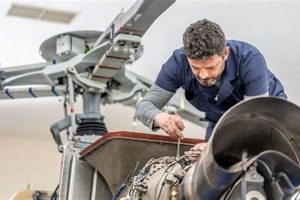
The experiences and daily routines of professionals who design, develop, test, and supervise the manufacture of aircraft, spacecraft, and missiles encompass a multifaceted existence. This involves a blend of theoretical knowledge application, practical problem-solving, and continuous learning to advance the boundaries of aerospace technology. Consider, for instance, an individual involved in designing the aerodynamic surfaces of a new commercial airliner, requiring meticulous calculations, simulations, and wind tunnel testing.
The impact of these professionals extends beyond technological advancement; their work contributes significantly to global transportation, national security, and scientific exploration. Throughout history, their innovations have propelled advancements in materials science, propulsion systems, and communication technologies, shaping both civilian and military applications. The benefits include enhanced air travel safety, more efficient space exploration, and the development of advanced defense systems.
Subsequent sections will delve into specific aspects of this profession, including educational requirements, typical work environments, common responsibilities, necessary skills, and career progression opportunities. The demanding yet rewarding nature of this field will be highlighted, focusing on the challenges and accomplishments associated with contributing to cutting-edge projects.
Guidance for Aspiring Professionals
The following insights are intended to provide guidance to individuals considering a career in aerospace engineering, drawing from practical experiences and professional standards within the field.
Tip 1: Cultivate a Strong Foundation in Mathematics and Physics: A thorough understanding of calculus, differential equations, linear algebra, and fundamental physics principles is essential. Example: Proficiency in computational fluid dynamics relies heavily on these mathematical and physical foundations.
Tip 2: Gain Proficiency in Computer-Aided Design (CAD) and Simulation Software: Familiarity with industry-standard software such as CATIA, SolidWorks, ANSYS, and MATLAB is crucial for design, analysis, and simulation tasks. Example: Designing aircraft structures requires meticulous modeling using CAD software, followed by structural analysis via finite element analysis tools.
Tip 3: Seek Internship or Co-op Opportunities: Practical experience gained through internships or cooperative education programs provides invaluable exposure to real-world engineering challenges and industry practices. Example: An internship at a NASA research center could involve working on a project related to advanced propulsion systems or spacecraft design.
Tip 4: Develop Strong Communication and Teamwork Skills: Aerospace projects are inherently collaborative, requiring effective communication and teamwork among engineers from diverse backgrounds. Example: Participating in a student design competition provides experience in teamwork and collaborative problem-solving.
Tip 5: Stay Current with Industry Trends and Technological Advancements: The aerospace field is constantly evolving; continuous learning and professional development are essential. Example: Keeping abreast of advancements in additive manufacturing, composite materials, and autonomous systems is crucial for career advancement.
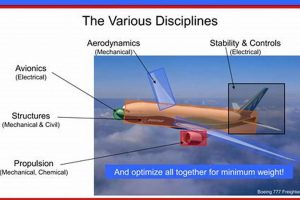
Tip 6: Consider Specialization: Aerospace engineering encompasses various specializations, such as aerodynamics, propulsion, structures, avionics, and astrodynamics. Focusing on a specific area of interest can enhance expertise and career prospects. Example: Specializing in astrodynamics could lead to opportunities in mission planning for space exploration.
Tip 7: Obtain Relevant Certifications: Pursuing professional certifications, such as a Professional Engineer (PE) license, can demonstrate competency and enhance credibility. Example: A PE license may be required for certain engineering roles involving public safety or infrastructure.
The adoption of these guidelines contributes to a well-rounded preparation for the demands and opportunities inherent in a career dedicated to advancing aerospace technology.
The following section will provide perspectives on career paths and potential areas of specialization within the aerospace domain.
1. Design Innovation

Design innovation forms a central pillar in the experiences of an aerospace engineer. The very nature of aerospace engineering necessitates continuous improvement and novel solutions to meet the evolving demands of flight, space exploration, and defense. Cause-and-effect relationships are readily apparent: a challenge in aircraft efficiency, for example, necessitates innovative designs in wing configurations or propulsion systems. Without a constant drive for innovative design, progress in aerospace would stagnate, hindering advancements in safety, performance, and sustainability.
Consider the evolution of aircraft wings. Early aircraft utilized simple, fixed-wing designs. However, the need for increased maneuverability and fuel efficiency led to the development of variable-sweep wings, as seen on the F-14 Tomcat. Further design innovation resulted in blended wing body aircraft, which aim to reduce drag and increase lift. These examples illustrate the cyclical nature of design innovation: a need is identified, novel solutions are explored, and the resulting designs undergo rigorous testing and refinement. The understanding of aerodynamics, materials science, and control systems is essential to translate innovative ideas into viable and effective designs.
In summary, design innovation is not merely a desirable skill, but a fundamental requirement for any professional involved in the field. The ability to generate creative solutions, analyze their feasibility, and translate them into tangible designs is crucial for advancing aerospace technology. The challenges are considerable, demanding constant learning and adaptation to new technologies and materials. The constant pursuit of superior design, ultimately contributes directly to the continued growth and evolution of the aerospace sector.
2. Rigorous Analysis
Rigorous analysis constitutes an indispensable element within the professional sphere of an aerospace engineer. Its application permeates every stage of design, development, and operation, ensuring the safety, efficiency, and reliability of aerospace systems. Failure to adhere to stringent analytical standards can have catastrophic consequences, underscoring its paramount importance. The ability to apply sophisticated analytical techniques and interpret results accurately is a hallmark of competent professionals in this domain.
- Structural Integrity Analysis
Aerospace structures are subjected to extreme stresses during flight or space travel. Structural integrity analysis, employing finite element methods and other computational techniques, assesses the ability of these structures to withstand those stresses without failure. For instance, the wings of an aircraft must be capable of withstanding aerodynamic loads, turbulence, and maneuvers. Such analysis is critical to ensure the safety of the aircraft and its occupants.
- Aerodynamic Performance Analysis
Aerodynamic performance dictates the efficiency and stability of aircraft and spacecraft. Computational fluid dynamics (CFD) simulations and wind tunnel testing are employed to analyze airflow patterns, lift, drag, and stability characteristics. The results of this analysis inform design decisions aimed at optimizing aerodynamic performance. For example, CFD simulations are essential in designing efficient wing profiles that minimize drag and maximize lift at various flight speeds and altitudes.
- Propulsion System Analysis
The efficiency and reliability of propulsion systems are critical for the success of any aerospace mission. Rigorous analysis of engine performance, combustion processes, and fuel consumption is essential to ensure that propulsion systems meet performance requirements. This may involve thermodynamic analysis, combustion modeling, and testing of engine components. For example, analyzing the performance of a rocket engine involves detailed calculations of thrust, specific impulse, and combustion efficiency.
- Control System Analysis
Aerospace vehicles require sophisticated control systems to maintain stability and execute desired maneuvers. Control system analysis involves modeling the dynamics of the vehicle and designing feedback control loops to ensure stable and precise control. This may involve using techniques from control theory, such as root locus analysis and frequency response analysis. For example, designing the autopilot system for an aircraft requires careful analysis of its stability and response characteristics.
The applications of rigorous analysis within the experiences of an aerospace engineer are pervasive, shaping the outcome and reliability of every project undertaken. The demand for precision and thoroughness, combined with the necessity to integrate findings from diverse analytical techniques, constitutes a defining aspect of professional life in this discipline. From designing efficient airfoils to determining spacecraft trajectories, detailed analysis remains fundamental to achieving success in the field.
3. Project Collaboration
Project collaboration stands as a cornerstone within the experiences of an aerospace engineer. The complexity inherent in aerospace projects necessitates the integration of diverse expertise, making effective teamwork not merely beneficial, but essential for project success. Individual engineers typically possess specialized knowledge in areas such as aerodynamics, propulsion, or structures. Consequently, the design and development of an aircraft or spacecraft require the coordinated efforts of professionals from various disciplines, each contributing their unique skills and perspectives. Without effective project collaboration, the potential for miscommunication, design conflicts, and ultimately, project failure increases significantly.
Consider the development of a new commercial airliner. The aerodynamic design team must collaborate closely with the structural engineers to ensure that the wing design can withstand the aerodynamic loads encountered during flight. Simultaneously, the propulsion engineers need to integrate the engine design with the aircraft’s airframe, optimizing performance and fuel efficiency. Avionics engineers contribute to the integration of flight control systems, navigation systems, and communication systems. This complex interplay demands constant communication, shared understanding of project goals, and the ability to resolve conflicts constructively. Real-world examples, such as the Boeing 787 Dreamliner, illustrate the impact of effective (and, in some instances, the consequences of ineffective) collaboration on project timelines and outcomes.
In summation, project collaboration is a defining characteristic of the experiences of an aerospace engineer. The multifaceted nature of aerospace projects mandates a collaborative approach, emphasizing communication, shared objectives, and the synergistic integration of specialized knowledge. The challenges associated with coordinating diverse teams and managing complex projects require strong leadership and effective communication strategies. However, the rewards of successful collaboration are substantial, leading to the development of innovative and reliable aerospace systems that benefit society as a whole.
4. Technological Mastery
Technological mastery is intrinsically linked to the experiences of an aerospace engineer, serving as a fundamental enabler for innovation and problem-solving within the field. Competency in a broad spectrum of technologies, ranging from advanced materials and propulsion systems to avionics and computational modeling, is not merely advantageous but essential. Cause and effect are evident: inadequate technological knowledge limits an engineer’s ability to contribute meaningfully to design, analysis, and development processes. Real-world examples, such as the development of composite aircraft structures, demonstrate the direct impact of technological expertise. Mastery of composite materials science, manufacturing techniques, and structural analysis methods is critical for engineers involved in such projects.
The practical significance of technological mastery manifests across numerous domains. In spacecraft design, engineers must possess comprehensive knowledge of orbital mechanics, thermal management, and radiation shielding to ensure mission success. The design of efficient and reliable aircraft engines demands proficiency in thermodynamics, fluid dynamics, and materials engineering. The integration of autonomous systems into aerospace vehicles necessitates expertise in robotics, artificial intelligence, and control systems. Furthermore, the rapid pace of technological advancement requires aerospace engineers to engage in continuous learning and professional development to remain at the forefront of their field.
In conclusion, technological mastery constitutes a defining attribute for an aerospace engineer. This competence ensures the ability to address complex challenges, contribute to innovation, and adapt to the ever-evolving landscape of aerospace technology. A commitment to continuous learning, coupled with a strong foundation in core engineering principles, is crucial for professionals seeking to excel in this demanding yet rewarding discipline.
5. Problem Solving

Problem-solving is a fundamental activity within the professional experiences of aerospace engineers. It constitutes a core competency, directly influencing the ability to address complex challenges inherent in the design, development, and operation of aerospace systems. The capacity to identify, analyze, and resolve technical issues effectively distinguishes competent practitioners in this field.
- System Optimization
Aerospace engineers are frequently tasked with optimizing system performance while adhering to stringent constraints. This involves identifying bottlenecks, evaluating trade-offs, and implementing solutions to maximize efficiency, minimize weight, or improve reliability. An example is optimizing the aerodynamic design of an aircraft wing to reduce drag while maintaining structural integrity. The implications of effective system optimization are significant, contributing to reduced fuel consumption, increased payload capacity, and enhanced safety.
- Failure Analysis and Prevention
Investigating and preventing failures are critical aspects of aerospace engineering. Engineers must possess the skills to analyze component malfunctions, identify root causes, and implement corrective actions to prevent recurrence. A representative scenario is investigating the structural failure of an aircraft component to determine the cause (e.g., fatigue, corrosion, manufacturing defect) and recommending design modifications or maintenance procedures to mitigate the risk of future failures. Proactive failure analysis is essential for ensuring the safety and reliability of aerospace systems.
- Constraint Management
Aerospace projects often operate under numerous constraints, including budgetary limitations, regulatory requirements, and performance targets. Effective problem-solving involves navigating these constraints to achieve project objectives. For instance, engineers may need to design a spacecraft propulsion system that meets specific performance requirements while adhering to strict weight and cost limitations. Successfully managing these constraints requires creativity, resourcefulness, and a thorough understanding of engineering principles.
- Risk Mitigation
Assessing and mitigating risks are paramount in aerospace engineering, given the potentially catastrophic consequences of system failures. This necessitates identifying potential hazards, evaluating their likelihood and severity, and implementing strategies to minimize the associated risks. For example, engineers may conduct probabilistic risk assessments of spacecraft systems to identify potential failure modes and implement redundant systems or contingency plans to reduce the overall mission risk. Proactive risk mitigation is essential for ensuring the safety and success of aerospace endeavors.
The integration of these problem-solving facets is inextricably linked to the professional experiences of aerospace engineers. Their ability to address complex challenges effectively contributes directly to the advancement of aerospace technology and the enhancement of safety and reliability. From optimizing system performance to mitigating risks, problem-solving stands as a cornerstone of engineering practice in this demanding field.
6. Continuous Learning
Continuous learning forms an indispensable element in the experiences of an aerospace engineer, driven by the rapidly evolving nature of technology and the ever-increasing demands placed on aerospace systems. Maintaining competence and contributing meaningfully to the field necessitates a commitment to ongoing professional development.
- Adaptation to Emerging Technologies
The aerospace industry consistently integrates new materials, manufacturing processes, and computational tools. An aerospace engineer must actively seek opportunities to learn about these emerging technologies to remain effective. For example, proficiency in additive manufacturing techniques or the application of artificial intelligence in flight control systems requires dedicated effort to acquire new knowledge and skills. Failure to adapt can result in obsolescence and limited career advancement.
- Staying Abreast of Regulatory Changes
Aerospace engineering is subject to stringent regulatory oversight, with standards and guidelines evolving periodically. Compliance with these regulations is crucial for ensuring safety and airworthiness. Continuous learning, through professional development courses and industry publications, ensures that engineers remain informed about regulatory changes and their implications for design, testing, and certification processes. Non-compliance can lead to project delays, increased costs, and potential safety hazards.
- Specialization and Skill Diversification
The field of aerospace engineering encompasses a wide range of specializations, from aerodynamics and propulsion to avionics and astrodynamics. Continuous learning enables engineers to deepen their expertise in a specific area or broaden their skill set to address interdisciplinary challenges. For instance, an engineer specializing in structural analysis may pursue additional training in computational fluid dynamics to better understand the interaction between aerodynamic forces and structural loads. Skill diversification enhances career opportunities and fosters innovation.
- Addressing Complex System Integration
Modern aerospace systems are characterized by increasing complexity, requiring the seamless integration of various subsystems. Continuous learning facilitates the development of systems-thinking skills, enabling engineers to understand the interactions between different components and optimize overall system performance. An example is the integration of autonomous navigation systems with flight control systems, which requires a comprehensive understanding of both software engineering and aerospace principles. Effective system integration is essential for achieving mission objectives and ensuring reliability.
These interconnected facets demonstrate that continuous learning is not merely an option, but a professional imperative. From adapting to emerging technologies and navigating regulatory changes to specializing in specific domains and mastering systems thinking, ongoing development ensures competence and effectiveness for aerospace engineers. The commitment to continued learning enhances their ability to contribute to the advancement of aerospace technology and the safety of air and space travel.
Frequently Asked Questions
The following section addresses common inquiries regarding career considerations within the field. These responses aim to provide clarity and insight into various facets of this profession.
Question 1: What is the typical educational path to becoming an aerospace engineer?
Typically, a bachelor’s degree in aerospace engineering or a closely related field, such as mechanical engineering, is the foundational requirement. Advanced positions may require a master’s degree or doctorate, particularly for research-oriented roles.
Question 2: What are the core skills necessary for success in this field?
Essential skills encompass a strong foundation in mathematics and physics, proficiency in computer-aided design (CAD) and simulation software, effective communication, teamwork abilities, and a commitment to continuous learning.
Question 3: What are common career paths for individuals with this background?
Career paths can include roles in aircraft design, spacecraft development, propulsion systems, avionics, research and development, and project management within aerospace companies, government agencies, or research institutions.
Question 4: What is the expected work environment for these professionals?
Work environments can vary from office settings to laboratories, manufacturing facilities, or test sites. Fieldwork may be required depending on the specific role and project requirements.
Question 5: What are the typical challenges encountered in this profession?
Common challenges include managing complex projects under tight deadlines, addressing technical problems effectively, adapting to rapidly evolving technologies, and ensuring compliance with stringent safety regulations.
Question 6: What is the potential for career advancement in this domain?
Career advancement opportunities exist through specialization, leadership roles, project management positions, or advanced research positions. Continuous learning and professional development are critical for maximizing career growth potential.
In summation, the responses provided aim to offer comprehensive insights into the requirements, opportunities, and challenges associated with a career within aerospace engineering.
The following segment will transition to a concluding overview of the profession, highlighting key considerations and future trends.
Life of an Aerospace Engineer
This exploration has outlined key facets of the career. The intersection of design innovation, rigorous analysis, project collaboration, technological mastery, problem-solving acumen, and continuous learning defines its demands. Mastery of technical principles, adaptability to evolving technologies, and strict adherence to safety regulations have been presented as essential attributes. The multifaceted nature of aerospace projects requires expertise across diverse engineering disciplines, underlining the necessity of collaborative work and detailed oversight.
The continued advancement of aerospace technologies hinges on the dedication and proficiency of those within the field. As future aerospace systems evolve, the need for engineers equipped with both technical expertise and a commitment to continuous learning will remain paramount. Further exploration into specialized areas, a commitment to ethical practice, and an emphasis on sustainable solutions will be crucial for addressing the complex challenges of future endeavors. The industry’s ongoing development depends on these elements.