This individual is a professional who applies scientific and technological principles to the design, development, and testing of aircraft, spacecraft, satellites, and related systems. This discipline requires a strong foundation in mathematics, physics, and engineering principles, allowing practitioners to solve complex problems related to flight, propulsion, materials, and aerodynamics. For example, such an engineer might be involved in designing a more fuel-efficient airplane wing or developing new technologies for space exploration.
The expertise of these professionals is crucial for advancements in aviation, space exploration, and national defense. Their work contributes to improved transportation systems, scientific discovery, and technological innovation. Historically, professionals in this field have played a pivotal role in shaping the course of aviation and space travel, from early aircraft designs to the development of sophisticated spacecraft and satellite systems. Their skills are continuously in demand due to the ongoing need for improved performance, efficiency, and safety in aerospace technologies.
The following sections will explore various aspects related to the skills, responsibilities, and contributions expected of such an expert, alongside career path, potential projects, and impacts on the overall aerospace industry.
Guidance from an Aerospace Engineering Professional
The following recommendations are geared toward individuals pursuing or engaged in the field of aerospace engineering, aiming to enhance their expertise and contribute effectively to the industry.
Tip 1: Prioritize a Strong Foundation in Fundamentals: A comprehensive understanding of mathematics, physics, and thermodynamics is indispensable. Without a solid grasp of these core concepts, advanced topics become significantly more challenging.
Tip 2: Develop Proficiency in CAD and Simulation Software: Modern aerospace engineering relies heavily on computer-aided design (CAD) and simulation tools. Familiarity with software such as CATIA, ANSYS, and MATLAB is crucial for design, analysis, and optimization.
Tip 3: Seek Practical Experience Through Internships: Real-world experience gained through internships or co-op programs provides invaluable insights into the application of theoretical knowledge. It also exposes individuals to industry practices and potential career paths.
Tip 4: Cultivate Effective Communication Skills: Aerospace engineers frequently collaborate with multidisciplinary teams. The ability to clearly communicate complex technical information, both verbally and in writing, is essential for successful project execution.
Tip 5: Stay Abreast of Industry Advancements: The aerospace industry is constantly evolving. Continuous learning through professional development courses, conferences, and publications is necessary to remain competitive and contribute to cutting-edge research.
Tip 6: Embrace Interdisciplinary Collaboration: Aerospace projects often require the integration of various engineering disciplines, such as electrical, mechanical, and computer engineering. Fostering collaboration and understanding different perspectives are critical for achieving project goals.
Tip 7: Focus on Systems Engineering Principles: Adopt a systems-level approach to problem-solving, considering the interactions and dependencies between different components of a system. This helps to ensure that designs are robust, reliable, and meet overall performance requirements.
These guidelines emphasize the importance of combining theoretical knowledge with practical experience, fostering communication skills, and maintaining a commitment to continuous learning. Adhering to these principles will contribute to a successful and impactful career in aerospace engineering.
The subsequent sections will further delve into specific project areas, career trajectories, and the evolving challenges within this dynamic field.
1. Aerodynamics Expertise

Aerodynamics expertise forms a cornerstone of the capabilities possessed by a professional in the field. This specialized knowledge enables the design and optimization of aircraft and spacecraft for efficient and stable flight. The following points illustrate specific facets of this expertise.
- Lift Generation and Drag Reduction
A core competency involves understanding and manipulating airflow to generate lift, enabling flight, while simultaneously minimizing drag, which reduces fuel efficiency and performance. This includes airfoil design, wing shaping, and the implementation of features like winglets to control vortices and reduce induced drag. Practical examples include the design of a highly efficient airliner wing or the development of low-drag profiles for unmanned aerial vehicles (UAVs). Proper management of these forces is fundamental to achieving optimal aerodynamic performance.
- Computational Fluid Dynamics (CFD) Application
Aerodynamicists utilize CFD software to simulate airflow around complex shapes, predict aerodynamic performance, and identify potential design flaws early in the development process. This allows for virtual testing and refinement of designs before physical prototypes are constructed, saving time and resources. Applications range from analyzing airflow around a complete aircraft configuration to optimizing the shape of engine inlets for maximum efficiency.
- Wind Tunnel Testing Interpretation
While CFD is a powerful tool, physical wind tunnel testing remains crucial for validating simulations and assessing aerodynamic characteristics under controlled conditions. A competent professional must be able to design wind tunnel experiments, interpret the data obtained, and correlate it with CFD results to ensure accuracy and reliability. This skill is vital for understanding phenomena that are difficult to model computationally, such as turbulence and boundary layer behavior.
- Supersonic and Hypersonic Aerodynamics
For high-speed aircraft and spacecraft, expertise in supersonic and hypersonic aerodynamics is essential. This involves understanding the behavior of shockwaves, expansion fans, and other phenomena that occur at speeds exceeding the speed of sound. Specialized knowledge of heat transfer and aerodynamic heating is also critical for designing thermal protection systems for re-entry vehicles.
In summary, possessing robust aerodynamics expertise is critical for any professional involved in the design, development, and analysis of aircraft and spacecraft. From manipulating lift and drag to employing computational tools and interpreting wind tunnel data, these skills directly influence performance, efficiency, and safety. These competences significantly contribute to advancements within the field and enable innovative solutions to complex aerospace engineering challenges.
2. Propulsion Systems

The design, development, and integration of propulsion systems represent a core area of expertise for aerospace engineers. A strong understanding of these systems is crucial for enabling flight and achieving desired performance characteristics in aircraft and spacecraft.
- Turbine Engine Design and Performance Analysis
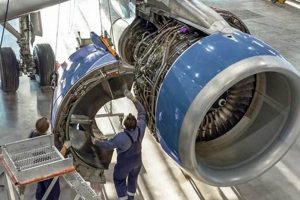
Gas turbine engines, commonly used in commercial and military aircraft, require intricate design considerations to optimize thrust, fuel efficiency, and reliability. Aerospace engineers utilize thermodynamic cycles, fluid dynamics, and heat transfer principles to analyze engine performance, identify areas for improvement, and ensure efficient combustion. Practical application includes designing advanced compressor blades to increase pressure ratio or optimizing fuel injection systems for reduced emissions.
- Rocket Propulsion Systems
Rocket engines are essential for space launch and satellite propulsion. Expertise in rocket propulsion involves understanding chemical rocket principles, propellant selection, combustion chamber design, and nozzle optimization. Engineers may work on projects such as developing new solid rocket motors for boosters or designing liquid-fueled engines for orbital maneuvers. Ensuring stable combustion and efficient thrust generation is paramount in these applications.
- Electric Propulsion Systems
Electric propulsion systems, including ion thrusters and Hall-effect thrusters, are increasingly used for long-duration space missions due to their high specific impulse. Engineers specializing in this area focus on plasma physics, electromagnetic field theory, and spacecraft power systems. Their work involves designing efficient ionization systems, optimizing thrust vectoring, and ensuring compatibility with spacecraft power budgets. Examples include developing propulsion systems for deep-space probes or satellite station-keeping.
- Ramjet and Scramjet Technology
Ramjets and scramjets are air-breathing engines designed for hypersonic flight. These engines require a thorough understanding of supersonic and hypersonic aerodynamics, shockwave phenomena, and high-temperature combustion. Aerospace engineers involved in this area work on projects such as developing hypersonic cruise missiles or designing reusable launch vehicles. Challenges include managing extreme temperatures, ensuring stable combustion, and achieving efficient air intake at high speeds.
The competencies detailed above are directly applicable to the work undertaken by those skilled in aerospace engineering. Whether designing efficient turbine engines for commercial aviation or pioneering advanced propulsion systems for space exploration, the proficiency in propulsion systems remains a critical determinant of mission success. The continuous advancement in propulsion technology ensures that this area remains a central focus for both research and practical application, furthering the capabilities and scope of aerospace engineering endeavors.
3. Materials Science

Materials science is a critical domain within aerospace engineering, directly influencing the performance, safety, and longevity of aircraft and spacecraft. The selection, development, and application of advanced materials are paramount for professionals in this field to meet stringent requirements for strength, weight, temperature resistance, and durability. The expertise in this area impacts virtually every aspect of aerospace design and operation.
- High-Strength, Lightweight Alloys
The demand for high strength-to-weight ratios necessitates the use of specialized alloys, such as titanium and aluminum alloys, in aircraft structures and engine components. These materials offer significant weight savings, which translate directly into improved fuel efficiency and payload capacity. For example, titanium alloys are extensively used in jet engine turbine blades due to their ability to withstand high temperatures and stresses. The proper selection and processing of these alloys require deep understanding of their mechanical properties and manufacturing techniques.
- Composite Materials
Composite materials, such as carbon fiber reinforced polymers (CFRP), are increasingly replacing traditional metals in aircraft structures due to their exceptional strength-to-weight ratios and corrosion resistance. These materials enable the creation of lighter and more aerodynamic structures, further enhancing performance. The Boeing 787 Dreamliner, for instance, utilizes a significant amount of CFRP in its fuselage and wings. The effective use of composites requires expertise in layup techniques, curing processes, and non-destructive testing methods.
- Thermal Protection Systems (TPS)
Spacecraft re-entering the Earth’s atmosphere experience extreme aerodynamic heating, requiring the implementation of advanced thermal protection systems. Materials such as ceramic tiles and ablative materials are used to dissipate heat and protect the underlying structure from damage. The Space Shuttle, for example, employed a TPS consisting of thousands of individual ceramic tiles. The design and application of TPS materials require a detailed understanding of heat transfer, material properties at high temperatures, and the effects of atmospheric entry on material degradation.
- Corrosion-Resistant Coatings
Aircraft operating in harsh environments are susceptible to corrosion, which can compromise structural integrity and lead to costly repairs. The application of corrosion-resistant coatings, such as specialized paints and surface treatments, is essential for protecting aircraft materials from degradation. These coatings must provide long-term protection without adding significant weight or affecting aerodynamic performance. The selection and application of these coatings require knowledge of electrochemistry, material compatibility, and environmental factors.
The application of materials science principles is integral to the work of a professional. By understanding the properties and behavior of various materials, an engineer can make informed decisions about material selection, design, and manufacturing processes, ultimately leading to safer, more efficient, and more durable aerospace systems. These competencies underscore the significance of materials science within the broader context of aerospace engineering.
4. Structural Design

Structural design is a fundamental element in aerospace engineering. Professionals in this field must possess a comprehensive understanding of structural principles to ensure the safety, reliability, and performance of aircraft and spacecraft. The structural integrity of these vehicles is paramount, as failure can lead to catastrophic consequences.
- Stress Analysis and Finite Element Method (FEM)
Stress analysis is essential for determining the internal forces and stresses within an aerospace structure under various loading conditions. The Finite Element Method (FEM) is a powerful computational tool used to simulate these stresses in complex geometries. Engineers apply FEM software to identify critical stress points, optimize structural designs, and predict potential failure modes. For example, FEM is used to analyze the stress distribution in an aircraft wing during flight, ensuring it can withstand aerodynamic loads. Proficiency in stress analysis and FEM is crucial for validating the structural integrity of aerospace components.
- Material Selection and Fatigue Analysis
The choice of materials is critical in structural design, as different materials possess varying strengths, weights, and fatigue characteristics. Fatigue analysis involves assessing the structural behavior of a component under cyclic loading, which is common in aircraft and spacecraft. Engineers must select materials that can withstand these repeated stresses without failing. For instance, aluminum alloys are often used in aircraft fuselages due to their good strength-to-weight ratio and resistance to fatigue. Understanding material properties and fatigue behavior is vital for ensuring the long-term reliability of aerospace structures.
- Structural Optimization and Weight Reduction
Aerospace structures must be designed to minimize weight while maintaining adequate strength. Structural optimization techniques are employed to identify areas where material can be removed without compromising structural integrity. This often involves complex mathematical algorithms and iterative design processes. An example of this is the design of lightweight lattice structures in spacecraft components to reduce overall mass. Optimizing structural designs for weight reduction improves fuel efficiency and payload capacity.
- Damage Tolerance and Repair Techniques
Aircraft and spacecraft structures are susceptible to damage from various sources, such as bird strikes, foreign object debris, and fatigue cracks. Damage tolerance analysis assesses the ability of a structure to withstand damage without catastrophic failure. Repair techniques, such as composite patching and crack stopping, are used to restore structural integrity. Understanding damage tolerance principles and repair methods is crucial for maintaining the safety and airworthiness of aerospace vehicles. Regular inspections and repairs are essential for preventing structural failures.
These facets underscore the significance of structural design in aerospace engineering. From stress analysis to material selection and damage tolerance, expertise in these areas is essential for ensuring the safety, reliability, and performance of aircraft and spacecraft. The principles and techniques described here are critical for all individuals involved in the design, analysis, and maintenance of aerospace structures, reinforcing the importance of this field in the advancement of aviation and space exploration.
5. Control Systems

Control systems are integral to the functioning of modern aerospace vehicles, directly impacting their stability, maneuverability, and overall performance. The expertise of an aerospace engineer in control systems is paramount, influencing the design and implementation of flight control algorithms, autopilot systems, and guidance navigation and control (GNC) systems for both aircraft and spacecraft. A malfunction or deficiency in these systems can lead to instability, loss of control, or mission failure. A practical example is the fly-by-wire systems implemented in modern aircraft. These systems rely on sophisticated algorithms to translate pilot input into precise control surface movements, enhancing maneuverability while maintaining stability. This requires a deep understanding of feedback control theory, sensor technology, and actuator dynamics.
Further illustrating this connection is the development of autonomous navigation systems for unmanned aerial vehicles (UAVs). Such systems require the integration of GPS, inertial measurement units (IMUs), and computer vision to enable autonomous flight and path planning. Aerospace engineers design the control algorithms that process sensor data, estimate vehicle position and orientation, and generate control commands for the actuators. The accuracy and robustness of these algorithms directly impact the UAV’s ability to navigate complex environments and perform its intended mission. Similarly, spacecraft require precise control systems for attitude control and orbital maneuvering. Engineers design reaction wheel systems, thruster control algorithms, and guidance systems to maintain spacecraft orientation and execute orbital changes, enabling scientific observations, satellite communication, or interplanetary travel.
In summary, the design and implementation of effective control systems are critical responsibilities. Expertise in this area ensures the safe and efficient operation of these vehicles across a wide range of applications. The challenges associated with developing advanced control systems include dealing with sensor noise, actuator limitations, and uncertainties in vehicle dynamics. Addressing these challenges requires a combination of theoretical knowledge, practical experience, and a commitment to continuous learning and innovation, ultimately underscoring the link in aerospace engineering.
6. Project Management

Effective project management is an indispensable skill for an aerospace engineer. These professionals are frequently involved in complex, multidisciplinary projects that demand meticulous planning, execution, and monitoring. A failure to adequately manage project scope, schedule, or budget can have significant consequences, ranging from cost overruns and delays to compromised performance or safety. For instance, the development of a new aircraft requires the coordination of numerous engineering teams, manufacturing processes, and regulatory approvals. Without robust project management practices, these efforts can easily become fragmented and inefficient, leading to increased costs and delayed delivery.
The practical application of project management principles by an aerospace engineer extends across the entire lifecycle of a project, from initial concept development to final delivery and testing. This includes defining project objectives, creating detailed work breakdown structures, allocating resources, managing risks, and tracking progress against established milestones. Software tools such as Microsoft Project or specialized aerospace project management platforms are often used to facilitate these tasks. Regular communication and collaboration among team members are essential for ensuring that everyone is aligned and that potential problems are identified and addressed promptly. Consider the development of a satellite mission. Such missions necessitate the integration of various subsystems, including power, communications, propulsion, and payload. Project management ensures each component is developed on schedule and meets specified requirements, culminating in a successful launch and operation.
In summary, project management is not merely an ancillary skill, but rather a core competency. It enables engineers to navigate the complexities of aerospace projects, ensuring that they are completed on time, within budget, and to the required standards. The ability to effectively manage projects is a critical determinant of success, both for individual engineers and for the organizations they serve. Overcoming challenges inherent in complex aerospace programs necessitates robust project management methodologies and continuous improvement in project execution strategies, reinforcing the link between effective project management and successful aerospace engineering outcomes.
7. Regulatory Compliance
For an aerospace engineer, regulatory compliance is not a peripheral concern but a central pillar of professional responsibility. It dictates the parameters within which designs are conceived, developed, tested, and ultimately, deployed. The activities of an aerospace engineer must conform to a complex web of regulations imposed by governing bodies like the Federal Aviation Administration (FAA) in the United States, the European Aviation Safety Agency (EASA) in Europe, and other international organizations. Failure to adhere to these regulations can result in severe penalties, including project delays, redesigns, financial losses, and, most critically, safety compromises. For example, an engineer designing a new aircraft wing must ensure that it meets stringent structural integrity requirements, noise emission standards, and fuel efficiency targets as mandated by relevant regulatory bodies. This requires a deep understanding of applicable regulations and a commitment to rigorous testing and documentation.
The connection between regulatory compliance and aerospace engineering extends beyond simply adhering to pre-defined rules. Engineers often play a crucial role in shaping those regulations by providing technical expertise and participating in industry working groups. They analyze the impact of proposed regulations, contribute to the development of new standards, and help ensure that regulations are both effective and technologically feasible. For instance, aerospace engineers specializing in environmental impact assessment may work with regulatory agencies to develop stricter emissions standards for aircraft engines. They use their knowledge of engine technology and atmospheric science to propose realistic and achievable targets. This highlights the practical significance and complexity of the role.
In conclusion, regulatory compliance is an intrinsic element of an aerospace engineer’s duties. It is an ongoing process that demands a thorough understanding of regulations, a proactive approach to compliance, and a commitment to safety and quality. The challenges associated with navigating the complex regulatory landscape are significant, but adherence to these standards is vital for ensuring the continued safety and success of the aerospace industry. It also involves anticipating evolving regulatory requirements and adapting designs and processes accordingly, which is a continuous learning process and crucial for maintaining compliance throughout the lifecycle of aerospace products and services.
Frequently Asked Questions Regarding Aerospace Engineering
The following questions address common inquiries and misconceptions surrounding the field, providing clarity and context for those seeking information about aerospace engineering.
Question 1: What are the core disciplines within aerospace engineering?
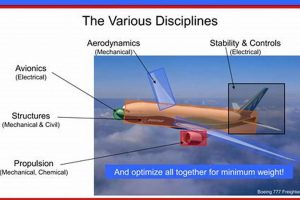
Aerospace engineering encompasses two primary branches: aeronautical engineering, focused on aircraft operating within Earth’s atmosphere, and astronautical engineering, concerned with spacecraft and operations beyond Earth’s atmosphere. Both disciplines require a strong foundation in areas such as aerodynamics, propulsion, materials science, structural analysis, and control systems.
Question 2: What educational background is required to pursue a career in aerospace engineering?
A bachelor’s degree in aerospace engineering or a closely related field, such as mechanical engineering, is typically the minimum requirement. Advanced positions often necessitate a master’s degree or doctorate, particularly those involving research or specialized design. Accreditation from recognized engineering bodies is crucial.
Question 3: What are the typical career paths for aerospace engineers?
Aerospace engineers find employment in various sectors, including aircraft manufacturing, spacecraft design and development, government agencies (such as NASA or national defense organizations), research institutions, and consulting firms. Specific roles can range from design engineer and test engineer to project manager and research scientist.
Question 4: What skills are essential for success in aerospace engineering?
Beyond technical expertise, effective communication, problem-solving, critical thinking, and teamwork skills are vital. Aerospace projects often involve multidisciplinary teams and require clear articulation of complex concepts. Proficiency in computer-aided design (CAD) and simulation software is also highly advantageous.
Question 5: What are some of the major challenges facing the aerospace industry today?
Current challenges include reducing aviation’s environmental impact (e.g., developing more fuel-efficient aircraft), managing increasing air traffic congestion, ensuring the safety and security of air and space travel, and developing innovative technologies for space exploration and colonization. Also, ensuring ethical standards are maintained.
Question 6: How is the field of aerospace engineering evolving?
The field is continuously evolving with advancements in materials science, propulsion systems, autonomous systems, and digital engineering tools. There is a growing emphasis on sustainable aviation, electric propulsion, additive manufacturing, and the integration of artificial intelligence into aerospace systems. Increased space exploration has grown, too.
These responses underscore the multifaceted nature of aerospace engineering and highlight the importance of a strong educational foundation, essential skills, and adaptability in a rapidly changing industry.
The subsequent section will delve into resources available for career advancement and professional development in aerospace engineering.
tyson rhodes aerospace engineer
This exploration has detailed key aspects of the profession, covering aerodynamics, propulsion, materials science, structural design, control systems, project management, and regulatory compliance. Each element contributes to the field’s complexity, demanding a rigorous skill set and understanding of fundamental principles.
The aerospace field presents constant challenges and requires individuals to uphold safety standards and to continue learning and adapting to new developments. Professionals within this field can continue to impact the course of aviation and space exploration.