Aerospace engineering encompasses the design, development, testing, and production of aircraft and spacecraft. It integrates principles from various engineering disciplines, including aerodynamics, propulsion, materials science, and control systems. A collection of intriguing details can reveal the breadth and depth of this fascinating field.
Understanding aspects of flight, space exploration, and related technological advancements is crucial for appreciating humanity’s progress in navigating the skies and venturing beyond. Knowledge concerning the historical evolution of flight, the complexities of orbital mechanics, and the ongoing innovations in propulsion systems underscores the field’s significant contributions to science and technology.
Consider, then, some compelling insights into the world of flight and space vehicle design. The following points offer a glimpse into the realities and sometimes surprising aspects of this complex and dynamic area of engineering.
Insights into Aerospace Engineering
Examining the realities of this field, one finds a diverse range of considerations, from the seemingly mundane to the truly groundbreaking. The following points shed light on some of the unexpected facets of aerospace engineering.
Tip 1: Development Cycles are Extensive. Bringing a new aircraft or spacecraft to fruition is a protracted undertaking, often spanning multiple years or even decades. This lengthy process involves design, prototyping, rigorous testing, and certification before the vehicle is operational.
Tip 2: Materials Selection is Critical. Aerospace engineers must carefully select materials that meet specific performance requirements. Considerations include strength-to-weight ratio, resistance to extreme temperatures, and durability under harsh environmental conditions.
Tip 3: Redundancy is Paramount. Safety is a core principle in aerospace engineering. Critical systems are often designed with redundant backups to mitigate the risk of failure. This approach enhances reliability and ensures continued operation even in the event of component malfunctions.
Tip 4: Simulation Plays a Vital Role. Before any physical prototype is built, engineers rely heavily on computer simulations to model and analyze the performance of aircraft and spacecraft. These simulations help identify potential design flaws early in the development process, saving time and resources.
Tip 5: Human Factors are Integral. Designing for human interaction is a crucial aspect of aerospace engineering. Engineers must consider the physical and cognitive capabilities of pilots and astronauts when designing cockpits, control systems, and other interfaces.
Tip 6: International Collaboration is Common. Many aerospace projects are international in scope, involving collaborations between companies and research institutions from different countries. This collaborative approach allows for the sharing of expertise and resources, leading to more innovative and impactful outcomes.
Tip 7: Environmental Considerations are Growing. With increasing concerns about climate change, there is a growing emphasis on developing more environmentally friendly aerospace technologies. This includes efforts to improve fuel efficiency, reduce emissions, and develop alternative propulsion systems.
In essence, the field requires a blend of meticulous planning, advanced scientific knowledge, and a dedication to safety. These insights reveal just some of the complexities involved in shaping the future of flight and space exploration.
Having examined these insights, one can better appreciate the multifaceted nature of this exciting field. The conclusion will summarize the importance of ongoing advancements and the challenges faced in realizing future aerospace innovations.
1. Innovation Catalyst

The concept of aerospace engineering as an innovation catalyst underscores its role in driving technological advancements across multiple disciplines. Many of the “10 fun facts about aerospace engineering” inherently demonstrate this catalytic effect. For example, the extended development cycles characteristic of the field necessitate continuous refinement and improvement of design methodologies and manufacturing processes. The demand for lighter, stronger materials has spurred innovation in materials science, leading to the development of composites and alloys with applications far beyond aerospace. Similarly, the stringent safety requirements inherent in the design of aircraft and spacecraft have fostered innovations in redundancy systems, fault-tolerant computing, and non-destructive testing techniques.
Consider the development of computational fluid dynamics (CFD), initially driven by the need to model and predict aerodynamic performance in aircraft design. CFD has since become an indispensable tool in a wide range of fields, including automotive engineering, weather forecasting, and biomedical engineering. The international collaborations common in aerospace engineering further amplify its catalytic effect by fostering the exchange of knowledge and expertise across national boundaries. Furthermore, the push for environmentally sustainable aerospace technologies has spurred innovation in areas such as alternative fuels, electric propulsion, and aerodynamic optimization, with potential implications for reducing carbon emissions across the transportation sector.
In conclusion, understanding aerospace engineering as an innovation catalyst highlights its profound impact on technological progress. The field’s unique challenges and demands necessitate pushing the boundaries of knowledge and developing cutting-edge solutions. While the primary goal may be to improve air and space travel, the resulting innovations often have far-reaching applications, driving advancements in other areas of engineering, science, and technology, thereby significantly benefiting society.
2. Global Collaboration

Global collaboration within aerospace engineering signifies international partnerships, resource sharing, and collaborative problem-solving. Its significance is amplified when considering the “10 fun facts about aerospace engineering,” highlighting how collective efforts drive progress and innovation in the field.
- Shared Research and Development
Aerospace projects often exceed the capabilities of single nations. Collaborative research and development pools expertise and funding. The International Space Station (ISS), a joint project involving multiple countries, exemplifies this. This allows for more ambitious and comprehensive research than any single entity could undertake, contributing to scientific breakthroughs.
- Standardization and Interoperability
Global collaboration fosters the development of international standards. This ensures that aircraft and spacecraft components from different countries can seamlessly integrate and function together. Such standardization promotes interoperability, reduces costs, and facilitates global trade and cooperation in the aerospace sector.
- Risk Mitigation and Resource Sharing
Aerospace ventures are inherently risky and resource-intensive. Global collaboration allows for risk mitigation through shared investment and expertise. Partner nations can contribute resources, technologies, and personnel, thereby diversifying the risk and ensuring project sustainability. This collaborative approach is particularly valuable in space exploration.
- Knowledge Transfer and Capacity Building
Collaborative projects facilitate knowledge transfer and capacity building among participating nations. Developing countries can benefit from the expertise and technology of more advanced partners, thereby accelerating their own aerospace development. Such collaboration promotes global equity and fosters a more inclusive aerospace community.
These facets illustrate the vital role of global collaboration in advancing aerospace engineering. The scale and complexity of modern aerospace projects necessitate a collaborative approach, enabling nations to share resources, expertise, and risks. By working together, countries can achieve goals that would be impossible to attain individually, ultimately contributing to significant advancements in the field.
3. Safety Imperative

The safety imperative in aerospace engineering is non-negotiable, influencing every stage of design, manufacturing, and operation. When considering the “10 fun facts about aerospace engineering,” it becomes clear that many aspects of the field are fundamentally shaped by the need to ensure the well-being of passengers, crew, and the general public.
- Redundancy Systems
Critical systems on aircraft and spacecraft are designed with multiple backups. This redundancy mitigates the risk of failure. For example, aircraft typically have multiple independent hydraulic systems. Should one fail, another takes over, ensuring continued control. Such systems are meticulously tested to guarantee reliability, a detail often overlooked but crucial to flight safety.
- Non-Destructive Testing (NDT)
NDT techniques are employed to detect flaws in aerospace components without causing damage. Methods like ultrasonic testing, radiography, and dye penetrant inspection identify hidden cracks or weaknesses. This proactive approach prevents catastrophic failures during operation, highlighting the commitment to preventing issues before they arise.
- Flight Simulation and Pilot Training
Pilots undergo extensive training in flight simulators that replicate a wide range of emergency scenarios. This preparation equips them to handle unexpected events with confidence and skill. Simulators provide a safe environment to practice procedures for engine failures, adverse weather conditions, and other potential hazards, underscoring the emphasis on preparedness.
- Material Selection and Certification
Aerospace engineers meticulously select materials that can withstand extreme conditions and stresses. These materials undergo rigorous testing and certification processes to ensure they meet stringent safety standards. The selection process accounts for factors like fatigue resistance, corrosion resistance, and flammability, ensuring the structural integrity of aircraft and spacecraft.
These facets illustrate how the safety imperative permeates aerospace engineering. Redundancy, testing, training, and material selection are not merely design considerations; they are fundamental principles that guide decision-making at every level. As future aerospace innovations emerge, the commitment to safety will continue to drive progress, shaping the development of more reliable and robust aircraft and spacecraft.
4. Extreme conditions

Extreme conditions are intrinsic to aerospace engineering, fundamentally shaping design, material selection, and operational procedures. The “10 fun facts about aerospace engineering” are often rooted in the necessity of overcoming these harsh environments. Aircraft and spacecraft operate in environments characterized by extreme temperatures, pressures, accelerations, and radiation levels, each presenting unique engineering challenges. Understanding these conditions is paramount to ensuring the safety and reliability of aerospace systems. The need for heat-resistant materials in hypersonic vehicles is a direct consequence of extreme temperatures generated by atmospheric friction. Similarly, spacecraft must be shielded against the vacuum of space and intense radiation from the sun and other celestial bodies.
The practical significance of understanding extreme conditions extends to various aspects of aerospace design. For instance, the selection of lubricants and hydraulic fluids must account for extreme temperature variations, preventing freezing at high altitudes or boiling within engine components. The design of pressure suits for astronauts directly addresses the vacuum of space, maintaining a habitable environment for crew members. Furthermore, the structural integrity of aircraft wings must withstand immense aerodynamic forces during flight, necessitating advanced materials and sophisticated stress analysis. The development of thermal protection systems for spacecraft re-entering Earth’s atmosphere is another critical area, requiring materials capable of dissipating tremendous amounts of heat.
In conclusion, extreme conditions represent a central theme within aerospace engineering. Designing for these conditions dictates material choices, system architecture, and operational protocols. The insights gained from addressing these challenges have not only enabled the exploration of space but have also contributed to advancements in other fields, such as materials science and thermal management. Ongoing research and development continue to focus on enhancing the performance and durability of aerospace systems under increasingly demanding environmental conditions, reflecting the enduring importance of this consideration.
5. Interdisciplinary nature
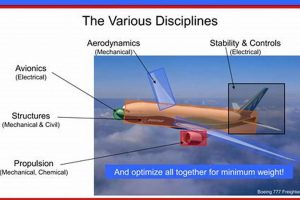
The interdisciplinary nature of aerospace engineering is a defining characteristic, profoundly shaping its approach to complex challenges. When examining the 10 fun facts about aerospace engineering, it becomes evident that advancements in the field are rarely the result of a single discipline. Instead, they stem from the integration of knowledge and techniques from various branches of engineering and science. This cross-pollination of ideas is essential for addressing the multifaceted problems inherent in designing, building, and operating aircraft and spacecraft. For example, creating effective heat shields requires knowledge from material science, thermodynamics, and aerodynamics, necessitating collaboration among specialists from these diverse areas.
Consider the development of modern aircraft. Aerodynamic design relies on fluid mechanics and computational methods. Structural integrity necessitates expertise in materials science and mechanical engineering. Propulsion systems demand knowledge of thermodynamics and combustion. Navigation and control systems incorporate electrical engineering and computer science. Furthermore, human factors engineering plays a crucial role in designing cockpits and control interfaces that optimize pilot performance and safety. The successful integration of these disciplines is not merely additive; it is synergistic, resulting in aircraft capabilities that far exceed what could be achieved through individual efforts. The design of satellite systems similarly relies on expertise from areas such as communications engineering, orbital mechanics, and power systems engineering, further exemplifying the need for interdisciplinary collaboration. Furthermore, the drive toward sustainable aviation fuels combines chemical engineering, environmental science, and economics to meet the demands of efficient and environmentally conscious air travel.
In conclusion, the interdisciplinary nature of aerospace engineering is a crucial component for progress and innovation. Its reliance on multiple fields underscores the importance of collaboration and communication among specialists from diverse backgrounds. The challenges inherent in designing and operating aircraft and spacecraft necessitate a holistic approach, integrating knowledge and techniques from various disciplines. By fostering this interdisciplinary mindset, aerospace engineering continues to push the boundaries of what is possible, driving advancements in technology and benefiting society as a whole.
6. Pioneering research

Pioneering research serves as a foundational pillar for progress in aerospace engineering. The field’s advancement is intrinsically linked to groundbreaking investigations and the pursuit of novel solutions. The emergence of many “10 fun facts about aerospace engineering” is directly attributable to the outcomes of such investigative efforts. As new technologies and methodologies are developed through research, they often become noteworthy aspects of the field, eventually finding their way into common knowledge and general interest.
A clear example of this connection lies in the development of composite materials. Initially, research efforts focused on identifying materials possessing high strength-to-weight ratios for enhanced aircraft performance. This pioneering work led to the creation of advanced composites, now a staple in modern aircraft construction. Another illustration is the evolution of computational fluid dynamics (CFD). Early research in this area aimed to simulate airflow around aircraft designs, enabling engineers to optimize aerodynamic performance. Today, CFD is an indispensable tool in aerospace engineering, used extensively for design and analysis. Hypersonic flight is a subject of intensive research. Early investigations focused on understanding the complex physics of airflow at extreme speeds, which led to novel designs for aircraft and spacecraft capable of traversing the atmosphere at Mach 5 or higher. These advancements would not be possible without dedicated research initiatives.
In conclusion, pioneering research provides the essential groundwork for generating new knowledge and technologies. The various compelling points within aerospace engineering reflect the field’s continued commitment to pushing the boundaries of what is achievable. As research progresses, more surprising and intriguing aspects will undoubtedly emerge, enriching understanding and inspiring future innovations.
7. Future advancements
Future advancements in aerospace engineering directly impact the potential “10 fun facts about aerospace engineering” by continuously redefining the boundaries of possibility. Novel technologies and approaches, once relegated to the realm of science fiction, gradually transition into tangible realities through dedicated research and development. Consequently, many aspects of current aerospace practices, considered commonplace today, may become intriguing historical footnotes within the broader context of future innovations.
The development of sustainable propulsion systems provides a relevant example. Ongoing research into electric propulsion, hydrogen fuel cells, and alternative biofuels is aimed at reducing the environmental impact of air travel. As these technologies mature and become more widely adopted, the reliance on traditional jet fuel may diminish, thereby transforming aircraft design and operational logistics. Another area of significant advancement lies in autonomous flight. Progress in artificial intelligence and sensor technology is paving the way for pilotless aircraft and unmanned aerial vehicles (UAVs) capable of performing a wide range of tasks, from package delivery to aerial surveillance. Such automation could revolutionize air traffic management and create new opportunities for aerial transportation. Further progress in space exploration is anticipated through advanced propulsion systems such as ion drives and nuclear thermal rockets, with the potential to drastically reduce travel times to distant planets. Such technology will contribute to expanding human presence beyond Earth’s orbit.
In conclusion, future advancements represent a dynamic force within aerospace engineering, shaping potential milestones and accomplishments. Continuous innovation across diverse areas promises to yield surprising and transformative developments, rendering existing methods obsolete and giving rise to what could be seen as modern marvels. As the field progresses, understanding the implications of these advancements will be crucial for appreciating the continuously evolving nature of flight and space exploration.
Frequently Asked Questions
The following questions address common inquiries regarding aerospace engineering, particularly in light of the field’s complexities and evolving nature. The answers aim to provide clear and factual information.
Question 1: Is aerospace engineering solely concerned with designing aircraft and spacecraft?
While the design of aircraft and spacecraft is a central focus, aerospace engineering also encompasses related areas such as propulsion systems, materials science, aerodynamics, and control systems. Furthermore, it includes the operation, maintenance, and management of aerospace vehicles and infrastructure.
Question 2: How long does it typically take to become a qualified aerospace engineer?
The path to becoming a qualified aerospace engineer generally requires completing a bachelor’s degree in aerospace engineering or a related field, typically a four-year program. Many engineers also pursue advanced degrees, such as a master’s or doctorate, which can add two to five years of study. Furthermore, practical experience through internships or co-op programs is highly beneficial.
Question 3: What are the primary challenges faced by aerospace engineers today?
Aerospace engineers face numerous challenges, including developing more fuel-efficient and environmentally friendly aircraft, designing spacecraft capable of withstanding extreme conditions, improving air traffic management systems, and reducing the cost of space access. They also tackle the unique problems posed by hypersonic flight and long-duration space missions.
Question 4: What role does mathematics play in aerospace engineering?
Mathematics is fundamental to aerospace engineering. Engineers use calculus, differential equations, linear algebra, and statistics to model and analyze various aspects of flight and space travel. These mathematical tools are essential for understanding aerodynamics, structural mechanics, propulsion systems, and control systems.
Question 5: What are some emerging trends in aerospace engineering?
Emerging trends include the development of electric propulsion systems, the use of advanced composite materials, the integration of artificial intelligence into aircraft and spacecraft systems, the exploration of hypersonic flight, and the expansion of commercial space activities.
Question 6: Is aerospace engineering a secure career path?
Aerospace engineering typically offers stable career opportunities. Demand for aerospace engineers fluctuates with economic conditions and government funding for space exploration and defense programs. However, as technology advances and new challenges arise, qualified aerospace engineers continue to be sought after.
Aerospace engineering is a multi-faceted field requiring both theoretical knowledge and practical skills. Addressing complex questions is crucial for furthering both our understanding of this intricate field, and developing informed opinions regarding its influence on the world.
The preceding discussion highlights some essential considerations, thus contributing to a more comprehensive and nuanced comprehension of the topic at hand.
Concluding Insights on Aerospace Engineering
This article explored “10 fun facts about aerospace engineering” by examining key themes: innovation, global collaboration, safety, extreme conditions, interdisciplinary nature, research, and future advancements. The discussion highlighted the field’s complexity, its reliance on diverse scientific principles, and its capacity to drive innovation across various sectors. Understanding these facets provides a more comprehensive perspective on aerospace engineering’s importance.
Continued progress in this field remains crucial for addressing global challenges related to sustainable aviation, space exploration, and technological advancement. Further investigation and engagement with aerospace concepts are encouraged to foster a deeper appreciation for its contributions to society. The future of air and space travel hinges on continued dedication to rigorous research, ethical considerations, and a commitment to pushing the boundaries of scientific knowledge.