The profession involves designing, developing, testing, and supervising the manufacture of aircraft, spacecraft, and missiles. Professionals in this field apply engineering principles and techniques to create vehicles that operate within and beyond Earth’s atmosphere. For example, these specialists might work on improving fuel efficiency in commercial airliners or developing new technologies for space exploration.
The role is crucial for advancements in transportation, national defense, and scientific discovery. Innovations driven by these engineers have led to safer air travel, enhanced satellite communications, and a deeper understanding of the universe. Historically, their contributions have propelled technological progress and shaped the course of aviation and space endeavors.
The subsequent sections will delve into the specific responsibilities, required skills, educational pathways, and career prospects associated with this complex and vital engineering discipline. Furthermore, it will explore the challenges and opportunities that characterize this dynamic field, providing a holistic overview of the profession.
Guidance for Aspiring Professionals
The following are some considerations for individuals seeking a career path focused on the design, development, and maintenance of flight-capable machines.
Tip 1: Develop a Strong Foundation in STEM: Emphasis should be placed on mastering mathematics, physics, and computer science. These subjects form the bedrock upon which aerospace engineering principles are built. For instance, a solid understanding of calculus is essential for analyzing aerodynamic forces.
Tip 2: Pursue Relevant Education and Certifications: A bachelor’s degree in aerospace engineering or a closely related field is generally a minimum requirement. Further specialization can be achieved through advanced degrees and certifications focused on specific areas, such as propulsion or avionics.
Tip 3: Gain Practical Experience Through Internships: Participating in internships with aerospace companies or research institutions provides invaluable hands-on experience. Such opportunities allow students to apply theoretical knowledge to real-world problems and network with industry professionals.
Tip 4: Cultivate Strong Problem-Solving Skills: The work necessitates the ability to analyze complex problems, develop creative solutions, and rigorously test their effectiveness. Practice with design projects and simulations can significantly enhance these skills.
Tip 5: Stay Abreast of Technological Advancements: The aerospace industry is constantly evolving, so professionals must commit to lifelong learning. Regularly reading industry publications, attending conferences, and pursuing continuing education courses are crucial for remaining competitive.
Tip 6: Develop Effective Communication and Teamwork Skills: Aerospace projects typically involve multidisciplinary teams, necessitating clear communication and collaborative problem-solving. Participating in group projects and developing strong interpersonal skills are essential.
Tip 7: Consider Specialization: The field encompasses a wide range of specializations, including aerodynamics, propulsion, materials science, and control systems. Identifying a specific area of interest and focusing on developing expertise in that area can enhance career prospects.
Adhering to these principles can significantly improve the chances of successfully pursuing and thriving in a career dedicated to the advancement of flight and space technology.
The subsequent section will summarize the key concepts covered and offer a concluding perspective on this critical engineering discipline.
1. Design and Development

The “Design and Development” phase represents a core component of the duties associated with the occupation. It is within this stage that theoretical concepts are transformed into tangible blueprints and prototypes, ultimately leading to the creation of functional aircraft, spacecraft, and related systems. A direct causal relationship exists; deficiencies in the design phase inevitably translate into operational limitations or even catastrophic failures during subsequent stages. For example, the design of the Boeing 787 Dreamliner involved extensive computational fluid dynamics simulations to optimize aerodynamic performance and reduce fuel consumption. These simulations, a product of the design phase, directly influenced the aircraft’s operational efficiency.
The process is not merely about creating aesthetically pleasing or theoretically sound models. It involves rigorous adherence to engineering principles, safety regulations, and performance specifications. This entails meticulous calculations, stress analyses, and simulations to ensure structural integrity, functional reliability, and compliance with established standards. The design of a spacecraft heat shield, for instance, requires precise understanding of thermal dynamics and materials science to protect the vehicle during atmospheric re-entry. Failure to adequately address these factors during the design stage could result in disintegration of the spacecraft.
In conclusion, the design and development work constitutes a pivotal function. Accurate understanding of this connection is not only academically significant but also critical for professionals in the field and for policymakers. The importance of this connection is underscored by the high stakes involved lives, resources, and national security. Consequently, continuous advancements in design methodologies and development techniques remain paramount for ensuring the safety, efficiency, and effectiveness of aerospace systems.
2. Testing and Analysis
Within the scope of the profession, “Testing and Analysis” functions as a critical process for validating designs, identifying potential weaknesses, and ensuring the safety and reliability of aerospace systems. This rigorous evaluation is essential for mitigating risks and optimizing performance before deployment.
- Structural Integrity Testing
This facet focuses on subjecting aerospace components and structures to simulated operational loads and environmental conditions to assess their ability to withstand stress and fatigue. For instance, aircraft wings undergo extensive wind tunnel testing to measure lift, drag, and structural response under various flight conditions. These tests reveal potential design flaws or material weaknesses that could lead to catastrophic failure in service.
- Performance Evaluation
Performance evaluation involves measuring key metrics such as thrust, fuel efficiency, and maneuverability to determine whether an aerospace vehicle meets its design specifications. Flight tests of new aircraft designs are a prime example. Data collected during these tests allows engineers to refine control systems, optimize engine performance, and ensure the vehicle operates within its intended performance envelope.
- Failure Analysis
When components or systems fail during testing or operation, thorough failure analysis is conducted to determine the root cause of the failure. This process involves detailed examination of fractured surfaces, material properties, and operational data. The findings from failure analysis are used to improve design, manufacturing processes, and maintenance procedures, thereby preventing future failures. For example, the investigation into the Space Shuttle Challenger disaster led to significant changes in the design and testing of solid rocket boosters.
- Environmental Testing
Aerospace systems must withstand extreme environmental conditions, including temperature fluctuations, radiation exposure, and vacuum. Environmental testing simulates these conditions to assess the durability and reliability of components and systems in space or high-altitude environments. Satellites, for instance, undergo thermal vacuum testing to ensure they can operate effectively in the harsh conditions of space. These tests identify potential vulnerabilities to radiation and temperature extremes, which are then addressed through design modifications or material selection.
The aforementioned facets demonstrate that the “Testing and Analysis” phase is fundamental to the responsible and effective execution of responsibilities related to the engineering specialization. Data collected during these rigorous evaluations informs design improvements, manufacturing process refinements, and operational procedures, ultimately contributing to enhanced safety, reliability, and performance of aerospace systems. The capacity to effectively interpret test data and implement appropriate corrective actions is a critical competency for professionals in the field.
3. Materials Science

The principles of “Materials Science” are inextricably linked to the responsibilities within the occupation. The selection, characterization, and application of materials are paramount to the design, performance, and safety of aircraft and spacecraft. Understanding the properties and behavior of materials under extreme conditions is fundamental for professionals operating within this domain.
- High-Strength Lightweight Alloys
The aerospace industry relies heavily on high-strength, lightweight alloys, such as aluminum, titanium, and magnesium alloys, to minimize structural weight while maintaining sufficient strength. For example, advanced aluminum-lithium alloys are used in aircraft fuselages to reduce weight, leading to improved fuel efficiency. Aerospace engineers must possess a deep understanding of the mechanical properties, corrosion resistance, and weldability of these alloys to ensure structural integrity and longevity of aircraft components.
- Composite Materials
Composite materials, such as carbon fiber reinforced polymers (CFRP), offer exceptional strength-to-weight ratios and are increasingly used in aerospace structures. The Boeing 787 Dreamliner, for instance, utilizes a significant amount of CFRP in its fuselage and wings, contributing to its improved fuel efficiency. Aerospace engineers must be proficient in the design, analysis, and manufacturing of composite structures, considering factors such as fiber orientation, matrix properties, and environmental degradation.
- High-Temperature Materials
Components exposed to extreme temperatures, such as those in jet engines and hypersonic vehicles, require specialized high-temperature materials. Nickel-based superalloys, ceramics, and thermal barrier coatings are commonly used to withstand these harsh conditions. The turbine blades in jet engines, for example, operate at temperatures exceeding the melting point of nickel, necessitating the use of sophisticated cooling techniques and advanced materials. Aerospace engineers working on propulsion systems must have a thorough understanding of the thermal and mechanical behavior of these materials.
- Smart Materials
Smart materials, such as shape memory alloys and piezoelectric materials, are gaining increasing attention in the aerospace industry due to their ability to adapt to changing conditions. Shape memory alloys, for example, can be used in morphing wings to optimize aerodynamic performance during different flight phases. Aerospace engineers are exploring the application of smart materials in actuators, sensors, and structural health monitoring systems to improve the efficiency, safety, and reliability of aerospace vehicles.
The integration of “Materials Science” into the work ensures that engineers can make informed decisions regarding material selection, design optimization, and manufacturing processes. This knowledge is crucial for advancing the capabilities of aircraft and spacecraft, enabling them to operate more efficiently, safely, and reliably in demanding environments.
4. Aerodynamics Principles
A comprehensive understanding of aerodynamics constitutes a foundational requirement for professionals engaged in the design, development, and analysis of aerospace vehicles. These principles govern the motion of air and its interaction with solid objects, directly influencing the performance, stability, and control of aircraft and spacecraft. A mastery of these concepts is not merely an academic exercise but a practical necessity for engineers in this field.
- Lift Generation
Lift, the force that opposes gravity and enables flight, is fundamentally dependent on aerodynamic principles. Airfoil design, angle of attack, and airspeed all contribute to generating sufficient lift to support an aircraft’s weight. The design of an aircraft wing, for example, incorporates a specific airfoil shape to create a pressure differential between the upper and lower surfaces, resulting in lift. Aerospace engineers must accurately predict and optimize lift generation to ensure safe and efficient flight.
- Drag Reduction
Drag, the force that opposes motion through the air, significantly impacts an aircraft’s fuel efficiency and performance. Aerodynamic design principles are applied to minimize drag through streamlining, reducing surface area, and controlling boundary layer flow. The use of winglets on aircraft wings, for instance, reduces induced drag by mitigating the formation of wingtip vortices. Professionals continuously seek to reduce drag to improve aircraft performance and fuel consumption.
- Stability and Control
Aerodynamic stability and control are essential for ensuring that an aircraft can maintain its desired flight path and respond effectively to pilot inputs. Control surfaces, such as ailerons, elevators, and rudders, are designed to manipulate airflow and generate control forces. The placement and size of these control surfaces, as well as the overall aircraft configuration, are critical for achieving stable and controllable flight characteristics. Aerospace engineers analyze stability and control characteristics to ensure aircraft safety and maneuverability.
- Supersonic and Hypersonic Aerodynamics
At supersonic and hypersonic speeds, the behavior of air becomes significantly more complex due to the formation of shock waves and changes in air density. The design of aircraft and spacecraft intended to operate at these speeds requires specialized knowledge of compressible flow, wave drag, and thermal effects. The design of the Space Shuttle, for example, incorporated aerodynamic principles to manage the extreme heat generated during atmospheric re-entry. Aerospace engineers must understand these phenomena to design safe and efficient vehicles for high-speed flight.
The successful application of aerodynamic principles is integral to the performance and safety of all aerospace vehicles. Continuous advancements in computational fluid dynamics and wind tunnel testing provide aerospace engineers with increasingly sophisticated tools for analyzing and optimizing aerodynamic designs. These advancements are driving innovation in aircraft design, leading to more efficient, sustainable, and capable air and space transportation systems.
5. Propulsion Systems

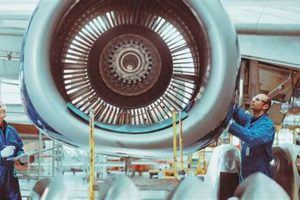
A fundamental aspect of the work involves a comprehensive understanding of “Propulsion Systems.” These systems are the driving force behind the motion of aircraft and spacecraft, and their design, development, and maintenance are critical responsibilities within the field. The efficiency, reliability, and performance of these systems directly impact the overall capabilities of aerospace vehicles. For example, the development of high-bypass turbofan engines has significantly improved the fuel efficiency of commercial airliners, reducing operational costs and environmental impact. This advancement is a direct result of engineering expertise applied to propulsion system design. Similarly, the design of rocket engines for space launch vehicles requires a deep understanding of thermodynamics, fluid mechanics, and combustion processes to achieve the necessary thrust and specific impulse. The success of space missions hinges on the reliable performance of these complex propulsion systems.
Professionals are involved in various aspects of propulsion system development, including designing engine components, conducting performance analyses, and overseeing testing and certification. They must also consider factors such as weight, size, cost, and environmental impact when selecting and integrating propulsion systems into aerospace vehicles. The application of computational fluid dynamics (CFD) simulations plays a crucial role in optimizing engine designs and predicting performance characteristics. Furthermore, materials science plays a critical role in the development of high-temperature components capable of withstanding the extreme conditions within propulsion systems. The evolution of scramjet technology for hypersonic flight represents a significant challenge, demanding continuous innovation in materials, combustion techniques, and aerodynamic design.
In summary, the design, development, and maintenance of “Propulsion Systems” constitute a core component of aerospace engineering. The advancements in propulsion technology have a direct and significant impact on the progress of air and space travel. The continuous drive for improved efficiency, reliability, and performance of these systems will continue to challenge engineers and shape the future of the field. Their capabilities require a strong foundation in engineering principles and a commitment to continuous learning and innovation.
6. Control Systems
The integration of “Control Systems” is paramount to the functional responsibilities inherent in the design, operation, and maintenance of aerospace vehicles. These systems govern the stability, maneuverability, and overall performance of aircraft and spacecraft, demanding a deep understanding of control theory and its practical applications.
- Flight Control Systems
Flight control systems enable pilots to precisely manipulate the aircraft’s attitude and trajectory. These systems translate pilot inputs into control surface deflections, adjusting aerodynamic forces to achieve desired flight characteristics. For instance, fly-by-wire systems, common in modern aircraft, use electronic sensors and actuators to enhance stability and prevent pilot-induced oscillations. Aerospace engineers must design and implement these systems to ensure safe and responsive aircraft handling across various flight regimes.
- Guidance, Navigation, and Control (GNC) Systems
GNC systems are critical for autonomous navigation and precise trajectory control of spacecraft and missiles. These systems integrate sensors, such as GPS receivers and inertial measurement units, with sophisticated algorithms to determine position and orientation. They then command actuators to execute necessary course corrections. The GNC system of a satellite, for example, maintains its orbital position and orientation, enabling it to perform its intended mission. Engineers specializing in GNC design these systems to achieve high accuracy and robustness in challenging environments.
- Engine Control Systems
Engine control systems regulate the operation of aircraft and spacecraft engines, optimizing performance, fuel efficiency, and emissions. These systems monitor engine parameters, such as temperature, pressure, and fuel flow, and adjust engine settings to maintain desired operating conditions. Full Authority Digital Engine Control (FADEC) systems, used in modern jet engines, automatically manage engine performance, reducing pilot workload and improving fuel efficiency. The development and optimization of engine control systems are vital for enhancing the overall efficiency and environmental friendliness of aerospace vehicles.
- Attitude Control Systems
Attitude control systems maintain the desired orientation of spacecraft in space. These systems utilize sensors, such as star trackers and gyroscopes, to determine spacecraft attitude and employ actuators, such as reaction wheels and thrusters, to make necessary adjustments. A satellite’s attitude control system, for example, ensures that its antennas and sensors are pointed in the correct direction for communication and observation. Precise attitude control is essential for the successful operation of many space missions.
The successful design and implementation of control systems are pivotal for aerospace engineering. Advancements in control theory, sensor technology, and actuator design continually push the boundaries of what is possible in air and space. The continuous demand for increased performance, autonomy, and safety necessitates a workforce proficient in the intricacies of control systems engineering.
7. Project Management

The aerospace engineering field inherently involves intricate, large-scale projects. Consequently, proficient “Project Management” skills are not merely ancillary but integral to the successful execution of an engineer’s duties. Delays, cost overruns, and performance shortfalls often stem directly from ineffective project management practices. For example, the development of a new satellite involves coordinating the efforts of numerous teams specializing in different aspects, such as payload design, power systems, and communication. Ineffective project management can lead to integration issues, schedule slippages, and ultimately, mission failure.
The core competencies of project management applicable to aerospace engineering include defining project scope, establishing timelines, allocating resources, managing risks, and ensuring effective communication among team members. Consider the development of a new aircraft engine. Project management principles dictate the need for a clear definition of performance targets, a detailed schedule for design, prototyping, and testing, and a system for tracking progress and identifying potential problems early. Moreover, risk management strategies are crucial for mitigating potential setbacks, such as supply chain disruptions or technical challenges. Effective communication is essential to keep all stakeholders informed and aligned throughout the project lifecycle.
In conclusion, the connection between “Project Management” and the profession is direct and substantial. Mastering project management methodologies is not merely a desirable skill but a fundamental requirement for aerospace engineers seeking to lead and contribute effectively to complex projects. The challenges inherent in the field demand rigorous application of project management principles to ensure the successful realization of innovative aerospace technologies. The industry recognizes that investment in project management training and implementation yields tangible returns in terms of improved project outcomes and enhanced organizational efficiency.
Frequently Asked Questions Regarding Roles in Aerospace Engineering
The following are frequently asked questions pertaining to the responsibilities and requirements associated with the role, offered to provide clarity and guidance.
Question 1: What fundamental skills are essential for success in an aerospace engineering role?
A strong foundation in mathematics, physics, and computer science is paramount. Proficiency in engineering design software, problem-solving, and effective communication are also critical.
Question 2: What educational qualifications are typically required to secure a position in this field?
A bachelor’s degree in aerospace engineering or a closely related field is generally considered the minimum requirement. Advanced degrees, such as a Master’s or Ph.D., may be necessary for specialized roles or research-oriented positions.
Question 3: Is practical experience, such as internships, beneficial for career advancement?
Yes, participation in internships or co-op programs provides invaluable hands-on experience and networking opportunities, significantly enhancing employment prospects.
Question 4: What are some common specializations within aerospace engineering?
Specializations include aerodynamics, propulsion, structural analysis, control systems, and avionics. Focusing on a specific area can lead to greater expertise and career opportunities.
Question 5: How important is it to stay updated with technological advancements in the aerospace industry?
Continuous learning and professional development are crucial due to the rapid pace of technological advancements in the field. Staying informed about new materials, design techniques, and software tools is essential for maintaining competitiveness.
Question 6: What are the primary industries that employ aerospace engineers?
Aerospace engineers are employed by aircraft manufacturers, space agencies, defense contractors, research institutions, and government organizations involved in aviation and space exploration.
In summary, the role demands a combination of technical expertise, practical experience, and a commitment to continuous learning. Successful navigation of this field requires a strong understanding of fundamental engineering principles and the ability to adapt to evolving technologies.
The subsequent section will provide a concluding overview of the critical aspects discussed.
Conclusion
The preceding discussion has illuminated the multifaceted nature of the job of aerospace engineer. The role encompasses design and development, rigorous testing and analysis, mastery of materials science, a deep understanding of aerodynamic principles, expertise in propulsion and control systems, and proficiency in project management. Each of these elements contributes to the overall success and innovation within the field.
As technological advancements continue to reshape the boundaries of air and space travel, the demands placed upon professionals in this domain will only intensify. Sustained commitment to education, innovation, and ethical practice remains paramount for those entrusted with shaping the future of flight and space exploration. The potential societal impact of this career path warrants serious consideration by those seeking to contribute to the advancement of human knowledge and capability.