Expansion in the number of available positions within the aeronautics and astronautics fields defines career opportunities for individuals specializing in the design, development, testing, and production of aircraft, spacecraft, and related systems. This encompasses roles ranging from initial concept and prototyping to manufacturing, quality control, and ongoing research and development.
A healthy trajectory in the employment market for these professionals is crucial for several reasons. It fosters innovation, supports national security through advancements in defense technologies, and drives economic growth by creating high-skilled, high-paying positions. Historically, periods of significant technological breakthroughs, such as the Space Race, have correlated with surges in demand for expertise in these areas.
The following sections will delve into the key factors influencing the projected increase in the need for qualified personnel, explore specific sectors exhibiting notable expansion, and examine the required skillsets necessary to capitalize on emerging opportunities within these technically demanding domains.
Strategies for Capitalizing on Career Advancement in Aerospace Engineering
The subsequent recommendations are intended to assist aspiring and current aerospace engineers in maximizing their professional prospects, given the projected expansion within the industry. These strategies focus on skill development, career planning, and staying abreast of technological advancements.
Tip 1: Pursue Advanced Education: A Master’s degree or Doctorate often enhances competitiveness, particularly in research and development roles. Consider specializations aligned with emerging fields such as hypersonic flight or autonomous systems.
Tip 2: Develop Expertise in Simulation and Modeling: Proficiency in software tools like MATLAB, Simulink, and computational fluid dynamics (CFD) packages is increasingly essential for design and analysis. Focus on gaining practical experience through projects or internships.
Tip 3: Acquire Systems Engineering Skills: A holistic understanding of how various components integrate within complex aerospace systems is highly valued. Seek opportunities to participate in multidisciplinary projects to broaden perspective.
Tip 4: Seek Certifications: Professional certifications, such as those offered by organizations like the American Institute of Aeronautics and Astronautics (AIAA), can demonstrate competence and commitment to the field.
Tip 5: Network Actively: Attend industry conferences, join professional societies, and connect with experienced engineers to learn about unadvertised opportunities and gain valuable insights.
Tip 6: Embrace Lifelong Learning: The aerospace industry is constantly evolving. Stay updated on the latest advancements in materials science, propulsion systems, and avionics through journals, online courses, and professional development programs.
Tip 7: Consider Government Service: Agencies like NASA and the Department of Defense offer diverse career paths with opportunities to work on cutting-edge projects. Explore pathways such as internships or direct hiring programs.
Adopting these strategies can significantly improve an individual’s ability to navigate and thrive within the evolving landscape of aerospace engineering, ultimately positioning them for long-term success.
The concluding section will synthesize the key findings presented and offer a final perspective on the anticipated trajectory of the aerospace engineering profession.
1. Defense sector expansion

The connection between defense sector expansion and the increased need for aerospace engineers is fundamentally causal. Elevated investment in military aircraft, missile systems, unmanned aerial vehicles (UAVs), and related technologies directly translates into a higher demand for professionals capable of designing, developing, testing, and maintaining these complex systems. The complexity inherent in modern defense technologies necessitates a workforce skilled in aerodynamics, propulsion, materials science, avionics, and systems integration. Therefore, as defense budgets grow and technological sophistication increases, the requirement for qualified aerospace engineers also rises.
The importance of defense sector expansion as a component of overall increases in employment for this discipline can be illustrated by examining recent trends. For instance, the development and deployment of advanced fighter jets, such as the F-35, have created numerous positions at aerospace companies like Lockheed Martin and its subcontractors. Similarly, the growing use of UAVs for surveillance and combat has spurred job creation at companies specializing in their design and manufacturing. Furthermore, ongoing research into hypersonic weapons systems represents a significant, long-term source of employment for aerospace engineers with expertise in high-speed aerodynamics and materials.
Understanding this relationship is of practical significance for several reasons. It allows aspiring aerospace engineers to strategically align their education and skill development with the specific needs of the defense industry. It also enables policymakers and educational institutions to anticipate workforce demands and tailor training programs accordingly. Moreover, a clear understanding of this connection allows aerospace companies to proactively recruit and retain talent, ensuring they can meet the demands of a growing defense sector. However, reliance on defense spending can present volatility, as fluctuations in geopolitical landscapes can impact budgets and therefore workforce needs.
2. Commercial aviation demand

The influence of commercial aviation demand on the proliferation of positions for aerospace engineers is a significant driver of career expansion within the field. Increasing passenger numbers, aircraft fleet renewals, and the evolution of aircraft technology directly impact the need for qualified engineering professionals.
- Aircraft Design and Manufacturing
Elevated demand for air travel prompts aircraft manufacturers like Boeing and Airbus to increase production rates. This intensification necessitates more aerospace engineers to work on design improvements, structural analysis, and the development of more fuel-efficient and sustainable aircraft. For example, the development of the Boeing 787 Dreamliner and the Airbus A350 required substantial engineering resources, contributing to the creation of numerous jobs in design, testing, and manufacturing.
- Maintenance, Repair, and Overhaul (MRO)
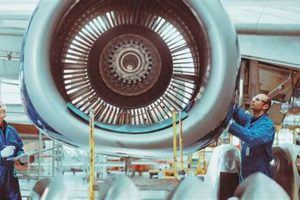
As aircraft fleets expand to meet passenger demand, the need for maintenance and repair services also grows. Aerospace engineers are critical in MRO operations, ensuring the safety and airworthiness of aircraft. They perform inspections, diagnose problems, and develop repair solutions. Companies specializing in MRO services, such as Lufthansa Technik and ST Engineering Aerospace, actively recruit aerospace engineers to meet this ongoing demand.
- Avionics and Systems Engineering
Modern commercial aircraft incorporate increasingly complex avionics systems, including flight control systems, navigation systems, and communication systems. Aerospace engineers with expertise in avionics are essential for designing, developing, and integrating these systems. Furthermore, rising emphasis on automation and enhanced safety features increases the need for skilled systems engineers who can oversee the integration of these various components.
- Sustainable Aviation Technologies
Growing environmental concerns are driving the development of more sustainable aviation technologies, such as electric propulsion, hybrid-electric propulsion, and alternative fuels. This transition creates new opportunities for aerospace engineers to work on cutting-edge research and development projects aimed at reducing the environmental impact of air travel. These initiatives could dramatically increase employment numbers.
The cumulative effect of these factorsaircraft design and manufacturing, MRO services, avionics advancements, and the pursuit of sustainable aviation technologiesdemonstrates the significant role commercial aviation demand plays in the expanding job market for aerospace engineers. The industry’s ongoing evolution and commitment to innovation suggest that this demand will remain robust in the coming years.
3. Space exploration surge

The renewed global emphasis on space exploration directly correlates with an increased demand for aerospace engineers. Government initiatives, such as NASA’s Artemis program aiming to return humans to the Moon, alongside private sector ventures like SpaceX’s Starship development and Blue Origin’s orbital ambitions, necessitate a substantial increase in the workforce capable of designing, building, and operating spacecraft, launch vehicles, and associated infrastructure.
This surge encompasses a wide spectrum of engineering disciplines within the aerospace field. The design and development of advanced propulsion systems, life support systems, and radiation shielding require specialized expertise. Furthermore, the construction and testing of these systems, alongside the planning and execution of complex missions, contribute significantly to the expanding employment landscape. The commercialization of space, including satellite constellations for communication and Earth observation, further adds to the demand for engineers in design, manufacturing, and operational roles. Companies supporting these efforts must attract and retain capable specialists, increasing competition in the labor market.
The expansion in space exploration represents a long-term driver for employment for aerospace engineers. Sustained government funding for space programs, coupled with increasing private investment in space-related technologies, suggest that the demand will continue. Successfully navigating this expanding sector necessitates a focus on advanced education and development of specialized skills, particularly in areas like space systems engineering, advanced materials, and autonomous systems. Understanding the specific needs of both government agencies and private companies involved in space exploration is crucial for aspiring aerospace engineers to secure promising career opportunities.
4. Technological advancements propel

The continuous evolution of aerospace technology serves as a primary catalyst for the increasing demand for qualified aerospace engineers. The complexities inherent in new technologies necessitate specialized skills and expertise, driving expansion across various sub-disciplines within the field.
- Advanced Materials and Manufacturing
The development and implementation of lightweight composites, advanced alloys, and additive manufacturing techniques (3D printing) are transforming aircraft and spacecraft design. These innovations require engineers skilled in materials science, structural analysis, and manufacturing processes to optimize designs, ensure structural integrity, and develop efficient production methods. The adoption of these advanced materials results in fuel savings and improved performance.
- Autonomous Systems and Robotics
The integration of autonomous systems and robotics into aerospace applications, including unmanned aerial vehicles (UAVs), autonomous spacecraft, and robotic assembly lines, creates opportunities for engineers specializing in artificial intelligence, machine learning, control systems, and robotics. The development of autonomous flight control systems and robotic maintenance platforms generates a requirement for personnel with expertise in software development, sensor integration, and algorithm design.
- Electric and Hybrid Propulsion Systems
The push for more sustainable aviation practices has led to increased research and development in electric and hybrid propulsion systems. Engineers are needed to design and develop electric motors, battery systems, and power electronics for aircraft and spacecraft. This emerging field requires expertise in electrical engineering, thermodynamics, and aerodynamics, as well as knowledge of new energy storage technologies.
- Hypersonic Technology
The pursuit of hypersonic flight capabilities is driving innovation in areas such as high-speed aerodynamics, advanced propulsion systems (scramjets and ramjets), and high-temperature materials. This field presents challenges requiring engineers with expertise in fluid dynamics, combustion, and heat transfer to design and test aircraft capable of sustained hypersonic flight. The development of such technology could lead to new advancements.
These technological advancements, alongside related innovations in fields such as avionics, communications, and cybersecurity, collectively propel the increasing demand for aerospace engineers. These developments are creating opportunities for new roles. Continuous learning and adaptation will be crucial for professionals seeking to capitalize on these evolving trends and secure their place in the future aerospace workforce.
5. Research and development funding
The availability of funding for research and development (R&D) directly influences the rate of job growth for aerospace engineers. Increased R&D investment, whether from governmental bodies, private corporations, or academic institutions, fuels innovation and technological advancement within the aerospace sector. This, in turn, generates a demand for engineers to conduct research, design new systems, and implement cutting-edge technologies. Without sufficient R&D funding, the pace of innovation slows, limiting the scope for new projects and consequently impacting employment opportunities within the field. Therefore, robust R&D funding acts as a crucial stimulus for advancement.
The importance of R&D funding is underscored by numerous examples. For instance, NASA’s investments in advanced propulsion systems, materials science, and autonomous navigation have led to the development of new technologies and the creation of engineering positions across government laboratories, universities, and private aerospace firms. Similarly, significant R&D expenditures by companies like Boeing and Airbus have resulted in more fuel-efficient aircraft designs and advanced manufacturing techniques, sustaining employment for design, manufacturing, and testing engineers. The practical significance of this connection is evident in the ongoing efforts to secure continued government funding for aerospace R&D programs, as these investments are viewed as essential for maintaining technological leadership and ensuring a skilled workforce.
In summary, R&D funding serves as a primary driver for innovation in the aerospace sector, resulting in direct and positive effects on opportunities for specialists. While other factors such as economic conditions and geopolitical considerations also play a role, the commitment to R&D remains paramount. Addressing challenges such as ensuring efficient allocation of funds and promoting collaboration between industry, academia, and government is crucial for maximizing the benefits of R&D investment and for sustaining the expansion of career options for aerospace engineers.
Frequently Asked Questions
The following questions address common inquiries regarding the career outlook for aerospace engineers, aiming to provide clear and concise information.
Question 1: What are the primary drivers influencing opportunities in aerospace engineering?
Key factors include defense spending, commercial aviation demand, renewed interest in space exploration, ongoing technological advancements, and the availability of research and development funding.
Question 2: Which specific skills are most in-demand for aerospace engineers?
Expertise in areas such as advanced materials, autonomous systems, computational fluid dynamics, systems engineering, and sustainable aviation technologies is highly valued by employers.
Question 3: How does advanced education impact an aerospace engineer’s prospects?
A Master’s degree or Doctorate can significantly enhance competitiveness, particularly for research and development roles and leadership positions.
Question 4: How do economic cycles affect opportunities in aerospace engineering?
Economic downturns can impact commercial aviation and defense spending, potentially affecting opportunities, although long-term trends are generally positive due to continuing technological progress.
Question 5: What are the key strategies for maximizing career prospects in aerospace engineering?
Focus on continuous learning, pursuing relevant certifications, developing strong networking skills, and staying abreast of industry trends are crucial for career advancement.
Question 6: Are there differences in career outlook between government and private sector roles?
Government positions may offer stability and opportunities for long-term research, while private sector roles often provide exposure to cutting-edge technologies and faster career advancement.
In summary, opportunities remain robust for aerospace engineering professionals. Successful careers in the field are based on continued adaptation and acquisition of advanced skills.
The following resources provide additional information and perspectives on career opportunities within this dynamic and evolving field.
Job Growth for Aerospace Engineers
This exploration has illuminated the key factors driving the expansion in employment for aerospace engineers. Defense sector activities, commercial aviation requirements, the resurgence of space programs, ongoing technological advancements, and sustained research funding all contribute to a positive employment trajectory within the discipline. Successfully navigating this landscape requires the continuous development of specialized skills, a commitment to lifelong learning, and strategic career planning aligned with industry needs.
The aerospace engineering field presents significant potential for skilled professionals prepared to embrace its challenges. Individuals are therefore encouraged to proactively pursue opportunities for advanced training, engage with industry developments, and contribute to the ongoing innovation that defines this critical sector. The continued vitality of aerospace engineering depends on a skilled and adaptable workforce prepared to advance this progress.