The core responsibility involves designing, developing, and testing aircraft, spacecraft, satellites, and missiles. Professionals in this field apply principles of engineering, science, and mathematics to create innovative solutions for the aerospace industry and related fields. This includes tasks such as designing the aerodynamic properties of a new airplane wing, developing propulsion systems for rockets, or creating control systems for unmanned aerial vehicles.
This work is crucial for advancements in air travel, space exploration, and national defense. It drives innovation in materials science, propulsion technology, and computer-aided design. Historically, these professionals have been instrumental in shaping the evolution of aviation from the Wright brothers’ first flight to the complex spacecraft that explore distant planets, contributing significantly to global communication, scientific discovery, and economic growth.
The following sections will explore specific aspects of this multifaceted profession, including common areas of specialization, the necessary skills and qualifications, and the current job market outlook for those pursuing this career path.
Guidance for Aspiring Aerospace Professionals
The subsequent recommendations offer direction for individuals considering a career in aerospace engineering. These points emphasize preparation, skill development, and professional awareness vital for success in this demanding field.
Tip 1: Cultivate a Strong Foundation in Mathematics and Science: A deep understanding of calculus, differential equations, physics, and chemistry is paramount. Pursue advanced coursework in these areas to build a solid base for future engineering studies.
Tip 2: Seek Relevant Engineering Internships: Practical experience is invaluable. Internships at aerospace companies, government agencies, or research institutions provide exposure to real-world projects and industry practices.
Tip 3: Develop Proficiency in Computer-Aided Design (CAD) Software: Familiarity with industry-standard CAD tools, such as CATIA, SolidWorks, or AutoCAD, is essential for designing and modeling aerospace components and systems.
Tip 4: Enhance Analytical and Problem-Solving Skills: Aerospace engineering involves complex challenges. Practice critical thinking, data analysis, and systematic problem-solving techniques to effectively address design constraints and performance requirements.
Tip 5: Acquire Knowledge of Aerodynamics and Propulsion: Understanding the principles of airflow and engine operation is fundamental. Explore coursework or independent study in these areas to gain a comprehensive understanding of flight dynamics and propulsion systems.
Tip 6: Focus on a Specialization Area: Aerospace engineering encompasses various disciplines, including aerodynamics, propulsion, structures, and control systems. Identify an area of interest and pursue focused studies or research to develop expertise in that domain.
Tip 7: Maintain Awareness of Industry Trends and Technological Advancements: The aerospace field is constantly evolving. Stay informed about new materials, technologies, and design methodologies through industry publications, conferences, and online resources.
Adhering to these guidelines can enhance an individual’s prospects for a fulfilling and impactful career. By prioritizing education, practical experience, and continuous learning, aspiring aerospace professionals can contribute significantly to the advancement of air and space technology.
The article will proceed to address the educational requirements and career prospects associated with the discipline.
1. Design
Design is a foundational element of the profession. It represents the initial stage where theoretical concepts are translated into tangible plans for aircraft, spacecraft, and related systems. The efficacy of subsequent phases, such as development and testing, hinges directly on the quality and thoroughness of the design phase.
- Conceptualization of Aerospace Systems
Conceptualization entails the creation of initial designs that meet specific performance requirements, regulations, and mission objectives. Engineers must integrate factors such as aerodynamics, structural integrity, propulsion, and avionics. For example, designing a new commercial airliner requires balancing fuel efficiency, passenger capacity, and safety standards, demanding innovative solutions to meet these often-competing demands.
- Detailed Engineering Drawings and Specifications
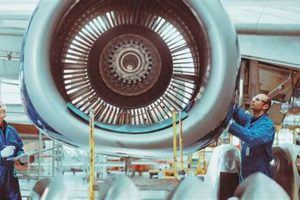
This facet involves transforming conceptual designs into precise technical drawings and specifications. These detailed plans serve as the blueprint for manufacturing and assembly processes, including tolerances, materials, and manufacturing processes. The creation of detailed engine drawings to be used to assemble the engine itself falls under this.
- Simulation and Modeling
Before physical prototypes are built, designs undergo rigorous simulation and modeling to predict their performance under various operating conditions. Finite element analysis (FEA) and computational fluid dynamics (CFD) are crucial tools. These simulation tools allow engineers to identify potential design flaws, such as stress concentrations or aerodynamic inefficiencies, before committing resources to physical construction.
- Integration of Subsystems
Aerospace systems are composed of numerous integrated subsystems, including propulsion, navigation, control, and communication systems. Successful design requires seamless integration of these components to ensure overall system functionality. This involves careful consideration of interfaces, data flow, and power requirements to avoid conflicts and optimize performance. Example, ensuring that all sub systems of the air plane integrates with each other so the plane can fly safely.
The design phase is therefore a critical determinant of the overall success and effectiveness. It dictates the potential for innovation, performance, and safety in air and space travel. Understanding design principles and methodologies is paramount for professionals contributing to the advancement of aeronautical and astronautical engineering.
2. Development
Development, a pivotal component of the aerospace engineer’s role, translates theoretical designs into functional prototypes and operational systems. This phase encompasses the practical application of engineering principles, involving the fabrication, assembly, and integration of aerospace components. The success of this stage is directly linked to the accuracy and feasibility of the initial designs, thus highlighting the iterative nature of engineering processes. For instance, developing a new satellite necessitates constructing the physical satellite based on detailed schematics, integrating the power systems, communication modules, and scientific instruments, each step conforming to stringent aerospace standards. Failures during development, such as structural weaknesses or system incompatibilities, necessitate design revisions, underscoring the symbiotic relationship between design and development.
Furthermore, the integration of advanced technologies often poses significant development challenges. The implementation of novel materials, advanced propulsion systems, and cutting-edge avionics requires rigorous testing and refinement. For example, the development of composite materials for aircraft wings requires careful consideration of their strength-to-weight ratio, resistance to fatigue, and manufacturing feasibility. Similarly, the development of electric propulsion systems for spacecraft demands innovative solutions for energy storage and power management. These developments often push the boundaries of current technology, necessitating collaborative efforts between engineers, scientists, and manufacturers.
In summary, the development phase in this field is instrumental in realizing innovative concepts and addressing critical challenges in air and space technology. It serves as the bridge between theoretical design and practical application, requiring expertise in manufacturing processes, systems integration, and testing methodologies. By successfully navigating the complexities of development, professionals in this field contribute directly to the advancement of aerospace capabilities, enabling new possibilities in air travel, space exploration, and national defense.
3. Testing

Testing constitutes a critical function, ensuring that designs and developed systems meet stringent performance and safety standards. As part of “what is the job of aerospace engineer”, comprehensive testing identifies potential flaws or vulnerabilities before deployment. Failure to adequately test can result in catastrophic consequences, highlighting testing’s integral role in guaranteeing operational integrity. For example, wind tunnel testing of aircraft models is essential to validate aerodynamic properties and stability, while structural testing verifies load-bearing capacity and resistance to fatigue. The repercussions of neglecting this phase are evident in historical incidents where design flaws led to aircraft failures.
Testing protocols within the field span a broad spectrum, encompassing component-level assessments to full-system evaluations. Non-destructive testing methods, such as ultrasonic inspection and radiography, are employed to detect internal defects in materials and structures without compromising their integrity. Environmental testing simulates extreme conditions, including temperature variations, vibration, and radiation, to assess system resilience in operational environments. Flight testing, a crucial phase for aircraft and spacecraft, evaluates performance characteristics, control systems, and pilot-vehicle interface under real-world conditions. Data derived from these tests informs design refinements and operational procedures.
In summary, testing is an indispensable aspect. It serves as a critical verification process that validates performance, identifies potential weaknesses, and ensures safety. Its role extends beyond mere compliance, influencing design improvements and operational strategies. By meticulously evaluating aerospace systems under a range of conditions, testing activities mitigate risks and contribute to the reliability and longevity of aerospace assets.
4. Analysis

Analysis constitutes a foundational pillar of the aerospace engineering profession. It is the rigorous process by which engineers dissect complex systems and datasets to understand their behavior, identify potential issues, and optimize performance. Without thorough analytical capabilities, designs would remain unvalidated, and systems would operate without understanding the underlying factors governing their functionality.
- Stress and Structural Analysis
Aerospace structures endure extreme stresses during operation. Stress analysis, often employing finite element methods (FEM), assesses the distribution of forces within a structure. This analysis is crucial in ensuring that components can withstand aerodynamic loads, thermal stresses, and vibrations without failure. For instance, determining the optimal thickness and material composition of an aircraft wing requires precise stress analysis to prevent structural failure during flight, highlighting its direct bearing on air safety.
- Aerodynamic Analysis
Understanding airflow around aircraft and spacecraft is vital for optimizing performance and stability. Aerodynamic analysis, employing computational fluid dynamics (CFD) and wind tunnel testing, predicts lift, drag, and stability characteristics. The design of efficient wing profiles and control surfaces relies heavily on detailed aerodynamic analysis to minimize drag and maximize lift, ultimately improving fuel efficiency and maneuverability.
- Thermal Analysis
Aerospace vehicles experience significant temperature variations, from the extreme cold of space to the intense heat generated during atmospheric reentry. Thermal analysis evaluates the temperature distribution within a system and its components. It is essential for designing thermal protection systems that shield spacecraft from extreme heat, preventing structural damage and ensuring the survival of onboard equipment and personnel. For instance, the design of heat shields for reentry vehicles requires meticulous thermal analysis to predict temperature profiles and material ablation rates.
- System Performance Analysis
This facet involves evaluating the overall performance of integrated aerospace systems, considering factors such as fuel consumption, range, payload capacity, and reliability. System performance analysis relies on mathematical modeling, simulation, and data analysis to optimize system parameters and identify potential bottlenecks. Analyzing flight data to optimize fuel consumption for a long-haul flight necessitates comprehensive system performance analysis to identify areas for improvement, such as route optimization or engine performance enhancements.
These analytical functions are inextricably linked to the multifaceted aspects. These practices collectively empower engineers to innovate safely and effectively. Through rigorous analysis, potential issues are proactively addressed, facilitating the creation of safer, more efficient, and technologically advanced aerospace systems.
5. Research

Research forms a cornerstone of what the job encompasses. It is the engine driving innovation and progress within the field, shaping the future of air and space travel. The effects of dedicated study are multifaceted, leading to breakthroughs in materials science, propulsion technology, and flight control systems. Without systematic investigation, the profession would stagnate, relying on established methodologies and failing to adapt to emerging challenges and opportunities. As a component, research enables aerospace engineers to push the boundaries of what is currently achievable, developing lighter, stronger materials, more efficient engines, and more sophisticated autonomous systems. For example, research into hypersonic flight is currently enabling the development of aircraft capable of traveling at speeds exceeding Mach 5, opening new possibilities for global transportation and space access. This practical significance extends beyond technological advancements, influencing safety protocols, environmental considerations, and the economic viability of aerospace ventures.
The connection between exploration and the profession is not merely theoretical; it manifests in tangible applications across diverse areas. Ongoing investigations into alternative fuels, such as biofuels and hydrogen, aim to reduce the environmental impact of air travel. Development of advanced sensor technologies and data analytics techniques enhances the safety and efficiency of air traffic management systems. Examination into novel propulsion concepts, like electric propulsion and advanced rocket engines, promises to revolutionize space exploration, enabling missions to distant planets with reduced travel times and increased payload capacities. These examples illustrate how focused exploration translates into real-world benefits, improving the quality of life, expanding scientific knowledge, and bolstering economic growth.
In conclusion, systematic exploration is not simply an adjunct but an integral element. Its impact is evident in enhanced safety, improved efficiency, and the expansion of human capabilities in air and space. Challenges remain, including the need for increased funding, improved collaboration between academia and industry, and the development of a skilled workforce capable of conducting cutting-edge studies. However, continued investment in research is essential for addressing these challenges and unlocking the full potential of this job, ensuring a future where air and space travel are safer, more sustainable, and more accessible to all.
Frequently Asked Questions Regarding the Role
The following section addresses common inquiries and misconceptions associated with the aerospace engineering profession. The aim is to provide clear and concise answers based on industry standards and established practices.
Question 1: Is there a distinct difference between aeronautical and astronautical engineering?
Yes, a key distinction exists. Aeronautical engineering focuses on designing aircraft that operate within Earth’s atmosphere. Astronautical engineering deals with spacecraft and systems designed for operation in outer space. While overlap exists in fundamental principles, each discipline involves specialized knowledge and techniques related to its respective environment.
Question 2: What are the fundamental educational requirements?
A bachelor’s degree in aerospace engineering or a closely related field is typically the minimum requirement for entry-level positions. Many employers prefer candidates with a master’s degree, particularly for research and development roles. Coursework should include a strong foundation in mathematics, physics, and engineering principles.
Question 3: What essential skills are vital for success?
Critical skills encompass analytical problem-solving, computer-aided design (CAD), proficiency in relevant software (e.g., MATLAB, ANSYS), strong communication abilities, and the capacity to work effectively in team environments. Adaptability and a commitment to lifelong learning are also crucial, given the rapidly evolving nature of technology.
Question 4: What is the job market outlook?
The job market outlook is generally favorable, with projected growth in employment driven by increasing demand for air travel, space exploration, and national defense. However, the specific outlook may vary depending on economic conditions and government funding priorities.
Question 5: Are there common career paths within the profession?
Yes, career paths are diverse and may include design engineering, research and development, testing and evaluation, project management, and consulting. Specialization areas may include aerodynamics, propulsion, structures, control systems, and avionics.
Question 6: What are the ethical considerations associated with the role?
Ethical considerations encompass ensuring public safety, adhering to engineering codes of conduct, protecting intellectual property, and promoting environmental sustainability. The development and application of aerospace technologies must align with societal values and responsible innovation practices.
In summary, this profession demands rigorous academic preparation, specialized skills, and a commitment to ethical conduct. A comprehensive understanding of these facets is crucial for individuals considering this challenging and rewarding career path.
The subsequent section will provide a concluding overview of the information presented.
Conclusion
The preceding discussion has elucidated the multifaceted nature of “what is the job of aerospace engineer.” It is a profession that demands a robust understanding of engineering principles, rigorous analytical skills, and a commitment to continuous learning. From conceptual design and system development to meticulous testing and in-depth research, these professionals contribute significantly to advancements in air and space technology.
As technological frontiers continue to expand, the role remains essential. Continued innovation in this field will be crucial for addressing global challenges, such as sustainable air travel and space exploration. Further, investment in education and research will ensure a pipeline of qualified individuals ready to shape the future of aerospace engineering.