An aerospace engineering education provides a foundation for a diverse range of careers beyond the design and construction of aircraft and spacecraft. These careers leverage the problem-solving skills, analytical abilities, and technical expertise acquired during the degree program. Examples include roles in research and development, testing, design, and project management across various industries.
The value of an aerospace engineering background lies in its rigorous curriculum, fostering a strong understanding of fundamental engineering principles and specialized knowledge in areas such as aerodynamics, propulsion, and materials science. Historically, these skills have been crucial in advancing aviation and space exploration; presently, they are increasingly relevant in sectors seeking innovative solutions and efficient designs. The analytical and problem-solving expertise developed through the degree program are highly sought after by employers.
The following sections will explore specific career paths available to individuals with this educational background, detailing the responsibilities, required skills, and potential employers associated with each role. These opportunities extend beyond the traditional aerospace industry, encompassing fields such as automotive engineering, renewable energy, and even finance.
Career Guidance
This section provides guidance for individuals considering or possessing a degree in aerospace engineering, emphasizing strategies to maximize career opportunities and professional development.
Tip 1: Develop Strong Analytical Skills: Employers value the ability to analyze complex systems and data. Cultivate proficiency in mathematical modeling, simulation software, and statistical analysis.
Tip 2: Gain Practical Experience: Internships and research opportunities provide invaluable hands-on experience. Seek positions that allow application of theoretical knowledge to real-world engineering challenges.
Tip 3: Specialize in a High-Demand Area: Identify specific areas within aerospace engineering that are experiencing growth, such as unmanned aerial vehicles (UAVs), space propulsion, or sustainable aviation technologies. Focus academic and professional development in these sectors.
Tip 4: Cultivate Communication Skills: Effective communication is essential for collaborating with diverse teams and presenting technical information to non-technical audiences. Participate in public speaking opportunities and practice technical writing.
Tip 5: Obtain Relevant Certifications: Professional certifications, such as those offered by professional engineering societies, can enhance credibility and demonstrate competency in specific areas of expertise.
Tip 6: Network Strategically: Attend industry conferences, join professional organizations, and connect with aerospace professionals online. Networking can provide access to job opportunities and mentorship.
Tip 7: Tailor Resume and Cover Letter: Highlight relevant skills and experiences in resumes and cover letters, specifically addressing the requirements outlined in job descriptions. Quantify achievements whenever possible.
By focusing on analytical skills, practical experience, specialization, communication, certification, networking, and targeted applications, graduates can significantly enhance their career prospects within the aerospace industry and related fields.
The subsequent section will summarize the key considerations discussed in this article and offer final insights for career planning.
1. Design Engineer

The role of a design engineer is intrinsically linked to career possibilities with an aerospace engineering degree. A design engineer applies engineering principles to create and improve aircraft, spacecraft, and related systems. This involves designing components, assemblies, and entire systems, requiring a deep understanding of aerodynamics, materials science, and structural analysis. The design engineer’s ability to translate theoretical concepts into tangible designs is a critical component of the broader field. For instance, an aerospace design engineer may develop new wing designs to improve fuel efficiency or create a heat shield for a spacecraft re-entering Earth’s atmosphere. Without design engineers, the practical implementation of aerospace innovation would be impossible.
Aerospace design engineering is not limited to purely technical skills. It also demands strong collaboration with other engineering disciplines, manufacturing teams, and project managers. The design process often involves iterative refinement, with design engineers using simulation software and physical prototypes to validate their work. Consider, for example, the design of a new satellite. The design engineer works alongside electrical engineers, software engineers, and mission specialists to ensure that all components integrate seamlessly. This interdisciplinary collaboration highlights the multifaceted nature of the profession and its central role within the broader aerospace industry. Effective communication, problem-solving, and adaptability are critical skills for excelling in this role.
The increasing demand for more efficient, sustainable, and innovative aerospace technologies ensures a continued need for skilled design engineers. Challenges include developing lighter and stronger materials, improving fuel efficiency, and designing systems for space exploration. The design engineer is at the forefront of these challenges, driving progress through innovation and problem-solving. In conclusion, the design engineer role exemplifies the application of skills gained through an aerospace engineering education, and its centrality to the aerospace industry is undeniable, offering numerous career pathways for qualified graduates.
2. Research Scientist

The role of a Research Scientist represents a critical pathway within the spectrum of “what jobs can you do with an aerospace engineering degree.” Research Scientists in the aerospace field are primarily concerned with advancing scientific knowledge and developing new technologies related to air and space travel. This role involves conducting experiments, analyzing data, and publishing research findings. Their work often leads to innovations in areas such as propulsion systems, materials science, and aerodynamics. The impact of their research is profound, directly influencing the performance, safety, and efficiency of aerospace vehicles. As an example, a research scientist might investigate the properties of new composite materials for use in aircraft construction, leading to lighter and stronger aircraft structures.
Practical applications of research conducted by aerospace Research Scientists extend beyond traditional aircraft and spacecraft design. Their expertise is invaluable in developing advanced satellite technologies, unmanned aerial vehicles (UAVs), and even contributing to advancements in related fields like renewable energy and advanced manufacturing. The interdisciplinary nature of the role often requires collaboration with engineers and scientists from various backgrounds. For instance, a scientist working on new propulsion systems might collaborate with chemical engineers and materials scientists to develop high-performance fuels or create more efficient engine designs. Their findings are crucial for staying at the forefront of technological progress and driving innovation within the aerospace industry.
In summary, the Research Scientist position is vital for pushing the boundaries of aerospace knowledge and technology. The discoveries and innovations stemming from their work directly contribute to advancements in flight, space exploration, and related fields. Despite challenges such as securing funding and overcoming complex technical hurdles, the role offers a high degree of intellectual stimulation and the opportunity to shape the future of aerospace engineering. The position illustrates a central component of the diverse opportunities available to individuals with an aerospace engineering degree, underlining the degree’s importance and benefits.
3. Project Manager

Project management represents a critical and versatile career path accessible with an aerospace engineering degree. It involves overseeing the planning, execution, and completion of complex aerospace projects, ensuring they are delivered on time, within budget, and to the required specifications. Effective project management is essential for coordinating diverse teams and resources in the development of aircraft, spacecraft, and related technologies.
- Scope Definition and Planning
Aerospace project managers define the scope of projects, establishing clear objectives, deliverables, and timelines. This involves breaking down large tasks into manageable components and allocating resources accordingly. For instance, in the development of a new satellite, the project manager would define the satellite’s mission objectives, payload requirements, and orbital parameters. Detailed planning is crucial for mitigating risks and ensuring that the project stays on track.
- Team Coordination and Communication
Project managers coordinate the efforts of multidisciplinary teams, including engineers, scientists, technicians, and administrative staff. Effective communication is paramount for fostering collaboration, resolving conflicts, and ensuring that all team members are aligned with project goals. Regular progress meetings, status reports, and communication protocols are essential for keeping everyone informed and engaged. For example, in the construction of a new aircraft, the project manager would facilitate communication between design engineers, manufacturing teams, and testing personnel to ensure seamless integration of components.
- Risk Management and Mitigation
Aerospace projects often involve significant technical, financial, and operational risks. Project managers identify potential risks, assess their impact, and develop mitigation strategies to minimize their effects. This may involve contingency planning, resource allocation, and proactive problem-solving. For instance, in the development of a new propulsion system, the project manager would assess the risks associated with testing and validation and develop plans to address potential failures or delays.
- Budget Control and Resource Allocation
Project managers are responsible for managing project budgets and allocating resources efficiently. This involves tracking expenses, monitoring resource utilization, and making adjustments as needed to stay within budgetary constraints. Accurate cost estimation, financial forecasting, and procurement management are essential skills for effective budget control. For example, in the construction of a space station module, the project manager would oversee the procurement of materials, equipment, and labor, ensuring that costs are controlled and resources are allocated effectively.
In conclusion, the role of a project manager in aerospace engineering is multifaceted, requiring a blend of technical knowledge, leadership skills, and business acumen. Project managers play a vital role in bringing innovative aerospace technologies from concept to reality. The ability to manage complex projects effectively is crucial for ensuring the success of aerospace endeavors and is a key aspect of the range of career options available with an aerospace engineering degree.
4. Test Engineer
The role of a Test Engineer is a crucial component within the landscape of “what jobs can you do with an aerospace engineering degree.” Test Engineers are responsible for planning, designing, and conducting tests on aerospace components, systems, and vehicles to ensure they meet performance, safety, and reliability standards. This role is essential for validating designs, identifying potential flaws, and guaranteeing the integrity of aerospace products prior to deployment.
- Test Planning and Design
Test Engineers develop comprehensive test plans that define the scope, methodology, and acceptance criteria for evaluating aerospace products. This involves selecting appropriate testing methods, designing test fixtures and equipment, and establishing data acquisition and analysis procedures. For example, a Test Engineer might design a wind tunnel test to measure the aerodynamic performance of a new aircraft wing or develop a structural test to assess the strength of a spacecraft component under simulated launch conditions. Without rigorous test planning, the reliability and safety of aerospace systems cannot be assured.
- Test Execution and Data Analysis
Test Engineers oversee the execution of tests, monitoring data collection, and ensuring that testing procedures are followed correctly. They analyze test data to identify trends, anomalies, and potential failures, and they document their findings in detailed test reports. For instance, a Test Engineer might analyze vibration data from a rocket engine test to identify potential resonance issues or evaluate the performance of a flight control system during simulated flight conditions. Accurate data analysis is critical for identifying design flaws and validating system performance.
- Failure Analysis and Root Cause Investigation
When failures occur during testing, Test Engineers conduct detailed failure analyses to determine the root cause of the problem. This involves examining failed components, analyzing test data, and collaborating with design engineers to develop corrective actions. For example, a Test Engineer might investigate a structural failure in an aircraft fuselage to identify the source of the problem and recommend design modifications to prevent future failures. Effective failure analysis is essential for improving the reliability and safety of aerospace products.
- Compliance and Certification
Test Engineers play a vital role in ensuring that aerospace products comply with industry standards and regulatory requirements. They conduct tests to demonstrate compliance with these standards and prepare documentation to support certification efforts. For instance, a Test Engineer might conduct flight tests to demonstrate compliance with FAA regulations or perform environmental tests to verify that a spacecraft can withstand the harsh conditions of space. Compliance testing is essential for obtaining regulatory approval and ensuring the safety of aerospace operations.
The role of a Test Engineer is integral to the aerospace industry, contributing significantly to the safety, reliability, and performance of aerospace systems. The skills and knowledge gained through an aerospace engineering education are directly applicable to this role, making it a valuable and rewarding career path for graduates. It is a practical application of theoretical knowledge, and demonstrates one of the critical ways an aerospace engineering degree can translate to a tangible career.
5. Systems Engineer

The Systems Engineer role exemplifies a pivotal career path attainable with an aerospace engineering degree. Systems Engineering involves a holistic approach to designing, integrating, and managing complex aerospace systems, ensuring that all components function cohesively to meet overall mission objectives. This interdisciplinary role requires a deep understanding of engineering principles, project management methodologies, and systems thinking. It emphasizes not just individual components but how they interact to achieve the system’s intended purpose.
- System Architecture and Design
Systems Engineers are responsible for defining the system architecture, specifying interfaces between components, and ensuring that all design elements align with system requirements. This involves creating detailed system models, conducting trade studies, and evaluating design alternatives. For example, in the development of a new satellite, the Systems Engineer would define the satellite’s overall architecture, specifying the interfaces between the payload, power system, communication system, and other subsystems. A well-defined system architecture is crucial for ensuring that all components work together seamlessly and that the system meets its performance requirements.
- Integration and Verification
Systems Engineers play a critical role in integrating individual components into a cohesive system and verifying that the integrated system meets performance specifications. This involves developing integration plans, conducting system-level tests, and analyzing test data to identify and resolve integration issues. For instance, in the construction of a new aircraft, the Systems Engineer would oversee the integration of the avionics, propulsion, and flight control systems, ensuring that they function correctly as a whole. Rigorous integration and verification are essential for ensuring system reliability and safety.
- Requirements Management and Traceability
Systems Engineers are responsible for managing system requirements and ensuring that they are traced throughout the design, implementation, and testing phases. This involves documenting requirements, tracking changes, and verifying that all requirements are met. For example, in the development of a new spacecraft, the Systems Engineer would manage the requirements for payload capacity, power consumption, and communication bandwidth, ensuring that these requirements are met throughout the project lifecycle. Effective requirements management is crucial for preventing scope creep and ensuring that the system meets its intended purpose.
- Risk Management and System Safety
Systems Engineers identify potential risks to system performance, safety, and reliability and develop mitigation strategies to minimize these risks. This involves conducting hazard analyses, developing safety procedures, and implementing risk management plans. For example, in the design of a new air traffic control system, the Systems Engineer would assess the risks associated with system failures and develop contingency plans to maintain air traffic safety. Proactive risk management is essential for ensuring the safety and reliability of complex aerospace systems.
The Systems Engineer role exemplifies how an aerospace engineering degree can lead to a position that requires a broad understanding of complex systems and the ability to manage their integration and performance. This role is highly valued in the aerospace industry, where the complexity of projects demands individuals who can see the big picture and ensure that all components work together harmoniously. Its a position that requires both technical expertise and strong management skills, highlighting the diverse opportunities available to those with an aerospace engineering background.
6. Aerospace Consultant

The role of Aerospace Consultant represents a compelling career trajectory for individuals holding an aerospace engineering degree. It leverages technical expertise, analytical skills, and industry knowledge to provide advisory services to a diverse clientele, spanning aerospace manufacturers, government agencies, and related organizations.
- Technical Advisory and Expertise
Aerospace Consultants offer specialized knowledge in areas such as aircraft design, propulsion systems, aerodynamics, and materials science. They provide expert guidance on technical challenges, design optimization, and the implementation of advanced technologies. For example, a consultant might advise an aircraft manufacturer on improving the fuel efficiency of a new aircraft design or assist a space agency in evaluating the feasibility of a novel propulsion system. This function demonstrates the direct application of aerospace engineering principles to solve real-world problems, underlining the degree’s practical utility.
- Business Strategy and Market Analysis
Consultants conduct market research, analyze industry trends, and develop business strategies for aerospace companies. They assess market opportunities, evaluate competitive landscapes, and provide recommendations on product development, pricing, and marketing strategies. For instance, a consultant might analyze the market for unmanned aerial vehicles (UAVs) and advise a company on developing a competitive product offering. This facet leverages the analytical and problem-solving skills developed through an aerospace engineering education, extending beyond pure technical expertise.
- Regulatory Compliance and Safety Analysis
Aerospace Consultants provide guidance on regulatory compliance, safety analysis, and risk management. They assist organizations in meeting industry standards, obtaining certifications, and mitigating potential hazards. For instance, a consultant might help an airline comply with FAA regulations or assist a space launch provider in conducting a safety analysis for a new launch vehicle. This function ensures adherence to critical safety and operational standards within the highly regulated aerospace sector.
- Project Management and Process Improvement
Consultants offer project management expertise, assisting organizations in planning, executing, and controlling aerospace projects. They help improve processes, streamline operations, and enhance efficiency. For instance, a consultant might assist an aerospace manufacturer in implementing lean manufacturing principles or help a space agency optimize its project management processes. This role underscores the value of organizational and leadership skills, supplementing the technical foundation of the aerospace engineering degree.
The multifaceted role of an Aerospace Consultant demonstrates a significant career avenue attainable with an aerospace engineering degree. It allows for the application of technical knowledge in a strategic advisory capacity, impacting various facets of the aerospace industry and related sectors. The position’s demand for both technical prowess and strategic thinking underscores the versatility and broad applicability of an aerospace engineering education.
7. Propulsion Specialist
The role of a Propulsion Specialist represents a focused career path directly stemming from an aerospace engineering degree. This specialization involves the design, analysis, and testing of propulsion systems for aircraft, spacecraft, and missiles. The expertise of a Propulsion Specialist is crucial for enabling flight, improving efficiency, and pushing the boundaries of aerospace technology.
- Engine Design and Development
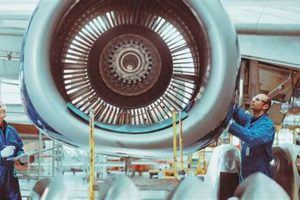
Propulsion Specialists are involved in the design and development of various types of engines, including jet engines, rocket engines, and electric propulsion systems. This involves applying thermodynamic principles, fluid mechanics, and combustion theory to create efficient and reliable engines. For example, a Propulsion Specialist might work on improving the thrust-to-weight ratio of a jet engine or developing a new rocket engine for deep space exploration. The successful execution of this facet relies heavily on the foundational knowledge acquired during an aerospace engineering education.
- Performance Analysis and Optimization
Propulsion Specialists analyze the performance of propulsion systems, identifying opportunities for optimization and improvement. This involves using computational fluid dynamics (CFD) simulations, experimental testing, and data analysis to assess engine efficiency, thrust, and fuel consumption. For example, a Propulsion Specialist might use CFD to analyze the airflow through a jet engine and identify areas where the design can be improved to reduce drag and increase thrust. The application of analytical tools and techniques is central to this work.
- Testing and Validation
Propulsion Specialists conduct rigorous testing and validation of propulsion systems to ensure they meet performance, safety, and reliability standards. This involves designing test setups, conducting experiments, and analyzing test data to identify potential flaws and validate system performance. For example, a Propulsion Specialist might conduct a series of rocket engine tests to measure thrust, specific impulse, and combustion stability. The outcome of these tests directly influences the deployment of aerospace technologies.
- Advanced Propulsion Technologies
Propulsion Specialists research and develop advanced propulsion technologies, such as hypersonic engines, electric propulsion systems, and fusion propulsion. This involves exploring new concepts, conducting experiments, and developing models to evaluate the feasibility and performance of these technologies. For example, a Propulsion Specialist might work on developing a scramjet engine for hypersonic flight or a fusion reactor for interstellar travel. This aspect pushes the boundaries of what is currently achievable and relies on cutting-edge research.
The role of a Propulsion Specialist exemplifies a career path where specialized knowledge and skills acquired through an aerospace engineering degree are directly applied to advance propulsion technology. This field is critical for enabling innovation in air and space travel, making it a vital and rewarding area for aerospace engineers. The opportunity to contribute to cutting-edge research and development makes this career path particularly attractive for those passionate about pushing the limits of aerospace technology.
Frequently Asked Questions
This section addresses common inquiries regarding career paths attainable with an aerospace engineering degree, providing clarity on job prospects, required skills, and industry expectations.
Question 1: What range of industries hire aerospace engineers?
Aerospace engineers find employment not only in the aerospace industry but also in automotive, energy, and manufacturing sectors. The core skills are transferable to diverse engineering challenges.
Question 2: Is a graduate degree necessary for career advancement in aerospace engineering?
While an undergraduate degree provides a solid foundation, a graduate degree, particularly a Master’s or Ph.D., often opens doors to specialized research roles, leadership positions, and higher salaries. The necessity depends on individual career aspirations and industry demands.
Question 3: What technical skills are most valued by employers of aerospace engineers?
Employers prioritize proficiency in CAD/CAM software, computational fluid dynamics (CFD), finite element analysis (FEA), and programming languages such as MATLAB and Python. Hands-on experience and a strong understanding of engineering principles are also highly regarded.
Question 4: How important are internships and co-op experiences for aspiring aerospace engineers?
Internships and co-op experiences are highly valuable, providing practical experience, industry exposure, and networking opportunities. These experiences enhance employability and offer a competitive edge in the job market.
Question 5: What are the typical starting salaries for entry-level aerospace engineers?
Starting salaries vary depending on location, employer, and educational qualifications. However, entry-level aerospace engineers can expect competitive salaries, often exceeding the average for engineering graduates.
Question 6: What are the long-term career prospects for aerospace engineers?
The long-term career prospects for aerospace engineers are generally positive, driven by ongoing advancements in aerospace technology, space exploration, and national defense. Career paths may evolve into management, research, or entrepreneurship.
In conclusion, an aerospace engineering degree offers diverse career opportunities, demanding a blend of technical skills, practical experience, and continuous learning. Understanding these aspects is crucial for effective career planning and advancement.
The subsequent section will provide a summary of key takeaways and concluding thoughts regarding career opportunities available with an aerospace engineering degree.
Conclusion
This exploration of “what jobs can you do with an aerospace engineering degree” reveals a landscape far broader than traditional aircraft design. From research science and propulsion systems to project management and consulting, the degree’s rigor and breadth equip graduates for diverse challenges. These opportunities span multiple industries, emphasizing the adaptability of skills acquired in aerospace engineering programs.
The future of aerospace engineering, and related fields, hinges on innovation and skilled professionals. Pursuing this educational path positions individuals at the forefront of technological advancement, contributing to solutions in areas such as sustainable aviation, space exploration, and advanced manufacturing. The commitment to continuous learning and adaptation remains paramount for sustained success in this dynamic field.