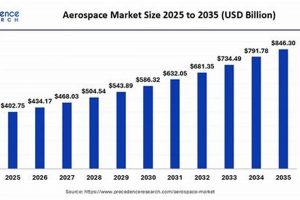
Data concerning employment within the field of aerospace engineering provides valuable insights into career opportunities and industry trends. These numerical analyses encompass various metrics such as employment growth rate, median salary, geographic distribution of jobs, and the educational backgrounds of professionals employed in the sector. Such information allows individuals considering a career in this engineering discipline to assess potential employment prospects.
Understanding the employment landscape for aerospace engineers is crucial for several reasons. It aids prospective students in making informed decisions about their education and career path. Current professionals can use the data to negotiate salaries, identify areas for skill development, and assess career advancement opportunities. Employers benefit by understanding the talent pool available and benchmarking compensation packages. Historically, shifts in government spending, technological advancements, and economic cycles have significantly impacted the demand for professionals in this area.
The following discussion will delve into specific areas. It includes examination of current and projected employment growth, compensation levels across different experience levels and geographic locations, prominent employers in the field, and educational requirements for securing positions within aerospace engineering. This analysis offers a detailed overview of the current state and future direction of the aerospace engineering workforce.
Utilizing workforce data to inform career decisions in aerospace engineering can significantly enhance prospects. The following recommendations are grounded in an analysis of current employment trends and projected demands within the industry.
Tip 1: Prioritize Specialization in High-Demand Areas: Workforce reports indicate increasing demand for expertise in areas such as autonomous systems, sustainable aviation, and advanced materials. Focusing academic pursuits and skill development on these domains can increase employability.
Tip 2: Target Geographic Regions with Concentrated Aerospace Activity: Employment numbers often cluster around aerospace hubs. States like California, Washington, Texas, and Florida consistently demonstrate high levels of aerospace engineering employment. Concentrating job search efforts in these areas may prove beneficial.
Tip 3: Pursue Advanced Degrees and Certifications: Salary surveys and job posting analyses frequently correlate higher compensation and career advancement with advanced degrees (Master’s or Ph.D.) and professional certifications (e.g., Professional Engineer license). Investing in further education can yield a significant return.
Tip 4: Develop Proficiency in Relevant Software and Technologies: Statistical analyses of job requirements consistently highlight the importance of proficiency in software tools like MATLAB, ANSYS, and CAD/CAM software. Acquiring demonstrable expertise in these areas is crucial.
Tip 5: Network Strategically Within the Industry: Employment figures often reflect the power of professional connections. Attending industry conferences, joining professional organizations (e.g., AIAA), and actively networking with professionals in the field can uncover hidden job opportunities and provide valuable insights.
Tip 6: Monitor Government and Industry Spending: Aerospace engineering employment is sensitive to fluctuations in government defense spending and commercial aviation investments. Staying informed about these trends can provide early indicators of potential job growth or contraction in specific sectors.
These data-driven recommendations provide a framework for navigating a successful career in aerospace engineering. By understanding employment trends and aligning skills and experience accordingly, individuals can maximize their career prospects within this dynamic and challenging field.
The subsequent sections will further explore the long-term outlook for the aerospace engineering profession, providing additional context for career planning and development.
1. Growth Rate Evaluation

The evaluation of growth rates within aerospace engineering employment data provides critical insights into the expanding or contracting sectors of the industry. Analyzing these rates informs strategic decisions for both job seekers and workforce development initiatives.
- Overall Sector Expansion
The overall growth rate signifies the net increase or decrease in aerospace engineering positions. A positive growth rate suggests an expanding job market driven by factors such as increased demand for air travel, defense spending, or space exploration initiatives. A negative growth rate, conversely, signals potential contraction due to economic downturns, technological shifts, or reduced government funding. For example, increased investment in space programs can lead to a higher growth rate in related sectors.
- Specialized Sub-sector Growth
Growth rate evaluation extends beyond the general field to encompass specialized sub-sectors like avionics, propulsion systems, or materials engineering. Analyzing the growth rates within these niches reveals areas of high demand and potential career opportunities. For instance, a significant growth rate in the development of sustainable aviation technologies would indicate a burgeoning market for engineers specializing in alternative fuels or electric propulsion systems.
- Geographic Variance in Growth
Growth rates often vary significantly by geographic region. Identifying areas with the highest growth rates enables job seekers to target locations with greater employment prospects. For example, regions with concentrated aerospace manufacturing facilities or research and development centers typically exhibit higher growth rates for aerospace engineering positions.
- Impact of Technological Advancements
Technological advancements, such as automation and artificial intelligence, can influence growth rates within specific areas of aerospace engineering. While some roles may be displaced by automation, new opportunities emerge in areas such as AI-driven aircraft design or autonomous drone development. Evaluating the growth rate in these emerging fields provides insights into the future direction of the industry.
These facets highlight the multifaceted nature of growth rate evaluation within the broader context of aerospace engineering employment data. By analyzing these various dimensions, individuals and organizations can make informed decisions about career paths, workforce development programs, and strategic investments in the aerospace sector.
2. Salary benchmark analysis

Salary benchmark analysis forms a critical component in interpreting employment data within the aerospace engineering sector. This process involves evaluating compensation levels across various roles, experience tiers, geographic locations, and specialized skill sets to provide a comparative framework for understanding fair market value.
- Role-Specific Compensation
Salary benchmarks delineate typical earnings for specific roles within aerospace engineering, such as design engineers, propulsion specialists, or systems analysts. For instance, a stress analyst with five years of experience will command a different salary range than a project manager with comparable tenure. These benchmarks reflect the specialized knowledge and responsibilities associated with each position and are vital for both employers and employees in negotiating compensation packages. This differentiation by role is a fundamental aspect of aerospace engineering employment data.
- Experience-Based Earning Progression
Salary benchmark analysis outlines the expected salary progression for aerospace engineers as they accumulate experience. Entry-level positions command lower salaries, which increase steadily with demonstrated expertise and seniority. These benchmarks allow engineers to gauge their earning potential over time and assess whether their current compensation aligns with industry standards. For example, an engineer with 15 years of experience and a professional engineering license will typically earn significantly more than one with five years and no license.
- Geographic Salary Variations
Cost of living and demand for aerospace engineers can vary significantly by geographic location. Salary benchmarks account for these variations, providing insight into compensation levels in different regions. For instance, an aerospace engineer in Silicon Valley, California, may earn more than a counterpart with similar experience in Huntsville, Alabama, due to differences in cost of living and industry concentration. Therefore, salary benchmarking must consider geographic context.
- Impact of Educational Attainment
Salary benchmarks often correlate earnings with levels of educational attainment. Engineers holding advanced degrees (Master’s or Ph.D.) typically command higher salaries than those with a bachelor’s degree alone. This reflects the increased specialization and research capabilities associated with advanced education. Furthermore, specialized certifications or licenses can also positively impact salary benchmarks. Data reveal a clear economic incentive for pursuing further education within the aerospace engineering field.
The insights derived from salary benchmark analysis are crucial for individuals seeking to understand their market worth and for organizations aiming to attract and retain top talent. The proper interpretation of these benchmarks necessitates consideration of numerous factors, from specific roles and experience levels to geographic influences and educational qualifications. Such analyses significantly inform the broader context of aerospace engineering employment data by providing a tangible measure of value within the profession.
3. Geographic Concentrations

Geographic concentrations represent a significant dimension within the broader context of aerospace engineering employment data. The clustering of aerospace companies, research institutions, and government facilities in specific regions directly influences job availability, salary levels, and overall career opportunities. The presence of a critical mass of aerospace activity creates a self-reinforcing ecosystem, attracting talent, investment, and further growth. This concentration effect is reflected in employment numbers, revealing where the majority of aerospace engineering positions are located. For instance, California’s high concentration of aerospace jobs is directly attributable to the presence of companies like Boeing, Lockheed Martin, Northrop Grumman, and SpaceX, as well as NASA’s Jet Propulsion Laboratory (JPL). The demand generated by these entities contributes to a higher volume of engineering positions and, consequently, shapes the overall statistical landscape of the aerospace engineering job market.
The influence of geographic concentrations extends beyond mere job quantity. The presence of specialized aerospace clusters often fosters innovation and technological advancement, creating demand for engineers with niche skill sets and expertise. For example, the concentration of space-related activities around Houston, Texas, near NASA’s Johnson Space Center, drives demand for engineers specializing in space systems, robotics, and human spaceflight. Similarly, the Puget Sound region of Washington state, home to Boeing’s primary commercial aircraft manufacturing facilities, exhibits a high concentration of engineers specializing in aircraft design, aerodynamics, and manufacturing. Analyzing statistical data on aerospace employment by geographic region helps identify areas with specific engineering strengths, aiding job seekers in targeting their searches and informing educational institutions about regional workforce needs. A lack of geographic awareness can result in overlooking significant career opportunities or misinterpreting national job trends.
In conclusion, geographic concentrations are not simply incidental to aerospace engineering employment; they are a fundamental shaping force. They influence the distribution of job opportunities, the demand for specialized skill sets, and the overall competitive landscape for aerospace engineers. Understanding these geographic dynamics is crucial for accurate interpretation of job figures and effective career planning within this complex and technologically advanced field. The challenges lie in anticipating shifts in these concentrations due to factors such as government policy changes, economic incentives, or the emergence of new aerospace hubs. Continual monitoring of employment numbers by region is therefore essential for navigating the ever-evolving aerospace engineering job market.
4. Educational attainment levels

Educational attainment levels serve as a significant predictor and determinant within aerospace engineering employment data. The level of formal education completed by aerospace engineers correlates directly with several key metrics: employment rates, salary scales, job responsibilities, and career advancement opportunities. A higher level of education, such as a Master’s or Doctoral degree, often translates to increased employment prospects, higher starting salaries, and access to more specialized or research-intensive roles. For example, positions involving advanced aerodynamic design, propulsion system development, or autonomous vehicle control typically require post-graduate qualifications. Data reveal a demonstrable cause-and-effect relationship between investment in advanced education and improved career outcomes within the aerospace sector.
The importance of educational attainment as a component of aerospace engineering job statistics is underscored by industry hiring practices and workforce demands. Aerospace companies and government agencies increasingly prioritize candidates with specialized knowledge and research experience, often gained through advanced degree programs. Statistical analyses demonstrate that engineers holding a Ph.D. are more likely to be employed in research and development roles, contributing to technological innovation and pushing the boundaries of aerospace science. For instance, positions at NASA’s research centers or within the R&D divisions of major aerospace corporations almost invariably require advanced degrees. Consequently, educational qualifications are not merely a factor influencing job statistics; they are a core determinant of career trajectory and industry leadership within aerospace engineering.
In summary, educational attainment levels represent a critical lens through which to interpret aerospace engineering job statistics. The correlation between advanced degrees and improved career outcomes is statistically significant and practically impactful. While a Bachelor’s degree remains the entry-level standard for many aerospace engineering positions, the pursuit of advanced education demonstrably enhances career prospects, facilitates access to specialized roles, and ultimately contributes to the overall advancement of the aerospace industry. A challenge lies in ensuring equitable access to advanced educational opportunities to broaden the pool of qualified aerospace engineers and foster innovation across the sector.
5. Industry Sector Demand
Industry sector demand constitutes a primary driver influencing aerospace engineering job statistics. Fluctuations within specific sectors, such as commercial aviation, defense, and space exploration, directly impact the volume and type of employment opportunities available to aerospace engineers. This demand shapes not only the overall number of positions but also the required skill sets and areas of specialization within the field.
- Commercial Aviation Sector
The commercial aviation sector’s demand for new aircraft, maintenance, and upgrades directly correlates with the need for aerospace engineers specializing in aircraft design, aerodynamics, propulsion, and avionics. Increased air travel, driven by economic growth and globalization, leads to higher production rates and, consequently, greater employment within the commercial aviation industry. A downturn in the economy or a major disruption, such as the COVID-19 pandemic, can significantly reduce aircraft orders and negatively impact employment in this sector. For example, the post-9/11 decline in air travel led to a temporary contraction in aerospace engineering jobs focused on commercial aircraft design and manufacturing.
- Defense Sector
Government spending on defense programs is a significant factor shaping demand for aerospace engineers. Investment in new military aircraft, missile systems, and defense technologies creates employment opportunities in areas such as aerodynamics, structural analysis, guidance and control systems, and materials science. Shifts in geopolitical landscapes, national security priorities, and budgetary allocations directly influence the demand for engineers in the defense sector. For instance, increased investment in unmanned aerial vehicles (UAVs) or hypersonic weapons development can lead to growth in specific areas of aerospace engineering related to those technologies.
- Space Exploration Sector
The space exploration sector, encompassing both government-funded and privately funded initiatives, is an increasingly important driver of demand for aerospace engineers. Missions to the Moon, Mars, and beyond require expertise in areas such as spacecraft design, propulsion systems, orbital mechanics, robotics, and life support systems. Increased investment in space tourism, satellite constellations, and asteroid mining also contributes to employment opportunities in this sector. The rise of private space companies like SpaceX and Blue Origin has significantly expanded the demand for aerospace engineers with expertise in reusable rocket technology and commercial space operations.
- Emerging Technology Sectors
Emerging technology sectors within aerospace, such as urban air mobility (UAM) and hypersonic flight, are creating new demand for engineers with specialized skill sets. The development of electric vertical takeoff and landing (eVTOL) aircraft for UAM requires expertise in electric propulsion, battery technology, and autonomous flight control systems. Hypersonic flight research and development demands engineers with knowledge of high-speed aerodynamics, thermal protection systems, and advanced materials. These emerging sectors are poised to significantly impact aerospace engineering job statistics in the coming years.
In conclusion, industry sector demand functions as a critical determinant of aerospace engineering employment levels and career opportunities. Shifts in commercial aviation, defense spending, space exploration, and emerging technologies directly influence the types of positions available, the skills required, and the overall growth or contraction of the field. A comprehensive understanding of these sector-specific drivers is essential for interpreting aerospace engineering job statistics and making informed career decisions.
6. Skills gap identification

Skills gap identification represents a critical analytical process closely intertwined with aerospace engineering job statistics. A skills gap exists when the competencies required by employers within the aerospace sector do not align with the skills possessed by the available workforce. This misalignment manifests as unmet demand for specific expertise, influencing hiring patterns, salary structures, and overall industry growth. Effectively identifying these gaps is essential for accurately interpreting job statistics and implementing targeted interventions to bridge the divide.
The presence of a skills gap exerts a demonstrable influence on aerospace engineering job statistics. For example, a surge in demand for engineers proficient in additive manufacturing, coupled with a limited pool of qualified candidates, will inflate salaries for those possessing these skills. Job postings will reflect the emphasis on additive manufacturing expertise, while the average time to fill these positions will likely increase. Conversely, areas experiencing an oversupply of qualified candidates may witness slower salary growth and increased competition for available positions. One specific instance is in the field of autonomy and artificial intelligence applied to aerospace systems. The rapid advancement in these technologies has created a demand for engineers with expertise in machine learning, sensor fusion, and control algorithms, often outpacing the supply of qualified individuals. As a result, companies must either invest in training existing employees or seek to attract talent from outside the traditional aerospace talent pool.
In conclusion, the identification of skills gaps is not merely a tangential concern; it is an integral component of aerospace engineering job statistics. Accurately assessing the discrepancy between employer needs and workforce capabilities allows for a more nuanced understanding of hiring trends, salary dynamics, and overall industry competitiveness. The challenge lies in proactively anticipating future skills needs through ongoing analysis of emerging technologies and evolving industry practices. By closing these skills gaps, the aerospace sector can ensure a robust and adaptable workforce capable of meeting the demands of a rapidly changing global landscape.
Frequently Asked Questions
This section addresses common inquiries regarding employment data within the aerospace engineering field. The information provided is intended to offer clarity and insight into interpreting and utilizing this data effectively.
Question 1: What is the most reliable source for aerospace engineering job statistics?
Government agencies, such as the U.S. Bureau of Labor Statistics (BLS), offer comprehensive and regularly updated data on employment, wages, and job outlook for various professions, including aerospace engineering. Professional organizations, such as the American Institute of Aeronautics and Astronautics (AIAA), often publish reports and surveys providing industry-specific employment insights. Reputable industry publications and research firms also offer valuable data; however, it is crucial to verify the methodology and data sources for any statistical information.
Question 2: How frequently are aerospace engineering job statistics updated?
The frequency of updates varies depending on the data source. The U.S. Bureau of Labor Statistics typically updates its employment projections and wage data annually. Industry-specific surveys and reports may be published on a quarterly or annual basis. It is advisable to consult the specific source for information regarding its update schedule. Always check the publication date or revision date to ensure that the data is current and relevant.
Question 3: What factors can significantly impact the accuracy of aerospace engineering job statistics?
Several factors can influence the accuracy of employment figures. Economic conditions, government spending policies, technological advancements, and global events can all significantly impact the aerospace industry and, consequently, employment levels. Data collection methodologies, sample sizes, and survey response rates can also introduce variability. Moreover, the classification of certain roles within the aerospace sector may vary across different data sources, leading to inconsistencies.
Question 4: How can aerospace engineering job statistics be used effectively for career planning?
Employment data provides valuable insights for career planning by revealing trends in job growth, salary ranges, and required skill sets. Prospective students can use this information to make informed decisions about their education and specialization choices. Current professionals can leverage employment figures to negotiate salaries, identify opportunities for skill development, and assess career advancement potential. By analyzing employment data, individuals can align their skills and experience with industry demands, increasing their competitiveness in the job market.
Question 5: Are aerospace engineering job statistics broken down by specific specializations?
Some data sources provide breakdowns of employment figures by specific specializations within aerospace engineering, such as aerodynamics, propulsion, structures, or avionics. This level of granularity allows for a more targeted analysis of job opportunities and salary ranges within specific areas of expertise. However, the availability of specialization-specific data may vary depending on the data source and the methodology employed.
Question 6: How do I account for regional variations when analyzing aerospace engineering job statistics?
Cost of living adjustments and regional economic factors should be considered when analyzing employment data across different geographic locations. Salary figures may vary significantly depending on the location, reflecting differences in the cost of housing, transportation, and other expenses. Furthermore, the concentration of aerospace companies and government facilities in specific regions can influence job availability and competition. Therefore, it is essential to account for these regional variations when interpreting employment figures and making career decisions.
Understanding and utilizing aerospace engineering job statistics requires careful consideration of data sources, update frequencies, and potential influencing factors. By critically evaluating employment figures, individuals can make informed decisions about their education, career path, and overall professional development within the aerospace sector.
The subsequent discussion will explore the long-term outlook for the aerospace engineering profession, providing additional context for career planning and development.
Aerospace Engineering Job Statistics
This exploration of aerospace engineering job statistics has traversed various critical dimensions, including growth rate evaluation, salary benchmark analysis, geographic concentrations, educational attainment levels, industry sector demand, and skills gap identification. The presented data underscore the complex interplay of factors influencing employment within this technologically advanced field. Understanding these statistics provides invaluable insights for students, professionals, and policymakers alike, informing decisions related to education, career planning, and workforce development.
The aerospace engineering profession stands at a pivotal juncture, characterized by both unprecedented opportunities and potential challenges. Continued vigilance in monitoring relevant employment figures, coupled with proactive strategies to address identified skills gaps, is essential for ensuring the sustained growth and competitiveness of the aerospace sector. A commitment to data-driven decision-making will undoubtedly be critical in navigating the future of aerospace engineering employment.