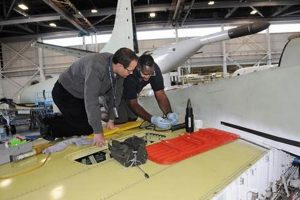
Standard Operating Procedures in the realm of aircraft and spacecraft development, testing, and maintenance represent a documented set of instructions designed to ensure consistency and repeatability in the execution of critical tasks. These procedures detail the precise steps required to perform specific actions, ranging from pre-flight checks to complex assembly operations, and are tailored to the unique demands and high-stakes nature of the industry. An example includes a step-by-step guide for conducting a non-destructive inspection of a composite aircraft wing, specifying the equipment, techniques, and acceptance criteria to be followed.
Adherence to defined process flows offers several key advantages. It minimizes the potential for human error, which is paramount in an environment where even minor deviations can have catastrophic consequences. It facilitates regulatory compliance, ensuring that all activities align with stringent safety and quality standards mandated by governing bodies. Furthermore, use of controlled process contributes to enhanced efficiency and reduced costs through streamlined workflows and optimized resource allocation. Historically, the formalization of operational methods arose from the need to address failures and prevent recurrences, evolving into a fundamental element of safety management systems.
The subsequent sections will elaborate on specific categories of procedures commonly encountered in aircraft and spacecraft activities, including design, manufacturing, testing, and maintenance. Focus will be given to the structure, content, and implementation of these process protocols, as well as their role in maintaining safety and operational excellence.
Best Practices in Standard Operating Procedures for Aerospace Engineering
The following are recommendations for the development and application of documented procedures in the aerospace domain. Strict adherence to these guidelines enhances operational safety, efficiency, and regulatory compliance.
Tip 1: Prioritize Clarity and Precision: Process documentation must be unambiguous and easy to understand. Use concise language, detailed diagrams, and visual aids to minimize potential for misinterpretation. For instance, a procedure for installing a sensor should specify exact torque values and wiring configurations.
Tip 2: Emphasize Regulatory Compliance: All procedural documents must explicitly address relevant regulatory requirements from agencies like the FAA or ESA. Reference specific regulations and standards within the documentation, ensuring traceability and accountability. For example, a procedure for engine overhaul must comply with airworthiness directives.
Tip 3: Incorporate Risk Assessment: Each operation should undergo a thorough risk assessment to identify potential hazards. The process documentation should outline mitigation strategies and safety precautions to address these risks. A test procedure might include emergency shutdown protocols and personnel evacuation plans.
Tip 4: Document Control and Revision Management: Implement a robust system for managing and updating documentation. Track revisions, approvals, and distribution to ensure that personnel are always using the latest versions. Use a controlled document management system for version control.
Tip 5: Training and Competency Assurance: Implement a training program to ensure that all personnel are proficient in the operations covered by the documentation. Regularly assess competency through testing and practical demonstrations. Documentation alone is insufficient without trained and qualified individuals.
Tip 6: Periodic Review and Improvement: Regularly review and update documented processes to reflect changes in technology, regulations, or best practices. Solicit feedback from personnel performing the operations to identify areas for improvement. Consider using a formal change management process.
Tip 7: Standardize Formats and Templates: Employ standardized templates and formats for all documentation to ensure consistency and ease of use. This facilitates training and allows for efficient information retrieval. Standard templates should be used for all types of processes.
By diligently implementing these practices, organizations in aerospace can significantly enhance the safety, reliability, and efficiency of their operations. These recommendations ensure a proactive approach to risk management and continuous improvement.
The subsequent section will explore common pitfalls encountered when developing and implementing operational procedures within the aerospace industry.
1. Repeatability

In aerospace engineering, repeatability is a cornerstone of reliable and safe operations. The consistent execution of processes, facilitated by documented procedures, directly impacts the integrity and performance of aircraft and spacecraft components and systems.
- Consistent Manufacturing Processes
Repeatability in manufacturing ensures that each component, regardless of when or where it is produced, meets specified design criteria. For example, the process for applying thermal barrier coatings to turbine blades must yield uniform thickness and composition across all blades. Deviations can lead to reduced engine performance and premature failure. Defined processes minimize variability and ensure consistency.
- Standardized Testing Protocols
Testing operations require high levels of standardization to produce comparable results. A fatigue test on a wing spar, for instance, must follow a precise load cycle and environmental conditions. Any deviation could skew the results, leading to inaccurate assessments of the component’s lifespan. Repeating these tests using documented processes ensures the reliability of the product.
- Maintenance and Repair Procedures
Repeatable maintenance procedures are essential for maintaining airworthiness. Tasks such as aircraft engine inspections or landing gear overhauls require adherence to defined checklists and standards. An uncontrolled repair can jeopardize safety and operational efficiency. SOP driven processes assure uniform maintenance, irrespective of the technician performing the work, ultimately preserving the asset.
- Flight Operations and Emergency Procedures
Flight operations, including pre-flight checks, flight maneuvers, and emergency protocols, rely heavily on repeatable actions. Pilots must execute checklists and respond to contingencies following established protocols. Standardized operating procedure minimize the risk of pilot error and ensure consistent responses to unforeseen events, enhancing overall flight safety. A failure to adhere to protocols could result in catastrophic incidents.
These facets underscore the integral relationship between repeatability and documented standard operating procedures in aerospace engineering. Through the meticulous application of defined procedures, organizations can achieve the required level of consistency necessary for ensuring safety, regulatory compliance, and operational efficiency.
2. Safety

In aerospace engineering, safety represents a non-negotiable imperative. Standard Operating Procedures (SOPs) form the cornerstone of safety management, serving as a structured framework for mitigating risks and ensuring the well-being of personnel and the integrity of equipment.
- Hazard Identification and Risk Mitigation
Operational processes mandate the systematic identification of potential hazards and the implementation of appropriate risk mitigation measures. For instance, an SOP for working with cryogenic fluids must detail the specific protective equipment required, ventilation protocols, and emergency procedures to prevent cryogenic burns or asphyxiation. Failure to adhere to such a procedure increases the likelihood of accidents and injuries.
- Error Prevention and Human Factors
Operational processes address the potential for human error by standardizing tasks and incorporating human factors considerations into design and execution. A procedure for assembling a critical aircraft component, for example, might include visual aids, checklists, and double-checks to minimize the risk of incorrect installation. Well-designed processes reduce the likelihood of errors that could compromise safety.
- Emergency Response and Incident Management
Operational processes delineate clear emergency response procedures and incident management protocols to ensure a coordinated and effective response in the event of an accident or malfunction. An SOP for handling an engine fire during a test run must outline specific steps for extinguishing the fire, evacuating personnel, and securing the test facility. Preparedness via standard protocols maximizes the chance of containing the situation and minimizing damage or injury.
- Regulatory Compliance and Airworthiness
Operational processes facilitate compliance with stringent regulatory requirements and airworthiness standards mandated by agencies such as the FAA or EASA. An SOP for conducting aircraft maintenance, for instance, must adhere to specific inspection intervals, repair procedures, and documentation requirements outlined in airworthiness directives. Compliance with these requirements is essential for maintaining the operational integrity of the aircraft.
The integration of rigorous risk assessment, human factors engineering, and regulatory compliance within documented processes underscores the pivotal role of SOPs in aerospace engineering. Consistent adherence to procedures minimizes risk and enhances overall operational safety, ensuring the reliable and responsible operation of complex aerospace systems. Without well-defined and followed SOPs, the potential for catastrophic failures increases exponentially.
3. Compliance
In the realm of aerospace engineering, compliance signifies adherence to a complex web of regulations, standards, and specifications established by governmental bodies, industry organizations, and internal company policies. Standard Operating Procedures (SOPs) serve as the mechanism through which this compliance is achieved and maintained. A direct causal relationship exists: the existence of clear, comprehensive SOPs directly contributes to the organization’s ability to meet its compliance obligations. Non-compliance can result in significant penalties, ranging from fines and operational restrictions to, in severe cases, the grounding of aircraft or the termination of projects. Examples include mandatory inspections, materials traceability, and defined maintenance intervals that must be adhered to.
The importance of compliance as a component of SOPs is evident in several practical scenarios. For instance, the FAA mandates specific procedures for aircraft maintenance, including detailed inspection checklists, approved repair methods, and documentation requirements. An SOP designed for aircraft engine overhaul must incorporate all these elements to ensure compliance with airworthiness directives. Similarly, the manufacturing of aircraft components requires adherence to strict material specifications and quality control procedures. An SOP for composite lay-up, for example, must specify the precise resin-to-fiber ratio, curing temperature, and inspection criteria to comply with industry standards. These elements are inextricably linked; each is a critical component within the overarching framework of compliance.
The practical significance of understanding this connection lies in the ability to proactively manage risk and ensure operational integrity. By explicitly integrating compliance requirements into the design and implementation of SOPs, organizations can create a robust system that minimizes the likelihood of errors, prevents regulatory violations, and promotes a culture of safety and accountability. Challenges remain in keeping SOPs up-to-date with evolving regulations and adapting them to new technologies. The consistent commitment to compliance is essential for sustainable operation and safeguarding brand reputation within the aerospace industry. Maintaining and refining processes to adhere to stringent standards is paramount in a high-stakes field where deviation from protocol can have serious, even catastrophic, consequences.
4. Efficiency
Efficiency in aerospace engineering, particularly as it relates to standardized operational procedures, constitutes a critical determinant of project success, cost management, and overall competitiveness. Optimized processes, driven by carefully crafted procedures, translate directly into resource savings and improved timelines. The implementation of these process flows focuses not only on reducing waste but also on enhancing the throughput and quality of all activities, from design to manufacturing and maintenance. Standardized processes are essential because they offer a predictable and streamlined framework.
- Reduced Redundancy and Streamlined Workflows
Well-defined processes minimize redundant tasks and streamline workflows by eliminating ambiguity and unnecessary steps. For instance, a standard procedure for conducting a structural analysis can ensure that all relevant data is collected and processed in a consistent manner, preventing duplicated efforts and accelerating the analysis process. Streamlining the workflow leads to faster turnaround and cost savings.
- Optimized Resource Allocation and Utilization
Efficient operational procedures enable better allocation and utilization of resources, including personnel, equipment, and materials. A standardized procedure for managing inventory, for example, can help to minimize waste, reduce storage costs, and ensure that materials are available when needed. Optimizing resources contributes to cost reduction and efficient project execution.
- Improved Training and Knowledge Transfer
Standard processes facilitate the training of personnel and the transfer of knowledge within the organization. A clearly documented procedure provides a standardized reference for training new employees, ensuring that they learn the most efficient and effective methods for performing their tasks. Better training ensures that personnel can work efficiently.
- Accelerated Problem Solving and Issue Resolution
Efficient operational procedures enable faster problem solving and issue resolution by providing a clear framework for troubleshooting and identifying root causes. A standardized procedure for investigating a manufacturing defect, for example, can help to quickly isolate the source of the problem and implement corrective actions. Faster resolutions minimize downtime and maintain operations.
The various facets of efficiency underscore the tangible benefits of integrating structured process frameworks into aerospace engineering operations. Through the reduction of redundancy, the optimization of resources, the enhancement of training, and the acceleration of problem-solving, these standards contribute significantly to the efficient and cost-effective realization of aerospace projects. Standardized operational procedures in aerospace are therefore not merely about compliance or risk mitigation but also about achieving optimal levels of performance and competitiveness in a demanding and dynamic industry.
5. Traceability

Traceability, within the context of aerospace engineering and its associated process protocols, represents the ability to chronologically track the history, location, and application of any component, material, or process utilized throughout the lifecycle of an aerospace system. This capability is not merely an operational preference but a fundamental requirement dictated by regulatory agencies and stringent safety standards. Traceability serves as a critical mechanism for ensuring accountability, facilitating failure investigations, and maintaining the overall integrity of complex aerospace systems. The existence and rigorous enforcement of Standard Operating Procedures (SOPs) form the foundation of an effective traceability system. A robust traceability system is crucial for all stages, from design to deployment.
- Material Provenance and Certification
Aerospace components are often manufactured from specialized materials with specific performance characteristics. Traceability ensures that the origin, composition, and certification of these materials are documented and verifiable. An SOP for material procurement might require suppliers to provide certificates of analysis and maintain detailed records of batch numbers and manufacturing processes. For example, a titanium alloy used in a jet engine turbine blade must be traceable back to its original melt source to verify its compliance with stringent metallurgical standards. This level of detail allows for immediate identification of any potential material defects or deviations from specifications. Strict process ensures high reliability.
- Manufacturing Process Control and Validation
The manufacturing process itself must be meticulously tracked to ensure that components are produced according to approved design specifications and quality control standards. Standardized procedures should mandate the recording of process parameters, equipment calibration records, and operator qualifications for each manufacturing step. For example, the welding process for a critical structural joint must be documented with details such as welding parameters, inspection results, and the identity of the certified welder. Accurate and complete process records enable the identification of any deviations from approved procedures that may have contributed to a component failure. Consistent process control is key to dependable outputs.
- Component Installation and Maintenance History
The installation and maintenance history of each component must be meticulously recorded to track its usage, repairs, and modifications throughout its service life. Standardized procedures should require detailed documentation of all maintenance activities, including the date, location, work performed, and parts replaced. For instance, the replacement of a landing gear strut on a commercial aircraft must be recorded with the serial number of the new strut, the date of installation, and the identity of the certified mechanic who performed the work. Comprehensive maintenance records allow for proactive monitoring of component performance and the identification of potential issues before they lead to failures. This information allows preventative measures to occur.
- Failure Investigation and Root Cause Analysis
Traceability is invaluable during failure investigations, enabling investigators to quickly trace the history of a failed component and identify potential contributing factors. By examining material certifications, manufacturing records, and maintenance logs, investigators can determine whether the failure was caused by a material defect, a manufacturing error, or improper maintenance. The ability to trace a failure back to its root cause is essential for preventing similar failures from occurring in the future. Standard operating procedures for failure investigation must include guidelines for preserving evidence, conducting thorough analyses, and documenting findings in a comprehensive report. The thoroughness helps promote safety.
The aforementioned facets of traceability are intricately linked to the implementation and enforcement of Standard Operating Procedures within aerospace engineering. SOPs provide the framework for defining the specific data to be collected, the methods for recording and storing that data, and the procedures for accessing and utilizing the data during failure investigations or audits. Without well-defined and rigorously followed SOPs, traceability efforts are rendered ineffective, compromising safety, and increasing the risk of regulatory non-compliance. This comprehensive approach to process management ensures accountability, improves operational efficiency, and reinforces the overall integrity of aerospace systems.
6. Reliability
Reliability, in the context of aerospace systems and operations, represents the probability that a system or component will perform its intended function for a specified period under defined operating conditions. A high level of reliability is paramount due to the severe consequences associated with failures in aerospace applications, often involving loss of life and significant economic impact. The relationship between reliability and process protocols is causal: well-defined, rigorously implemented, and consistently followed standard operating procedures (SOPs) directly contribute to enhanced system reliability. Conversely, poorly defined or inconsistently applied procedures erode system reliability, increasing the likelihood of failures. Redundancy in systems should not be traded off with unreliable processes.
The connection between process protocols and reliability is evident across all phases of the aerospace lifecycle. During design, engineering processes dictate how components are selected, integrated, and tested to meet reliability targets. For instance, a process for selecting electronic components for a flight control system must consider factors such as temperature tolerance, vibration resistance, and radiation hardness to ensure reliable operation in the harsh space environment. In manufacturing, stringent process controls are essential for minimizing defects and ensuring that components are built to specification. An SOP for welding structural components must specify the welding parameters, inspection procedures, and operator qualifications to prevent weak welds that could lead to catastrophic failures. Similarly, SOPs for maintenance and repair activities ensure that aircraft are properly maintained and that any defects are identified and corrected before they compromise safety. The implementation and management of these protocols dictate whether the systems can be relied upon.
The practical significance of this understanding lies in the ability to proactively manage reliability risk and optimize system performance. By integrating reliability considerations into the design of operational procedures, organizations can create a robust system that minimizes the likelihood of failures, improves system availability, and reduces lifecycle costs. Effective procedures act as a defense against the inevitable effects of component wear and environmental stresses. Challenges remain in keeping procedures up-to-date with evolving technology and in ensuring consistent adherence to procedures across geographically dispersed teams. The unwavering commitment to both the creation and application of process protocols remains crucial for maintaining the highest levels of reliability within the aerospace sector. Understanding this relationship is paramount for achieving operational excellence in the aerospace industry.
Frequently Asked Questions on Standard Operating Procedures for Aerospace Engineering
The following questions address common inquiries regarding the development, implementation, and importance of standard operational processes within aerospace engineering. The objective is to provide clear, concise answers based on industry best practices and regulatory requirements.
Question 1: What constitutes a Standard Operating Procedure within the aerospace context?
A Standard Operating Procedure (SOP) in aerospace is a documented set of instructions detailing the steps required to perform a specific task or operation. These procedures are designed to ensure consistency, repeatability, and compliance with regulatory requirements, minimizing the risk of error and promoting safety.
Question 2: Why are standardized processes especially critical in aerospace engineering?
The aerospace industry demands stringent levels of safety and reliability due to the high-stakes nature of its operations. Standard operational processes are essential for ensuring that all tasks, from design to manufacturing and maintenance, are performed consistently and according to established standards, mitigating the risk of catastrophic failures.
Question 3: What regulatory bodies typically influence process protocols in aerospace?
Several regulatory bodies influence the development and implementation of procedural documentation in the aerospace domain. These include, but are not limited to, the Federal Aviation Administration (FAA) in the United States, the European Aviation Safety Agency (EASA) in Europe, and various international standards organizations such as ISO and SAE International.
Question 4: How can aerospace organizations ensure compliance through procedural documentation?
Aerospace organizations can ensure compliance by incorporating regulatory requirements directly into procedure documentation. This involves referencing specific regulations, specifying compliance criteria, and implementing verification steps to confirm adherence. Regular audits and reviews of procedures are also essential for maintaining compliance.
Question 5: What are the potential consequences of neglecting process control and standardization?
Neglecting standardization can lead to a range of adverse consequences, including increased risk of accidents, reduced operational efficiency, higher costs, and potential legal liabilities. Failure to comply with regulatory requirements can result in fines, operational restrictions, or even the grounding of aircraft.
Question 6: How frequently should procedural documentation be reviewed and updated?
Procedural documentation should be reviewed and updated regularly, at least annually, or whenever there are changes in regulations, technology, or operational practices. A formal change management process should be in place to ensure that revisions are properly documented, approved, and communicated to all relevant personnel.
In summary, structured operational process frameworks are indispensable for maintaining safety, ensuring compliance, and optimizing performance within the aerospace industry. Organizations must prioritize the development, implementation, and continuous improvement of these frameworks to mitigate risks and achieve operational excellence.
The subsequent section will explore future trends and innovations in the field of standardization within aerospace, emphasizing the ongoing evolution of standard operational processes.
Conclusion
This exploration has demonstrated that standard operating procedures for aerospace engineering are not merely administrative formalities, but rather fundamental pillars supporting the integrity and reliability of the entire sector. The principles of repeatability, safety, compliance, efficiency, traceability, and reliability are inextricably linked to the rigorous application of documented processes. Neglecting these procedures introduces unacceptable risks and undermines the very foundations upon which safe and efficient air and space travel are built.
Therefore, a sustained commitment to the development, implementation, and continuous improvement of standard operating procedures is essential for all stakeholders within the aerospace industry. A proactive and disciplined approach to procedural adherence safeguards not only the lives of passengers and crew, but also protects the vast investments and technological advancements that define this critical field. The future of aerospace hinges upon a continued dedication to excellence in process management.