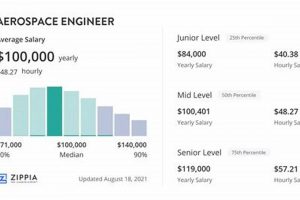
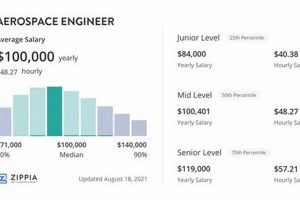
The financial compensation associated with the civil engineering and aerospace engineering professions reflects the distinct demands, specialized skills, and industry dynamics inherent to each field. Civil engineers, responsible for designing and maintaining public infrastructure, receive remuneration based on factors such as experience, location, and project scope. Aerospace engineers, focused on the design, development, and testing of aircraft and spacecraft, also experience variability in earnings influenced by these same factors, as well as the specific sector of the aerospace industry in which they are employed.
Understanding the potential earnings in each discipline is crucial for prospective students making informed career decisions. Career paths, industry growth, and regional demand patterns all play significant roles in shaping compensation expectations. Furthermore, the increasing complexity of both fields, coupled with technological advancements, can lead to opportunities for specialized skills and corresponding adjustments in income. For example, expertise in areas like sustainable infrastructure design in civil engineering or advanced propulsion systems in aerospace engineering can significantly impact earning potential.
The following sections will provide a more detailed examination of the factors influencing salary levels in both civil and aerospace engineering, offering a comprehensive comparison of their earning potential across various experience levels and geographical locations. It will also delve into the impact of educational attainment, specialization, and industry trends on financial compensation within each field.
Successfully navigating career options requires careful consideration of potential financial rewards. The following insights aim to provide clarity regarding salary expectations for both civil and aerospace engineering professionals.
Tip 1: Research Industry Averages. Consult reputable salary surveys and professional organization reports, such as those published by the American Society of Civil Engineers (ASCE) or the American Institute of Aeronautics and Astronautics (AIAA). These resources offer data-driven salary ranges categorized by experience level, location, and specialization.
Tip 2: Factor in Location. Geographic location significantly impacts earning potential. Salaries in metropolitan areas with high costs of living, or regions with a high concentration of aerospace or infrastructure projects, may be considerably higher than those in rural areas.
Tip 3: Consider Educational Attainment. Advanced degrees, such as a Master’s or Ph.D., can lead to increased earning potential, particularly in specialized roles. Investment in postgraduate education can be a strategic move for long-term career advancement.
Tip 4: Explore Specialization Opportunities. Both civil and aerospace engineering offer diverse specialization paths. Focusing on high-demand areas, such as sustainable infrastructure, composite materials, or autonomous systems, can command a premium salary.
Tip 5: Evaluate Company Size and Type. Salaries often vary based on the size and type of employer. Large corporations and government agencies may offer different compensation packages compared to smaller firms or startups. Consider potential benefits and long-term career prospects.
Tip 6: Negotiate Effectively. Understand your market value and be prepared to negotiate salary during the hiring process. Research industry standards and highlight relevant skills and experiences that justify your compensation expectations.
Tip 7: Seek Mentorship and Networking. Connecting with experienced professionals in the field can provide valuable insights into salary trends and career advancement strategies. Attend industry conferences and join professional organizations to expand your network.
Understanding salary expectations is a critical aspect of career planning. Careful research, strategic specialization, and effective negotiation skills can contribute to maximizing earning potential in either civil or aerospace engineering.
The subsequent analysis will delve into a comparative salary analysis, providing a side-by-side assessment of earnings in both engineering disciplines.
1. Experience Level
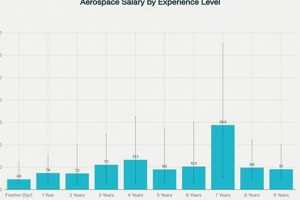
The progression of experience significantly influences earnings in both civil and aerospace engineering. As professionals accumulate practical knowledge and demonstrate increasing competence, their compensation typically reflects their enhanced value to employers.
- Entry-Level Positions
Graduates entering the workforce in civil or aerospace engineering typically begin in entry-level roles. These positions often involve supporting senior engineers, conducting analyses under supervision, and gaining familiarity with industry standards and practices. The initial salary for these positions is usually lower, reflecting the need for on-the-job training and skill development. The initial separation in earning potential between a civil engineer vs aerospace engineering salary, maybe wide or close.
- Mid-Career Professionals
With several years of experience, engineers progress to mid-career roles, assuming greater responsibilities such as project management, design leadership, and client interaction. At this stage, demonstrated proficiency and specialized skills become key determinants of salary increases. Engineers may pursue professional certifications or advanced degrees to further enhance their expertise and earning potential.
- Senior Engineering Roles
Experienced engineers with extensive knowledge and a proven track record may advance to senior positions such as lead engineer, technical specialist, or project director. These roles often involve strategic decision-making, mentoring junior staff, and overseeing complex projects. Senior engineers command higher salaries, reflecting their expertise, leadership abilities, and contributions to organizational success.
- Executive and Management Positions
Some engineers transition into executive or management roles, overseeing engineering departments, leading research and development efforts, or managing entire organizations. These positions require strong leadership, communication, and business acumen, and they offer the highest earning potential within the engineering profession.
The impact of experience on earning potential is evident across both civil and aerospace engineering. While specific salary ranges may vary based on industry sector, geographic location, and other factors, the general trend of increasing compensation with experience holds true. Continuous learning, professional development, and a commitment to excellence are essential for maximizing career growth and financial rewards in these fields.
2. Geographic Location

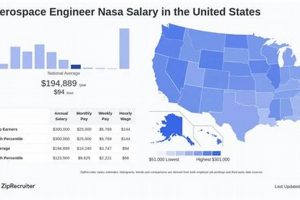
Geographic location exerts a substantial influence on compensation levels within both civil and aerospace engineering. Regional economic conditions, industry concentration, and cost of living variances contribute to disparities in earning potential.
- Metropolitan vs. Rural Areas
Engineers working in large metropolitan areas typically command higher salaries compared to those in rural regions. This difference reflects the increased cost of living, greater demand for skilled professionals, and concentration of large corporations and government agencies in urban centers. For example, a civil engineer working on infrastructure projects in New York City is likely to earn more than a counterpart in a smaller town due to these factors. Aerospace engineers in Silicon Valley or Seattle often receive premium salaries due to the high concentration of aerospace companies and technology firms.
- Regional Industry Clusters
Geographic regions with established industry clusters tend to offer higher salaries for engineers in those specific fields. For aerospace engineers, areas with a significant presence of aerospace manufacturers, research institutions, or military installations, such as Southern California or the Space Coast of Florida, often provide more lucrative opportunities. Similarly, civil engineers may find higher-paying positions in regions experiencing rapid infrastructure development or with a high concentration of construction companies.
- Cost of Living Adjustments
Salary variations across different geographic locations are often tied to cost of living. Areas with higher costs of living, such as San Francisco or Boston, typically offer higher salaries to compensate for increased expenses related to housing, transportation, and other essential goods and services. Salary surveys often incorporate cost of living indices to provide a more accurate comparison of earning potential across different regions.
- State and Local Government Spending
Government spending on infrastructure projects and aerospace initiatives can influence demand and salaries for engineers in specific regions. States with substantial investments in transportation infrastructure, water resources management, or renewable energy projects may offer more opportunities for civil engineers. Similarly, states that host major aerospace research facilities or receive significant federal funding for aerospace programs often have higher-paying jobs for aerospace engineers.
The interplay between geographic location and salary underscores the importance of considering regional economic factors when evaluating career opportunities in civil and aerospace engineering. Understanding the nuances of local industry dynamics and cost of living differences is crucial for making informed decisions about where to pursue professional opportunities and optimize earning potential.
3. Education Attainment
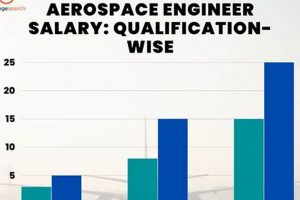
Educational attainment significantly influences the earning potential in both civil and aerospace engineering. Advanced degrees and specialized certifications often correlate with higher compensation, reflecting the increased expertise and specialized knowledge acquired through further education.
- Bachelor’s Degree as a Baseline
A Bachelor’s degree in Civil Engineering or Aerospace Engineering serves as the foundational requirement for entry into these professions. While it provides the necessary theoretical and practical knowledge for basic engineering tasks, it often limits access to more specialized and higher-paying roles. Initial salary expectations for individuals with only a Bachelor’s degree may be lower compared to those with advanced qualifications.
- Master’s Degree: Specialization and Advancement
A Master’s degree allows engineers to specialize in a specific area within their field, such as structural engineering, transportation engineering, or aerospace propulsion. This specialized knowledge is highly valued by employers, leading to increased earning potential. A Master’s degree often opens doors to research positions, project management roles, and leadership opportunities that are not typically accessible with only a Bachelor’s degree.
- Doctorate (Ph.D.): Research and Development Leadership
A Ph.D. is primarily pursued by individuals interested in research, academia, or highly specialized engineering roles. Ph.D. holders are often involved in developing new technologies, conducting advanced analyses, and leading research and development projects. A Ph.D. typically commands the highest salary potential, particularly in research-intensive industries or academic institutions. Within civil and aerospace engineering, a Ph.D. is essential for positions focused on innovation and cutting-edge technology.
- Professional Certifications and Licensure
Professional certifications, such as Professional Engineer (PE) licensure, demonstrate competence and commitment to ethical standards. These certifications often lead to increased earning potential, particularly for civil engineers who are required to be licensed to approve engineering designs and plans for public infrastructure projects. Specialized certifications in areas like project management or sustainable design can also enhance earning potential in both civil and aerospace engineering. For example, LEED certification for civil engineers or certifications in specific aerospace software or systems can make a significant difference in salary negotiations.
In conclusion, the level of education attainment plays a crucial role in determining the earnings trajectory in civil and aerospace engineering. While a Bachelor’s degree provides a solid foundation, pursuing advanced degrees and professional certifications can lead to significant increases in salary potential, particularly in specialized or leadership roles. The decision to pursue further education should align with individual career goals and the specific demands of the desired engineering path.
4. Industry Sector

The industry sector in which civil and aerospace engineers are employed significantly influences their earning potential. Compensation scales vary widely depending on whether an engineer works in the public sector, private consulting, manufacturing, or research and development. These variations are driven by factors such as funding availability, project complexity, and the overall economic climate within each sector.
- Public Sector Employment
Civil engineers in the public sector, employed by government agencies at the local, state, or federal level, often focus on infrastructure development and maintenance. Salaries in this sector tend to be more stable, with comprehensive benefits packages, but may be lower compared to the private sector. Aerospace engineers in government roles, such as at NASA or the Department of Defense, work on research, development, and regulatory oversight. Public sector aerospace positions often prioritize long-term stability and mission-driven work over high salaries.
- Private Consulting Firms
Private consulting firms employ both civil and aerospace engineers to provide design, analysis, and project management services to clients. These firms often offer higher salaries than the public sector, particularly for engineers with specialized expertise or project management skills. Civil engineers in consulting may work on projects ranging from transportation infrastructure to environmental remediation. Aerospace engineers may consult on aircraft design, space systems engineering, or regulatory compliance. Compensation in consulting firms is often tied to billable hours and project performance, offering opportunities for bonuses and increased earnings.
- Manufacturing and Production
Civil engineers in the construction and manufacturing sectors oversee the production of building materials, construction processes, and quality control. Aerospace engineers in manufacturing are involved in the design, fabrication, and testing of aircraft, spacecraft, and related systems. Salaries in manufacturing are influenced by factors such as the size of the company, the complexity of the product, and the location of the manufacturing facility. Unionized positions in manufacturing may offer competitive wages and benefits.
- Research and Development
Both civil and aerospace engineers are employed in research and development roles within universities, research institutions, and private companies. Civil engineers in R&D may focus on developing innovative construction materials, sustainable infrastructure solutions, or advanced sensing technologies. Aerospace engineers in R&D work on cutting-edge technologies related to propulsion systems, aerodynamics, and space exploration. Salaries in R&D positions are often highly competitive, particularly for individuals with advanced degrees and specialized expertise. Funding for research projects and the commercial potential of new technologies can significantly influence compensation levels.
In summary, the specific industry sector chosen by civil and aerospace engineers significantly shapes their earning potential. Public sector roles offer stability, while private consulting and manufacturing may provide higher salaries for specialized skills. Research and development positions often command premium compensation for advanced knowledge and innovative contributions. Understanding the dynamics of each sector is crucial for making informed career decisions and optimizing financial rewards in these engineering fields.
5. Specialized Skills
A direct correlation exists between specialized skills and compensation levels in both civil and aerospace engineering. As the complexity of engineering projects increases, the demand for engineers with expertise in niche areas drives up their market value. Specific skill sets, often acquired through advanced education, certifications, or extensive on-the-job experience, command higher salaries due to their relative scarcity and the critical roles these skills play in project success. For instance, a civil engineer proficient in seismic design for high-rise buildings in earthquake-prone regions will likely earn a premium compared to a generalist civil engineer. Similarly, an aerospace engineer specializing in computational fluid dynamics (CFD) for hypersonic vehicles will be highly sought after, resulting in a higher compensation package. The possession of specialized skills directly addresses critical needs within these industries, thereby increasing an engineer’s value proposition.
In civil engineering, specialization in areas such as sustainable infrastructure, Building Information Modeling (BIM), or advanced geotechnical engineering directly impacts earning potential. Government agencies and private firms are actively seeking engineers with these skills to address pressing societal needs and regulatory requirements. In aerospace engineering, expertise in areas like unmanned aerial vehicle (UAV) design, composite materials, or satellite communication systems is increasingly valuable due to technological advancements and the expanding scope of the aerospace industry. The ability to design and implement complex systems within these specialized domains translates to higher salaries and greater career opportunities. Further, these specialized skills frequently necessitate continuous professional development, making engineers more adaptable and capable of addressing future challenges, further cementing their value.
Understanding the demand for specific skill sets is vital for engineers seeking to maximize their earning potential. By strategically acquiring specialized knowledge and skills, engineers can position themselves for higher-paying roles and greater career advancement opportunities. A focus on continuous learning and adaptation to emerging technologies ensures long-term relevance and competitiveness in the job market. The challenge lies in identifying the specific skills that are both in demand and align with an individual’s interests and aptitudes, requiring careful consideration of industry trends and personal career goals to make informed decisions. Ultimately, specialized skills serve as a primary driver of salary differentiation within civil and aerospace engineering.
6. Company Size
Company size constitutes a significant determinant in shaping the compensation packages offered to civil and aerospace engineers. Larger organizations, characterized by substantial revenue streams and expansive project portfolios, frequently possess the financial capacity to offer more competitive salaries and comprehensive benefits compared to smaller firms. This disparity stems from the economies of scale enjoyed by larger companies, enabling them to allocate greater resources toward employee compensation and professional development. A large aerospace manufacturer, for example, may provide higher base salaries, performance bonuses, and stock options to attract and retain top engineering talent. This stands in contrast to a smaller civil engineering consultancy, which may operate with tighter margins and thus offer comparatively lower compensation.
The correlation between company size and compensation extends beyond base salary, encompassing factors such as retirement plans, health insurance, and opportunities for career advancement. Larger companies often have more structured career pathways and mentorship programs, allowing engineers to acquire new skills and advance into higher-paying positions. For instance, a civil engineer working for a large multinational construction company may have opportunities to manage international projects, leading to increased responsibilities and higher compensation. Similarly, an aerospace engineer at a major defense contractor may gain access to advanced training programs and cutting-edge research initiatives, enhancing their expertise and earning potential. Conversely, smaller companies may offer greater flexibility and a more intimate work environment, but may lack the resources to provide the same level of financial and professional support.
In summary, company size exerts a multifaceted influence on civil and aerospace engineering salaries. Larger organizations typically offer more competitive compensation packages, greater opportunities for career advancement, and more comprehensive benefits. Smaller companies, while potentially offering a more personalized work environment, may be limited in their ability to match the financial incentives provided by larger firms. Engineers should carefully consider the trade-offs associated with company size when evaluating job offers, weighing financial considerations against factors such as work-life balance, company culture, and opportunities for professional growth to align their career choices with their personal and financial objectives.
Frequently Asked Questions
The following section addresses common inquiries regarding the financial aspects of civil and aerospace engineering careers. These questions aim to provide clarity and inform prospective students and professionals about salary expectations, influencing factors, and career progression within these fields.
Question 1: Is the earning potential significantly different between civil engineering and aerospace engineering?
The earning potential can vary, although both professions offer competitive salaries. Aerospace engineering often presents opportunities for higher initial salaries, especially within the defense or space sectors. However, experienced civil engineers, particularly those specializing in high-demand areas like sustainable infrastructure, can achieve comparable or even greater earnings.
Question 2: What role does geographic location play in civil engineering vs aerospace engineering salary?
Geographic location exerts a substantial influence on salary levels for both professions. Metropolitan areas with high costs of living and regions with significant infrastructure projects or aerospace industry presence typically offer higher compensation. Areas with a strong defense industry presence often have higher wages for aerospace engineers, while regions undergoing rapid urbanization may present more lucrative opportunities for civil engineers.
Question 3: How does educational attainment impact civil engineering vs aerospace engineering salary?
Advanced degrees, such as a Master’s or Ph.D., can significantly increase earning potential in both fields. Specialized knowledge and expertise gained through postgraduate studies are highly valued by employers, particularly for research and development roles. Professional certifications, like the Professional Engineer (PE) license for civil engineers, also contribute to higher salaries.
Question 4: Which specialization within civil engineering tends to offer the highest salary?
Specializations that address critical infrastructure needs and environmental concerns often command higher salaries. Examples include structural engineering, geotechnical engineering, and water resources management. Expertise in sustainable infrastructure design and implementation is also increasingly valuable.
Question 5: Which specialization within aerospace engineering typically results in the highest earning potential?
Specializations aligned with cutting-edge technologies and national defense priorities often lead to higher salaries. Examples include propulsion systems, avionics, and spacecraft design. Expertise in areas like unmanned aerial vehicles (UAVs) and satellite technology is also in high demand.
Question 6: How does company size affect civil engineering vs aerospace engineering salary?
Larger companies with greater financial resources often offer more competitive salaries and comprehensive benefits packages compared to smaller firms. These companies typically have structured career paths and opportunities for professional development. However, smaller companies may provide greater flexibility and a more intimate work environment.
Understanding these frequently asked questions provides a clearer perspective on the financial aspects of civil and aerospace engineering careers. The interplay of geographic location, educational attainment, specialization, and industry sector collectively defines earning potential.
The final section will offer concluding remarks and recommendations for navigating the complexities of civil and aerospace engineering career paths.
civil engineering vs aerospace engineering salary
This analysis of civil engineering vs aerospace engineering salary reveals that while both fields offer promising financial prospects, nuanced factors shape the overall compensation landscape. Location, education, specialized skills, industry sector, and company size all exert considerable influence on earning potential within these distinct engineering disciplines. Aerospace engineering often commands higher initial salaries, particularly in specialized areas tied to defense or space exploration. However, experienced civil engineers with expertise in high-demand sectors, such as sustainable infrastructure or advanced structural design, can achieve comparable, or even greater, compensation. The decision between these career paths should therefore extend beyond mere financial considerations.
Ultimately, a thorough understanding of individual aptitudes, career goals, and the specific demands of each field is paramount. Prospective engineers must conduct diligent research, seek mentorship, and proactively acquire the skills necessary to thrive in their chosen profession. While salary remains a significant factor, long-term career satisfaction, professional growth opportunities, and alignment with personal values should guide the decision-making process, ensuring a fulfilling and financially rewarding career trajectory in either civil or aerospace engineering. The ongoing evolution of both fields promises continued opportunities for those prepared to adapt and innovate.