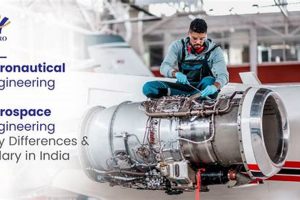
Aerospace engineers design, develop, and test aircraft, spacecraft, satellites, and missiles. Their responsibilities encompass a broad spectrum of activities, from conceptualizing new designs and analyzing aerodynamic performance to overseeing manufacturing processes and ensuring structural integrity. They may specialize in areas like aerodynamics, propulsion, guidance and control systems, or structural design, applying principles of physics, mathematics, and engineering to solve complex challenges.
The contributions of these engineers are critical for advancements in air travel, space exploration, national defense, and scientific research. Their work enables faster, safer, and more efficient transportation; facilitates satellite-based communication and navigation; and contributes to our understanding of the universe. Historically, aerospace engineering has driven innovation across multiple fields, leading to technological breakthroughs that have transformed society. The demand for skilled professionals in this field is driven by ongoing developments in both the commercial and government sectors, promising impactful career opportunities.
The following sections will delve into the specific duties, required skills, educational pathways, and career prospects associated with this vital engineering discipline, providing a detailed overview of the profession.
Guidance for Aspiring Aerospace Engineers
This section offers practical advice for individuals pursuing a career in aerospace engineering. It emphasizes key areas for development and highlights essential skills needed for success.
Tip 1: Strengthen Foundational Knowledge: A robust understanding of mathematics, physics, and computer science is paramount. Focus on mastering calculus, differential equations, linear algebra, fluid dynamics, thermodynamics, and programming languages such as MATLAB and Python. These form the bedrock of aerospace engineering principles.
Tip 2: Cultivate Problem-Solving Skills: Aerospace engineers are constantly confronted with intricate problems. Hone analytical and critical thinking abilities through coursework, independent projects, and participation in engineering competitions. Practice breaking down complex challenges into manageable components.
Tip 3: Gain Practical Experience: Internships and research opportunities are invaluable for acquiring hands-on experience. Seek out placements at aerospace companies, government agencies (e.g., NASA, FAA), or university research labs. This exposure provides real-world insights and allows the application of theoretical knowledge.
Tip 4: Develop Strong Communication Skills: Effective communication is crucial for collaborating with colleagues, presenting research findings, and writing technical reports. Practice both written and oral communication skills through coursework, presentations, and participation in group projects.
Tip 5: Specialize Strategically: The field of aerospace engineering is vast. Consider specializing in a specific area of interest, such as aerodynamics, propulsion, structural analysis, or control systems. This focused approach can lead to greater expertise and career opportunities.
Tip 6: Stay Current with Industry Trends: The aerospace industry is constantly evolving. Remain abreast of the latest advancements in technology, such as additive manufacturing, advanced materials, and autonomous systems. Read industry publications, attend conferences, and engage in continuing education.
Tip 7: Build a Professional Network: Attend industry events, join professional organizations (e.g., AIAA), and connect with experienced engineers. Networking can provide valuable mentorship opportunities, career advice, and potential job leads.
By focusing on these areas, aspiring aerospace engineers can significantly increase their chances of success in this challenging and rewarding field. A strong foundation, practical experience, and continuous learning are key to a fulfilling career trajectory.
The subsequent sections will provide further details on educational requirements, career paths, and the future of aerospace engineering.
1. Design Aircraft

Aircraft design forms a foundational element of aerospace engineering. The creation of efficient, safe, and innovative aircraft directly reflects the core responsibilities of professionals in this field, impacting both commercial aviation and military capabilities.
- Aerodynamic Configuration
This involves determining the shape and arrangement of wings, fuselage, and control surfaces to optimize lift, minimize drag, and ensure stability. Examples include the design of high-lift wings for short takeoff and landing aircraft or the development of blended-wing-body configurations for increased fuel efficiency. Such aerodynamic considerations are critical for meeting performance requirements.
- Structural Integrity
Aerospace engineers must ensure the structural soundness of aircraft to withstand aerodynamic forces, engine vibrations, and landing loads. This requires selecting appropriate materials, calculating stress distributions, and designing robust structures that meet stringent safety standards. The use of composite materials in modern aircraft exemplifies efforts to reduce weight while maintaining strength.
- Propulsion System Integration
Integrating engines into the aircraft design is essential for achieving desired thrust and fuel efficiency. This includes considerations for engine placement, intake design, and exhaust management. Optimizing engine performance and minimizing noise pollution are key objectives in this aspect of aircraft design.
- Control Systems
Effective control systems are vital for maintaining stability, maneuvering, and ensuring pilot workload remains manageable. This encompasses designing flight control surfaces, implementing autopilot systems, and developing advanced control algorithms. Fly-by-wire technology, which replaces mechanical linkages with electronic controls, exemplifies advancements in this area.
These interconnected facets underscore the complex nature of aircraft design, a fundamental task within aerospace engineering. Each element necessitates rigorous analysis, innovative solutions, and a commitment to safety, reinforcing the vital role that aerospace engineers play in advancing aviation technology. From conceptual sketches to final production models, professionals in this field shape the future of air travel and defense.
2. Develop Spacecraft

The development of spacecraft represents a specialized yet crucial function within the broader scope of aerospace engineering. These activities push the boundaries of technology, enabling exploration, communication, and scientific discovery beyond Earth’s atmosphere, directly showcasing the capabilities and impact of those in the field.
- Orbital Mechanics and Trajectory Design
This involves calculating and designing spacecraft trajectories to reach desired orbits or destinations, accounting for gravitational forces and fuel constraints. Real-world examples include trajectory planning for Mars missions or the precise orbit insertion of communication satellites. This careful calculation ensures that spacecraft achieve their intended purposes efficiently.
- Spacecraft Systems Engineering
This encompasses the integration of various subsystems, such as power generation, thermal control, communication, and attitude control, into a cohesive and functional spacecraft. The success of a space mission relies heavily on the reliable operation of these interconnected systems, ensuring that the spacecraft can function autonomously in the harsh conditions of space.
- Radiation Hardening and Environmental Protection
Protecting spacecraft components from the detrimental effects of space radiation and extreme temperatures is essential for mission longevity. Radiation-hardened electronics and thermal control systems are critical design considerations. Proper shielding and heat dissipation enable spacecraft to operate reliably for extended periods in the space environment.
- Remote Sensing and Instrument Integration
Many spacecraft are equipped with specialized instruments for remote sensing, scientific observation, or communication. Integrating these instruments seamlessly into the spacecraft architecture and ensuring their proper functionality is a key aspect of development. Examples include designing platforms for Earth-observing satellites or integrating telescopes into space-based observatories.
These elements illustrate the complexity and precision involved in spacecraft development, highlighting the multifaceted contributions of aerospace engineers. From designing robust systems to navigating the challenges of the space environment, these professionals drive advancements in space exploration and technology, furthering scientific knowledge and expanding human capabilities.
3. Analyze Aerodynamics

Aerodynamic analysis constitutes a cornerstone of aerospace engineering practice. Its application is fundamental to ensuring the safe, efficient, and optimized performance of aircraft and spacecraft, directly influencing design decisions and operational characteristics.
- Computational Fluid Dynamics (CFD) Simulations
Aerospace engineers utilize CFD software to simulate airflow around vehicles, enabling the prediction of lift, drag, and pressure distributions. These simulations provide critical insights into aerodynamic performance, guiding design modifications to improve efficiency and stability. For example, CFD can be used to optimize wing shapes for reduced drag or to analyze the effects of airflow on control surfaces during flight.
- Wind Tunnel Testing
Physical wind tunnel experiments complement CFD simulations, providing empirical data to validate computational models and assess aerodynamic behavior under controlled conditions. Scale models of aircraft or spacecraft are subjected to airflow, and sensors measure forces and pressures. This allows engineers to identify potential aerodynamic issues and refine designs based on real-world measurements.
- Aerodynamic Load Analysis
Determining the aerodynamic loads acting on aircraft and spacecraft structures is essential for ensuring structural integrity. Engineers calculate the forces and pressures exerted by airflow on various components, informing the design of robust and lightweight structures. For instance, analyzing aerodynamic loads on wings helps determine the required strength of spars and ribs.
- Flight Testing and Data Analysis
Flight testing involves evaluating the aerodynamic performance of aircraft in actual flight conditions. Engineers analyze flight data to assess stability, control, and overall performance, comparing it with predictions from CFD and wind tunnel testing. This process allows for final adjustments and validations, ensuring that aircraft meet design specifications and safety requirements.
Through these analytical methods, aerospace engineers optimize the aerodynamic characteristics of aircraft and spacecraft, contributing significantly to their efficiency, safety, and performance. The insights gained from these analyses directly impact design decisions, material selection, and control system development, underscoring the critical role of aerodynamic analysis in the profession.
4. Oversee Manufacturing

Overseeing manufacturing processes represents a critical, albeit often less publicized, facet of aerospace engineering responsibilities. It bridges the gap between theoretical design and tangible realization, ensuring that meticulously conceived plans are accurately and safely translated into functional aircraft and spacecraft. The direct involvement of aerospace engineers in manufacturing is not merely advisory; it is an active role in quality control, problem-solving, and process optimization, directly affecting the final product’s integrity and performance. Without this oversight, designs, however innovative, risk being compromised by manufacturing errors, material defects, or deviations from specified tolerances. This can lead to catastrophic failures in service. The oversight involves detailed review of production plans, selection of manufacturing techniques, and continuous monitoring of the fabrication process.
The practical implications of this oversight are far-reaching. For example, consider the manufacturing of composite wing structures for modern aircraft. Aerospace engineers must ensure that the layup of carbon fiber plies adheres precisely to the design specifications to achieve the desired strength and weight characteristics. They might oversee the curing process, monitoring temperature and pressure to prevent delamination or other structural defects. Similarly, in the production of jet engine turbines, engineers supervise the precision machining and coating processes to ensure the blades can withstand extreme temperatures and stresses. In space exploration, they are deeply involved in manufacturing the radiation-shielding components required for interplanetary probes. Further, aerospace engineers are pivotal in verifying that manufacturing standards meet rigorous regulatory requirements, ensuring airworthiness and safety protocols are strictly followed.
In conclusion, the act of overseeing manufacturing for an aerospace engineer is a multifaceted responsibility that goes far beyond the drawing board. It demands an intricate understanding of materials science, production techniques, and quality assurance protocols. While the design and theoretical aspects of aerospace engineering often receive greater attention, the practical application through manufacturing oversight is vital for translating concepts into reality. This oversight is non-negotiable in the pursuit of safe, reliable, and high-performing aircraft and spacecraft. The capacity of aerospace engineers to engage and lead in manufacturing environments significantly determines the final product’s success and overall mission accomplishment.
5. Ensure Safety

The imperative to ensure safety is inextricably linked to the roles and responsibilities of aerospace engineers. It is not merely a peripheral concern but rather a foundational principle that permeates every stage of the design, development, and operation of aircraft and spacecraft. Every decision, from material selection to system architecture, is scrutinized through the lens of safety to mitigate potential risks and prevent catastrophic failures. A breach in safety protocols can result in loss of life, environmental damage, and significant economic repercussions, making it a paramount consideration in the field. The duty to ensure safety is a critical component of the professional identity, driving innovation and shaping engineering practices. It requires not only theoretical knowledge but also keen judgment, foresight, and unwavering attention to detail, placing “Ensure Safety” at the very core of “what does and aerospace engineer do”.
The practical significance of this commitment is evident in numerous real-world examples. The rigorous testing and validation procedures applied to aircraft components, such as engines and flight control systems, are designed to identify and address potential vulnerabilities before they can manifest in flight. Redundancy in critical systems, such as multiple hydraulic systems or backup power sources, minimizes the risk of single-point failures that could jeopardize the aircraft or spacecraft. Additionally, the implementation of fail-safe mechanisms, such as automatic shut-down systems or emergency landing protocols, provides layers of protection in the event of unforeseen circumstances. These specific examples serve as tangible evidence of how the imperative to ensure safety directly influences engineering design and operational procedures. It demonstrates how aerospace engineers proactively work to prevent hazards, protect human lives, and safeguard assets. This commitment extends from the initial design phase through the operational lifecycle of an aircraft or spacecraft.
In conclusion, the connection between ensuring safety and what an aerospace engineer does is not a matter of convenience but a matter of necessity. Challenges persist in the form of increasingly complex systems and demanding operational environments. Continuous innovation in safety protocols and vigilant adherence to established best practices are essential to maintaining the highest standards of safety in the aerospace industry. The relentless pursuit of safety, even in the face of evolving technological landscapes, ensures the continued reliability and success of air and space travel. This proactive and persistent commitment represents a key determinant of success in the demanding field of aerospace engineering.
Frequently Asked Questions
The following section addresses common inquiries regarding the roles, responsibilities, and career paths associated with this engineering discipline. It provides concise answers to prevalent questions, clarifying misconceptions and offering insights into the profession.
Question 1: Does this profession require extensive travel?
The frequency of travel varies depending on the specific role and employer. Some positions, particularly those involving flight testing or on-site support at manufacturing facilities, may necessitate frequent travel. Other roles, such as design or research, may involve minimal travel.
Question 2: What educational background is essential for this career?
A bachelor’s degree in aerospace engineering, or a closely related field such as mechanical engineering with a specialization in aerospace, is the standard entry-level requirement. Advanced degrees (master’s or doctorate) are often preferred for research-oriented or specialized positions.
Question 3: What are the primary software tools used by professionals in this field?
Aerospace engineers commonly utilize a range of software tools, including CAD (Computer-Aided Design) software for design and modeling, CFD (Computational Fluid Dynamics) software for aerodynamic analysis, and specialized simulation software for structural analysis and control system design.
Question 4: Is a security clearance typically required for positions in this field?
A security clearance may be required for positions involving national security or defense-related projects. The level of clearance required depends on the sensitivity of the information and access granted in the specific role.
Question 5: What opportunities exist for career advancement?
Career advancement opportunities are diverse, ranging from technical leadership roles to project management positions and specialized consulting roles. Experienced engineers may also transition into management or executive positions within aerospace companies or government agencies.
Question 6: Is this a field characterized by ongoing technological advancements?
The aerospace industry is characterized by constant technological innovation, driven by advancements in materials science, propulsion systems, avionics, and autonomous systems. This dynamic environment necessitates continuous learning and adaptation throughout an engineer’s career.
These frequently asked questions provide a succinct overview of key considerations related to this field. Prospective engineers are encouraged to conduct further research and explore specific areas of interest within this dynamic and impactful profession.
The following sections will delve into the future trends and challenges within aerospace engineering.
Conclusion
This exploration has detailed “what does and aerospace engineer do,” encompassing design, development, testing, and manufacturing oversight of air and spacecraft. The analysis has emphasized the critical roles these professionals play in advancing aviation, space exploration, and national defense. From aerodynamic analysis and structural design to propulsion system integration and ensuring safety, their responsibilities are multifaceted and demand a high degree of technical expertise and problem-solving acumen.
As technology evolves, the demands on aerospace engineers will continue to increase. Future generations of engineers must embrace innovation, master new technologies, and remain dedicated to safety and efficiency. The continued advancement of air and space travel depends on their skill, dedication, and commitment to pushing the boundaries of what is possible.