



Programs designed to introduce younger students to the principles and practices of designing, building, and testing aircraft and spacecraft are becoming increasingly prevalent. These structured learning experiences offer participants opportunities to engage with real-world challenges faced by professionals in the aeronautics field. An example could be a summer program where students build and launch model rockets, analyzing the flight characteristics based on design modifications.
The significance of these programs lies in their potential to ignite an early passion for STEM fields, particularly within the aerospace domain. Participation fosters critical thinking, problem-solving skills, and teamwork, crucial attributes for future engineers and scientists. Historically, such initiatives have played a role in cultivating the next generation of innovators and leaders in the industry. Exposure to practical applications and mentorship opportunities are invaluable benefits.
The following sections will delve into specific aspects such as curriculum development, hands-on activities, the role of industry partnerships, and the impact on student career pathways. Emphasis will be placed on highlighting exemplary programs and strategies for effective implementation.
Guidance for Maximizing the Value of Youth-Focused Aerospace Programs
The following recommendations are aimed at enhancing the design, execution, and impact of programs intended to introduce young individuals to aerospace engineering. Adherence to these guidelines can improve participant engagement and learning outcomes.
Tip 1: Curriculum Integration of Real-World Scenarios: Program curricula should incorporate authentic problems and challenges faced by practicing aerospace engineers. Example: Design a mission to Mars, including calculations for trajectory, life support, and communication systems.
Tip 2: Emphasize Hands-On Learning Opportunities: Active participation through experimentation and prototyping is crucial. Example: Constructing and testing model aircraft, rocket engines, or satellite components.
Tip 3: Foster Collaboration and Teamwork: Encourage group projects that necessitate effective communication and shared responsibility. Example: Building and launching a high-altitude balloon as a team, with each member responsible for a different aspect.
Tip 4: Leverage Industry Partnerships: Collaborating with aerospace companies and research institutions provides access to resources, expertise, and mentorship opportunities. Example: Arranging site visits to aerospace facilities or inviting guest speakers from the industry.
Tip 5: Incorporate Data Analysis and Scientific Method: Train participants to collect, analyze, and interpret data to draw informed conclusions. Example: Measuring the performance characteristics of a model aircraft and using statistical analysis to identify areas for improvement.
Tip 6: Promote Problem-Solving and Critical Thinking: Structure activities to encourage independent thought and innovative solutions. Example: Presenting participants with an unexpected failure during a project and challenging them to devise a recovery plan.
Tip 7: Offer Mentorship Opportunities: Pairing participants with experienced aerospace professionals provides valuable guidance and support. Example: Connecting students with engineering students or early-career professionals working in the field.
Adoption of these recommendations facilitates a more enriching and impactful experience for participants, fostering a deeper understanding of aerospace engineering principles and promoting future engagement in STEM careers.
The subsequent sections will explore detailed case studies and best practices for implementing these recommendations within different program settings.
1. Core Curriculum

The core curriculum serves as the foundational element of any effective aerospace engineering camp. It provides participants with the essential theoretical knowledge necessary to understand and engage in practical activities. A robust core curriculum establishes a clear cause-and-effect relationship between fundamental scientific principles and the design, construction, and operation of aerospace systems. For instance, teaching the principles of aerodynamics directly enables students to understand how wing shapes generate lift during model aircraft design. The absence of such a curriculum would render hands-on activities largely rote exercises devoid of genuine understanding.
The curriculums importance extends to providing a common language and framework for all participants. Typically, the core includes topics such as physics (mechanics, thermodynamics, electromagnetism), mathematics (calculus, differential equations, linear algebra), materials science, and basic principles of flight. Examples of effective integration involve using calculus to calculate rocket trajectories, applying thermodynamics to understand engine efficiency, or employing linear algebra to analyze structural loads on aircraft components. These direct applications foster a deeper appreciation for the relevance of theoretical knowledge to real-world engineering problems. Curriculum should be also built according to the experience of the users. Beginner levels needs less curriculum than advanced levels. The length of the program is also important.
In summary, a well-defined core curriculum is indispensable to an impactful aerospace engineering camp. It ensures that participants acquire the necessary knowledge base, enabling them to actively learn from practical activities. The challenges lie in balancing theoretical rigor with accessibility, ensuring that complex concepts are presented in an engaging and understandable manner. The strength of the core curriculum will directly impact the effectiveness of other facets of the program, ultimately contributing to the overall educational value.
2. Hands-on Activities

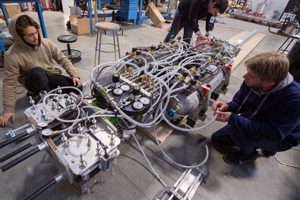
Hands-on activities are crucial to an effective aerospace engineering camp, translating theoretical knowledge into practical understanding. These activities, ranging from model rocket construction to wind tunnel testing, provide participants with a tangible connection to aerospace engineering principles. The cause-and-effect relationship is direct: engaging in hands-on projects solidifies concepts learned in the core curriculum, promoting deeper retention and comprehension. For instance, building a functional airfoil and testing its lift characteristics in a wind tunnel directly demonstrates the principles of Bernoulli’s equation and aerodynamic forces.
The importance of hands-on experience stems from its ability to foster problem-solving skills and critical thinking. Participants are forced to confront real-world challenges, such as design flaws, material limitations, and unexpected experimental results. These challenges necessitate creative solutions and iterative design improvements, mirroring the engineering design process. A practical example includes modifying a model rocket’s fin design to improve stability during flight, based on observations from previous launches. These skills translate directly into improved performance in academic settings and provide a competitive advantage in future engineering careers.
In conclusion, hands-on activities are not merely supplementary components, but rather central to the success of an aerospace engineering camp. They bridge the gap between theory and practice, fostering a deeper understanding of aerospace engineering principles and developing essential skills for future engineers. The challenge lies in designing activities that are both engaging and educational, ensuring that participants actively learn from each project. Prioritizing hands-on learning maximizes the impact of these educational programs, cultivating a passion for STEM fields and preparing participants for future success.
3. Industry Exposure

Industry exposure within an aerospace engineering camp context bridges the gap between academic learning and professional practice. It offers participants firsthand insights into the realities of the aerospace sector, supplementing theoretical knowledge with practical applications and career awareness.
- Site Visits to Aerospace Facilities
These visits provide opportunities to observe real-world engineering in action. Participants may witness manufacturing processes, testing procedures, and design implementations within aerospace companies or research institutions. Exposure to these environments can solidify understanding of engineering principles and inspire career aspirations. For example, a visit to a jet engine manufacturing plant would illustrate the application of thermodynamics and materials science principles, connecting classroom learning to industrial production.
- Guest Lectures from Aerospace Professionals
Inviting engineers, scientists, and technicians from the aerospace industry to speak directly exposes participants to diverse career paths and current industry challenges. These professionals share their experiences, offer advice, and provide insights into emerging technologies. A lecture from an astronaut, for instance, could detail the engineering challenges of spaceflight and the multidisciplinary skills required for mission success.
- Mentorship Opportunities
Pairing participants with mentors working in the aerospace sector offers personalized guidance and support. Mentors provide insights into career planning, educational pathways, and professional development. They can also offer feedback on projects and research, enhancing participants’ understanding of industry standards and expectations. A mentorship pairing might involve an experienced engineer advising a participant on a design project, providing critiques on functionality, manufacturability, and cost-effectiveness.
- Project-Based Collaboration
Partnering with aerospace companies on specific projects provides participants with real-world engineering challenges. These collaborations allow participants to contribute to ongoing projects, gain experience working with industry professionals, and develop practical skills relevant to the aerospace sector. An example could be designing a component for a UAV, working under the guidance of engineers from a drone manufacturing company, thereby gaining experience with real-world constraints and design standards.
These facets of industry exposure enrich the educational experience within aerospace engineering programs, enhancing participants’ understanding of engineering principles and career possibilities. Such exposure can ignite a passion for STEM fields and prepares participants for future roles in the aerospace industry.
4. Faculty Expertise

The success of any aerospace engineering camp hinges significantly on the expertise of its faculty. This expertise dictates the quality of instruction, the depth of knowledge imparted, and the ability to effectively guide participants through complex concepts. The expertise of faculty directly causes an increase in the comprehension and retention of crucial aerospace engineering principles among students. For instance, a faculty member with a background in spacecraft propulsion systems is better equipped to explain the intricacies of rocket engine design and performance, enabling participants to grasp the underlying physics and engineering trade-offs. The absence of such expertise would reduce the camp to a superficial overview, lacking the necessary depth to foster genuine understanding and skill development.
The importance of faculty expertise manifests in several critical areas. It ensures the accuracy and relevance of the curriculum, aligning the program content with current industry practices and research. Experienced faculty members can contextualize theoretical concepts with real-world examples, drawing upon their professional experience to illustrate the practical applications of engineering principles. Furthermore, they can provide personalized guidance and mentorship, tailoring their instruction to meet the individual needs and interests of participants. A faculty member actively involved in aerospace research, for example, can connect students with opportunities to participate in ongoing projects, providing valuable research experience and networking opportunities. Moreover, the facultys experience is also crucial on helping the participants to find career in aerospace engineering, since they know the job requirements well.
In conclusion, faculty expertise is a non-negotiable requirement for a successful aerospace engineering camp. It guarantees the quality of instruction, promotes deep learning, and provides participants with valuable insights into the aerospace profession. While logistical considerations and curriculum design are important, they are ultimately secondary to the quality and experience of the teaching staff. The challenge lies in attracting and retaining highly qualified faculty members who possess both technical expertise and a passion for education, a factor that can significantly impact the effectiveness and long-term success of the program.
5. Safety Protocols

Safety protocols are a paramount concern within aerospace engineering camps. These protocols are not merely procedural formalities, but essential safeguards designed to mitigate risks associated with hands-on activities and technical equipment, thereby ensuring the well-being of all participants and staff.
- Equipment Handling and Operation
Safe operation and maintenance of equipment, from hand tools to testing apparatus, are critical. Specific training and supervision are required. Improper handling of equipment, such as power tools or rocket launch systems, can cause physical injuries. Clear operating procedures, documented risk assessments, and mandatory safety briefings are necessary to prevent accidents.
- Chemical and Material Safety
Aerospace activities often involve the use of potentially hazardous chemicals and materials, including propellants, adhesives, and composite materials. Proper storage, handling, and disposal procedures are essential to prevent exposure and environmental contamination. Specific protocols must address ventilation, personal protective equipment (PPE), and emergency response procedures in case of spills or accidents. Material Safety Data Sheets (MSDS) should be readily accessible.
- Launch Site Safety
Activities involving rocket launches necessitate stringent safety protocols to protect participants, bystanders, and property. These protocols encompass site selection, pre-launch inspections, range safety procedures, and emergency abort mechanisms. Clear communication channels and well-defined exclusion zones are crucial for minimizing the risk of injuries from misfires or debris. Certified range safety officers are often required to oversee launch operations.
- Emergency Response Procedures
Comprehensive emergency response plans are essential for addressing potential incidents, ranging from minor injuries to serious accidents. These plans should outline communication protocols, evacuation procedures, first aid protocols, and contact information for emergency services. Regular drills and training exercises are necessary to ensure that all participants and staff are familiar with the emergency response procedures.
These safety protocols are fundamental to the ethical and responsible operation of aerospace engineering programs. They provide a framework for minimizing risks, protecting participants, and fostering a culture of safety awareness. Neglecting these safety measures can have severe legal and ethical consequences, compromising the integrity and reputation of the program. Comprehensive enforcement and continuous improvement of protocols are essential to maintain a safe and productive learning environment.
6. Resource Availability
Resource availability directly impacts the scope and effectiveness of an aerospace engineering camp. The presence of adequate funding, equipment, facilities, and expertise creates an environment conducive to hands-on learning and project-based exploration. The allocation of resources acts as a limiting or enabling factor, directly determining the complexity of projects and the degree of practical experience participants can acquire. For example, a camp with access to advanced simulation software or wind tunnels enables sophisticated analysis and testing, significantly enhancing the educational experience. Conversely, limited funding restricts access to necessary materials or expert instructors, diminishing the quality of the learning environment. Specifically, limited funding might cause the camp to use basic material when the camp required students to use advanced material for a challenging project.
Practical significance is evident in the correlation between resource investment and participant outcomes. Camps with well-equipped labs, 3D printers, and access to computational resources foster innovation and enable participants to tackle complex challenges. Availability of diverse materials, such as carbon fiber, aluminum alloys, and specialized electronics, allows participants to experiment with different designs and manufacturing techniques. Furthermore, access to industry professionals as mentors or guest lecturers provides invaluable insights into career pathways and real-world engineering practices. Proper funding would allow this kind of collaboration or inviting speaker in the event.
In summary, resource availability is an instrumental component of an aerospace engineering camp. It shapes the curriculum, facilitates hands-on learning, and influences participant outcomes. Challenges lie in securing adequate funding, maintaining equipment, and attracting qualified instructors. However, the investment in resources directly translates into improved program quality and a more enriching experience for participants, nurturing future generations of aerospace professionals.
7. Program Evaluation
Program evaluation serves as a critical feedback mechanism for aerospace engineering camps, determining their effectiveness in achieving stated educational objectives. Systematic evaluation, employing quantitative and qualitative methodologies, provides data-driven insights into the program’s strengths and weaknesses. These insights are essential for continuous improvement and ensuring alignment with the evolving needs of participants and the aerospace industry. The absence of rigorous program evaluation can lead to stagnation and diminished relevance, as program design may not adapt to changing circumstances or address emerging skill gaps. A real-world example could involve tracking participant performance on standardized aerospace-related tests before and after camp attendance to quantitatively measure knowledge gained. Furthermore, surveys administered to both participants and instructors can provide qualitative feedback on the program’s curriculum, delivery methods, and overall impact. This understanding is practically significant, informing future curriculum development, resource allocation, and instructor training strategies.
Practical application of program evaluation extends to optimizing the structure and content of hands-on activities. Analyzing data from participant feedback, performance metrics, and observations can reveal which activities are most effective in fostering learning and skill development. For example, if an evaluation reveals that participants struggle with a particular aspect of rocket design during a build-and-launch activity, the program can adjust its instructional approach or provide additional resources to address the challenge. Furthermore, program evaluation can inform decisions regarding partnerships with industry professionals or research institutions, ensuring that participants have access to relevant and cutting-edge aerospace technologies and knowledge. Longitudinal tracking of participant career paths can further assess the long-term impact of the program on participants’ pursuit of aerospace-related careers.
In conclusion, program evaluation is an indispensable component of aerospace engineering camps. It provides actionable insights for optimizing program design, enhancing participant learning, and ensuring alignment with industry needs. Challenges lie in the complexity of accurately measuring nuanced outcomes and in securing resources for comprehensive evaluation efforts. Despite these challenges, investing in robust program evaluation is essential for maintaining the relevance, effectiveness, and long-term sustainability of aerospace engineering camps, cultivating the next generation of aerospace professionals.
Frequently Asked Questions
This section addresses common inquiries regarding aerospace engineering programs designed for younger students. The information below clarifies typical aspects of these structured learning experiences.
Question 1: What is the target age range for participation in programs focused on introducing young individuals to the principles and practices of designing, building, and testing aircraft and spacecraft?
Typical programs are designed for students in middle school and high school, generally ranging from ages 12 to 18. Specific age requirements may vary depending on the program’s complexity and intended learning outcomes.
Question 2: What specific knowledge or skills are necessary for enrolling in an aerospace-focused educational program for younger students?
Formal prerequisite knowledge is generally not required. An interest in science, technology, engineering, and mathematics (STEM) fields is beneficial. Programs are typically designed to introduce fundamental concepts to participants with varying levels of prior experience.
Question 3: What types of hands-on activities are commonly incorporated into aerospace-related STEM programs?
Common activities include building and launching model rockets, designing and testing aircraft wings, constructing and programming robotic systems, and simulating space missions. The activities aim to apply theoretical concepts and develop problem-solving skills.
Question 4: How do these aerospace engineering programs support the development of participants’ skills in the fields of science, technology, engineering, and mathematics (STEM)?
These programs promote STEM skill development through hands-on projects, problem-solving challenges, and collaborative teamwork activities. Participants apply mathematical and scientific principles to real-world engineering problems, fostering critical thinking and innovation.
Question 5: Are these programs usually residentially based, or day programs?
Programs may be structured as residential camps, day camps, or after-school programs. The format depends on the program’s duration, scope, and available resources. Residential programs typically offer a more immersive experience.
Question 6: How can participation in an aerospace-related STEM program for younger students potentially contribute to their future academic or career pursuits?
These programs cultivate an early interest in STEM fields, provide valuable skills and experience, and expose participants to career opportunities in the aerospace sector. Participation can enhance college applications and provide a competitive advantage for future engineering studies or careers.
Participating in these structured youth programs provides valuable exposure to real-world applications and mentorship opportunities.
The next section outlines specific guidance for maximizing the value of youth-focused aerospace programs.
Aerospace Engineering Camp
This analysis has explored the multifaceted elements contributing to the effectiveness of programs designed to introduce younger students to aerospace engineering. Emphasis has been placed on the core curriculum, hands-on activities, industry exposure, faculty expertise, safety protocols, resource availability, and program evaluation. These facets, when strategically integrated, create a comprehensive learning environment.
The cultivation of future generations of aerospace engineers hinges on a commitment to excellence in program design and execution. Continued investment in resources, rigorous evaluation methodologies, and collaboration between academic institutions and industry partners are vital to ensure that these programs fulfill their potential to inspire and prepare the next wave of innovators. Sustained effort is required to meet the evolving demands of the aerospace sector.


![Top CAD Software for Aerospace Engineers [2024 Guide] | Innovating the Future of Flight with Reliable Aviation Solutions](https://mixaerospace.com/wp-content/uploads/2026/05/th-246-300x200.jpg "Top CAD Software for Aerospace Engineers [2024 Guide] Innovating the Future of Flight with Reliable Aviation Solutions")