The array of positions within the field encompasses roles dedicated to the design, development, testing, and maintenance of aircraft and spacecraft. These vocations range from highly specialized engineering tasks to management positions overseeing complex projects, and further extend into scientific research focused on advancing the boundaries of flight and space exploration. For example, a propulsion engineer concentrates on the systems that power flight, while an avionics technician ensures the proper functioning of electronic components within an aircraft.
The significance of careers related to aviation and space exploration is multi-faceted. They are instrumental in driving technological advancements, fostering economic growth through innovation, and enhancing national security. Historically, these occupations have attracted highly skilled individuals, contributing significantly to landmark achievements such as the first human flight and the Apollo missions. This field fuels continuous progress in areas like materials science, computational modeling, and satellite communications, benefiting society as a whole.
The following sections will delve into specific categories of employment opportunities, highlighting the requisite skills, typical responsibilities, and potential career paths associated with each. Exploration will include opportunities in engineering, scientific research, manufacturing, and related support services, painting a detailed picture of the diverse professional landscapes available to qualified individuals.
This section offers guidance for individuals interested in pursuing professional opportunities within the sector. Consider these recommendations for effectively entering and advancing within this field.
Tip 1: Acquire Relevant Education and Training: A strong foundation in engineering, physics, mathematics, or a related scientific discipline is often a prerequisite. Consider pursuing advanced degrees or specialized certifications to enhance competitiveness. For example, a Bachelor’s degree in Aerospace Engineering is a common entry point for many design and development positions.
Tip 2: Develop Specialized Skills: Cultivate expertise in areas such as CAD/CAM software, computational fluid dynamics, materials science, or avionics systems. Proficiency in these skills is highly valued by employers. Focusing on a niche skill can lead to specific opportunities and increased demand.
Tip 3: Seek Internship and Co-op Experiences: Gain practical experience through internships or cooperative education programs with aerospace companies or research institutions. These opportunities provide valuable hands-on training and networking possibilities. Real-world experience is often a differentiator in the job market.
Tip 4: Network with Industry Professionals: Attend industry conferences, join professional organizations (e.g., AIAA, SAE), and connect with individuals working in this sphere. Networking can provide access to job leads, mentorship, and insights into industry trends. Professional connections are crucial for career advancement.
Tip 5: Tailor Resumes and Cover Letters: Customize application materials to highlight relevant skills and experiences for each specific position. Emphasize accomplishments and quantify contributions whenever possible. A generic application is less likely to succeed than a targeted one.
Tip 6: Prepare for Technical Interviews: Anticipate technical questions related to fundamental engineering principles, problem-solving scenarios, and specific software or hardware systems. Practice communicating technical concepts clearly and concisely. Technical proficiency is rigorously assessed during the interview process.
Tip 7: Stay Current with Industry Trends: Continuously update knowledge of emerging technologies, industry regulations, and market trends. This demonstrates a commitment to professional growth and adaptability. The aviation and space sectors are constantly evolving, requiring continuous learning.
Adhering to these recommendations will significantly improve an individual’s prospects for securing and succeeding in employment related to flight and space. The aerospace sector presents numerous challenges and rewards for dedicated and well-prepared professionals.
The subsequent section will offer a concluding overview of the field.
1. Engineering Design

Engineering design constitutes a foundational element within the spectrum of vocations. It serves as the initial stage for nearly all projects, influencing subsequent manufacturing, testing, and operational phases. Without robust engineering design, advanced aviation and space exploration ventures would be impossible. For example, the design of a new aircraft wing involves aerodynamic analysis, structural integrity calculations, and materials selection, all crucial for ensuring safety and performance. The impact of design flaws can be catastrophic, underscoring the critical importance of thoroughness and precision.
Positions directly related to engineering design include roles such as aerospace engineer, mechanical engineer specializing in aerospace applications, and CAD/CAM designer. Responsibilities typically involve creating blueprints, conducting simulations, and collaborating with other engineering teams to optimize designs for manufacturability and performance. Furthermore, specialized engineering designers focus on niche areas such as propulsion systems, avionics, or structural components, contributing to targeted improvements and innovations. The iterative nature of the design process requires continuous evaluation and refinement based on testing data and feedback from other departments.
In summary, engineering design forms the backbone of development in aviation and space sectors. Its accuracy, innovation, and suitability directly impact the functionality, safety, and efficiency of related projects. Understanding its central role within the overarching framework of employment offers valuable insights for career planning and industry awareness.
2. Manufacturing & Production

Manufacturing and production processes are integral to the creation of aircraft, spacecraft, and associated components, directly influencing the spectrum of available vocations. The practical realization of engineering designs relies on skilled personnel operating advanced manufacturing technologies. Positions within this domain span a wide range of expertise, from skilled technicians assembling intricate parts to quality control specialists ensuring adherence to stringent standards. The efficiency and precision of manufacturing operations directly affect project timelines, cost-effectiveness, and the overall reliability of finished products. For example, the production of a jet engine turbine blade requires a complex series of casting, machining, and coating processes, each demanding specialized expertise.
The significance of manufacturing-related employment within the aerospace sector extends beyond mere assembly. It encompasses process optimization, supply chain management, and the implementation of lean manufacturing principles. Advanced manufacturing techniques, such as additive manufacturing (3D printing) and robotic automation, are increasingly prevalent, creating demand for professionals skilled in operating and maintaining these systems. Furthermore, the industry’s commitment to safety and reliability necessitates rigorous quality control procedures at every stage of production, resulting in numerous opportunities for quality assurance engineers and inspectors. Effective manufacturing and production are crucial for maintaining competitiveness in the global marketplace and ensuring the timely delivery of innovative aerospace technologies.
In summary, manufacturing and production positions are essential components of the career landscape. Their effectiveness directly impacts the quality, cost, and delivery of aviation and space related technologies. A comprehensive understanding of manufacturing processes and their associated vocational opportunities is valuable for individuals seeking to enter or advance within the aerospace industry. Challenges in this domain include adapting to rapid technological advancements and maintaining a skilled workforce capable of meeting increasingly complex manufacturing demands.
3. Research & Development

Research and Development (R&D) forms a critical nexus within diverse employment sectors. Its influence directly shapes the evolution of existing technologies and the emergence of novel solutions. Within aviation and space industries, investment in R&D correlates with advancements in aircraft design, propulsion systems, materials science, and space exploration capabilities. These advancements, in turn, create and redefine vocational roles. For example, the development of composite materials for aircraft structures necessitates specialists in materials science, structural analysis, and manufacturing processes. Without the impetus provided by research initiatives, the pool of potential opportunities would stagnate, limiting the scope for innovation and economic growth. The causal link between investment in R&D and the expansion of employment options is demonstrably strong. Consider the development of unmanned aerial vehicles (UAVs), driven by research into autonomous systems and sensor technologies; this has directly generated positions in areas such as UAV piloting, data analysis, and regulatory compliance.
The practical significance of understanding this connection is multi-faceted. Prospective employees can strategically align their education and skill development with emerging trends in research. Companies can optimize their workforce development programs to capitalize on new technological breakthroughs. Policymakers can leverage R&D investment to stimulate economic growth and maintain national competitiveness in strategic industries. Real-world examples abound: NASA’s investments in space exploration technologies have consistently led to the creation of jobs in fields ranging from rocketry and propulsion to life support systems and mission control. Similarly, private sector investments in electric propulsion systems for aircraft are fostering a new wave of opportunities in electrical engineering, power electronics, and battery technology. The ability to anticipate future employment trends based on research activities is crucial for both individuals and organizations.
In summary, R&D is not merely a theoretical exercise; it is a practical driver of job creation and industrial transformation. Its impact on employment cannot be overstated. The challenges associated with translating research findings into tangible products and services require a diverse and skilled workforce, thereby underlining its integral role in the broader landscape. Understanding this interplay is essential for individuals, companies, and governments seeking to navigate the complexities of the evolving global economy.
4. Testing & Quality Control

Testing and quality control are indispensable components of the aviation and space sectors, directly influencing the spectrum of professional opportunities. These processes are responsible for verifying that aircraft, spacecraft, and their constituent components meet stringent performance and safety standards. Consequently, various jobs exist specifically to execute and oversee these crucial functions. The implementation of thorough testing procedures directly reduces the risk of catastrophic failures and ensures operational reliability. For instance, non-destructive testing (NDT) techniques, such as ultrasonic inspection and radiographic analysis, are employed to detect hidden flaws in aircraft structures without compromising their integrity. The individuals who perform and interpret these tests are critical for maintaining airworthiness and preventing accidents. Without robust testing and quality control measures, the safety and reliability of air and space travel would be drastically compromised, leading to significant economic and human costs.
The practical implications of testing and quality control extend beyond immediate safety concerns. They also influence the long-term durability and performance of vehicles and systems. Positions focused on these activities range from entry-level inspection roles to highly specialized engineering positions requiring advanced knowledge of materials science, statistical analysis, and regulatory compliance. Furthermore, the advent of advanced technologies, such as automated testing systems and data analytics, is creating demand for professionals skilled in operating and interpreting the data generated by these systems. For example, the use of artificial intelligence to analyze sensor data from engine tests allows for earlier detection of potential problems, leading to more proactive maintenance and improved engine performance. This ongoing evolution of testing technologies necessitates a continuous commitment to training and professional development.
In conclusion, testing and quality control constitute a critical link in the aviation and space industries, fostering safety and reliability. The associated vocational opportunities demand specialized skills and a rigorous attention to detail. The challenges involved include adapting to evolving regulatory requirements, implementing advanced testing methodologies, and maintaining a skilled workforce capable of meeting the industry’s exacting standards. A comprehensive understanding of this interconnection is essential for individuals seeking to contribute to the safety and reliability of air and space travel.
5. Flight Operations

Flight operations encompasses the activities necessary for the safe and efficient conduct of air travel, representing a critical component within the broader landscape of employment opportunities. The direct connection between flight operations and various vocational fields is undeniable. Efficient aircraft operation requires the collaboration of flight crews, air traffic controllers, dispatchers, meteorologists, and maintenance personnel. Each role contributes to the safe and timely execution of flights, highlighting the integrated nature of associated careers. For example, pilots require extensive training and certification to operate aircraft, while air traffic controllers manage the flow of air traffic to prevent collisions. The effectiveness of flight operations directly affects passenger safety, economic productivity, and national security.
The importance of skilled personnel in flight operations is demonstrated in real-world scenarios. Precise navigation, effective communication, and rapid decision-making are essential for pilots navigating complex weather patterns or responding to in-flight emergencies. Similarly, air traffic controllers must maintain situational awareness and coordinate aircraft movements to ensure the safe separation of flights. Dispatchers are responsible for monitoring flight progress, providing weather updates, and making decisions regarding flight diversions or cancellations when necessary. The consequences of errors in flight operations can be severe, underscoring the need for highly trained and competent professionals. The increasing complexity of air traffic management systems and the growing demand for air travel are driving the need for continuous innovation and improvement in flight operations.
In summary, flight operations are a vital segment. Associated employment demands specialized skills, knowledge, and training. The challenges faced by professionals involve adapting to evolving technologies, managing increasing air traffic volumes, and maintaining vigilance in the face of potential threats. A comprehensive understanding of the dynamics within flight operations is crucial for individuals pursuing careers in aviation and for organizations seeking to optimize their operational efficiency and safety.
6. Maintenance & Repair
Maintenance and repair activities within the aviation and space sectors directly influence the demand for specialized personnel, thereby shaping the contours of available positions. The operational longevity and safety of aircraft and spacecraft depend on rigorous maintenance schedules and prompt repairs. The inherent complexity of these systems necessitates a diverse array of skilled technicians, engineers, and inspectors.
- Avionics Maintenance
Avionics maintenance focuses on the repair, inspection, and calibration of electronic systems within aircraft. This includes navigation systems, communication equipment, radar, and flight control systems. Technicians specializing in avionics require a deep understanding of electronics principles and diagnostic procedures. The increasing sophistication of avionics systems, such as fly-by-wire technology and integrated flight management systems, creates ongoing demand for highly skilled avionics technicians.
- Airframe Maintenance
Airframe maintenance encompasses the inspection, repair, and structural modification of aircraft fuselages, wings, and control surfaces. Technicians specializing in airframe maintenance must possess expertise in materials science, welding, and composite repair techniques. Regular inspections are conducted to detect corrosion, fatigue cracks, and other forms of structural damage. The repair or replacement of damaged airframe components is critical for maintaining the structural integrity of the aircraft.
- Engine Maintenance
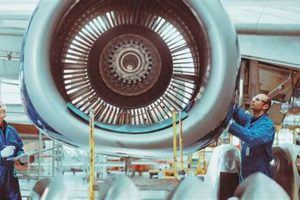
Engine maintenance focuses on the overhaul, repair, and testing of aircraft engines. Technicians specializing in engine maintenance require a thorough understanding of engine mechanics, thermodynamics, and combustion principles. Engine maintenance procedures include disassembly, inspection, component replacement, and performance testing. The complexity of modern jet engines, with their intricate systems for fuel injection, lubrication, and cooling, demands highly specialized skills.
- Inspection and Quality Control
Inspection and quality control positions are responsible for ensuring that all maintenance and repair activities are performed in accordance with regulatory requirements and industry best practices. Inspectors conduct detailed examinations of aircraft systems and components to verify compliance with technical specifications and safety standards. Quality control personnel monitor maintenance procedures, review documentation, and implement corrective actions to prevent defects. The rigorous nature of inspection and quality control is crucial for maintaining airworthiness and preventing accidents.
These facets illustrate the pivotal role of maintenance and repair within the spectrum of careers related to aviation and space. The demand for skilled professionals in these areas remains consistently high due to the ongoing need for maintaining and repairing the existing fleet of aircraft and spacecraft. Furthermore, the introduction of new technologies and materials necessitates continuous training and adaptation within these vocational fields. This area is crucial for the sustenance of aviation and space activities.
7. Management & Administration
Effective management and administration are critical for the successful operation of the aerospace sector. They provide the organizational framework that enables engineering, manufacturing, research, and operational functions to function effectively. Consequently, the quality of management and administrative practices directly influences the performance and competitiveness of aerospace organizations, while also shaping the types of roles found within those structures.
- Project Management
Project management entails planning, executing, and controlling projects within budget and schedule constraints. In aerospace, this often involves managing complex engineering projects, such as developing new aircraft or spacecraft. Project managers must possess technical knowledge, leadership skills, and the ability to coordinate diverse teams. A poorly managed project can lead to cost overruns, delays, and compromised quality, ultimately impacting the organization’s overall performance and success in the market. Effective project management is pivotal for delivering innovative technologies and meeting customer demands.
- Financial Management
Financial management encompasses budgeting, accounting, and financial analysis activities. Aerospace companies require sound financial management to secure funding, manage costs, and ensure profitability. Financial managers must have a deep understanding of financial principles, accounting standards, and regulatory requirements. Poor financial management can lead to financial instability, loss of investor confidence, and ultimately, business failure. Strong financial management practices are essential for long-term sustainability and growth.
- Human Resources Management
Human resources management focuses on recruiting, training, and retaining employees. Aerospace companies require a skilled and motivated workforce to compete effectively. HR managers must develop competitive compensation packages, implement effective training programs, and foster a positive work environment. A shortage of skilled workers or high employee turnover can hinder innovation, reduce productivity, and increase costs. Effective human resources management is critical for attracting and retaining top talent.
- Strategic Planning
Strategic planning involves setting long-term goals and developing strategies to achieve them. Aerospace companies must anticipate future market trends, technological advancements, and competitive threats. Strategic planners must possess analytical skills, industry knowledge, and the ability to develop innovative strategies. A well-defined strategic plan provides a roadmap for future growth and helps the organization to allocate resources effectively. Poor strategic planning can lead to missed opportunities, misallocation of resources, and ultimately, a decline in market share.
The integration of effective management and administrative practices is crucial for optimizing the performance and competitiveness of aerospace organizations. By focusing on project management, financial management, human resources management, and strategic planning, aerospace companies can create a foundation for long-term success and contribute to the advancement of the industry as a whole. Consequently, job roles in management and administration become important facilitators.
Frequently Asked Questions Regarding Positions in Aviation and Space
This section addresses common inquiries concerning the multifaceted field, offering insights into required skills, compensation expectations, and career progression.
Question 1: What educational qualifications are typically required to secure a position in the engineering design segment?
A minimum of a Bachelor’s degree in Aerospace Engineering, Mechanical Engineering, or a closely related discipline is generally expected. Advanced degrees, such as a Master’s or Ph.D., may be necessary for specialized research or leadership roles. Relevant coursework should include aerodynamics, structural analysis, propulsion systems, and control theory.
Question 2: What is the average salary range for a manufacturing and production technician with several years of experience?
Compensation varies based on location, experience, and specific skill set. However, a technician with several years of experience can typically expect a salary range of $50,000 to $75,000 annually. This range may be higher for positions requiring specialized certifications or expertise in advanced manufacturing techniques.
Question 3: What are the primary responsibilities of a research and development engineer working on advanced propulsion systems?
Responsibilities include designing and testing new propulsion technologies, conducting simulations to optimize performance, analyzing experimental data, and collaborating with other engineers and scientists. The role demands a strong understanding of thermodynamics, fluid mechanics, and combustion processes.
Question 4: What certifications are generally required for individuals performing aircraft maintenance and repair?
The Federal Aviation Administration (FAA) requires aircraft mechanics to hold an Airframe and Powerplant (A&P) license. This certification demonstrates competency in performing maintenance, repair, and inspection tasks on aircraft airframes and engines. Additional specialized certifications may be required for specific aircraft models or systems.
Question 5: What are the common career paths for individuals starting in entry-level positions in the testing and quality control segment?
Entry-level positions often involve visual inspection, dimensional measurements, and non-destructive testing. Career progression can lead to roles as quality engineers, test engineers, or quality assurance managers. Advancement typically requires additional training, certifications, and experience in specialized testing methodologies.
Question 6: What leadership qualities are essential for success in management and administrative roles?
Effective leadership qualities include strong communication skills, the ability to motivate and inspire teams, strategic thinking, problem-solving capabilities, and a commitment to ethical conduct. Managers must also possess a deep understanding of business principles and the ability to navigate complex regulatory environments.
These answers provide a foundational understanding of the professional terrain. Specific requirements and expectations may vary depending on the employer and the specific nature of the position.
The subsequent section will offer resources for job searching.
Types of Aerospace Jobs
The preceding exploration has elucidated the multifaceted nature of employment within the aviation and space domain. From engineering design and manufacturing to research, flight operations, and management, a diverse range of positions contribute to the overall success of this industry. Understanding the specific requirements, responsibilities, and career paths associated with each vocation is essential for prospective employees and industry stakeholders alike. The ongoing advancement of technology and the increasing demand for air and space travel will continue to shape the landscape of careers.
As the sector evolves, a commitment to continuous learning, professional development, and adaptation to emerging trends will be crucial for individuals seeking to thrive. The future of aviation and space depends on a skilled and dedicated workforce capable of meeting the challenges and opportunities that lie ahead. Explore further, engage with industry professionals, and contribute to the ongoing advancement of aerospace.