The discipline encompasses the design, development, testing, and production of aircraft and spacecraft. It involves a broad spectrum of scientific and technological principles, merging aerodynamics, propulsion, materials science, structural analysis, and control systems. For example, calculating the lift and drag forces acting on an aircraft wing during flight requires a deep understanding of fluid dynamics and applied mathematics.
Its significance stems from its crucial role in advancing air travel, space exploration, and national defense. Innovations in this field have led to increased fuel efficiency in commercial airliners, enabling longer flight ranges and reduced operating costs. Furthermore, the technologies developed contribute to advancements in weather forecasting, satellite communications, and remote sensing, which benefit various sectors of society. Its origins trace back to early aviation pioneers who sought to understand and control flight, evolving into a sophisticated and multifaceted engineering branch.
This fields multifaceted nature will be further explored through examinations of key topics such as propulsion systems, structural integrity considerations, and the evolving landscape of autonomous flight technologies.
Guidance Based on Underlying Principles
Understanding fundamental principles is crucial for success within the field. The following guidelines, derived from established knowledge and best practices, offer a foundation for navigating its complexities.
Tip 1: Prioritize a Strong Foundation in Mathematics and Physics: Proficiency in calculus, differential equations, linear algebra, and classical mechanics is essential for modeling and analyzing complex systems. For example, accurately simulating the trajectory of a spacecraft requires a robust understanding of orbital mechanics and related mathematical concepts.
Tip 2: Cultivate Expertise in Aerodynamics and Fluid Dynamics: These disciplines govern the behavior of air and other fluids around objects, influencing lift, drag, and stability. Precise aerodynamic analysis is necessary when designing aircraft wings or optimizing rocket nozzle shapes.
Tip 3: Develop a Comprehensive Understanding of Materials Science: The selection of appropriate materials is critical for ensuring structural integrity and performance under extreme conditions. For instance, titanium alloys and composite materials are frequently used in aircraft construction due to their high strength-to-weight ratios and resistance to corrosion.
Tip 4: Master Control Systems Engineering: This field deals with the design and implementation of automated systems for controlling aircraft and spacecraft. Developing a robust autopilot system for an aircraft requires proficiency in feedback control theory and sensor integration.
Tip 5: Embrace Simulation and Modeling Techniques: Computational tools are indispensable for simulating complex systems and predicting their behavior. Utilizing finite element analysis (FEA) software allows engineers to assess the structural integrity of components under various loading conditions.
Tip 6: Emphasize Systems Engineering Principles: Integrating diverse components into a cohesive and functional system requires a systems-level perspective. Successfully designing a satellite involves coordinating the efforts of various teams responsible for power systems, communication systems, and attitude control.
Tip 7: Maintain Awareness of Industry Standards and Regulations: Compliance with established standards and regulations is crucial for ensuring safety and airworthiness. Adhering to FAA guidelines for aircraft design and maintenance is paramount.
Adherence to these principles will contribute to a more thorough comprehension and a greater likelihood of success within this challenging, yet rewarding, domain.
The following sections will further elaborate on specific areas, addressing critical considerations for continued advancement and innovation.
1. Aerodynamics Governs Flight

The principle that aerodynamics governs flight is a cornerstone of aerospace engineering. It’s not simply a concept, but a fundamental truth dictating the design, performance, and safety of all airborne vehicles. Understanding this relationship is essential when considering elements that constitute factual knowledge in this engineering field.
- Lift Generation and Wing Design
Aerodynamics dictates the shape and configuration of wings to generate lift, the force that counteracts gravity. Different airfoil designs, such as those used in subsonic aircraft versus supersonic jets, reflect aerodynamic principles tailored to specific flight regimes. A factual element is the lift equation itself, quantifying the relationship between lift, air density, airspeed, wing area, and lift coefficient. Misunderstanding this equation can lead to inaccurate calculations and unsafe aircraft designs.
- Drag Reduction and Efficiency
Aerodynamic drag opposes motion through the air, reducing efficiency and performance. Streamlining, surface treatments, and wingtip devices are all employed to minimize drag. Examples are the addition of winglets to an aircraft wing for reducing induced drag, resulting in the conservation of fuel and increases range. This reduction translates directly to lower operational costs and reduced environmental impact, verifiable through flight test data.
- Stability and Control Surfaces
Aerodynamic forces and moments govern the stability and control of an aircraft. Control surfaces, such as ailerons, elevators, and rudders, manipulate airflow to achieve desired maneuvers. Their size, shape, and placement are determined through careful aerodynamic analysis and wind tunnel testing. Incorrect sizing or placement can make an aircraft unstable or difficult to control. Aerospace facts on control surfaces confirm that the design can have devastating effect.
- Computational Fluid Dynamics (CFD) and Wind Tunnel Testing
Aerodynamic principles are validated through extensive simulations and physical testing. CFD software is used to predict airflow patterns and forces, while wind tunnels provide a controlled environment for measuring aerodynamic performance. These tools provide the factual data needed to refine designs and ensure safe operation. The results of these analysis and testing are indispensable as engineering facts.
These interconnected components, all stemming from the core principle of aerodynamics governing flight, highlight the critical importance of a strong foundation in this area for any aerospace engineer. This is not merely a theoretical concept, but rather a collection of verifiable and quantifiable factors driving every aspect of airborne vehicle design and operation.
2. Propulsion enables movement
The statement “Propulsion enables movement” constitutes a central tenet within the field of aerospace engineering. It represents the direct cause-and-effect relationship between an engineered system that generates thrust and the subsequent motion of an aerospace vehicle. This principle is not merely theoretical; it’s an indispensable component of the body of aerospace engineering facts, underpinned by physics, thermodynamics, and fluid mechanics.
Consider, for example, the factual differences between various propulsion systems. A turbofan engine, commonly used in commercial aircraft, generates thrust by accelerating a large volume of air. The bypass ratio, a numerical value indicating the amount of air bypassing the core engine, directly impacts fuel efficiency and thrust output. Rocket engines, on the other hand, rely on the rapid expansion of hot gases produced from the combustion of propellants to generate thrust, a mechanism essential for space travel where atmospheric oxygen is absent. Understanding these differences, quantified through performance metrics like specific impulse and thrust-to-weight ratio, enables engineers to select the appropriate propulsion system for a given mission profile. Moreover, the historical evolution of propulsion systems, from early piston engines to advanced scramjets, showcases the continuous refinement driven by the pursuit of greater efficiency and performance. It is the progression of technological facts and how to apply them efficiently.
In conclusion, “Propulsion enables movement” is more than a simplistic statement; it’s a foundational principle that informs the design, development, and operation of all aerospace vehicles. A thorough understanding of propulsion systems, backed by empirical data and theoretical knowledge, is crucial for advancing the field and ensuring the safe and efficient movement of aircraft and spacecraft. The challenges associated with developing new propulsion technologies, such as achieving higher fuel efficiency and reducing emissions, drive ongoing research and innovation, pushing the boundaries of what is possible in aerospace engineering. The understanding the engineering facts pertaining to this principle is essential.
3. Materials ensure integrity

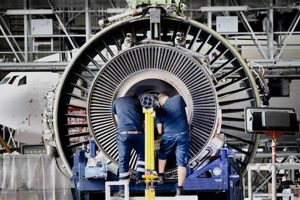
The axiom “Materials ensure integrity” constitutes a core tenet within the body of aerospace engineering facts. Material selection directly determines the structural performance, lifespan, and safety of aircraft and spacecraft components. The integrity of materials, characterized by properties such as strength, stiffness, fatigue resistance, and thermal stability, is paramount for withstanding the extreme conditions encountered during flight and space travel. A direct correlation exists between material properties and the ability of a component to perform its intended function without failure. Consider, for example, the application of titanium alloys in aircraft engine turbines. These alloys are selected due to their high strength-to-weight ratio and ability to maintain their mechanical properties at elevated temperatures. A failure in a turbine blade, resulting from material degradation or fatigue, can lead to catastrophic engine failure, underscoring the critical link between materials and structural integrity. The systematic selection and testing of materials therefore constitute a vital component of aerospace engineering practice.
Further illustration of this principle is found in the use of composite materials in aircraft fuselages and wings. Carbon fiber reinforced polymers (CFRPs) offer significant weight savings compared to traditional aluminum alloys, contributing to improved fuel efficiency and performance. However, the long-term durability and damage tolerance of these composites must be carefully evaluated to ensure structural integrity over the lifespan of the aircraft. Non-destructive testing methods, such as ultrasonic inspection and X-ray radiography, are employed to detect defects and assess the structural health of composite components. Similarly, the selection of materials for spacecraft structures requires consideration of factors such as radiation resistance and vacuum compatibility. The use of specialized polymers and coatings is essential to protect sensitive components from the harsh environment of space. These practical applications underscore the multifaceted nature of material selection and the constant need for innovation to meet the evolving demands of aerospace engineering.
In summary, the principle “Materials ensure integrity” is an indispensable element of aerospace engineering facts, directly impacting safety, performance, and mission success. Rigorous material selection, characterization, and testing are essential for mitigating risks and ensuring the long-term reliability of aircraft and spacecraft structures. Ongoing research into advanced materials, such as ceramic matrix composites and high-temperature alloys, promises to further enhance the capabilities and durability of aerospace vehicles. Overcoming the challenges associated with material degradation and failure requires a continuous commitment to innovation and a deep understanding of the fundamental principles governing material behavior.
4. Control maintains stability

The principle of “Control maintains stability” is fundamental within the defined body of aerospace engineering facts. This principle addresses the design and implementation of systems that ensure an aircraft or spacecraft remains in a desired orientation and trajectory, even when subject to external disturbances or internal variations. Its application involves a complex interplay of sensors, actuators, and control algorithms, all working in concert to maintain equilibrium and prevent uncontrolled deviations.
- Feedback Control Systems
Feedback control systems form the backbone of maintaining stability in aerospace vehicles. These systems utilize sensors to measure the vehicle’s orientation, position, and velocity, comparing these values to desired setpoints. Actuators, such as control surfaces on an aircraft or reaction wheels on a spacecraft, are then manipulated to correct any deviations. An example is the autopilot system in a commercial airliner, which continuously adjusts the control surfaces to maintain altitude, heading, and airspeed, even in turbulent conditions. The effectiveness of a feedback control system is quantified through metrics such as stability margins, response time, and steady-state error, all of which contribute to its factual performance characteristics.
- Stability Augmentation Systems (SAS)
Stability Augmentation Systems enhance the inherent stability of an aircraft, particularly in situations where the aircraft’s natural stability is insufficient. SAS typically employs rate gyros and accelerometers to detect deviations from the desired flight path, activating actuators to counteract these deviations. For instance, fly-by-wire aircraft often incorporate SAS to compensate for reduced inherent stability resulting from aerodynamic design choices. The factual contribution of SAS is measured by improvements in handling qualities and reduced pilot workload, verifiable through flight testing and pilot evaluations.
- Attitude Determination and Control Systems (ADCS) for Spacecraft
Attitude Determination and Control Systems are essential for maintaining the orientation of spacecraft in the vacuum of space. ADCS utilizes a suite of sensors, including star trackers, sun sensors, and inertial measurement units, to determine the spacecraft’s attitude. Actuators, such as reaction wheels, control moment gyros, and thrusters, are then used to adjust the spacecraft’s orientation. Consider a communication satellite that must maintain a precise pointing direction towards Earth to ensure uninterrupted signal transmission. The accuracy and reliability of the ADCS directly impact the satellite’s ability to perform its mission, reflecting factual performance parameters.
- Fault Tolerance and Redundancy
To ensure continued stability in the event of component failures, aerospace control systems often incorporate fault tolerance and redundancy. Redundant sensors and actuators provide backup capabilities if primary components fail. Fault detection and isolation algorithms identify and isolate faulty components, switching to redundant systems to maintain control. For example, an aircraft might have multiple independent flight control computers, each capable of taking over in case of a failure in another. The factual improvement in system reliability is quantified through probabilistic risk assessments and failure mode and effects analyses.
These interconnected facets highlight the critical role of control systems in maintaining stability in aerospace vehicles. The design, implementation, and verification of these systems are grounded in established aerospace engineering facts, with performance metrics and safety analyses providing objective evidence of their effectiveness. Continued advancements in control theory, sensor technology, and actuator design are driving ongoing improvements in the stability and control of aircraft and spacecraft, expanding the realm of what is possible in aerospace engineering.
5. Systems Integration essential

Systems integration, as it pertains to verifiable knowledge within the sphere of aerospace engineering, underscores the necessity of harmonizing disparate components into a cohesive and functional whole. It represents more than a mere assembly process; it embodies a systematic methodology for ensuring interoperability, reliability, and performance across an entire system. This practice is indispensable for the success of any aerospace endeavor, from the design and construction of aircraft to the deployment and operation of satellites.
- Interoperability of Avionics Systems
Avionics systems, encompassing communication, navigation, flight control, and electronic warfare capabilities, must seamlessly integrate to provide pilots with comprehensive situational awareness and control. For example, integrating a GPS receiver with an inertial navigation system allows for precise position determination, even in the absence of GPS signals. Proper systems integration ensures that data is exchanged accurately and efficiently between these systems, preventing conflicts and maximizing performance. Discrepancies in data formats or communication protocols can lead to critical failures, emphasizing the need for rigorous testing and validation.
- Power and Thermal Management Integration
Aerospace vehicles require robust power and thermal management systems to operate reliably under extreme conditions. Integrating power generation, distribution, and storage components with thermal control systems is crucial for maintaining optimal operating temperatures and preventing overheating or energy depletion. Consider a spacecraft operating in the vacuum of space, where heat dissipation is primarily achieved through radiation. Integrating thermal control coatings and heat pipes is essential for managing the heat generated by electronic components and ensuring their continued functionality. Inadequate thermal management can lead to component failure and mission degradation.
- Structural and Mechanical Integration
The structural and mechanical components of an aerospace vehicle must be carefully integrated to withstand aerodynamic loads, vibration, and other stresses encountered during flight or space travel. Integrating the fuselage, wings, and propulsion system requires precise alignment and secure fastening to ensure structural integrity. Finite element analysis and wind tunnel testing are employed to validate the structural design and identify potential weaknesses. Improper integration can lead to structural failure and catastrophic loss of the vehicle. An understanding of loads and load paths is crucial.
- Software and Hardware Integration
Modern aerospace systems rely heavily on software to control various functions, from flight control and navigation to payload management and data processing. Integrating software with hardware requires careful attention to compatibility, timing, and error handling. Real-time operating systems (RTOS) are often used to ensure deterministic execution and prevent timing conflicts. Thorough testing and validation are essential to identify and correct software bugs that could compromise system performance or safety. The space shuttle software serves as a prime example of a system requiring an incredible level of integration.
These examples, grounded in established aerospace engineering facts, highlight the critical role of systems integration in ensuring the reliability, performance, and safety of aerospace vehicles. Neglecting any aspect of integration can have severe consequences, underscoring the need for a holistic and systematic approach to aerospace engineering design and development. Further innovations in model-based systems engineering, digital twins, and artificial intelligence are expected to play an increasingly important role in streamlining the systems integration process and reducing the risk of errors.
Frequently Asked Questions
The following section addresses common inquiries and clarifies established knowledge regarding the field of aerospace engineering. The responses are intended to provide concise and accurate information based on verifiable data and principles.
Question 1: What are the core disciplines encompassed by aerospace engineering?
Aerospace engineering integrates multiple engineering disciplines, including aerodynamics, propulsion, structures, materials science, and control systems. These disciplines are applied to the design, development, and testing of aircraft and spacecraft.
Question 2: How does aerodynamics contribute to flight?
Aerodynamics governs the interaction of air with moving objects, influencing lift, drag, and stability. Aerodynamic principles dictate the shape of wings, control surfaces, and fuselages to optimize flight performance and efficiency.
Question 3: What types of propulsion systems are used in aerospace vehicles?
Aerospace propulsion systems range from air-breathing engines, such as turbojets and turbofans, to rocket engines that operate in the vacuum of space. The selection of a specific propulsion system depends on the mission requirements and operating environment.
Question 4: Why are advanced materials critical in aerospace engineering?
Advanced materials, such as titanium alloys, composite materials, and ceramics, offer high strength-to-weight ratios and resistance to extreme temperatures and stresses. These properties are essential for ensuring structural integrity and optimizing performance.
Question 5: How do control systems maintain stability in aerospace vehicles?
Control systems employ sensors, actuators, and algorithms to maintain stability and control the orientation and trajectory of aircraft and spacecraft. Feedback control systems continuously monitor and adjust vehicle parameters to counteract disturbances and achieve desired flight paths.
Question 6: What is the significance of systems integration in aerospace engineering?
Systems integration ensures that all components of an aerospace vehicle function cohesively and reliably. This process involves careful coordination of hardware, software, and communication protocols to achieve optimal performance and prevent malfunctions.
The information presented in these frequently asked questions serves as a foundation for understanding key concepts in aerospace engineering. Further exploration of specific topics may be necessary for a more comprehensive understanding.
The following section transitions to a discussion of future trends and challenges in aerospace engineering.
Conclusion
This article has explored foundational aerospace engineering facts, emphasizing the critical role of aerodynamics, propulsion, materials, control systems, and systems integration. These elements form the bedrock upon which all aerospace endeavors are built. Disregarding any of these facts will lead to diminished performance and potential system compromise.
As aerospace technology continues to evolve, a firm grounding in these fundamental principles remains essential for driving innovation and ensuring the safety and efficacy of future aircraft and spacecraft. Continued adherence to these core “aerospace engineering facts” is imperative for the advancement and responsible development of the field.