Aerospace engineering encompasses a multitude of specialized fields focused on the design, development, testing, and production of aircraft and spacecraft. These distinct areas of concentration address specific aspects of flight and space travel, each requiring unique skill sets and knowledge bases. For example, one area concentrates on the structure and materials used in airframes, while another specializes in the propulsion systems that power these vehicles.
The segregation of aerospace expertise into these defined concentrations allows for focused innovation and optimized performance. This specialization contributes to increased safety, efficiency, and technological advancement in both atmospheric and space environments. Historically, this division of labor has been essential to overcoming the complex challenges associated with flight, leading to groundbreaking achievements in aviation and space exploration.
The subsequent sections will delve into several key concentrations within this expansive field, including aerodynamics, propulsion, structures, control systems, and avionics. These disciplines represent fundamental pillars of aerospace expertise and will be examined in detail to provide a comprehensive overview.
Selecting a specialization within the aerospace field requires careful consideration. Aligning personal interests with career goals is crucial for long-term professional satisfaction and success.
Tip 1: Explore Core Fundamentals: Before committing to a specific specialization, establish a strong foundation in fundamental aerospace principles. A thorough understanding of aerodynamics, propulsion, and structures provides a comprehensive perspective, aiding informed decision-making.
Tip 2: Research Emerging Technologies: Stay abreast of technological advancements within various specializations. Fields like autonomous systems, advanced materials, and sustainable propulsion are rapidly evolving and offer significant career potential. Actively monitor industry publications and attend relevant conferences.
Tip 3: Consider Interdisciplinary Applications: Recognize the interconnectedness of the various specializations. Opportunities often arise at the intersection of disciplines, such as the application of advanced control systems to improve propulsion efficiency. Broadening one’s skill set increases versatility and problem-solving capabilities.
Tip 4: Seek Mentorship: Connect with experienced professionals within the area of interest. Mentors can provide invaluable insights into career paths, industry trends, and the challenges and rewards associated with specific specializations. Networking through professional organizations is a valuable resource.
Tip 5: Pursue Relevant Projects and Internships: Practical experience is essential for solidifying theoretical knowledge and demonstrating competence. Seek out projects and internships that align with the desired specialization, providing opportunities to apply skills and gain hands-on experience.
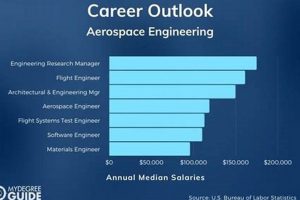
Tip 6: Evaluate Long-Term Career Prospects: Research the projected job market outlook for different specializations. Consider factors such as industry growth, technological disruption, and government funding priorities to make informed decisions about long-term career stability and advancement opportunities.
Strategic specialization, grounded in a strong foundational knowledge base and guided by informed research and practical experience, sets the stage for a successful and fulfilling career in the aerospace sector. Proactive engagement with emerging technologies and a commitment to continuous learning are essential for navigating the dynamic landscape of this field.
The following sections will delve into the broader implications and future trends impacting the selected field, providing a comprehensive perspective on the evolving aerospace landscape.
1. Aerodynamics

Aerodynamics, a foundational concentration within aerospace engineering, investigates the motion of air and other gaseous fluids, and how these forces interact with objects. Its applications are pervasive, shaping the design and operational characteristics of both aircraft and spacecraft.
- Lift Generation
Lift, the force that counteracts gravity, is critically dependent on aerodynamic principles. Airfoil design, a core element of aerodynamics, manipulates airflow to create a pressure differential, generating lift. Aircraft wings are prime examples, meticulously shaped to maximize lift for efficient flight. Understanding lift is crucial for determining aircraft size, speed, and overall performance characteristics within the overall design. Without proper consideration to lift generation from aerodynamic perspective, the entire engineering operation could be a huge waste of resources.
- Drag Reduction
Drag, the resistance an object encounters as it moves through a fluid, directly impacts fuel consumption and speed. Aerodynamic design seeks to minimize drag through streamlining and surface treatments. Winglets on aircraft, for instance, reduce induced drag caused by wingtip vortices. Reducing drag is the only way to boost the performance of any aerial or space machine, where power efficiency is crucial to prolong machine operation.
- Stability and Control
Aerodynamic forces are crucial for maintaining stability and controlling aircraft movement. Control surfaces, such as ailerons, elevators, and rudders, alter airflow to induce desired changes in pitch, roll, and yaw. Careful aerodynamic analysis is essential to ensure stable flight characteristics and responsive control. Without a properly integrated stability and control, there is a high chance that the aerospace machine will be out of control, leading to danger and material waste.
- Supersonic and Hypersonic Flow
Aerodynamics extends beyond subsonic speeds, addressing the complexities of supersonic and hypersonic flight. Shock waves, thermal effects, and compressibility become significant factors at these speeds. The design of supersonic aircraft and spacecraft requires specialized aerodynamic considerations to manage these phenomena. Aerodynamic principles on supersonic and hypersonic flow will improve the overall flight performance as well as durability of aerospace machines.
The examples above shows aerodynamics is not merely a theoretical discipline but a practical necessity. Its principles are directly applicable to every facet of aerospace engineering. Continuous advancements in computational fluid dynamics and wind tunnel testing continue to refine the understanding and application of aerodynamic principles, driving innovation and pushing the boundaries of flight.
2. Propulsion

Propulsion, an indispensable area within aerospace engineering, focuses on the generation of thrust to propel aircraft and spacecraft. The effective and efficient operation of any vehicle within or beyond the Earth’s atmosphere relies directly on the capabilities of its propulsion system. The design, development, and implementation of these systems are core responsibilities of aerospace engineers specializing in this area. Without propulsion nothing happens, since machines will stay idle on the ground.
The cause-and-effect relationship between propulsion advancements and progress in aerospace is readily apparent. The development of the jet engine revolutionized air travel, enabling higher speeds and longer distances. Similarly, rocket propulsion systems were essential for achieving spaceflight and exploring the solar system. The ongoing quest for more efficient, powerful, and sustainable propulsion technologies drives continued innovation in the field. Electric propulsion for satellites, for example, offers increased efficiency and lifespan compared to traditional chemical propulsion. Alternative fuel sources can also improve machine operation.
Understanding propulsion principles is critically important for all aerospace engineers, regardless of their specific specialization. Aerodynamicists must consider how the engine interacts with the airflow around the aircraft. Structural engineers must account for the stresses induced by the engine’s operation. Control systems engineers must integrate engine control with overall aircraft stability. Continued challenges in propulsion include reducing emissions, improving fuel efficiency, and developing systems capable of operating in extreme environments.
3. Structures

Within aerospace engineering, the study of structures constitutes a critical specialization, addressing the design, analysis, and integrity of airframes and spacecraft. This area is fundamental to ensuring the safety and performance of aerospace vehicles, necessitating a deep understanding of material properties, load distribution, and structural mechanics.
- Stress Analysis and Finite Element Methods
Stress analysis is essential for predicting how structural components respond to applied loads, including aerodynamic forces, engine thrust, and gravitational effects. Finite element methods (FEM) are employed to simulate these stresses, allowing engineers to identify potential failure points and optimize designs for strength and weight. Aircraft wings, fuselage sections, and engine mounts undergo rigorous FEM analysis. Proper FEM analysis is essential for maintaining aircraft integrity.
- Material Selection and Testing
The selection of appropriate materials is crucial to structural performance. Aerospace structures utilize a range of materials, including aluminum alloys, titanium, composites, and advanced ceramics. Material testing, encompassing tensile strength, fatigue resistance, and fracture toughness, validates material properties and ensures structural integrity under operational conditions. Selecting proper material is essential for designing a machine. Each has benefits and short comings.
- Structural Health Monitoring
Structural health monitoring (SHM) employs sensors and data analysis techniques to detect damage or degradation in real-time. SHM systems can identify cracks, corrosion, or other structural anomalies before they lead to catastrophic failures. Applications include monitoring aircraft wings for fatigue cracks and detecting damage to composite structures following impact events. Regular monitoring can also improve flight performance.
- Aeroelasticity and Flutter Analysis
Aeroelasticity studies the interaction between aerodynamic forces, elastic deformation, and inertial forces on aircraft structures. Flutter, a self-excited oscillation caused by this interaction, can lead to structural failure. Flutter analysis is essential for ensuring that aircraft structures remain stable and do not experience uncontrolled oscillations within the operating flight envelope.
The aspects of structural design and analysis highlight the importance of this specialization within the wider field of aerospace engineering. By ensuring the integrity and reliability of aerospace structures, engineers contribute directly to the safety and efficiency of air and space travel, advancing the capabilities of modern aerospace technology.
4. Control Systems

Control systems constitute a critical specialization within aerospace engineering, focusing on the design, implementation, and optimization of systems that govern the behavior of aircraft and spacecraft. Their role is paramount in ensuring stability, maneuverability, and overall performance across a spectrum of operational conditions. The effectiveness of these systems directly impacts safety and mission success.
- Flight Control Systems
Flight control systems manage aircraft attitude and trajectory. These systems employ sensors, actuators, and sophisticated algorithms to maintain stability and execute pilot commands. Examples include fly-by-wire systems in modern aircraft, which replace mechanical linkages with electronic signals, improving responsiveness and reducing pilot workload. In the context of aerospace engineering, flight control system advancements enable the development of more agile and efficient aircraft.
- Guidance, Navigation, and Control (GNC) Systems
GNC systems are essential for spacecraft and missiles, directing vehicles to their intended destinations. These systems integrate sensors (e.g., inertial measurement units, GPS receivers, star trackers), processors, and actuators to determine position, orientation, and velocity, and to execute corrective maneuvers. GNC systems are critical for missions ranging from satellite deployment to interplanetary exploration. Within aerospace concentrations, GNC drives innovation in autonomous navigation and precision targeting.
- Engine Control Systems
Engine control systems regulate engine performance parameters, such as thrust, fuel flow, and air intake, to optimize efficiency and maintain safe operating conditions. These systems utilize feedback control loops and sophisticated algorithms to respond to changing environmental conditions and pilot demands. Full Authority Digital Engine Control (FADEC) systems, common in modern aircraft engines, provide precise control and enhance fuel efficiency. Engine control refinement is a critical pursuit in aerospace development.
- Autonomous Control Systems
Autonomous control systems enable aircraft and spacecraft to operate without direct human intervention. These systems employ artificial intelligence, machine learning, and advanced sensor fusion to make decisions and execute actions autonomously. Examples include autopilots, unmanned aerial vehicles (UAVs), and self-landing spacecraft. Autonomous control represents a frontier in aerospace innovation, promising increased efficiency, reduced risk, and expanded mission capabilities.
The previously mentioned facets highlight the centrality of control systems to the various sub-disciplines within aerospace engineering. The continuous evolution of control systems technology, driven by advancements in computing power, sensor technology, and algorithmic design, fuels innovation in aerospace vehicles and missions, expanding the boundaries of flight and space exploration.
5. Avionics

Avionics, an abbreviation for aviation electronics, represents a critical branch within aerospace engineering. It encompasses the electronic systems used on aircraft, satellites, and spacecraft, forming an integral component of their operation and control. The effective integration and performance of avionics systems directly influence the overall safety, efficiency, and mission capabilities of aerospace vehicles.
The interconnectedness of avionics with other concentrations within aerospace engineering is readily apparent. For instance, flight control systems, a sub-discipline of avionics, rely on sensors, processors, and actuators to maintain stability and execute pilot commands. Similarly, navigation systems, another facet of avionics, provide crucial positional data for guidance and trajectory management. The development of advanced avionics systems has enabled innovations such as fly-by-wire technology in aircraft and autonomous navigation in spacecraft. Commercial airliners employ sophisticated avionics suites for flight management, weather monitoring, and communication, while satellites utilize specialized avionics for data acquisition, transmission, and orbital control.
In conclusion, avionics forms an indispensable element within the broader aerospace engineering landscape. Its integration with other concentrations, such as aerodynamics, propulsion, and control systems, is essential for the safe and efficient operation of modern aircraft and spacecraft. Continuous advancements in microelectronics, sensor technology, and software engineering drive the evolution of avionics, pushing the boundaries of aerospace capabilities and enabling new frontiers in air and space exploration. Challenges persist in ensuring the reliability, security, and interoperability of increasingly complex avionics systems.
6. Materials

Materials engineering stands as a cornerstone within the diverse specializations of aerospace engineering. The selection, development, and application of materials are pivotal to the performance, safety, and longevity of aircraft and spacecraft. The harsh environments encountered in flight, both atmospheric and exoatmospheric, demand materials capable of withstanding extreme temperatures, pressures, radiation, and mechanical stresses. Therefore, advancements in materials science directly enable progress across all branches of aerospace engineering, from aerodynamics to propulsion and structural design.
Consider the impact of materials on aircraft structures. The transition from wood and fabric to aluminum alloys significantly improved aircraft speed, range, and payload capacity. Similarly, the introduction of composite materials, such as carbon fiber reinforced polymers, allowed for even lighter and stronger airframes, enabling greater fuel efficiency and maneuverability. In space exploration, the use of heat-resistant materials, like ceramic tiles on the Space Shuttle, was essential for protecting spacecraft during atmospheric re-entry. Nickel-based superalloys are integral to the operation of jet engines, withstanding the extreme temperatures and stresses within the combustion chamber. Such examples underscore the cause-and-effect relationship between materials innovations and the capabilities of aerospace vehicles. Therefore, the study of new materials is crucial for further advancements in the aerospace field.
The ongoing research and development in materials science promise to further revolutionize aerospace engineering. Nanomaterials, shape memory alloys, and self-healing materials hold the potential to create lighter, stronger, and more durable aerospace components. The integration of these advanced materials will facilitate the design of more efficient aircraft, spacecraft capable of withstanding harsher environments, and propulsion systems with improved performance characteristics. However, challenges remain in the cost-effective production and reliable application of these materials. Addressing these challenges will be instrumental in unlocking the full potential of advanced materials and realizing the next generation of aerospace technologies. Understanding the interaction of these materials with different environments is key to building successful aerospace machines.
7. Space Systems
Space systems engineering integrates numerous specialized concentrations to facilitate the design, development, and operation of vehicles and infrastructure intended for use beyond Earth’s atmosphere. This field necessitates a holistic approach, drawing upon diverse expertise within the broader context of aerospace engineering to address the unique challenges of the space environment.
- Orbital Mechanics and Trajectory Design
Orbital mechanics, rooted in celestial mechanics and astrodynamics, dictates spacecraft motion under gravitational forces. Trajectory design involves calculating optimal paths for spacecraft to reach desired destinations, considering factors such as fuel consumption, mission duration, and planetary alignment. For example, the trajectory of the Mars rovers required precise calculations to achieve efficient transfer orbits and safe landing profiles. Within the aerospace concentrations, trajectory design requires a strong understanding of propulsion systems and control systems to execute the necessary maneuvers.
- Satellite Communication Systems
Satellite communication systems facilitate data transmission and reception between Earth-based stations and orbiting spacecraft. These systems rely on radio frequency technology, antenna design, and signal processing techniques to ensure reliable communication links. The Global Positioning System (GPS) exemplifies the capabilities of satellite communication, providing precise location data to users worldwide. Aerospace concentrations relating to avionics, signal processing, and communications engineering are central to developing and maintaining satellite communication infrastructure.
- Spacecraft Power Systems
Spacecraft power systems provide the electrical energy necessary for all onboard functions, including communication, navigation, and scientific instrumentation. Solar panels are a common power source, converting sunlight into electricity, while batteries store energy for use during periods of eclipse. Radioisotope thermoelectric generators (RTGs) are employed for missions to distant planets where solar energy is limited. These power systems illustrate the dependence of space systems on electrical, chemical, and potentially nuclear engineering. A deep understanding of material sciences is also important, for example, the study of how radiation may damage material and decrease power generation.
- Environmental Control and Life Support Systems (ECLSS)
ECLSS are critical for manned space missions, providing habitable environments for astronauts. These systems regulate temperature, pressure, atmosphere composition, and waste management to ensure crew survival and well-being. The International Space Station (ISS) exemplifies the complexity of ECLSS, requiring sophisticated systems for air revitalization, water recycling, and food production. Aerospace concentrations in mechanical engineering, chemical engineering, and biomedical engineering are essential for the design and operation of ECLSS. These aspects are vital for the survival of space explorers.
The successful implementation of space systems hinges on the seamless integration of diverse engineering specialties. Orbital mechanics, satellite communication, spacecraft power, and ECLSS are just a few examples illustrating the breadth of expertise required. Acknowledging the interconnectedness of these fields is crucial for the continued advancement of space exploration and the realization of ambitious space-based missions.
Frequently Asked Questions
The following questions address common inquiries regarding specializations within the field of aerospace engineering, providing clarity on career paths, required skills, and industry trends.
Question 1: What are the primary concentrations within aerospace engineering?
Aerospace engineering encompasses several key specializations, including aerodynamics, propulsion, structures, control systems, avionics, materials science, and space systems engineering. Each area focuses on distinct aspects of aircraft and spacecraft design, development, and operation.
Question 2: How does one choose a specific area of focus?
Selection of a specialization should align with individual interests and career goals. A strong foundation in fundamental aerospace principles is essential, along with awareness of emerging technologies and interdisciplinary opportunities. Seeking mentorship and gaining practical experience through projects and internships can also inform this decision.
Question 3: Is advanced mathematics essential for success?
A strong foundation in mathematics, including calculus, differential equations, and linear algebra, is crucial for comprehending the underlying principles of aerodynamics, propulsion, and structural mechanics. While computational tools assist in analysis, a firm grasp of mathematical concepts remains essential for effective problem-solving.
Question 4: What role does computer programming play in aerospace?
Computer programming is increasingly important for tasks such as computational fluid dynamics (CFD), finite element analysis (FEA), and the development of control systems software. Proficiency in languages like Python, MATLAB, and C++ is beneficial for modeling, simulation, and data analysis.
Question 5: What are the career prospects for aerospace engineers?
Career opportunities exist in various sectors, including aerospace manufacturing, government research agencies, defense, and commercial space exploration. The demand for aerospace engineers is influenced by factors such as government funding, technological advancements, and industry growth, particularly in areas such as sustainable aviation and space exploration.
Question 6: How important is continued professional development?
Continuous learning is vital for staying current with technological advancements and maintaining professional competence. Pursuing advanced degrees, attending conferences, and engaging in professional organizations are valuable avenues for expanding knowledge and enhancing career prospects.
Understanding the diverse branches within aerospace engineering is paramount for aspiring professionals seeking to contribute to this dynamic and technologically advanced field. A focused approach, combining theoretical knowledge with practical experience, is key to achieving success.
The subsequent section will explore the impact of emerging technologies on the selected field, providing insights into the future of aerospace engineering.
Conclusion
The preceding discussion has illuminated the multifaceted landscape of “branches in aerospace engineering.” Aerodynamics, propulsion, structures, control systems, avionics, materials, and space systems represent distinct yet interconnected areas of specialization, each demanding focused expertise. The effective integration of these disciplines is essential for the advancement of aerospace technology and the realization of ambitious engineering objectives.
Continued progress within these specialized areas is critical for addressing emerging challenges and realizing future opportunities in aerospace. Further research, innovation, and collaboration are necessary to push the boundaries of flight, explore the vastness of space, and ensure the continued safety and efficiency of aerospace systems. The ongoing pursuit of knowledge and excellence within these branches will define the future of aerospace engineering and its impact on the world.