The trajectory one undertakes to acquire the skills, knowledge, and credentials necessary for a career designing, developing, and testing aircraft, spacecraft, satellites, and missiles involves a multifaceted educational and professional journey. It’s a progression marked by rigorous academic coursework, practical experience, and a commitment to continuous learning in the dynamic field of aerospace technology. For example, the route commonly begins with a strong foundation in mathematics and physics during secondary education, followed by specialized studies at the undergraduate and graduate levels.
Successfully navigating this course leads to impactful contributions to advancements in air travel, space exploration, national defense, and scientific research. Historically, the demand for qualified professionals in this sector has grown alongside the increasing complexity of aerospace systems and the expansion of space-related activities. The ability to innovate and problem-solve within this domain is crucial for maintaining technological superiority and addressing global challenges such as climate change and resource management.
Understanding the specific stages of academic preparation, the value of internships and research opportunities, the licensing and certification processes, and the evolving skill sets required by employers is essential for those aspiring to contribute to the future of aerospace engineering. The following sections will delve into these critical elements.
Achieving a successful career in aerospace engineering requires strategic planning and focused effort. These tips highlight key areas for aspiring professionals.
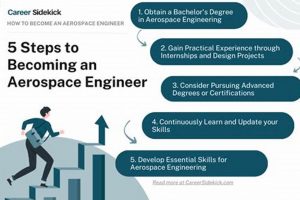
Tip 1: Develop a Strong Foundation in STEM: Excellence in mathematics, physics, and computer science is paramount. Rigorous coursework and independent study in these areas will provide a solid base for advanced aerospace engineering topics. For example, proficiency in calculus and differential equations is essential for understanding aerodynamics and propulsion systems.
Tip 2: Pursue a Bachelor’s Degree in Aerospace Engineering: A bachelor’s degree from an accredited program provides the core knowledge and skills required for entry-level positions. Select a program with a strong curriculum covering aerodynamics, propulsion, structures, and flight control. Many universities offer specialized tracks within aerospace engineering, such as astronautics or aeronautics.
Tip 3: Gain Practical Experience Through Internships: Internships with aerospace companies, government agencies, or research institutions offer invaluable hands-on experience. These opportunities allow one to apply theoretical knowledge to real-world problems, network with industry professionals, and gain a competitive edge in the job market. Consider internships focused on design, testing, or analysis.
Tip 4: Consider Graduate Studies for Specialization: A master’s degree or doctorate allows for specialization in a specific area of aerospace engineering, such as composite materials, space systems engineering, or computational fluid dynamics. Advanced degrees are often required for research and development positions or leadership roles. Select a graduate program that aligns with one’s career goals and research interests.
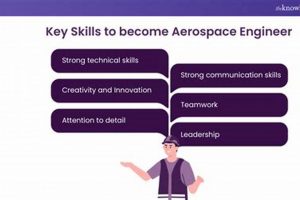
Tip 5: Develop Strong Communication Skills: Effective communication is crucial for collaborating with engineers, technicians, and stakeholders. Practice writing technical reports, presenting research findings, and participating in team discussions. Strong written and verbal communication skills are highly valued by employers.
Tip 6: Stay Current with Industry Trends: The aerospace industry is constantly evolving. Remain informed about new technologies, materials, and design methodologies through professional journals, conferences, and continuing education courses. Awareness of industry trends enables adaptability and innovation.
Tip 7: Obtain Relevant Certifications and Licenses: Certain aerospace engineering roles may require professional certifications or licenses. Research the specific requirements for one’s desired career path and pursue the necessary credentials. Professional Engineer (PE) licensure may be required for certain design and oversight roles.
Adhering to these suggestions will maximize opportunities and potential for success in the competitive field of aerospace engineering. Commitment to continuous learning is crucial for maintaining relevance in this dynamic field.
The ensuing sections will address specific career paths and future prospects within aerospace engineering.
1. Academic Foundation

A robust academic foundation serves as the bedrock for a successful trajectory in aerospace engineering. It provides the essential theoretical knowledge and analytical skills necessary to comprehend and address the complex challenges inherent in the design, development, and testing of aerospace systems. Without a solid grounding in fundamental principles, advanced concepts become inaccessible, hindering one’s ability to contribute meaningfully to the field.
- Mathematics Proficiency
A thorough understanding of calculus, differential equations, linear algebra, and statistics is paramount. These mathematical tools are used extensively in aerodynamics, structural analysis, control systems, and other core aerospace disciplines. For instance, calculus is essential for modeling fluid flow around an aircraft wing, while linear algebra is critical for analyzing the stability of flight control systems. Insufficient mathematical skills will limit the ability to analyze complex engineering problems and develop effective solutions.
- Physics Principles
A strong grasp of classical mechanics, thermodynamics, electromagnetism, and fluid dynamics is crucial. These principles govern the behavior of aerospace systems and are fundamental to understanding how aircraft and spacecraft function. For example, understanding Newton’s laws of motion is essential for analyzing the forces acting on an aircraft during flight, while knowledge of thermodynamics is required for designing efficient propulsion systems. Deficiencies in physics knowledge will impede the ability to design and optimize aerospace systems.
- Computer Science Fundamentals
Proficiency in programming languages such as Python, MATLAB, or C++ is increasingly important. These tools are used for computational modeling, simulation, data analysis, and control system development. For instance, computational fluid dynamics (CFD) software relies on programming to simulate airflow around an aircraft, while embedded systems in spacecraft require programming for autonomous control. Inadequate computer science skills will hinder the ability to leverage modern computational tools in aerospace engineering.
- Engineering Principles
Exposure to fundamental engineering concepts such as statics, dynamics, materials science, and circuit analysis provides a broad understanding of engineering problem-solving techniques. These principles are applied in the design and analysis of aerospace structures, electrical systems, and mechanical components. For example, understanding stress-strain relationships is crucial for designing lightweight yet robust aircraft structures, while knowledge of circuit analysis is necessary for designing avionics systems. A weakness in these foundational engineering principles will impair the ability to integrate and apply specialized aerospace knowledge.
In conclusion, a strong academic foundation, characterized by proficiency in mathematics, physics, computer science, and fundamental engineering principles, is not merely desirable but indispensable for anyone aspiring to a successful career in aerospace engineering. This foundation provides the essential tools and knowledge needed to comprehend complex aerospace concepts, solve challenging engineering problems, and contribute to advancements in the field. Lack of this robust base impedes one’s ability to progress along the path and reach full potential.
2. Specialized Coursework
The rigorous path toward becoming an aerospace engineer mandates a comprehensive curriculum in fundamental engineering principles, culminating in focused study within specialized areas. This specialized coursework provides the specific knowledge and skills necessary to address the complex challenges inherent in the design, development, and maintenance of aerospace systems. Its relevance is paramount, bridging the gap between theoretical foundations and practical application within the aerospace industry.
- Aerodynamics
Aerodynamics focuses on the study of air and its interaction with moving objects. This specialization provides the knowledge necessary to design efficient airfoils, analyze aircraft stability, and optimize flight performance. Coursework typically includes fluid mechanics, boundary layer theory, and computational fluid dynamics (CFD). For example, aerodynamic principles are critical in the design of aircraft wings to maximize lift and minimize drag, thereby improving fuel efficiency and overall aircraft performance. Mastery of aerodynamics is essential for any engineer involved in aircraft design or testing.
- Propulsion
Propulsion encompasses the study of systems that generate thrust to propel aircraft and spacecraft. This area covers a broad range of technologies, including jet engines, rocket engines, and electric propulsion systems. Coursework includes thermodynamics, combustion, and turbomachinery. The development of more efficient and environmentally friendly jet engines, for instance, relies heavily on advancements in propulsion technology and the understanding of combustion processes. Engineers specializing in propulsion play a vital role in improving the performance and sustainability of air and space travel.
- Aerospace Structures
Aerospace structures involves the design and analysis of airframe and spacecraft structures to withstand the extreme loads and environmental conditions encountered during flight. This specialization requires a deep understanding of materials science, stress analysis, and structural dynamics. Designing lightweight yet strong aircraft wings, capable of withstanding aerodynamic forces during flight, requires specialized knowledge of composite materials and structural analysis techniques. Engineers specializing in aerospace structures ensure the safety and reliability of aircraft and spacecraft.
- Flight Dynamics and Control
Flight dynamics and control focuses on the study of aircraft and spacecraft motion and the design of control systems to stabilize and guide them. This specialization includes coursework in control theory, system identification, and navigation. The development of autopilot systems, which autonomously control an aircraft’s flight path, relies on advanced control algorithms and a thorough understanding of flight dynamics. Engineers specializing in this area are crucial for ensuring the safe and efficient operation of aircraft and spacecraft.
The convergence of these specialized areas within aerospace engineering coursework provides a comprehensive preparation for navigating the complexities of the field. Each discipline, from aerodynamics to flight dynamics, contributes uniquely to the overarching goal of designing and operating safe, efficient, and innovative aerospace systems. The successful integration of these specialized skill sets is indispensable for aspiring aerospace engineers aiming to make substantial contributions to the industry.
3. Practical Experience
Gaining practical experience is an indispensable component of the journey toward becoming an aerospace engineer. It serves as the bridge connecting theoretical knowledge acquired through academic coursework with the real-world application of engineering principles. This hands-on involvement refines skills, fosters problem-solving capabilities, and cultivates a deeper understanding of the complexities inherent in the field.
- Internships in Aerospace Companies
Internships within established aerospace companies offer unparalleled opportunities to observe and participate in actual engineering projects. Roles may involve assisting in design, testing, or manufacturing processes, thereby providing exposure to industry standards and practices. For example, an intern might contribute to the design of an aircraft wing, working alongside experienced engineers and utilizing industry-standard software. These experiences translate directly into enhanced employability and a more informed career path.
- Research Assistantships in University Labs
Participating in research assistantships within university laboratories allows aspiring aerospace engineers to contribute to cutting-edge research projects. This involvement fosters critical thinking, data analysis, and problem-solving skills. An individual might assist in developing new composite materials for aircraft structures or in simulating aerodynamic performance using computational fluid dynamics. Research experience strengthens academic credentials and provides a foundation for graduate studies.
- Capstone Projects with Industry Partners
Many aerospace engineering programs culminate in capstone projects, often conducted in collaboration with industry partners. These projects provide a platform for students to apply their collective knowledge to solve real-world engineering problems. For instance, a team of students might design and build a small unmanned aerial vehicle (UAV) for a specific application, such as aerial surveying or environmental monitoring. Successful completion of a capstone project demonstrates competency and practical skill application.
- Engineering Competitions and Design Challenges
Participating in engineering competitions and design challenges offers a competitive environment to apply engineering principles and test design solutions. These events often involve designing, building, and testing aerospace-related systems, such as rockets, aircraft, or satellites. An example is the SAE Aero Design competition, where students design and build remote-controlled aircraft to meet specific performance requirements. Competition experience fosters teamwork, innovation, and a practical understanding of design constraints.
In summary, practical experience, whether gained through internships, research assistantships, capstone projects, or engineering competitions, is vital for aspiring aerospace engineers. These experiences not only enhance technical skills but also cultivate essential professional attributes, preparing individuals for the multifaceted demands of a career in the aerospace industry.
4. Advanced Education
Advanced education, typically pursued through master’s or doctoral degrees, is a significant accelerant along the trajectory to becoming an aerospace engineer, particularly for those seeking roles in research, development, and specialized engineering functions. While a bachelor’s degree provides a foundational understanding of aerospace principles, advanced studies cultivate specialized knowledge and research capabilities necessary for innovation. The cause-and-effect relationship is direct: focused graduate-level coursework and research opportunities lead to expertise that distinguishes candidates in a competitive job market. This advanced training provides the skills needed to address the intricate challenges encountered in the design, analysis, and optimization of aerospace systems. For example, an engineer with a master’s degree specializing in computational fluid dynamics may be better equipped to model and simulate airflow around complex aircraft geometries, leading to improved aerodynamic performance.
The practical significance of advanced education extends beyond theoretical understanding. Graduate programs often involve research projects that contribute to the advancement of aerospace technology. These projects can range from developing new materials for spacecraft to designing autonomous control systems for unmanned aerial vehicles. The skills acquired through these research endeavors, such as data analysis, experimental design, and technical writing, are highly valued by employers. Furthermore, advanced degrees can open doors to leadership roles and opportunities for career advancement within aerospace organizations. Real-world examples include engineers with doctoral degrees leading research teams at NASA or serving as chief engineers at aerospace manufacturing companies. These individuals leverage their expertise to drive innovation and shape the future of the aerospace industry.
In summary, advanced education serves as a catalyst for accelerating career advancement within aerospace engineering. While a bachelor’s degree establishes a foundational understanding, postgraduate studies provide the specialized knowledge, research skills, and professional network necessary for tackling complex engineering challenges and assuming leadership positions. The challenges associated with pursuing advanced education, such as financial constraints and time commitments, are often outweighed by the long-term benefits, including enhanced career prospects and the opportunity to contribute meaningfully to the advancement of aerospace technology. This underscores the critical role that advanced education plays in shaping the future trajectory of aspiring aerospace engineers and the industry as a whole.
5. Professional Network

Cultivating a professional network is an instrumental, albeit often understated, element in traversing the path toward becoming an aerospace engineer. It extends beyond mere social interaction, representing a strategic assemblage of connections that can significantly influence career progression and opportunities within the field. These networks serve as conduits for mentorship, knowledge exchange, and access to otherwise unavailable resources.
- Mentorship and Guidance
Established professionals within the aerospace industry offer invaluable mentorship and guidance to aspiring engineers. Senior engineers or researchers can provide insights into career paths, offer advice on technical challenges, and provide crucial feedback on project work. For instance, a connection made at an industry conference may lead to a mentorship opportunity with an experienced engineer who can provide guidance on navigating the complexities of aircraft design or spacecraft propulsion systems. This mentorship accelerates learning and enhances one’s ability to make informed career decisions.
- Knowledge Exchange and Collaboration
Professional networks facilitate the exchange of technical knowledge and foster collaboration on engineering projects. Engaging with peers, professors, and industry experts allows for the dissemination of innovative ideas and best practices. For example, participation in professional organizations like the American Institute of Aeronautics and Astronautics (AIAA) provides access to technical conferences, workshops, and publications, fostering a collaborative environment where engineers can share their research findings and learn from others. Such collaboration is crucial for solving complex aerospace engineering problems.
- Access to Job Opportunities
A well-developed professional network significantly enhances access to job opportunities within the aerospace industry. Networking events, industry conferences, and online platforms like LinkedIn provide opportunities to connect with recruiters and hiring managers. A recommendation from a trusted contact within a company can significantly increase one’s chances of securing an interview. For instance, a connection made during an internship may lead to a full-time job offer upon graduation. These connections provide a distinct advantage in a competitive job market.
- Industry Insights and Trend Awareness
Active participation in a professional network allows for the acquisition of valuable industry insights and awareness of emerging trends. Engaging with industry professionals provides a firsthand perspective on technological advancements, market demands, and regulatory changes. For instance, attending industry seminars or participating in online forums allows one to stay informed about the latest developments in areas such as sustainable aviation, space exploration, and autonomous systems. This awareness is essential for adapting to the evolving demands of the aerospace industry and maintaining a competitive edge.
The multifaceted benefits derived from a strong professional network directly contribute to the successful navigation of the aerospace engineering career path. From gaining invaluable mentorship to accessing exclusive job opportunities and staying abreast of industry trends, a well-cultivated network serves as an essential tool for career advancement and professional development within this dynamic field. Ignoring the cultivation of a strong professional network is at one’s own peril.
6. Industry Knowledge

Acquiring comprehensive industry knowledge is not merely advantageous, but rather a fundamental prerequisite for effectively navigating the path toward becoming an aerospace engineer. This knowledge encompasses a deep understanding of current trends, technological advancements, regulatory landscapes, and competitive dynamics that define the aerospace sector. It is the lens through which theoretical concepts are translated into practical applications and innovative solutions.
- Technological Advancements
Staying abreast of technological advancements is essential for aerospace engineers. This includes understanding innovations in materials science, propulsion systems, avionics, and manufacturing processes. For example, knowledge of composite materials and additive manufacturing techniques allows engineers to design lighter and stronger aircraft structures, enhancing performance and fuel efficiency. An aerospace engineer lacking awareness of these advancements risks designing outdated or inefficient systems. Understanding how emerging technologies intersect is key.
- Regulatory Landscape
The aerospace industry is heavily regulated to ensure safety and compliance with environmental standards. Aerospace engineers must possess a thorough understanding of these regulations, including airworthiness requirements, emissions standards, and safety protocols. For example, engineers involved in aircraft design must adhere to strict Federal Aviation Administration (FAA) guidelines to obtain certification for their designs. Ignorance of these regulations can lead to costly design flaws and project delays and can even compromise safety. Navigating the complex regulatory web ensures projects remain compliant and viable.
- Competitive Dynamics
The aerospace industry is characterized by intense competition among companies vying for market share and technological leadership. Understanding the competitive landscape is crucial for aerospace engineers to identify opportunities for innovation and differentiation. For example, an engineer working on a new aircraft engine might need to consider the performance characteristics and cost-effectiveness of competing engines from other manufacturers. A lack of awareness of the competitive environment can lead to the development of products that are uncompetitive or fail to meet market demands. Engineers must be innovative and competitive for new ideas.
- Supply Chain Management
Aerospace projects often involve complex global supply chains, requiring engineers to understand the intricacies of sourcing materials, components, and services from various suppliers. Knowledge of supply chain management principles enables engineers to optimize logistics, reduce costs, and mitigate risks. For instance, an engineer might need to assess the reliability and capacity of different suppliers of specialized aerospace-grade alloys. A failure to consider supply chain factors can lead to project delays, cost overruns, and quality issues. A smooth path forward is insured by a strong supply chain.
In conclusion, the integration of comprehensive industry knowledge into the skill set of an aspiring aerospace engineer is paramount. This knowledge base enables the translation of theoretical expertise into practical, innovative solutions that meet the evolving demands of the aerospace sector. The acquisition of this insight is not a passive process, but rather an ongoing commitment to learning and adapting to the dynamic forces shaping the industry’s future. Only by possessing this holistic understanding can an engineer truly contribute to the advancement and success of aerospace endeavors.
7. Continuous Learning
The aerospace engineering landscape is characterized by relentless innovation and technological evolution, creating a direct causal relationship between continuous learning and sustained professional relevance. The field’s reliance on cutting-edge materials, advanced propulsion systems, and sophisticated avionics demands an unwavering commitment to staying abreast of the latest developments. Failure to engage in continuous learning results in professional obsolescence and limits the capacity to contribute meaningfully to aerospace projects. The path of an aerospace engineer is therefore inextricably linked to an ongoing process of skill enhancement and knowledge acquisition. For example, the integration of additive manufacturing into aerospace component production necessitates that engineers actively learn new design principles and manufacturing techniques, lest they be limited to traditional methodologies.
Furthermore, the practical significance of continuous learning manifests in the ability to adapt to evolving industry standards and regulatory requirements. Aerospace engineers are responsible for ensuring the safety and reliability of aircraft and spacecraft, requiring a thorough understanding of current airworthiness regulations and certification processes. Changes in these regulations, driven by advancements in technology and lessons learned from past incidents, mandate constant engagement with industry publications, professional organizations, and continuing education programs. An engineer involved in aircraft design, for instance, must remain informed about the latest FAA directives regarding composite materials and structural integrity to ensure compliance with safety standards. Ignoring these changes can lead to design flaws, project delays, and, most critically, compromise the safety of aircraft and passengers.
In summary, continuous learning is not merely a desirable attribute but a fundamental requirement for a successful and impactful career as an aerospace engineer. The dynamic nature of the industry demands a proactive approach to acquiring new knowledge and skills, ensuring that engineers remain competent, innovative, and capable of addressing the complex challenges of aerospace design, development, and operation. While the commitment to lifelong learning presents challenges, such as time constraints and resource limitations, the potential benefits in terms of career advancement and contribution to the field far outweigh the obstacles. The aerospace engineer’s journey is, therefore, a continuous loop of education, application, and adaptation.
Frequently Asked Questions
This section addresses common inquiries regarding the educational and professional trajectory toward a career in aerospace engineering. The information provided aims to clarify misconceptions and offer guidance for aspiring professionals.
Question 1: What is the minimum educational requirement for entry into the aerospace engineering field?
A bachelor’s degree in aerospace engineering, or a closely related field such as mechanical engineering with a focus on aerospace, is generally the minimum requirement for entry-level positions. This degree provides the foundational knowledge necessary for understanding aerospace principles and design methodologies.
Question 2: Is a master’s degree necessary for career advancement in aerospace engineering?
While not always mandatory for initial employment, a master’s degree is often advantageous for career advancement, particularly for roles in research and development or specialized engineering functions. Advanced studies provide specialized knowledge and research capabilities that are highly valued by employers.
Question 3: What are the key skills that aerospace employers seek in job applicants?
Aerospace employers typically seek candidates with strong analytical and problem-solving skills, a solid understanding of aerospace principles, proficiency in computer-aided design (CAD) software, and effective communication skills. Practical experience through internships or research projects is also highly valued.
Question 4: How important are internships in gaining employment as an aerospace engineer?
Internships are highly important for gaining employment in the aerospace industry. They provide opportunities to apply theoretical knowledge to real-world problems, develop practical skills, and network with industry professionals. Many employers use internships as a pipeline for recruiting full-time employees.
Question 5: Are there specific certifications or licenses that aerospace engineers should pursue?
While not always required, professional certifications, such as the Professional Engineer (PE) license, can enhance career prospects, particularly for engineers involved in design and oversight roles. Other certifications related to specific areas of expertise, such as project management or systems engineering, may also be beneficial.
Question 6: What are the typical career paths available to aerospace engineers?
Aerospace engineers can pursue a variety of career paths, including roles in aircraft design, spacecraft development, propulsion systems, flight testing, and research. Opportunities exist in government agencies, aerospace manufacturers, research institutions, and consulting firms.
The aerospace engineering field demands a comprehensive skill set, combining theoretical knowledge with practical experience and a commitment to continuous learning. Aspiring professionals should focus on building a strong academic foundation, gaining relevant experience, and cultivating a professional network.
The subsequent section will delve into the future outlook for the aerospace engineering profession, considering emerging trends and technological advancements.
Conclusion
The preceding sections have comprehensively explored the “path to becoming an aerospace engineer,” delineating the essential academic preparation, practical experience, and professional development required for success. Key elements encompass a robust foundation in STEM disciplines, specialized coursework in core aerospace areas, hands-on experience through internships and research, advanced education for specialized expertise, the cultivation of a strong professional network, comprehensive industry knowledge, and a commitment to continuous learning. These components interlink to form a cohesive strategy for aspiring aerospace professionals. The rigor and multifaceted nature of this preparation cannot be overstated.
The ongoing evolution of aerospace technology necessitates that those undertaking this path remain adaptable and dedicated to lifelong learning. The future of aerospace engineering holds immense potential for innovation and contribution to global challenges, including sustainable aviation and space exploration. The responsibility rests upon aspiring engineers to embrace the outlined principles, cultivate their expertise, and contribute to the continued advancement of this vital field. To not accept this responsibility is to fall behind.