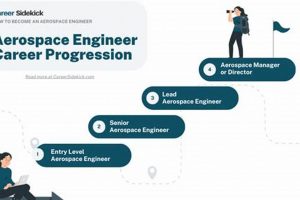
Gaining entry into the aerospace engineering field typically involves formal education, culminating in a bachelor’s or master’s degree in aerospace engineering or a closely related discipline. However, alternative pathways exist for individuals seeking to contribute to the field without acquiring such academic credentials. These pathways often necessitate a combination of practical experience, specialized training, and demonstrated competence in relevant skills.
Successfully navigating a career in aerospace without a traditional degree can offer significant advantages, including avoiding substantial educational debt and entering the workforce sooner. Historically, skilled tradespeople and technicians have played a vital role in aerospace manufacturing and development, demonstrating that practical expertise can be just as valuable as theoretical knowledge in certain roles. The value of diverse skill sets and perspectives is increasingly recognized within the industry.
This article will explore various strategies for aspiring aerospace professionals who choose to forgo a traditional degree. It will examine the roles where individuals without degrees are most likely to find employment, the specific skills and certifications that enhance employability, and alternative educational options that can bridge the knowledge gap. It will also provide advice on networking, building a professional portfolio, and demonstrating proficiency to potential employers.
Guidance on Entering Aerospace Engineering without Formal Certification
Achieving a career in aerospace engineering without a traditional degree requires a strategic and dedicated approach. Focus should be placed on acquiring practical skills, relevant experience, and demonstrable knowledge that can compensate for the absence of formal education.
Tip 1: Target Specific Roles: Identify positions within the aerospace industry where practical skills are highly valued, such as aerospace technician, drafter, or CAD designer. These roles often require hands-on experience and technical proficiency that can be acquired through vocational training or on-the-job learning.
Tip 2: Obtain Relevant Certifications: Pursue certifications that demonstrate expertise in specific aerospace-related skills, such as FAA Airframe and Powerplant (A&P) certification or certifications in CAD software. These credentials can enhance credibility and demonstrate commitment to the field.
Tip 3: Gain Practical Experience: Seek out opportunities to gain practical experience through internships, apprenticeships, or entry-level positions in aerospace manufacturing or maintenance facilities. Hands-on experience is invaluable and can provide a foundation for career advancement.
Tip 4: Build a Strong Portfolio: Create a portfolio showcasing skills and accomplishments, including projects, designs, and technical reports. A well-developed portfolio can demonstrate competence and attract the attention of potential employers.
Tip 5: Network Strategically: Attend industry events, join professional organizations, and connect with aerospace professionals online. Networking can open doors to opportunities and provide valuable insights into the industry.
Tip 6: Consider Alternative Education: Explore alternative educational options such as online courses, community college programs, or vocational training programs focused on specific aerospace skills. These programs can provide targeted knowledge and skills without requiring a four-year degree.
Tip 7: Demonstrate Continuous Learning: The aerospace industry is constantly evolving, so it is crucial to demonstrate a commitment to continuous learning. Stay updated on industry trends, new technologies, and regulatory changes through professional development courses, online resources, and industry publications.
These strategies emphasize the importance of acquiring specialized skills, building a compelling portfolio, and proactively seeking opportunities to gain experience. While a degree is often considered the conventional route, these alternative approaches provide pathways to a fulfilling career in the field.
The subsequent section will address commonly asked questions and potential challenges in navigating a career in aerospace engineering without formal academic qualifications.
1. Technical Proficiency

Technical proficiency serves as a cornerstone for individuals aiming to contribute to aerospace engineering endeavors without a formal degree. In the absence of academic credentials, demonstrated mastery of specific technical skills becomes the primary means of establishing credibility and securing employment opportunities. The following facets illustrate the depth and breadth of technical proficiency required to successfully navigate this career path.
- CAD/CAM Software Expertise
Proficiency in Computer-Aided Design (CAD) and Computer-Aided Manufacturing (CAM) software is essential for designing, modeling, and simulating aerospace components. Real-world examples include using SolidWorks to design aircraft wing structures or employing CAM software to program CNC machines for manufacturing precision parts. Without a degree, mastery of these tools demonstrates practical aptitude and design capabilities crucial for contributing to aerospace projects.
- Materials Science Knowledge
A fundamental understanding of materials science, including the properties and behaviors of various aerospace materials such as aluminum alloys, composites, and titanium, is critical. For example, knowing how different materials react to stress, temperature, and corrosion is vital for selecting appropriate materials for aircraft structures or spacecraft components. This knowledge informs design decisions and ensures structural integrity, compensating for the lack of formal materials science coursework.
- Programming and Simulation Skills
Expertise in programming languages like Python or MATLAB is increasingly valuable for simulating aerospace systems, analyzing data, and developing control algorithms. An individual might use Python to analyze flight data or MATLAB to simulate the performance of a rocket engine. These skills allow for independent analysis and problem-solving, vital attributes when formal academic validation is absent.
- Electronics and Instrumentation
A working knowledge of electronics and instrumentation, including sensors, data acquisition systems, and control systems, is often necessary for working with aerospace systems. For instance, an understanding of how sensors measure altitude, speed, and orientation is essential for developing and maintaining flight control systems. Possessing this skillset demonstrates the ability to work with complex aerospace hardware and software, enhancing employability.
In conclusion, the multifaceted nature of technical proficiency underscores its importance for those pursuing a career in aerospace engineering without a degree. Mastery of CAD/CAM software, a solid understanding of materials science, programming and simulation expertise, and proficiency in electronics and instrumentation collectively provide a foundation for contributing meaningfully to aerospace projects. Demonstrating these skills through practical application and a strong portfolio becomes the primary validation of competence in lieu of academic qualifications.
2. Relevant Certifications

In the pursuit of a career in aerospace engineering without the traditional prerequisite of a formal degree, relevant certifications serve as critical validators of competence and specialized knowledge. These certifications provide tangible evidence of skills and training, effectively bridging the gap created by the absence of academic credentials and significantly enhancing employability within the industry.
- FAA Airframe and Powerplant (A&P) Certification
This certification, issued by the Federal Aviation Administration, is essential for individuals seeking to maintain, repair, and inspect aircraft. The A&P certification demonstrates a comprehensive understanding of aircraft systems, including airframes, engines, and related components. For example, an A&P certified technician may perform routine maintenance on commercial aircraft or troubleshoot complex mechanical issues. This certification is a vital asset for those seeking practical, hands-on roles in aerospace maintenance and repair, bypassing the need for a traditional engineering degree for certain positions.
- ASNT Nondestructive Testing (NDT) Certifications
Nondestructive Testing (NDT) certifications, offered by the American Society for Nondestructive Testing (ASNT), validate expertise in inspecting materials and components without causing damage. Methods include ultrasonic testing, radiographic testing, and magnetic particle testing. For example, NDT technicians might inspect aircraft wings for cracks or evaluate the integrity of welds on rocket engine components. These certifications are highly valued in aerospace manufacturing and quality control, providing a direct pathway for individuals to contribute to ensuring the safety and reliability of aerospace systems without a formal engineering background.
- Certified SolidWorks Professional (CSWP) or Certified SolidWorks Expert (CSWE)
SolidWorks certifications demonstrate proficiency in using SolidWorks, a widely used CAD software for designing and modeling 3D parts and assemblies. The CSWP and CSWE certifications validate skills in creating complex models, generating drawings, and performing simulations. For example, a CSWP-certified designer could create detailed models of aircraft components or design tooling for manufacturing processes. These certifications are particularly relevant for individuals seeking roles in design and drafting, enabling them to contribute to engineering projects without possessing a traditional engineering degree.
- Project Management Professional (PMP) Certification
While not specific to aerospace engineering, the Project Management Professional (PMP) certification demonstrates competence in managing projects, including planning, execution, monitoring, and closing. This certification validates skills in leadership, communication, and problem-solving. For example, a PMP-certified project manager could oversee the development of a new aerospace product or manage a team of engineers and technicians. This certification is valuable for those seeking to lead projects and coordinate teams within the aerospace industry, even without a formal engineering background.
In summation, the attainment of relevant certifications provides a powerful means for individuals to substantiate their skills and knowledge in the absence of an aerospace engineering degree. These credentials offer concrete evidence of competence, opening doors to specialized roles and enabling individuals to contribute meaningfully to the industry. Certifications such as FAA A&P, ASNT NDT, SolidWorks, and PMP directly enhance employability and demonstrate a commitment to professional development, effectively compensating for the lack of formal academic qualifications.
3. Practical Experience
Practical experience constitutes a cornerstone in the pursuit of a career in aerospace engineering absent a formal degree. The lack of theoretical foundations typically provided by academic institutions necessitates the acquisition of hands-on skills and knowledge through real-world application. This experience serves as a substitute for formal education, demonstrating competence and adaptability to the specific demands of the industry. For example, individuals working as aerospace technicians gain direct experience with aircraft maintenance, repair, and inspection procedures. This experience provides a practical understanding of aerospace systems that supplements, or in some cases, surpasses, the knowledge gained through theoretical study alone. The direct cause and effect are evident: increased practical experience leads to improved job prospects and career advancement opportunities in aerospace, effectively enabling individuals without degrees to enter and thrive in the field.
Consider the case of an individual who began as an entry-level machinist in an aerospace manufacturing facility. Through years of experience operating and maintaining complex machinery, coupled with a dedication to learning the principles of aerospace manufacturing, this individual could potentially advance to roles involving process optimization or even contribute to the design and development of new aerospace components. Similarly, individuals involved in composite layup for aircraft structures gain invaluable experience with materials science and manufacturing techniques, directly applying these skills to the production of aerospace hardware. The value of this accumulated experience is often recognized by employers who prioritize practical skills and a proven track record over formal academic credentials. Furthermore, practical experience facilitates the development of problem-solving skills and the ability to adapt to unforeseen challenges, traits highly sought after in the dynamic aerospace environment.
In conclusion, practical experience is not merely a supplementary element but a foundational requirement for achieving a career in aerospace engineering without a degree. It provides the skills, knowledge, and adaptability necessary to succeed in a technically demanding field. While the path may present unique challenges, such as overcoming initial skepticism from employers, the accumulation of relevant practical experience serves as a crucial determinant of success, allowing individuals to contribute meaningfully to the advancement of aerospace technology. This experience also provides a pathway for continued professional development, potentially leading to opportunities for formal education or specialized training later in one’s career.
4. Portfolio Development

Portfolio development serves as a critical instrument for individuals pursuing aerospace engineering careers without formal degrees. In the absence of academic credentials, a well-constructed portfolio provides tangible evidence of skills, projects, and relevant experience. The cause and effect relationship is evident: a strong portfolio directly enhances the likelihood of securing employment or project opportunities within the aerospace industry. The importance of portfolio development is amplified for those lacking traditional qualifications, as it becomes the primary means of showcasing capabilities and demonstrating competence to potential employers or clients.
Effective portfolios may include detailed descriptions and visual representations of completed projects, such as design schematics, CAD models, or prototypes. Examples could encompass participation in aerospace-related competitions, independent research projects, or contributions to open-source aerospace initiatives. Furthermore, portfolios can highlight proficiency in relevant software or tools, such as computational fluid dynamics (CFD) simulations or finite element analysis (FEA) models. Quantifiable achievements, such as efficiency improvements resulting from process optimizations or cost savings achieved through innovative design solutions, can significantly strengthen the impact of a portfolio. This demonstration of practical skills and tangible results provides compelling evidence of an individual’s ability to contribute to aerospace projects, even without a formal engineering background.
Ultimately, portfolio development is an ongoing process that requires continuous refinement and updating to reflect evolving skills and project experiences. While building a robust portfolio presents initial challenges, such as identifying relevant projects and effectively showcasing achievements, the long-term benefits are substantial. A well-curated portfolio not only facilitates entry into the aerospace field but also supports career advancement by providing a comprehensive record of professional growth and accomplishments. This aligns with the broader theme of demonstrating tangible skills to compensate for the absence of a degree.
5. Strategic Networking
For individuals seeking to enter the aerospace engineering field without a formal degree, strategic networking assumes heightened significance. It functions as a vital mechanism for accessing opportunities, mentorship, and industry knowledge otherwise attained through academic channels. Proactive engagement within the aerospace community can effectively compensate for the absence of traditional credentials by building credibility and facilitating access to career pathways.
- Attending Industry Events and Conferences
Participation in aerospace-focused events, such as trade shows and technical conferences, provides direct access to professionals, companies, and emerging technologies. Such events enable the establishment of personal connections, facilitate discussions regarding career opportunities, and provide insights into industry trends. Attendance provides visibility within the sector and demonstrates proactive interest.
- Joining Professional Organizations
Membership in organizations like the American Institute of Aeronautics and Astronautics (AIAA) or the Society of Automotive Engineers (SAE) offers avenues for networking with peers, participating in technical discussions, and gaining access to exclusive resources. These organizations frequently host local chapter meetings, webinars, and workshops that provide opportunities to learn from experienced professionals and cultivate relationships within the field.
- Leveraging Online Platforms
Online professional networking platforms, such as LinkedIn, serve as valuable tools for connecting with individuals working in aerospace engineering roles. Targeted searches and engagement in relevant groups can facilitate interactions with potential mentors, employers, and collaborators. Thoughtful participation in online discussions and the sharing of relevant content can establish expertise and build a professional reputation.
- Seeking Mentorship Opportunities
Establishing a mentoring relationship with an experienced aerospace engineer or professional can provide invaluable guidance, support, and access to insider knowledge. Mentors can offer advice on career development, provide insights into industry practices, and facilitate introductions to their professional networks. Seeking out mentorship opportunities demonstrates initiative and a commitment to professional growth.
In conclusion, strategic networking plays a crucial role in enabling individuals without formal degrees to navigate the complexities of the aerospace engineering field. Through active participation in industry events, membership in professional organizations, utilization of online platforms, and pursuit of mentorship, aspiring aerospace professionals can build the relationships and gain the insights necessary to overcome the limitations of lacking traditional academic qualifications.
6. Continuous Learning
Continuous learning is indispensable for individuals aspiring to enter the aerospace engineering field without a formal degree. The absence of a structured academic curriculum necessitates a self-directed approach to acquiring and updating knowledge. This sustained commitment to learning directly impacts an individual’s ability to remain current with rapidly evolving technologies and practices, directly influencing their employability and capacity for contributing meaningfully to aerospace projects. Failure to engage in continuous learning will render skills obsolete and limit career progression. The cause and effect relationship is clear: proactive learning leads to enhanced competence, while stagnation leads to professional marginalization.
Consider the example of additive manufacturing, a technology undergoing rapid advancement in aerospace. An individual without a degree but actively engaged in learning about new materials, printing techniques, and design considerations for additive manufacturing can develop a specialized skill set highly sought after by aerospace companies. Similarly, staying abreast of evolving regulatory requirements, such as those related to unmanned aerial systems (UAS), is crucial for professionals involved in the design, operation, and maintenance of these systems. This includes actively seeking and completing certifications and attending industry workshops. Another example is the evolving landscape of composites. A technician or aspiring engineer with no formal training can gain considerable expertise through online courses, trade magazines, and hands-on learning and improve composite part production.
In conclusion, continuous learning is not merely a supplementary activity but a fundamental requirement for success in aerospace engineering without a degree. It requires a proactive commitment to staying informed, acquiring new skills, and adapting to technological advancements. Embracing a culture of continuous learning is the best substitute of getting an aerospace degree, helping in career progression and opening a variety of job opportunities in the engineering world.
7. Targeted Skill Acquisition

Targeted skill acquisition represents a strategic imperative for individuals pursuing a career in aerospace engineering without formal academic qualifications. Recognizing the limitations imposed by the absence of a degree, the deliberate and focused acquisition of specific, in-demand skills becomes crucial for demonstrating competence and securing employment within this technically demanding field.
- CAD/CAM Software Proficiency
Mastery of Computer-Aided Design (CAD) and Computer-Aided Manufacturing (CAM) software is paramount. For example, proficiency in CATIA, SolidWorks, or NX allows individuals to design, model, and simulate aerospace components with precision. A focused effort to learn these tools, coupled with the ability to demonstrate practical application through portfolio projects, significantly enhances employability. This specialized skill set is often more valuable to employers than a broad, theoretical understanding without practical CAD/CAM expertise.
- Composite Materials Expertise
The increasing use of composite materials in aerospace structures necessitates specialized knowledge of their properties, manufacturing processes, and repair techniques. Individuals can target skills in composite layup, bonding, or non-destructive inspection (NDI) methods. Certification in composite repair or NDI techniques, for instance, can provide a competitive advantage and demonstrate practical competence in this critical area of aerospace engineering.
- Programming for Aerospace Applications
Proficiency in programming languages such as Python, MATLAB, or C++ is increasingly valuable for aerospace engineers, particularly for tasks involving data analysis, simulation, and automation. Targeted skill acquisition in these areas might involve learning to develop flight control algorithms, simulate aerodynamic performance, or automate testing procedures. Demonstrating the ability to apply programming skills to solve specific aerospace-related problems can significantly enhance career prospects.
- Systems Engineering Fundamentals
A fundamental understanding of systems engineering principles, including requirements analysis, system architecture, and integration and testing, is essential for contributing to complex aerospace projects. While a formal systems engineering degree is often preferred, individuals can acquire these skills through targeted training courses, online resources, or on-the-job experience. Demonstrating the ability to apply systems engineering principles to solve real-world aerospace challenges can be a significant differentiator for those without a formal engineering degree.
These facets of targeted skill acquisition highlight the importance of focusing on specific, in-demand skills that directly address the needs of the aerospace industry. While a degree provides a broad foundation of knowledge, targeted skill acquisition allows individuals without formal qualifications to develop expertise in niche areas, thereby enhancing their competitiveness and creating pathways to successful careers in aerospace engineering.
Frequently Asked Questions
This section addresses common inquiries and misconceptions surrounding the possibility of pursuing a career in aerospace engineering without obtaining a formal degree. It provides concise answers to pertinent questions, offering clarity on the challenges and opportunities associated with this alternative path.
Question 1: Is it realistically possible to become an aerospace engineer without a traditional engineering degree?
While challenging, it is possible to contribute to the aerospace field without a traditional degree. Success depends on acquiring specialized skills, relevant certifications, and extensive practical experience to compensate for the lack of formal academic qualifications.
Question 2: What types of roles are more accessible to individuals without an aerospace engineering degree?
Roles such as aerospace technician, drafter, CAD designer, and quality control inspector are often more accessible. These positions prioritize hands-on skills and technical proficiency, which can be acquired through vocational training or on-the-job learning.
Question 3: How important are certifications in lieu of a formal degree?
Certifications are critically important. They provide tangible evidence of skills and knowledge, effectively validating competence in specific areas relevant to aerospace engineering. FAA A&P certification or SolidWorks certifications, for example, can significantly enhance employability.
Question 4: What kind of practical experience is most valuable?
Hands-on experience in aerospace manufacturing, maintenance, or repair facilities is highly valuable. Internships, apprenticeships, and entry-level positions that provide opportunities to work with aerospace systems and components are essential for building practical skills.
Question 5: How can an individual without a degree compete with degreed engineers?
By focusing on targeted skill acquisition, building a strong portfolio, demonstrating continuous learning, and networking strategically. A commitment to professional development and a proven track record of success can compensate for the lack of formal academic qualifications.
Question 6: Are there alternative educational options that can help bridge the knowledge gap?
Yes, online courses, community college programs, and vocational training programs focused on specific aerospace skills can provide targeted knowledge and skills without requiring a four-year degree. These options can supplement practical experience and enhance credibility.
In summary, while a degree is the conventional route, it is not the only path. Dedicated individuals can reach their goals with skills, a network, and continued improvement.
The succeeding section will focus on resources and where to find them, and this is to aid in the successful career path of an aerospace engineer without a formal degree.
Conclusion
The preceding exploration of how to become an aerospace engineer without a degree has delineated alternative pathways to a challenging but potentially rewarding career. It emphasized that focused skill acquisition, relevant certifications, practical experience, portfolio development, strategic networking, and continuous learning represent indispensable components for success. Though the absence of a formal degree presents unique hurdles, dedication and strategic preparation can mitigate these disadvantages.
The pursuit of such a career requires realistic expectations and a firm commitment to continuous improvement. While formal qualifications remain valuable, demonstrable expertise can open doors and contribute to the advancement of the aerospace field. Prospective professionals should rigorously assess their aptitude, diligently pursue relevant skills, and proactively engage with the aerospace community to forge a viable and fulfilling career trajectory.