A document accompanying a resume, submitted as part of an application for positions within the field concerned with the design, development, testing, and production of aircraft and spacecraft, serves to highlight relevant skills and experience. It provides a tailored narrative demonstrating how the candidate’s qualifications align with the specific requirements of the role and the organization. For example, an individual applying for a propulsion engineer position might detail their experience with computational fluid dynamics and specific engine types, demonstrating a direct connection to the advertised requirements.
This communication is crucial because it offers a personalized perspective beyond the objective data presented in a resume. It allows individuals to articulate their enthusiasm for the specific opportunity and the aerospace industry. Historically, such letters have been essential in showcasing communication skills and attention to detail, qualities highly valued in the technically rigorous environment of aerospace. Furthermore, a well-crafted one can significantly enhance a candidate’s chances of securing an interview, thus opening doors to career advancement.
The following sections will explore key elements in crafting effective application documents, focusing on structure, content, and strategies for showcasing relevant expertise to potential employers within the aeronautics and astronautics sector. Attention will be given to highlighting accomplishments and quantifying achievements to create a compelling narrative.
Crafting a Successful Application Letter
The following provides key considerations for constructing a compelling document accompanying an application for roles in the aerospace sector. Focus remains on demonstrating relevance and value to prospective employers.
Tip 1: Tailor Content to the Specific Role: Generic submissions are often ineffective. Research the company and the specific requirements outlined in the job description. Address how specific skills and experiences directly align with the stated needs of the employer. For example, if the posting highlights experience with particular software packages, such as CATIA or ANSYS, emphasize proficiency with these tools.
Tip 2: Quantify Achievements: Whenever possible, provide concrete examples of accomplishments. Instead of stating “Improved design efficiency,” specify “Improved design efficiency by 15% through implementation of a new simulation technique, resulting in a reduction of prototyping costs by $50,000.” Numbers and data points add credibility.
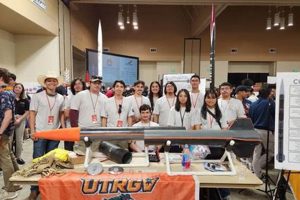
Tip 3: Highlight Relevant Projects: Academic or personal projects related to aerospace engineering can demonstrate initiative and technical aptitude. Clearly articulate the project’s objective, the candidate’s role, and the results achieved. For example, participation in a rocketry competition or the design and fabrication of a UAV should be detailed.
Tip 4: Emphasize Technical Skills: Aerospace roles require specific technical competencies. Clearly state proficiency in relevant areas such as aerodynamics, propulsion, structural analysis, control systems, and materials science. Cite specific coursework, projects, or professional experience that demonstrates mastery of these areas.
Tip 5: Showcase Soft Skills: While technical skills are paramount, soft skills such as teamwork, communication, and problem-solving are also highly valued. Provide examples of instances where these skills contributed to a successful outcome. For instance, cite an instance where collaboration with a multidisciplinary team led to the successful resolution of a complex engineering challenge.
Tip 6: Maintain Professionalism and Conciseness: The document should be well-written, free of grammatical errors, and presented in a professional format. Keep the content concise and focused, typically limited to one page. Avoid overly verbose language or irrelevant information.
Tip 7: Research the Company Culture: Understand the values and culture of the organization. Align the tone and language to reflect the company’s ethos. This shows the applicant has invested time in learning about the company and is genuinely interested in becoming a part of it.
By adhering to these guidelines, individuals can construct an impactful document that significantly enhances their prospects of securing a position in the aerospace industry.
The subsequent discussions will delve into further refinements and considerations for tailoring the document to specific sub-disciplines within aerospace engineering.
1. Tailored Relevance

The concept of tailored relevance is paramount when constructing a document intended to support an application within the highly specialized field of aerospace engineering. Its application ensures the document directly addresses the specific requirements and expectations of the potential employer, thereby maximizing its impact and effectiveness.
- Role-Specific Skill Demonstration
This facet involves explicitly connecting skills and experience to the specific demands of the role advertised. For example, an application for a thermal engineer position should emphasize experience in heat transfer analysis, thermal modeling software, and materials science relevant to aerospace applications. Failure to demonstrate a direct connection to the role can render the document generic and less compelling.
- Company Alignment Showcase
Demonstrating an understanding of the company’s mission, values, and ongoing projects indicates a genuine interest beyond mere job acquisition. An individual applying to a company known for its work in sustainable aviation might highlight personal projects or research focused on fuel efficiency or alternative propulsion systems. This facet demonstrates a proactive effort to align with the organization’s goals.
- Keyword Integration and Contextualization
While not the sole focus, strategic integration of keywords from the job description within the document signals an understanding of the recruiter’s priorities. However, the keywords must be woven into the narrative naturally and supported by concrete examples. Overusing keywords without context can be detrimental.
- Problem-Solving Approach Highlighting
Illustrating how past experiences have equipped the individual to tackle specific challenges relevant to the targeted role is crucial. For instance, an application for a structural engineer role might detail a successful project involving the resolution of a complex stress analysis problem, showcasing the application of relevant software and methodologies.
In summary, tailored relevance transforms a generic application document into a focused and compelling representation of an individual’s qualifications. By meticulously aligning skills, experiences, and interests with the specific requirements and values of the aerospace engineering role and organization, an applicant significantly increases their chances of capturing the attention of potential employers and progressing through the selection process.
2. Quantifiable Achievements

The inclusion of quantifiable achievements within a document submitted for an aerospace engineering position is critical to demonstrate tangible value to a prospective employer. Such achievements translate generalized skills and experiences into measurable outcomes, providing concrete evidence of an applicant’s capabilities. The absence of quantifiable metrics leaves the evaluation of an applicants performance open to subjective interpretation, diminishing the document’s overall impact.
The cause-and-effect relationship is clear: specific actions lead to measurable results. For instance, stating “Optimized aerodynamic performance of a UAV wing” is less impactful than “Optimized aerodynamic performance of a UAV wing, resulting in a 12% reduction in drag coefficient and a 5% increase in lift-to-drag ratio.” The latter provides verifiable evidence of expertise. Another example involves a role in materials engineering. Instead of writing “Improved material selection process,” a more effective statement would be “Improved material selection process, leading to a 20% reduction in component weight and a 15% increase in structural integrity, as validated by FEA simulations.” The practical significance of this understanding extends to the recruitment process. Hiring managers often face a large volume of applications; quantifiable achievements allow for rapid assessment of an applicants potential contribution.
In conclusion, the incorporation of quantifiable achievements is not merely an embellishment; it is a fundamental component of a compelling application for roles in aerospace engineering. It transforms abstract claims into demonstrable competencies. Challenges may arise in accurately quantifying the impact of contributions, but careful documentation and a focus on key performance indicators can overcome these hurdles. Ultimately, emphasizing quantifiable results aligns directly with the data-driven nature of the aerospace industry, increasing the likelihood of securing an interview and progressing towards career objectives.
3. Technical Proficiency

Technical proficiency, as articulated within a document accompanying an aerospace engineering application, functions as a primary determinant of candidate suitability. The aerospace sector demands a high degree of specialized knowledge and demonstrable skill; therefore, a document lacking explicit evidence of relevant technical capabilities diminishes an applicant’s prospects. The causal relationship is straightforward: demonstrated expertise in specific areas leads to a higher likelihood of consideration for interview and subsequent employment. Examples of such expertise include proficiency in computational fluid dynamics (CFD), finite element analysis (FEA), control systems design, and materials science. An application lacking specific mention of these skills, or others relevant to the target position, indicates a potential deficiency in the required qualifications.
The practical significance of highlighting technical proficiency is exemplified by its influence on the evaluation process. Hiring managers and technical recruiters utilize these application documents as a screening tool. Candidates whose qualifications align most closely with the position’s requirements, as demonstrated by specific technical competencies, are prioritized. For instance, an applicant for a propulsion engineer role must explicitly state their experience with specific engine types, thermodynamic cycles, and related simulation software. Similarly, a structural engineer applicant should highlight their expertise in stress analysis, fatigue analysis, and the use of relevant CAD/CAM software. General statements of engineering competence are insufficient; specificity is paramount. Furthermore, certifications (e.g., professional engineer license, specific software certifications) enhance the perceived level of technical proficiency.
In summary, technical proficiency constitutes a critical pillar of an effective document supporting an aerospace engineering application. Its importance stems from the highly specialized nature of the field and the need for applicants to demonstrate immediate value to potential employers. While challenges may arise in accurately conveying the depth and breadth of one’s technical abilities within a concise document, strategic focus on relevant skills, supported by concrete examples and certifications, can significantly enhance the applicant’s standing. This emphasis aligns with the industry’s demand for demonstrably competent and capable engineers.
4. Project Highlights
Project highlights serve as a vital component within a document accompanying an application for roles in aerospace engineering. They offer concrete evidence of an applicant’s practical skills, problem-solving abilities, and direct experience relevant to the target position, thereby significantly enhancing the overall effectiveness of the communication.
- Demonstrating Applied Knowledge
Project highlights allow the articulation of academic or personal endeavors where theoretical knowledge was applied to solve real-world engineering problems. For instance, participation in a university-sponsored satellite design competition permits the applicant to showcase their understanding of orbital mechanics, spacecraft systems, and project management principles. The communication should detail the scope of the project, the applicant’s specific contributions, and the outcomes achieved, emphasizing the practical application of acquired knowledge.
- Showcasing Technical Skills and Tools
Detailed descriptions of projects provide a platform to exhibit proficiency in specific technical skills and tools relevant to the aerospace industry. This might include experience with CAD/CAM software, simulation tools, programming languages, or experimental techniques. The application should explicitly mention the tools utilized and describe how they were employed to achieve project objectives. For example, a project involving the design and analysis of a composite aircraft wing should articulate the applicant’s experience with finite element analysis software and the interpretation of simulation results.
- Illustrating Problem-Solving and Innovation
Project highlights can effectively demonstrate an applicant’s ability to identify and resolve engineering challenges. These challenges might involve design constraints, performance limitations, or unforeseen technical obstacles. The communication should emphasize the applicant’s problem-solving approach, highlighting the methods used to analyze the problem, develop potential solutions, and implement the most effective approach. Furthermore, instances of innovation or novel design solutions should be clearly articulated.
- Highlighting Teamwork and Communication Skills
Participation in collaborative projects provides an opportunity to showcase teamwork and communication skills, which are essential in the aerospace industry. The applicant should describe their role within the team, the contributions made to the group effort, and any instances where effective communication was crucial to the project’s success. Examples of conflict resolution, negotiation, or technical presentations can further demonstrate the applicant’s ability to work effectively in a team environment.
The strategic incorporation of project highlights within the document allows for a more compelling and persuasive demonstration of an applicant’s qualifications for roles in aerospace engineering. By providing concrete evidence of practical skills, problem-solving abilities, and relevant experience, project highlights enhance the overall impact of the communication and increase the likelihood of securing an interview.
5. Professional Tone
A professional tone within documentation submitted for consideration in the aerospace engineering sector reflects not merely an aesthetic choice, but a critical demonstration of the applicant’s capacity for clear, precise, and effective communication. Given the highly technical and collaborative nature of the industry, the tone adopted within a such document serves as a preliminary indicator of an individual’s suitability for integration within a professional engineering environment. A perceived lack of professionalism may lead to immediate disqualification, regardless of underlying technical competencies.
- Clarity and Conciseness
Ambiguity and verbosity are detrimental to effective communication. A professional tone necessitates the use of clear, concise language, avoiding jargon or overly complex sentence structures. This clarity ensures the recipient can readily understand the intended message and reduces the potential for misinterpretation. For example, stating “Optimized the structural design for enhanced performance” is less effective than “Reduced structural weight by 15% through implementation of topology optimization techniques,” which provides specific details and avoids vagueness.
- Precision and Accuracy
The aerospace industry demands a high degree of precision. A professional tone reflects this by ensuring all information presented is accurate and thoroughly verified. Claims should be supported by evidence, and technical details must be presented with meticulous attention to detail. Any factual inaccuracies or unsubstantiated claims can erode the applicant’s credibility and raise concerns about their attention to detail.
- Objectivity and Impartiality
Maintaining objectivity is crucial for conveying a sense of professionalism. Avoid subjective language, personal opinions, or emotional appeals. Focus on presenting factual information and objective data to support claims. For instance, instead of stating “I am a highly motivated and passionate engineer,” a more professional approach would be to demonstrate motivation and passion through specific examples of accomplishments and contributions to relevant projects.
- Respectful and Courteous Language
Even in a written format, it is imperative to maintain a respectful and courteous tone. Address the recipient professionally, using formal language and avoiding colloquialisms or slang. Demonstrate respect for the organization and its employees, as well as for the engineering profession. This fosters a sense of professionalism and demonstrates the applicant’s ability to interact appropriately in a professional setting.
In summation, the professional tone adopted within a document intended to accompany an application for roles in aerospace engineering functions as a critical element in conveying competence, credibility, and suitability for the profession. Clarity, precision, objectivity, and respect are all vital components of this tone, and their consistent application significantly enhances the applicant’s prospects for consideration. The absence of a professional tone can negate the impact of even the most impressive technical qualifications.
Frequently Asked Questions
This section addresses common queries regarding the creation and utilization of a document accompanying an application for positions in the aerospace engineering sector. Focus is on providing clear, concise, and informative answers based on industry best practices.
Question 1: What is the ideal length for an document complementing a resume for an aerospace engineering role?
The generally accepted standard is a single page. Hiring managers often review numerous applications; therefore, brevity and conciseness are essential. The information presented should be relevant and impactful, avoiding unnecessary verbosity. Exceeding one page risks losing the reader’s attention and may indicate a lack of prioritization skills.
Question 2: Should the same communication be used for multiple applications?
No. Generic submissions are often ineffective. Each communication should be tailored to the specific requirements of the role and the organization. This demonstrates genuine interest and highlights the applicant’s understanding of the company’s mission and values. Adapting the content to address the specific needs outlined in the job description increases the likelihood of securing an interview.
Question 3: What information should be included if lacking direct aerospace engineering experience?
Highlight relevant coursework, academic projects, and transferable skills acquired through other experiences. Emphasize analytical skills, problem-solving abilities, and technical proficiency. Demonstrate a passion for aerospace engineering through involvement in relevant extracurricular activities or personal projects. Clearly articulate how these experiences have prepared the applicant for a career in the field.
Question 4: Is it necessary to address the communication to a specific individual?
Whenever possible, address the document to the hiring manager or a specific contact person within the organization. Research the company website or utilize professional networking platforms to identify the appropriate individual. Addressing the document to a specific person demonstrates initiative and attention to detail. If a specific name cannot be found, addressing it to “Hiring Manager” or “Recruiting Team” is acceptable.
Question 5: How important is the formatting and presentation of this application component?
Formatting and presentation are crucial. The document should be well-organized, easy to read, and free of grammatical errors. Utilize a professional font and maintain consistent formatting throughout. Proofread carefully before submitting. A poorly formatted communication detracts from the applicant’s qualifications and may convey a lack of professionalism.
Question 6: Should salary expectations be included in the communication accompanying a resume?
Generally, it is advisable to avoid discussing salary expectations in the initial document. The focus should be on highlighting qualifications and demonstrating value to the employer. Salary negotiations typically occur later in the hiring process, after an interview has been conducted and a job offer has been extended. Premature discussion of salary may be perceived as presumptuous.
In summary, creating a compelling and effective document to accompany an application for an aerospace engineering role requires careful planning, attention to detail, and a thorough understanding of industry expectations. Tailoring the content to the specific position and organization, highlighting quantifiable achievements, and maintaining a professional tone are essential for maximizing the applicant’s chances of success.
The subsequent section will provide a checklist to ensure all critical components are included before submitting the document.
Conclusion
The preceding discussion has elucidated the fundamental components and strategic considerations involved in crafting an effective “aerospace engineering cover letter.” Emphasis has been placed on tailoring content to specific roles, quantifying achievements, showcasing technical proficiency, highlighting relevant projects, and maintaining a consistently professional tone. Adherence to these principles serves to elevate the perceived value of an application and enhance the applicant’s prospects for consideration.
The creation of a compelling document for aerospace engineering positions requires diligent effort and a thorough understanding of industry expectations. While the information contained herein provides a framework for success, continuous refinement and adaptation are essential. Candidates are encouraged to utilize this information to develop personalized application materials that accurately reflect their unique skills and experiences, thereby contributing to the advancement of the aerospace engineering profession.