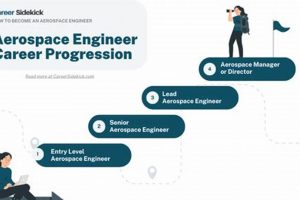
The trajectory within the field of designing, developing, and testing aircraft, spacecraft, satellites, and missiles is a long-term endeavor that involves education, skill development, and experience acquisition. It is the professional journey of an individual dedicated to advancing air and space technologies. For instance, one might start as a junior engineer focusing on a specific system and, over time, progress to leading entire project teams.
A well-defined advancement route is critical for attracting and retaining talent, fostering innovation, and ensuring the continued progress of the aerospace industry. It provides aspiring professionals with a clear vision of their future contributions and motivates them to excel. Historically, advancements in this field have been driven by the dedication and skill of engineers who followed clearly defined progression routes, leading to breakthroughs in flight, propulsion, and space exploration.
The subsequent sections will delve into the educational prerequisites, essential skills, typical roles, and potential areas of specialization that constitute this multifaceted professional journey. Understanding these components is crucial for anyone considering a career in this challenging and rewarding domain.
The following guidelines offer strategic insights for individuals pursuing professional growth in aerospace engineering. They are designed to facilitate informed decision-making and optimize career advancement within this demanding field.
Tip 1: Prioritize Foundational Knowledge: A robust understanding of mathematics, physics, and computer science is indispensable. Consistently seek opportunities to deepen this core knowledge base through coursework, self-study, and practical application.
Tip 2: Specialize Strategically: Identify a specific area of interest within aerospace engineering, such as aerodynamics, propulsion, or structural analysis. Focused expertise increases marketability and advancement potential.
Tip 3: Pursue Advanced Education: Consider obtaining a master’s degree or doctorate in a specialized area. Advanced degrees often open doors to research and development roles, as well as leadership positions.
Tip 4: Secure Relevant Internships: Gain practical experience through internships with aerospace companies or government agencies. Internships provide valuable exposure to real-world projects and industry practices.
Tip 5: Develop Technical Proficiency: Master industry-standard software and tools used for design, simulation, and analysis. Proficiency in these tools is essential for effective performance on engineering tasks.
Tip 6: Cultivate Communication Skills: Effective communication is critical for collaborating with colleagues, presenting findings, and writing technical reports. Invest in developing strong written and verbal communication abilities.
Tip 7: Seek Mentorship: Connect with experienced engineers who can provide guidance, advice, and support. Mentorship can offer invaluable insights into navigating the challenges and opportunities of the field.
Tip 8: Stay Current with Industry Trends: Continuously monitor advancements in aerospace technology and adapt skills accordingly. This can be achieved through attending conferences, reading industry publications, and participating in professional organizations.
Adherence to these recommendations will equip individuals with the necessary skills and knowledge to successfully navigate the challenges and opportunities inherent in this field, fostering sustained professional growth and contributions to technological advancements.
The subsequent sections will further explore the long-term prospects and emerging trends that shape the future of the field. Understanding these factors is crucial for making informed choices and maximizing long-term career success.
1. Education and Training

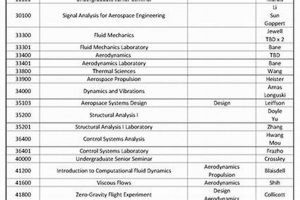
Education and training form the bedrock upon which advancement in aerospace engineering is built. A rigorous academic foundation, typically culminating in a bachelor’s or master’s degree in aerospace engineering or a closely related field, is a prerequisite for entry-level positions. This formal education provides the theoretical knowledge and analytical skills necessary for understanding complex engineering principles. For example, coursework in aerodynamics, propulsion, structural analysis, and control systems equips aspiring engineers with the tools to design, analyze, and optimize aircraft and spacecraft. Without this initial educational base, progression beyond entry-level roles is improbable.
However, academic credentials alone are insufficient. Ongoing training and professional development are essential for remaining current with technological advancements and industry best practices. This may involve attending workshops, conferences, and seminars, as well as pursuing certifications in specialized areas such as computational fluid dynamics or finite element analysis. Furthermore, many aerospace companies offer internal training programs designed to enhance employees’ technical skills and prepare them for leadership roles. For instance, an engineer might participate in a company-sponsored program focused on project management or systems engineering to broaden their skillset and increase their eligibility for promotion.
In summary, education provides the initial foundation, while ongoing training ensures sustained competence and adaptability throughout a professional’s journey. A commitment to continuous learning is not merely advantageous but indispensable for sustained advancement within the aerospace engineering profession. It is the confluence of initial academic grounding and subsequent, targeted training that shapes a successful and impactful career trajectory. Without both, opportunities for advancement are severely limited and long-term success is unlikely.
2. Technical Skill Development

Technical skill development constitutes a crucial element in the professional trajectory of an aerospace engineer. Proficiency in specific technical domains directly influences an engineer’s capabilities and advancement prospects within the industry. Acquisition and refinement of these skills are not merely additive but rather transformative, shaping the engineer’s ability to contribute meaningfully to projects and assume increasingly complex responsibilities. For example, an aerospace engineer proficient in computational fluid dynamics (CFD) can accurately model airflow around an aircraft wing, optimizing its design for enhanced performance and fuel efficiency. This expertise makes the engineer a valuable asset, accelerating their progression toward leadership roles.
Furthermore, specific skill sets correlate with distinct career opportunities within aerospace engineering. Mastery of finite element analysis (FEA) software enables engineers to analyze the structural integrity of aerospace components, contributing to the design of safer and more durable aircraft and spacecraft. Engineers skilled in control systems design are essential for developing guidance and navigation systems, critical for both manned and unmanned aerial vehicles. Similarly, expertise in materials science is vital for selecting and implementing advanced materials that can withstand the extreme conditions encountered in aerospace applications. The development of these specialized skills, therefore, enables engineers to pursue niche areas within the field, further enhancing their marketability and potential for advancement.
In conclusion, technical skill development is a non-negotiable aspect of an aerospace engineer’s professional growth. A continuous commitment to acquiring and refining technical expertise translates directly into increased competence, expanded career options, and enhanced contributions to the advancement of aerospace technology. Insufficient attention to skill development hinders progress and limits opportunities within this competitive and technically demanding field, underscoring the vital connection between technical skill and a successful long-term professional journey.
3. Specialization and Focus

Within the domain of aerospace engineering, the selection of a specific area of specialization and the maintenance of a focused professional trajectory are pivotal determinants of long-term advancement and impact. Strategic specialization provides a competitive advantage, allowing engineers to develop deep expertise and contribute meaningfully to specific areas of aerospace technology.
- Aerodynamics Specialization
Aerodynamics focuses on the study of air motion and its effects on aircraft and spacecraft. Engineers specializing in aerodynamics contribute to the design of efficient and high-performing vehicles by optimizing wing shapes, reducing drag, and improving lift. A focused career in aerodynamics might involve working on the aerodynamic design of commercial airliners, supersonic jets, or even spacecraft re-entry vehicles. Such specialization often leads to roles in research and development, where engineers push the boundaries of aerodynamic theory and application.
- Propulsion Systems Focus
Propulsion systems engineers concentrate on the design, development, and testing of engines and related systems that provide thrust for aircraft and spacecraft. This specialization requires a strong understanding of thermodynamics, fluid mechanics, and combustion. A focused career in propulsion could involve working on jet engines, rocket engines, or alternative propulsion technologies like electric propulsion. Expertise in this area is highly valued in both the commercial and defense sectors, leading to opportunities for leadership roles in engine development programs.
- Structural Analysis and Design
Structural analysis and design involves ensuring the structural integrity and safety of aerospace vehicles. Engineers specializing in this area analyze the loads and stresses acting on aircraft and spacecraft components, using computer-aided engineering (CAE) tools and mathematical models. A focused career in structural analysis might involve working on the design of lightweight composite structures, the analysis of fatigue and fracture in aerospace materials, or the development of advanced structural health monitoring systems. Such expertise is essential for ensuring the safety and reliability of aerospace vehicles, leading to opportunities in design, testing, and certification.
- Avionics and Control Systems
Avionics and control systems engineers focus on the design, development, and integration of electronic systems used to control and navigate aircraft and spacecraft. This specialization requires expertise in electrical engineering, computer science, and control theory. A focused career in avionics might involve working on flight control systems, navigation systems, or communication systems. The increasing complexity and sophistication of avionics systems create a growing demand for engineers with expertise in this area, leading to opportunities in both hardware and software development.
These specializations underscore the impact of strategic focus on professional growth within the aerospace engineering field. Each area demands specific skill sets and knowledge, leading to distinct career paths. The selection of a specialization, therefore, becomes a critical decision point that shapes an individual’s future trajectory and potential contributions to the advancement of aerospace technology.
4. Leadership Opportunities
Advancement within the aerospace engineering domain frequently necessitates a transition from individual contributor to leadership roles. The assumption of leadership responsibilities signifies a maturation of technical expertise coupled with the acquisition of interpersonal and managerial competencies. Leadership opportunities are not merely a potential outcome but a critical component of a well-defined progression. For instance, a project engineer demonstrating consistent technical proficiency and effective team collaboration might be promoted to project manager, overseeing the entire project lifecycle from conceptualization to completion. Such advancements require both technical acumen and the ability to effectively manage resources, timelines, and personnel.
The presence of leadership opportunities within an organization directly impacts its ability to attract and retain top talent. Aerospace engineers are often driven by a desire to not only contribute technically but also to shape the direction of projects and initiatives. The absence of clearly defined leadership pathways can lead to stagnation and attrition, hindering the organization’s capacity for innovation and growth. Organizations that prioritize leadership development programs and mentorship initiatives cultivate a culture of empowerment and advancement, fostering a more engaged and productive workforce. Consider the example of NASA, which invests heavily in leadership training for its engineers, ensuring a pipeline of qualified individuals capable of leading complex missions and research endeavors.
Ultimately, leadership roles represent a significant step in a professional’s journey, demanding a blend of technical mastery, strategic thinking, and effective communication. The availability and cultivation of leadership opportunities are essential for both individual career advancement and the sustained success of the aerospace industry. Addressing the challenges of developing future leaders within this demanding field is crucial for maintaining a competitive edge and driving continued innovation in air and space technologies. The career trajectory, therefore, is inextricably linked to the accessibility and pursuit of leadership positions within the field.
5. Continuous Learning

Continuous learning is not merely a desirable attribute but a fundamental requirement for sustained advancement in the demanding field of aerospace engineering. The rapid pace of technological innovation and evolving industry standards necessitate an unwavering commitment to acquiring new knowledge and skills. This commitment directly impacts an engineer’s capabilities, contributions, and overall potential within the professional sphere.
- Adapting to Technological Advancements
The aerospace industry is characterized by relentless technological progress. New materials, propulsion systems, avionics, and manufacturing techniques emerge regularly. Engineers must actively engage in continuous learning to remain proficient in these evolving technologies. Failure to adapt renders existing skills obsolete and limits opportunities for advancement. For example, an engineer who neglects to learn about additive manufacturing techniques risks being sidelined as the industry increasingly adopts these methods for prototyping and production.
- Maintaining Regulatory Compliance
Aerospace engineering is heavily regulated to ensure safety and reliability. Regulations are subject to change as new technologies are introduced and lessons are learned from past incidents. Engineers must stay abreast of these regulatory updates and adapt their practices accordingly. Neglecting to comply with current regulations can have severe consequences, including project delays, financial penalties, and even legal repercussions. Continuous learning, therefore, is essential for ensuring adherence to the highest standards of safety and quality.
- Expanding Skill Sets Beyond Core Competencies
While specialization is important, successful aerospace engineers often benefit from expanding their skill sets beyond their core competencies. This may involve acquiring knowledge in related disciplines, such as computer science, materials science, or project management. A broader skill set enhances an engineer’s ability to collaborate effectively with colleagues from different backgrounds and contribute to interdisciplinary projects. For example, an aerospace engineer with a background in computer science may be better equipped to develop and implement advanced simulation tools for analyzing aircraft performance.
- Fostering Innovation and Problem-Solving
Continuous learning cultivates a mindset of intellectual curiosity and innovation. Engineers who are constantly seeking new knowledge and skills are more likely to identify opportunities for improvement and develop creative solutions to complex problems. This innovative thinking is highly valued in the aerospace industry, where breakthroughs in technology are essential for maintaining a competitive edge. By fostering a culture of continuous learning, organizations can empower their engineers to push the boundaries of what is possible and drive the next generation of aerospace advancements.
In summary, the multifaceted benefits of continuous learning are intrinsically linked to career progression and success within aerospace engineering. From adapting to technological advancements to maintaining regulatory compliance, expanding skill sets, and fostering innovation, the commitment to lifelong learning is a cornerstone of a thriving and impactful professional journey. The absence of this commitment invariably leads to professional stagnation and diminished opportunities within this rapidly evolving field.
Frequently Asked Questions About Aerospace Engineering Professional Trajectories
The following section addresses common inquiries regarding advancement routes within the aerospace engineering field, offering concise and informative answers.
Question 1: What academic qualifications are essential for commencing a journey?
A bachelor’s degree in aerospace engineering, or a closely related field such as mechanical engineering with an aerospace focus, is typically the minimum requirement. Advanced degrees, such as a Master of Science or doctorate, often enhance opportunities, particularly in research and development roles.
Question 2: How important is practical experience gained through internships?
Practical experience obtained through internships is highly valued. Internships provide exposure to real-world engineering challenges, industry practices, and professional networking opportunities that are difficult to replicate in an academic setting.
Question 3: What specialized skills are most sought after by employers?
Skills in areas such as computational fluid dynamics (CFD), finite element analysis (FEA), control systems design, and advanced materials are consistently in demand. Proficiency in industry-standard software tools is also essential.
Question 4: Is it necessary to specialize in a specific area of aerospace engineering?
While not strictly required, specialization can significantly enhance career prospects. Focusing on a particular area, such as aerodynamics, propulsion, or structural analysis, allows for the development of deep expertise and increased marketability.
Question 5: What are the typical roles an aerospace engineer might progress through?
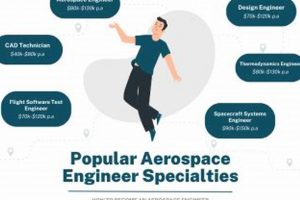
Progression often begins with entry-level roles such as design engineer or test engineer. With experience, engineers may advance to roles such as project manager, lead engineer, or engineering director.
Question 6: How crucial is continuous learning for long-term advancement?
Continuous learning is paramount. The aerospace industry is characterized by rapid technological advancements, making it essential for engineers to stay current with the latest developments and acquire new skills throughout their careers.
In summation, a strong academic foundation, practical experience, specialized skills, and a commitment to continuous learning are all vital components of a successful route. Individuals should prioritize these factors to maximize their potential for advancement and contribution.
The subsequent section will explore the emerging trends and future directions that are shaping the landscape of aerospace engineering. A comprehensive understanding of these trends is crucial for navigating the evolving opportunities and challenges within the industry.
Aerospace Engineer Career Path
This exploration has illuminated the multifaceted dimensions of the aerospace engineer career path, underscoring the significance of education, skill development, specialization, and continuous learning. The analysis has detailed the importance of gaining practical experience, adapting to technological advancements, and cultivating leadership capabilities within this dynamic and demanding field.
Aspiring and established professionals are encouraged to strategically leverage these insights to navigate their respective trajectories. The ongoing evolution of aerospace technology demands a proactive and adaptable mindset, ensuring continued contributions to this pivotal industry. The sustained advancement of air and space technologies relies on the dedication and expertise of those who commit to this challenging, yet rewarding, professional pursuit.