Aerospace engineering and mechanical engineering are distinct yet related engineering disciplines. Mechanical engineering is a broad field concerned with the design, analysis, manufacturing, and maintenance of mechanical systems. It encompasses areas like thermodynamics, fluid mechanics, and materials science. Aerospace engineering, on the other hand, focuses specifically on the design, development, and testing of aircraft and spacecraft. This specialization involves aerodynamics, propulsion, and aerospace structures.
While aerospace engineering draws heavily on principles and techniques developed within mechanical engineering, its specialized focus necessitates additional, unique knowledge. Aerospace engineers require in-depth understanding of flight dynamics, orbital mechanics, and the behavior of materials under extreme conditions found in aerospace environments. The importance of this specialization lies in its ability to address the unique challenges of designing safe and efficient aircraft and spacecraft, contributing to advancements in air travel, space exploration, and national defense.
The relationship between these fields is best understood as one of specialization within a broader domain. Many foundational principles from mechanical engineering are directly applicable to aerospace engineering problems. However, the specific demands of aerospace applications warrant a distinct and highly focused educational and professional pathway. Considering degree programs, career paths, and research areas highlights the differences and overlaps between these two vital engineering fields.
Guidance Regarding Aerospace and Mechanical Engineering Disciplines
The following points provide key insights when considering a career or education involving aerospace engineering and mechanical engineering.
Tip 1: Understand Foundational Overlap: Recognize that aerospace engineering leverages core principles from mechanical engineering. A strong foundation in mechanics, thermodynamics, and materials science is beneficial for either field.
Tip 2: Acknowledge Specialized Focus: Appreciate the distinct specialization of aerospace engineering. Its curriculum delves into areas unique to flight and space, such as aerodynamics and spacecraft design.
Tip 3: Evaluate Career Goals: Consider career aspirations carefully. Mechanical engineering offers broader applications across industries, while aerospace engineering focuses on aviation and space-related sectors.
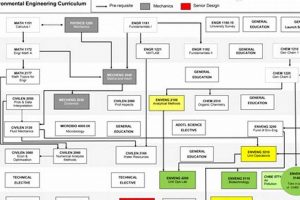
Tip 4: Investigate Curricula Differences: Compare coursework for each discipline. Aerospace engineering programs include specialized courses in propulsion systems and orbital mechanics that are generally absent from mechanical engineering curricula.
Tip 5: Explore Research Opportunities: Review research areas at universities. This provides insights into specialized knowledge within aerospace engineering, highlighting topics like hypersonic flight and advanced materials for space applications.
Tip 6: Consider Double Majors or Minors: For comprehensive knowledge, contemplate a double major or minor. Combining mechanical and aerospace engineering can provide a strong skill set and broader career opportunities.
Tip 7: Evaluate Industry Trends: Research current industry trends. Understanding future demands, such as the growth in the space industry or developments in sustainable aviation, can guide educational choices.
These insights facilitate informed decisions regarding engineering education and career paths. Recognizing the distinct nature of aerospace engineering, while acknowledging its roots in mechanical engineering, promotes strategic planning and optimal career outcomes.
The following section will further explore specific educational pathways and degree options relevant to these engineering disciplines.
1. Foundational Engineering Principles

Foundational engineering principles form the bedrock upon which all engineering disciplines, including aerospace and mechanical engineering, are built. These principles provide a common language and problem-solving framework that transcends specific applications. While aerospace engineering involves specialized knowledge, its mastery relies heavily on these core principles, influencing perspectives on the classification of aerospace as a distinct field or a branch of a broader domain.
- Mechanics and Statics
The principles of mechanics and statics govern the behavior of objects under the influence of forces. These principles are essential for analyzing structural integrity, calculating loads, and ensuring stability in both mechanical systems and aerospace vehicles. For example, understanding static equilibrium is crucial in designing aircraft wings to withstand aerodynamic forces and prevent structural failure. These shared principles highlight the strong ties between the two fields.
- Thermodynamics and Heat Transfer
Thermodynamics dictates energy conversion and heat transfer phenomena, which are critical for understanding the operation of engines, propulsion systems, and thermal management in both mechanical and aerospace applications. The design of efficient combustion engines, whether for automobiles or aircraft, relies on thermodynamic principles to maximize performance and minimize waste. Heat transfer considerations are essential in designing cooling systems for electronic components in satellites to prevent overheating, underlining the common ground between the two fields.
- Fluid Mechanics
Fluid mechanics describes the behavior of liquids and gases, which is vital for understanding aerodynamic forces on aircraft and the flow of fluids in hydraulic systems. This knowledge is fundamental in designing efficient airfoils that minimize drag and maximize lift, as well as in optimizing fluid flow in pumps and turbines. The application of fluid mechanics principles is a shared area in mechanical and aerospace engineering.
- Materials Science
Materials science focuses on the properties and behavior of different materials, essential for selecting appropriate materials for specific engineering applications. This involves understanding the strength, elasticity, and corrosion resistance of materials under varying conditions. Aerospace engineers require a thorough understanding of materials science to select lightweight, high-strength materials suitable for extreme conditions encountered in flight and space. Mechanical engineers also rely heavily on materials science for designing durable and reliable mechanical components.
These foundational principles, while shared by both mechanical and aerospace engineering, are applied in distinct ways within each discipline. The specialization of aerospace engineering lies in its unique application of these principles to the specific challenges of flight and space environments. Therefore, while not a branch in the traditional sense, aerospace engineering heavily relies on and extends these foundational concepts established within the broader field of mechanical engineering.
2. Specialized Aerospace Knowledge
Specialized aerospace knowledge represents the distinctive expertise required to design, analyze, and operate systems within the aerospace environment. Its existence challenges the classification of aerospace engineering as a mere subset of mechanical engineering, as it necessitates expertise extending beyond the conventional boundaries of the latter.
- Aerodynamics and Flight Mechanics
This area focuses on the study of airflow around aircraft and spacecraft, encompassing the principles of lift, drag, and stability. Unlike mechanical engineering, aerospace engineers must possess a deep understanding of supersonic and hypersonic flows, atmospheric effects, and control systems unique to flight. Real-world applications include designing efficient airfoils to reduce fuel consumption and developing stable flight control systems for unmanned aerial vehicles. This expertise distinguishes aerospace engineering as a specialized field.
- Spacecraft Dynamics and Control
Spacecraft dynamics involves the analysis of orbital mechanics, attitude determination, and control of satellites and space probes. This necessitates knowledge of celestial mechanics, gravitational forces, and specialized control algorithms not typically covered in mechanical engineering curricula. Examples include designing orbital trajectories for satellite constellations and developing precise attitude control systems for space telescopes. Such capabilities represent a specialized body of knowledge within aerospace engineering.
- Aerospace Propulsion Systems
The design and analysis of propulsion systems, including jet engines, rocket engines, and electric propulsion, are core to aerospace engineering. This requires understanding combustion processes, nozzle design, and performance characteristics under extreme conditions. Applications range from developing high-efficiency jet engines for commercial aircraft to designing powerful rocket engines for space launch vehicles. This distinct focus on propulsion systems underscores the specialization of aerospace engineering.
- Aerospace Structures and Materials
Aerospace structures involve the design and analysis of lightweight, high-strength structures capable of withstanding extreme loads and temperatures. This demands in-depth knowledge of composite materials, fatigue analysis, and structural dynamics. Real-world applications include designing aircraft fuselages that minimize weight while maintaining structural integrity and developing heat shields for spacecraft re-entry. This specialized knowledge of materials and structures in aerospace environments further solidifies its distinction.
The aforementioned facets collectively demonstrate that specialized aerospace knowledge extends significantly beyond the foundational principles of mechanical engineering. While a mechanical engineering background provides a valuable base, the distinct requirements of designing and operating systems within the aerospace realm necessitate a specialized body of knowledge that defines aerospace engineering as a unique discipline.
3. Distinct Curricular Content

Distinct curricular content in aerospace engineering distinguishes it from mechanical engineering, impacting perspectives on whether the former constitutes a specialized branch of the latter. Examination of this content reveals the depth and breadth of knowledge areas unique to aerospace, influencing its categorization as an independent field.
- Aerospace Vehicle Design
Aerospace vehicle design involves the integrated design of aircraft and spacecraft, considering aerodynamics, structures, propulsion, and control systems. Unlike mechanical engineering, which may cover machine design or structural analysis in a broader context, aerospace curricula include specialized courses focused on the unique challenges of designing vehicles for flight and space environments. For instance, students learn to optimize wing shapes for specific flight conditions, design lightweight yet robust fuselage structures, and integrate propulsion systems effectively. The depth of this focus sets aerospace engineering apart.
- Orbital Mechanics and Spacecraft Control
Orbital mechanics and spacecraft control are specialized subjects addressing the motion of objects in space and the methods for controlling their orientation and trajectory. This area involves knowledge of celestial mechanics, spacecraft attitude determination, and control algorithms tailored for the space environment. Aerospace engineering curricula include courses on topics such as orbital maneuvers, interplanetary trajectories, and satellite stabilization techniques, which are not typically found in mechanical engineering programs. This distinct content is critical for missions involving satellites, space probes, and human spaceflight.
- Aerothermodynamics and Hypersonic Flight
Aerothermodynamics and hypersonic flight deal with the interaction between high-speed flows and thermodynamic effects, particularly at speeds exceeding Mach 5. Aerospace engineering students learn about phenomena such as shock waves, high-temperature gas dynamics, and thermal protection systems for hypersonic vehicles. Curricular elements include courses on heat transfer in extreme environments and the design of thermal barriers for re-entry vehicles, knowledge areas not extensively covered in mechanical engineering. This specific knowledge base highlights the unique aspects of aerospace engineering.
- Air Traffic Management and Avionics
Air traffic management and avionics encompass the systems and technologies used to manage air traffic and control aircraft. Aerospace engineering curricula address topics such as navigation systems, communication systems, and automated flight control systems. Specialized courses cover the integration of avionics components, air traffic control procedures, and the design of human-machine interfaces for pilots. The focus on the operational aspects of flight and the integration of complex electronic systems further distinguishes aerospace engineering from its mechanical counterpart.
The distinct curricular content in aerospace engineering reflects the specialized knowledge and skills required to address the unique challenges of flight and space. These educational elements, while building upon foundational engineering principles, extend far beyond the scope of mechanical engineering, reinforcing the classification of aerospace engineering as a distinct and specialized field.
4. Industry-Specific Applications
Industry-specific applications delineate the distinct focus and operational environments of aerospace engineering, thereby illuminating its relationship with mechanical engineering. The nature of these applications contributes significantly to understanding whether aerospace engineering functions as a specialized offshoot or a separate, albeit related, field.
- Aircraft Manufacturing
Aircraft manufacturing epitomizes a core industry-specific application of aerospace engineering. This encompasses the design, construction, and testing of airframes, propulsion systems, and control systems tailored for atmospheric flight. Unlike mechanical engineering, which might address vehicle design more broadly, aerospace engineers specialize in the unique aerodynamic, structural, and material requirements of aircraft. For instance, the development of advanced composite materials for lightweight airframes directly aligns with aerospace-specific needs, demonstrating a focused application distinct from general mechanical engineering practices.
- Spacecraft Development
Spacecraft development highlights another key industry application unique to aerospace engineering. This involves the design, assembly, and testing of satellites, probes, and manned spacecraft intended for operation in the vacuum of space. Aerospace engineers engaged in this sector possess expertise in orbital mechanics, thermal management in space environments, and radiation shielding knowledge sets not typically emphasized in mechanical engineering curricula. The construction of the James Webb Space Telescope, requiring specialized deployment mechanisms and cryogenic cooling systems, exemplifies the highly specialized nature of spacecraft development within aerospace engineering.
- Aerospace Research and Development
Aerospace research and development (R&D) concentrates on advancing the frontiers of aerospace technology. This includes investigating novel propulsion systems, developing advanced materials for extreme environments, and designing innovative air traffic management systems. While mechanical engineers may participate in general R&D activities, aerospace R&D focuses specifically on flight and space-related challenges. Research into hypersonic flight technologies or the creation of self-healing materials for spacecraft exemplify this specialized application, furthering the distinction between the two fields.
- Aviation and Space Exploration
Aviation and space exploration represent the culmination of aerospace engineering efforts, encompassing the operational aspects of air travel and space missions. Aerospace engineers are involved in flight testing, mission planning, and system maintenance, applying their specialized knowledge to ensure the safety and efficiency of these endeavors. The planning and execution of a Mars rover mission, requiring precise orbital calculations, autonomous navigation, and robust systems to withstand the Martian environment, illustrate the highly specific application of aerospace engineering in enabling space exploration, an area distinct from typical mechanical engineering involvement.
The industry-specific applications detailed underscore that while aerospace engineering builds upon foundational principles shared with mechanical engineering, its focus, expertise, and operational contexts are distinctly tailored to the demands of flight and space. These applications necessitate specialized knowledge and skills that extend beyond the typical scope of mechanical engineering, supporting the view that aerospace engineering functions as a separate and specialized discipline.
5. Advanced Materials Science
Advanced materials science plays a critical role in both aerospace engineering and mechanical engineering, influencing perspectives on whether the former is a branch of the latter. While both fields utilize materials science principles, aerospace engineering leverages advanced materials to a far greater extent, owing to the extreme conditions encountered in flight and space. This specialized need affects the classification of aerospace engineering.
- High Strength-to-Weight Ratio Materials
Aerospace engineering critically depends on materials with exceptionally high strength-to-weight ratios to minimize structural mass and maximize performance. Materials such as titanium alloys, aluminum-lithium alloys, and carbon fiber composites are extensively used in aircraft and spacecraft construction. These materials provide the necessary strength to withstand aerodynamic forces and structural loads while minimizing weight to improve fuel efficiency and payload capacity. The development and application of these specialized materials are less emphasized in general mechanical engineering, reflecting a divergence in focus.
- High-Temperature Materials
Components within aerospace vehicles, particularly those in propulsion systems and during atmospheric re-entry, encounter extremely high temperatures. Advanced materials capable of maintaining their structural integrity and mechanical properties at elevated temperatures are essential. Examples include nickel-based superalloys for turbine blades in jet engines and ceramic matrix composites for thermal protection systems on spacecraft. The intense focus on high-temperature materials and their performance characteristics is more pronounced in aerospace engineering due to the specific operating environments.
- Corrosion and Radiation Resistance
Aerospace materials must exhibit resistance to corrosion from atmospheric elements and radiation exposure in space. This necessitates specialized coatings and material compositions designed to withstand these harsh conditions. For instance, aluminum alloys used in aircraft construction are often treated with corrosion-resistant coatings, while spacecraft components require shielding to mitigate the effects of radiation damage. The specific demands for corrosion and radiation resistance drive material selection and development in aerospace engineering, differentiating it from broader mechanical engineering applications.
- Smart Materials and Structures
The integration of smart materials into aerospace structures allows for adaptive control and performance optimization. Shape memory alloys, piezoelectric materials, and self-healing composites enable structures to respond to changing conditions, improve aerodynamic efficiency, and repair damage autonomously. While smart materials find applications in other engineering fields, their implementation in aerospace engineering is particularly advanced, leading to more efficient and reliable aircraft and spacecraft. This integration illustrates a sophisticated application area that helps distinguish the disciplines.
In conclusion, while advanced materials science is foundational to both aerospace and mechanical engineering, the former’s reliance on highly specialized materials tailored for extreme conditions and performance requirements underscores its distinct character. The focused application and advanced integration of materials within the aerospace sector support the perspective that aerospace engineering is a specialized field with unique demands, rather than simply a branch of mechanical engineering.
6. Aerodynamics and Propulsion

Aerodynamics and propulsion are fundamental to aerospace engineering, profoundly influencing perspectives on whether it is simply a branch of mechanical engineering. These two disciplines represent core competencies that distinguish aerospace from its broader mechanical counterpart. Aerodynamics, focusing on the interaction of air with moving bodies, dictates aircraft design, performance, and efficiency. Propulsion systems, including jet engines and rocket engines, provide the thrust necessary for flight within the atmosphere and beyond. The specific and intensive application of these principles to the challenges of atmospheric and space flight is a defining characteristic of aerospace engineering. For instance, the design of a supercritical airfoil, which delays the onset of shock waves at transonic speeds, requires expertise deeply rooted in aerodynamic theory and computational fluid dynamics a level of specialization not typically encountered in general mechanical engineering. Similarly, the development of high-efficiency turbofan engines for commercial aircraft demands specialized knowledge of thermodynamics, fluid mechanics, and combustion processes tailored to the specific requirements of aviation.
The practical significance of understanding the relationship between aerodynamics and propulsion in aerospace engineering extends to numerous real-world applications. The optimization of aircraft wing design to minimize drag and maximize lift directly translates to improved fuel efficiency and reduced operating costs for airlines. The design of advanced rocket engines, capable of delivering heavier payloads into orbit, is crucial for space exploration and satellite deployment. Furthermore, the integration of aerodynamic principles with propulsion system design allows for the creation of innovative flight vehicles, such as blended-wing-body aircraft, which promise significant improvements in aerodynamic efficiency and fuel economy. The continuous refinement and advancement of these technologies depend on a deep understanding of the interdependencies between aerodynamics and propulsion, solidifying the specialized nature of aerospace engineering.
In summary, while the foundational principles of fluid mechanics and thermodynamics, essential for both aerodynamics and propulsion, are also taught in mechanical engineering, the depth of specialization and application within the context of flight and space environments sets aerospace engineering apart. The examples cited demonstrate how these disciplines are not merely theoretical concepts but are critical for real-world applications that are distinctly aerospace-focused. This specialized knowledge, coupled with the unique challenges of aerospace systems, contributes to the argument that aerospace engineering is a distinct discipline that relies upon, but is not simply a branch of, mechanical engineering.
7. Systems Integration Expertise

Systems integration expertise is a crucial aspect of aerospace engineering that shapes the discourse on whether the field constitutes a branch of mechanical engineering. Aerospace systems are inherently complex, often involving the seamless operation of numerous subsystems, each contributing to overall functionality. These subsystems can include navigation, propulsion, communications, environmental control, and life support. Systems integration expertise in aerospace engineering concerns the ability to effectively combine and coordinate these disparate elements to achieve mission-critical objectives. A failure in systems integration can have catastrophic consequences, emphasizing the stringent demands and specialized knowledge required. For example, the successful operation of the International Space Station necessitates ongoing systems integration expertise to maintain a habitable environment and ensure the proper functioning of scientific equipment. This level of complexity and criticality distinguishes aerospace systems integration from many mechanical engineering applications.
Furthermore, systems integration in aerospace engineering often requires adherence to stringent safety standards and regulatory requirements. Certification processes, such as those mandated by the Federal Aviation Administration (FAA) or the European Union Aviation Safety Agency (EASA), demand rigorous testing and documentation to ensure the safe operation of aircraft. This includes validating the integration of avionics systems, flight control software, and structural components. The expertise required to navigate these regulatory landscapes and ensure compliance with safety protocols further underscores the specialized nature of aerospace systems integration. Moreover, the real-time nature of aerospace systems often necessitates the development of fault-tolerant designs and redundancy mechanisms to mitigate the impact of component failures. This emphasis on reliability and robustness is a hallmark of aerospace engineering practice.
In summary, systems integration expertise is a defining characteristic of aerospace engineering, reflecting the intricate and safety-critical nature of aerospace systems. While mechanical engineering principles provide a foundation for understanding individual components, the expertise required to integrate these components into a cohesive and functional aerospace system necessitates a specialized body of knowledge. This advanced integration is not simply a direct extension of mechanical engineering, reinforcing the argument that aerospace engineering is a distinct discipline with its own unique focus and requirements. The successful operation of aircraft, spacecraft, and other aerospace vehicles depends critically on the ability to effectively integrate complex systems, highlighting the importance of systems integration expertise in shaping the aerospace engineering landscape.
Frequently Asked Questions
The following questions and answers address common inquiries regarding the relationship between aerospace engineering and mechanical engineering. These responses aim to clarify the distinctions and similarities between the two fields.
Question 1: Is aerospace engineering a subdiscipline of mechanical engineering?
Aerospace engineering is not accurately described as a subdiscipline of mechanical engineering. While aerospace engineering draws heavily upon principles and techniques developed within mechanical engineering, it possesses a distinct specialization focused on the design, analysis, and manufacturing of aircraft and spacecraft. The specialized curriculum and industry-specific applications differentiate it from the broader field of mechanical engineering.
Question 2: What foundational knowledge do aerospace and mechanical engineers share?
Both aerospace and mechanical engineers share a foundation in mathematics, physics, and core engineering principles such as thermodynamics, fluid mechanics, and materials science. These fundamental concepts provide the basis for understanding the behavior of mechanical systems and aerospace vehicles.
Question 3: How does the curriculum differ between aerospace and mechanical engineering programs?
Aerospace engineering curricula typically include specialized courses in aerodynamics, propulsion, orbital mechanics, and aerospace structures, which are not typically found in mechanical engineering programs. These specialized courses address the unique challenges of designing and operating vehicles in flight and space environments.
Question 4: In which industries do aerospace and mechanical engineers typically work?
Mechanical engineers find employment across a wide range of industries, including manufacturing, automotive, energy, and consumer products. Aerospace engineers primarily work in the aviation and space industries, focusing on the design and development of aircraft, spacecraft, and related technologies.
Question 5: What are the key skills required for aerospace engineers?
Aerospace engineers require expertise in areas such as aerodynamics, propulsion systems, structural analysis, and systems integration. They must also possess strong problem-solving skills, analytical abilities, and the capacity to work effectively in multidisciplinary teams.
Question 6: Is it possible to transition from mechanical engineering to aerospace engineering?
A transition from mechanical engineering to aerospace engineering is possible, often requiring further education or specialized training. Individuals with a mechanical engineering background can pursue graduate studies in aerospace engineering or seek positions within the aerospace industry that leverage their existing skills while allowing them to acquire aerospace-specific knowledge.
These FAQs clarify that while aerospace engineering relies on foundational principles from mechanical engineering, its specialized knowledge, curriculum, and industry applications distinguish it as a distinct engineering discipline.
The following section will delve into degree options for both aerospace and mechanical engineering.
Conclusion
The preceding analysis has systematically explored the multifaceted relationship between aerospace engineering and mechanical engineering. While aerospace engineering fundamentally relies on principles originating within mechanical engineering, its distinct focus, specialized knowledge domains, unique curricular content, and industry-specific applications significantly differentiate it. The exploration of aerodynamics, propulsion systems, advanced materials, and systems integration highlights a level of specialization that extends beyond the scope of general mechanical engineering practices.
Therefore, based on the evidence presented, it is determined that is aerospace engineering a branch of mechanical engineering, while sharing foundational roots, is not a fully accurate representation of their relationship. Aerospace engineering is a distinct and specialized engineering discipline that addresses the unique challenges of flight and space. Continued innovation and advancement in both fields remain crucial for technological progress and global development. Future explorations should focus on fostering interdisciplinary collaboration and maximizing the synergistic potential between these essential engineering disciplines.