The nation’s endeavors in aircraft and spacecraft design, development, testing, and production constitute a significant sector. This encompasses a broad range of activities, from fundamental research to the manufacture of complex aerospace systems. An example is the design and production of advanced aircraft components within its borders.
This sector is vital to the country’s technological advancement, economic growth, and national security. Historically, the nation has played a prominent role in aviation and space exploration, fostering innovation and creating numerous high-skilled jobs. The benefits extend beyond economic gains, contributing to scientific knowledge and enhancing the nation’s global standing.
The following sections will explore specific aspects of this field, including prominent companies, educational institutions, research initiatives, and future trends shaping its trajectory within the country.
The nation’s aeronautical and astronautical technological sector offers a diverse range of career paths. The following suggestions offer guidance for those seeking to enter and thrive within this competitive landscape.
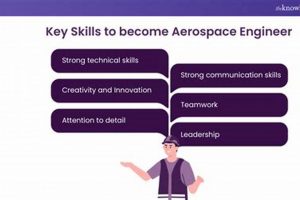
Tip 1: Pursue a Rigorous Academic Foundation: A strong background in mathematics, physics, and engineering principles is essential. Completing a bachelor’s or master’s degree in aerospace engineering, mechanical engineering, or a related field from a reputable institution is crucial. The cole Polytechnique and ISAE-SUPAERO are examples of relevant establishments.
Tip 2: Develop Specialized Skills: Focus on acquiring expertise in specific areas such as aerodynamics, propulsion systems, avionics, or structural analysis. Consider coursework or certifications in relevant software tools like CATIA, ANSYS, or MATLAB to enhance practical capabilities.
Tip 3: Seek Internship Opportunities: Gaining practical experience through internships with leading aerospace companies is highly beneficial. Airbus, Safran, and Thales are prominent organizations that offer internship programs, providing exposure to real-world engineering challenges.
Tip 4: Cultivate Networking Connections: Attend industry conferences, workshops, and career fairs to network with professionals in the field. Engage with alumni networks and professional organizations like 3AF (Association Aronautique et Astronautique de France) to build relationships and gain insights.
Tip 5: Enhance Language Proficiency: While technical skills are paramount, proficiency in French can significantly improve employment prospects, particularly when working for domestic companies or collaborating on international projects.
Tip 6: Demonstrate Innovation and Problem-Solving Abilities: Participate in engineering design competitions or research projects to showcase creativity and problem-solving skills. Highlighting contributions to innovative solutions can distinguish candidates in a competitive job market.
Tip 7: Stay Abreast of Technological Advancements: The sector is constantly evolving. Continuously update knowledge of emerging technologies such as advanced materials, additive manufacturing, and artificial intelligence to remain competitive and adaptable.
By focusing on a strong academic foundation, specialized skills, practical experience, and professional networking, aspiring engineers can significantly improve their chances of success in this dynamic sector.
The subsequent sections will delve into the current challenges and future opportunities shaping the direction of this technologically advanced field.
1. Engineering Expertise

Engineering expertise forms the bedrock of the nation’s accomplishments in the aeronautical and astronautical fields. This expertise, encompassing a deep understanding of scientific principles, advanced design techniques, and rigorous testing methodologies, is the driving force behind the creation of innovative and reliable aerospace systems. Without this highly skilled workforce, the nation would not be able to compete on a global stage, let alone develop and manufacture cutting-edge aircraft and spacecraft. The sectors success relies heavily on the training and capabilities of engineers in areas such as aerodynamics, propulsion, materials science, and control systems. For example, the design and optimization of the A350’s wing, a complex aerodynamic feat, is a direct result of the nation’s advanced aeronautical engineering knowledge.
The practical significance of this expertise extends beyond the design phase. It is equally crucial in the manufacturing, testing, and certification processes that ensure the safety and reliability of aerospace products. Consider the development of the Ariane launch system. This project demanded a highly coordinated effort involving engineers from various disciplines, all contributing their specialized knowledge to overcome complex technical challenges and ensure the successful launch of satellites. The capacity to integrate diverse engineering skills and knowledge is essential for achieving ambitious aerospace goals.
In summary, engineering expertise is not merely a component of the nation’s aeronautical and astronautical capabilities; it is the core enabler. It fuels innovation, drives advancements in technology, and ensures the continued competitiveness of the sector on the world stage. Maintaining and developing this expertise through education, research, and industry collaboration is paramount to sustaining its position as a global leader in the aeronautical and astronautical domains.
2. Technological Innovation
Technological innovation is inextricably linked to the nation’s capabilities in aerospace engineering. Innovation serves as the catalyst for advancements in design, materials, propulsion, and manufacturing processes, directly impacting the performance, efficiency, and safety of aircraft and spacecraft. Without a continuous drive for innovation, the nation would be unable to maintain a competitive edge in the global aerospace market. The development of the LEAP engine, a collaborative project involving a domestic company, exemplifies this. The engine’s advanced materials and fuel-efficient design were results of sustained technological innovation, offering significantly improved performance compared to previous generations.
The integration of new technologies impacts various aspects of aerospace engineering. The use of computational fluid dynamics (CFD) for aerodynamic design, for instance, allows engineers to simulate airflow and optimize aircraft shapes, leading to reduced drag and improved fuel efficiency. Similarly, the adoption of advanced composite materials, such as carbon fiber reinforced polymers, enables the creation of lighter and stronger aircraft structures. These materials enhance performance and reduce fuel consumption, as demonstrated in the construction of the A350. Furthermore, innovations in autonomous flight systems, driven by developments in artificial intelligence and sensor technology, are paving the way for safer and more efficient air traffic management systems.
In conclusion, technological innovation is not merely a desirable aspect of the aerospace engineering sector; it is an essential driver of progress. By fostering research and development, supporting collaboration between industry and academia, and encouraging the adoption of emerging technologies, the nation can ensure its continued leadership in the global aerospace arena. However, sustained investment in fundamental research and the development of skilled personnel are crucial to address the inherent challenges associated with technological advancement in this complex and demanding field.
3. Research and Development

Research and development (R&D) forms a critical component within the French aerospace engineering landscape. Substantial investment in R&D activities directly influences advancements in aircraft design, propulsion systems, materials science, and avionics. This investment creates a cycle wherein basic scientific discoveries are translated into practical engineering applications, enhancing the performance, safety, and efficiency of aerospace systems. The nation’s strong tradition of aerospace engineering is, therefore, inextricably linked to its dedication to R&D. A prime example is the nation’s role in the development of the Ariane rocket program. Continuous research into propulsion technologies and materials has enabled the Ariane series to remain competitive in the global launch market. This commitment to innovation illustrates the tangible benefits derived from sustained R&D efforts.
Further analysis reveals that R&D not only drives technological progress but also supports the creation of high-skilled jobs and fosters a robust industrial ecosystem. Academic institutions, research organizations, and aerospace companies collaborate on R&D projects, leveraging their respective expertise to tackle complex engineering challenges. For example, partnerships between universities and companies like Airbus are common, leading to joint research initiatives focused on areas such as reducing aircraft noise and improving fuel efficiency. The practical applications of this collaborative approach are evident in the development of more environmentally friendly aircraft designs and the integration of advanced technologies into existing aerospace platforms. Government funding and support policies play a crucial role in facilitating such collaborations and incentivizing innovation.
In conclusion, R&D is not merely an ancillary activity within the French aerospace sector; it is a foundational element that underpins its technological leadership and economic competitiveness. Addressing challenges related to funding stability and fostering stronger links between research outcomes and industrial applications are essential to ensuring the long-term success of the nation’s aerospace industry. Continued investment in R&D is, therefore, paramount for maintaining its position at the forefront of global aerospace innovation.
4. Industrial Capacity

Industrial capacity represents a core determinant in translating engineering innovation into tangible aerospace systems. This capacity, encompassing manufacturing facilities, skilled labor, and supply chain infrastructure, directly influences the volume, quality, and cost-effectiveness of aerospace production. The nation’s achievements in aerospace engineering are dependent on its ability to scale up production of complex components and integrate them into finished aircraft and spacecraft. The Airbus production facilities in Toulouse, for example, illustrate the significance of industrial capacity. These facilities, equipped with advanced manufacturing technologies and a highly skilled workforce, enable the mass production of aircraft such as the A320 family and the A350, contributing significantly to the company’s global market share.
The impact of industrial capacity extends beyond final assembly. It necessitates a robust network of suppliers capable of producing specialized components and materials. The supply chain must be reliable and resilient, ensuring that manufacturers can meet production targets without delays. Consider the production of aircraft engines. Domestic companies specializing in engine manufacturing and maintenance play a crucial role in supplying power plants for aircraft built both domestically and internationally. The presence of these specialized manufacturers contributes significantly to the nation’s overall aerospace capabilities.
In conclusion, industrial capacity is not merely a supportive function of aerospace engineering; it is a fundamental pillar. Without sufficient manufacturing infrastructure and a skilled workforce, innovative designs remain conceptual. Ongoing investment in modernizing production facilities, developing skilled labor, and fostering a resilient supply chain are essential to maintaining the nation’s competitive edge in the global aerospace arena. Addressing potential challenges related to supply chain disruptions and ensuring access to skilled labor are critical for sustaining the long-term viability of its aerospace industry.
5. Government Support
Government support is an indispensable element underpinning the strength and competitiveness of the nation’s aerospace engineering sector. This support manifests through various policies, funding mechanisms, and strategic initiatives designed to foster innovation, promote research and development, and ensure the industry’s continued growth.
- Direct Funding and Grants
Direct financial contributions, including grants and subsidies, are allocated to aerospace companies and research institutions. These funds support specific projects aimed at developing cutting-edge technologies, enhancing manufacturing processes, and improving the overall competitiveness of the sector. For instance, governmental bodies provide funding for research into sustainable aviation fuels, directly incentivizing advancements in environmentally friendly aerospace technologies. This financial support mitigates the risks associated with long-term R&D projects, encouraging companies to invest in innovation.
- Tax Incentives and Credits
Tax incentives and credits are implemented to encourage investment in aerospace research and development. These measures reduce the financial burden on companies engaged in innovative activities, fostering a favorable environment for technological advancement. Examples include tax breaks for companies that invest in new aerospace manufacturing equipment or for those that conduct research in partnership with public universities. These incentives not only reduce costs but also stimulate collaboration between industry and academia.
- Strategic Partnerships and Collaborative Programs
The government actively facilitates strategic partnerships between aerospace companies, research institutions, and international organizations. These collaborative programs leverage the combined expertise and resources of various stakeholders to achieve common goals, such as developing new aircraft designs or enhancing air traffic management systems. The Clean Sky program, a public-private partnership aimed at developing environmentally friendly aviation technologies, exemplifies this approach. These partnerships accelerate the pace of innovation and enhance the overall effectiveness of aerospace research efforts.
- Regulatory Framework and Standards
The government establishes a regulatory framework that promotes safety, security, and environmental sustainability within the aerospace sector. This framework includes standards for aircraft design, manufacturing, and operation, ensuring that all aerospace activities adhere to stringent quality and safety requirements. Compliance with these regulations not only protects the public but also enhances the reputation of the nation’s aerospace industry. Furthermore, the government actively participates in international standardization efforts, ensuring that the nation’s aerospace products and services meet global standards, enhancing their export potential.
These facets of governmental support collectively create a conducive environment for the growth and innovation within the nation’s aerospace engineering sector. By providing financial incentives, fostering collaboration, and establishing a robust regulatory framework, the government plays a vital role in ensuring the sector’s continued success and global competitiveness. The ongoing dialogue between the government, industry, and research institutions is crucial for adapting support mechanisms to address emerging challenges and capitalize on future opportunities in the rapidly evolving aerospace landscape.
Frequently Asked Questions
This section addresses common inquiries concerning the aerospace engineering field within the nation. The aim is to provide clear and concise responses grounded in factual information.
Question 1: What are the primary strengths of the aerospace engineering industry in France?
The sector benefits from a combination of factors: a highly skilled workforce, significant government investment in research and development, a strong tradition of innovation, and the presence of major global players like Airbus and Safran. This confluence of factors results in a competitive and technologically advanced industry.
Question 2: What are the key areas of specialization within aerospace engineering in France?
Specialization areas encompass aerodynamics, propulsion systems, avionics, materials science, structural analysis, and space systems engineering. These specializations are critical for developing and manufacturing aircraft, spacecraft, and related technologies.
Question 3: What are some prominent educational institutions for aerospace engineering studies in France?
cole Polytechnique, ISAE-SUPAERO, and ENAC (cole Nationale de l’Aviation Civile) are leading institutions offering comprehensive aerospace engineering programs. These establishments provide students with a rigorous academic foundation and practical skills.
Question 4: What role does research and development play in the nation’s aerospace industry?
Research and development are integral to the industry’s success. Significant investment is directed towards advancing aerospace technologies, developing new materials, and improving the efficiency and sustainability of aerospace systems. Public-private partnerships are common in this sphere.
Question 5: What are the career prospects for aerospace engineers in France?
Career prospects are generally favorable, with opportunities available in aircraft manufacturing, space technology, research institutions, and related support services. The demand for skilled engineers is influenced by the overall health of the global aerospace market and the specific needs of domestic companies.
Question 6: What challenges currently face the aerospace engineering industry in France?
Challenges include maintaining competitiveness in a global market, adapting to evolving environmental regulations, managing supply chain complexities, and addressing the skills gap. Overcoming these challenges requires strategic planning and sustained investment in education and innovation.
In summary, the aerospace engineering sector in France is characterized by its technological prowess, skilled workforce, and strategic government support. Addressing ongoing challenges and fostering continued innovation are paramount for sustaining its position as a global leader.
The succeeding sections will delve into emerging trends and future directions within this dynamic field.
France Aerospace Engineering
This exploration has highlighted key facets of the nation’s endeavors in aeronautical and astronautical technological development. The convergence of engineering expertise, technological innovation, research and development, robust industrial capacity, and sustained government support underscores the strategic importance of this sector. These elements collectively contribute to the nation’s global competitiveness and technological advancement.
Sustained commitment to these core areas is paramount. Continued investment in education, infrastructure, and research is essential for navigating future challenges and maintaining a leadership position in this critical industry. The future trajectory of aerospace engineering within the country will be determined by its ability to adapt, innovate, and collaborate on a global scale. The sector’s significance extends beyond economic gains, directly impacting national security and technological progress.