Aspiring aerospace engineers require a strong foundation in science, technology, engineering, and mathematics (STEM). The typical path involves obtaining a bachelor’s degree in aerospace engineering or a closely related field such as mechanical engineering. This undergraduate curriculum emphasizes coursework in aerodynamics, propulsion, structural analysis, control systems, and materials science. Practical experience through internships or research projects is also highly beneficial.
A robust educational background is crucial for success in this demanding profession. It provides the analytical and problem-solving skills necessary to design, develop, test, and maintain aircraft, spacecraft, and related systems. The benefits extend to contributing to advancements in air travel, space exploration, and national defense. Historically, formal education in aeronautics and astronautics has been fundamental to progress in these fields, evolving from basic principles to sophisticated computational methods.
The subsequent sections will detail specific degree requirements, advanced study options, specialized skills acquired through education, and the role of continuing education in maintaining professional competency within the aerospace engineering domain. Understanding these facets is paramount for individuals seeking to enter and thrive in this intellectually stimulating and technologically driven career.
Essential Guidance for Aspiring Aerospace Engineers
The following recommendations provide actionable insights for those pursuing a career in aerospace engineering, focusing on the academic and professional preparation necessary for success.
Tip 1: Prioritize a Strong STEM Foundation: Excellence in mathematics and physics during secondary education is critical. These subjects form the bedrock of engineering principles applied in aerospace contexts.
Tip 2: Select an Accredited Undergraduate Program: Ensure the chosen university’s aerospace engineering program is accredited by ABET (Accreditation Board for Engineering and Technology). Accreditation signifies adherence to established quality standards.
Tip 3: Gain Hands-on Experience: Actively seek internships, co-op programs, or research opportunities related to aerospace. Practical application of theoretical knowledge is invaluable.
Tip 4: Cultivate Programming Skills: Proficiency in programming languages such as MATLAB, Python, or C++ is increasingly essential for modeling, simulation, and data analysis in aerospace engineering.
Tip 5: Focus on Specialization: Within aerospace engineering, identify specific areas of interest such as aerodynamics, propulsion, or structures. Tailoring coursework and projects to a chosen specialization can enhance career prospects.
Tip 6: Develop Strong Communication Skills: Aerospace engineers frequently collaborate on projects and present findings. Effective written and verbal communication skills are crucial for conveying technical information clearly and concisely.
Tip 7: Consider Advanced Studies: A master’s degree or doctorate can provide a deeper understanding of specialized topics and open doors to research and development roles. Assess career goals to determine the necessity of postgraduate education.
By diligently following these guidelines, prospective aerospace engineers can significantly enhance their preparedness for the challenges and opportunities within this demanding yet rewarding field.
The ensuing section will address the ongoing learning and professional development expected throughout an aerospace engineer’s career.
1. Bachelor's Degree (Engineering)

A bachelor’s degree in engineering, particularly in aerospace engineering or a closely related field such as mechanical or electrical engineering, serves as the foundational academic requirement for entering the aerospace profession. This degree provides the fundamental scientific and engineering principles necessary for the design, development, and analysis of aerospace systems.
- Core Engineering Principles
The undergraduate curriculum covers essential concepts in thermodynamics, fluid mechanics, solid mechanics, and electrical circuits. These principles are applicable across various engineering disciplines and provide a common base for understanding more specialized aerospace topics. For example, the principles of fluid mechanics are critical for analyzing airflow over aircraft wings, while solid mechanics informs the structural design of spacecraft.
- Specialized Aerospace Coursework
Aerospace-specific courses build upon the core engineering foundation, delving into areas such as aerodynamics, propulsion, aircraft and spacecraft design, and control systems. Aerodynamics courses teach students how to analyze and predict aerodynamic forces on aircraft, while propulsion courses cover the design and operation of jet engines and rocket engines. These specialized topics equip students with the knowledge needed to tackle aerospace-specific challenges.
- Mathematical Proficiency
A strong mathematical background is indispensable for aerospace engineers. The curriculum includes calculus, differential equations, linear algebra, and numerical methods. These mathematical tools are essential for modeling and simulating complex aerospace systems. For instance, differential equations are used to model the motion of an aircraft, while numerical methods enable the solution of complex engineering problems that lack analytical solutions.
- Laboratory and Design Experience
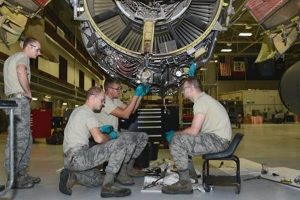
Bachelor’s programs incorporate hands-on laboratory experiments and design projects to reinforce theoretical concepts and develop practical skills. Students might design and build a small-scale aircraft, conduct wind tunnel tests, or simulate the performance of a rocket engine. These experiences provide valuable exposure to the engineering design process and prepare students for real-world engineering challenges.
In conclusion, a bachelor’s degree in engineering provides the essential knowledge, skills, and practical experience required for individuals pursuing a career in aerospace engineering. While further specialization through advanced degrees or professional certifications may be pursued, the undergraduate degree serves as the crucial first step in meeting the educational requirements for the profession.
2. Aerospace Specialization

Aerospace specialization within an engineering education is a pivotal component of what is needed to become an aerospace engineer. While a broad engineering foundation is valuable, focused study in aerospace-specific subjects is essential for acquiring the expertise necessary to design, analyze, and develop aircraft, spacecraft, and related systems. This specialization involves rigorous coursework in areas directly relevant to aerospace applications, ensuring graduates possess the knowledge and skills demanded by the industry. For instance, understanding aerodynamics is critical for designing efficient aircraft wings, while knowledge of propulsion systems is necessary for developing advanced jet engines and rocket motors. Without this specialized knowledge, engineers would lack the depth of understanding required to contribute meaningfully to aerospace projects.
The practical implications of aerospace specialization are evident in the roles aerospace engineers fulfill. They may work on projects ranging from designing the next generation of commercial airliners to developing satellites for communication and remote sensing. Their specialized education equips them with the ability to apply theoretical principles to real-world engineering challenges. For example, an engineer specializing in structural analysis would use their knowledge to ensure that an aircraft’s wings can withstand the stresses of flight, while an engineer specializing in control systems would design the autopilot system to maintain stability and trajectory. These specialized skills directly contribute to the safety, performance, and reliability of aerospace systems.
In summary, aerospace specialization represents a crucial link in the chain of education required to become a competent aerospace engineer. It transforms a general engineering foundation into targeted expertise, enabling engineers to address the complex challenges inherent in the aerospace field. Though foundational engineering principles offer a starting point, the depth and breadth of specialized knowledge gained through focused aerospace coursework are indispensable for successful contributions to this demanding and innovative industry.
3. Advanced Mathematics

Advanced mathematics constitutes a cornerstone of the educational requirements for aspiring aerospace engineers. The complexities inherent in aerospace engineering necessitate a robust understanding of mathematical principles beyond the scope of introductory calculus. These advanced mathematical tools are essential for modeling, analyzing, and predicting the behavior of aerospace systems.
- Differential Equations
Differential equations are fundamental for modeling dynamic systems, such as the motion of an aircraft through the atmosphere or the control system governing a satellite’s orientation. Aerospace engineers utilize differential equations to analyze stability, predict performance, and design control algorithms. For instance, the Navier-Stokes equations, a set of partial differential equations, are used to model fluid flow around aircraft wings, enabling engineers to optimize wing designs for improved lift and reduced drag. Understanding and applying these equations are vital in the educational preparation of an aerospace engineer.
- Linear Algebra
Linear algebra provides the mathematical framework for analyzing and manipulating vectors and matrices, which are essential for representing spatial relationships and performing transformations in three-dimensional space. Aerospace engineers employ linear algebra in areas such as structural analysis, flight dynamics, and control systems. Finite element analysis, a widely used technique for simulating stress and strain in aerospace structures, relies heavily on linear algebra to solve large systems of equations. Furthermore, linear algebra is essential for representing and manipulating coordinate systems used in navigation and guidance systems.
- Complex Analysis
Complex analysis, dealing with functions of complex numbers, is crucial for analyzing oscillatory phenomena and designing control systems. In aerospace engineering, complex analysis is employed to study the stability of feedback control systems, analyze signal processing algorithms, and model electromagnetic wave propagation. The Laplace transform, a technique based on complex analysis, is widely used for designing controllers that maintain stability and performance in the presence of disturbances and uncertainties.
- Numerical Methods
Numerical methods provide techniques for approximating solutions to mathematical problems that cannot be solved analytically. These methods are essential for solving complex engineering problems in aerospace, such as simulating fluid flow around an aircraft or optimizing the design of a rocket nozzle. Computational fluid dynamics (CFD), a widely used tool in aerospace engineering, relies on numerical methods to solve the Navier-Stokes equations. Similarly, optimization algorithms, which are also based on numerical methods, are used to design aerospace structures with minimal weight and maximum strength.
In conclusion, advanced mathematics serves as an indispensable foundation for the analytical and problem-solving skills required of aerospace engineers. The ability to apply these mathematical tools to real-world engineering challenges is a defining characteristic of a well-prepared aerospace professional. The mastery of these concepts is integral to meeting the required “education needed to become an aerospace engineer.”
4. Physics Proficiency

Physics proficiency stands as a non-negotiable element in the educational foundation of an aerospace engineer. It is not merely a desirable attribute but a core competency directly influencing the ability to comprehend and manipulate the fundamental principles governing aerospace systems. A deficiency in physics understanding directly translates to an inability to effectively design, analyze, or troubleshoot complex engineering challenges in this field. For example, understanding Newton’s laws of motion is paramount when calculating the trajectory of a spacecraft or determining the forces acting on an aircraft during flight. Without a firm grasp of these laws, accurate predictions and safe designs become unattainable. Physics proficiency provides the framework for understanding concepts such as aerodynamics, propulsion, and structural mechanics, all of which are integral to aerospace engineering.
The direct application of physics principles is evident in numerous facets of aerospace engineering. Consider the design of an aircraft wing. Optimizing the wing’s shape to maximize lift and minimize drag requires a deep understanding of fluid dynamics, a branch of physics. Similarly, the development of a rocket engine necessitates a comprehensive knowledge of thermodynamics and combustion, which are also rooted in physics. The materials used in aerospace structures must be selected based on their physical properties, such as strength, stiffness, and resistance to thermal stress. These properties are determined through rigorous physics-based testing and analysis. Even seemingly abstract concepts like quantum mechanics play a role in the development of advanced sensors and materials used in aerospace applications.
In summary, physics proficiency is not merely a prerequisite but an active and vital component of “what education is needed to become an aerospace engineer.” It provides the essential tools and conceptual understanding necessary to navigate the complexities of the field. Deficiencies in this area can lead to flawed designs, inaccurate analyses, and ultimately, unsafe aerospace systems. Therefore, a robust physics education is critical for ensuring the competence and success of future aerospace engineers. The ability to apply these principles effectively is what separates a competent engineer from one who is merely theoretically informed.
5. Software Competency

Software competency is an indispensable component of the education required for aerospace engineers. Modern aerospace engineering relies heavily on sophisticated software tools for design, analysis, simulation, and control. A lack of proficiency in these tools can significantly hinder an engineer’s ability to contribute effectively to the field.
- Computer-Aided Design (CAD) Software
CAD software is essential for creating detailed 2D and 3D models of aircraft, spacecraft, and their components. Aerospace engineers use CAD tools like CATIA, SolidWorks, and AutoCAD to design complex geometries, optimize designs for manufacturing, and generate engineering drawings. For example, CAD is used to precisely model the intricate shape of an aircraft wing, ensuring it meets aerodynamic specifications. The ability to effectively utilize CAD software is crucial for visualizing and communicating design concepts.
- Computational Fluid Dynamics (CFD) Software
CFD software enables the simulation of fluid flow around aerospace vehicles, providing insights into aerodynamic performance, heat transfer, and other critical phenomena. Tools such as ANSYS Fluent and OpenFOAM allow engineers to analyze the airflow over an aircraft wing, predict drag and lift forces, and optimize designs for improved efficiency. CFD simulations are also used to study the behavior of exhaust plumes from rocket engines, informing the design of launch facilities and mitigating environmental impact. Competency in CFD is vital for understanding and predicting the performance of aerospace systems in fluid environments.
- Finite Element Analysis (FEA) Software
FEA software facilitates the analysis of structural stresses, strains, and deformations in aerospace structures. Engineers use FEA tools like ANSYS Mechanical and ABAQUS to simulate the response of aircraft fuselages, wing structures, and spacecraft components to various loads and environmental conditions. FEA can identify areas of high stress concentration, allowing engineers to optimize designs for strength and durability. For example, FEA is used to ensure that a satellite’s solar panels can withstand the vibrations and accelerations experienced during launch. Proficiency in FEA is crucial for ensuring the structural integrity and reliability of aerospace systems.
- Programming Languages and Scripting
Proficiency in programming languages such as MATLAB, Python, and C++ is increasingly important for aerospace engineers. These languages are used for developing custom analysis tools, automating repetitive tasks, and implementing control algorithms. MATLAB is widely used for signal processing, control system design, and data analysis. Python is valuable for scripting, data visualization, and machine learning applications. C++ is often used for developing high-performance simulation codes and embedded systems. The ability to program and script is essential for tailoring software tools to specific engineering needs and developing innovative solutions.
The software competencies described are integral to the modern practice of aerospace engineering. These skills are essential for design, analysis, simulation, and control. Educational programs must provide adequate training in these areas to equip graduates with the tools needed to succeed in the industry, thereby fulfilling “what education is needed to become an aerospace engineer.”
6. Accredited Program

Accreditation of an aerospace engineering program is a critical factor in determining whether an individual has received the requisite education to enter the profession. It serves as an independent validation that the curriculum, faculty, and resources of the program meet established quality standards. Therefore, selecting an accredited program is a fundamental consideration for anyone pursuing a career in this field.
- ABET Accreditation
The Accreditation Board for Engineering and Technology (ABET) is the primary accrediting body for engineering programs in the United States and internationally. ABET accreditation signifies that a program has undergone rigorous evaluation and meets specific criteria related to curriculum content, faculty qualifications, student outcomes, and continuous improvement. Graduation from an ABET-accredited program is often a prerequisite for professional licensure as a Professional Engineer (PE).
- Curriculum Standards
Accredited aerospace engineering programs adhere to specific curriculum standards that ensure students receive a comprehensive education in fundamental engineering principles and specialized aerospace topics. These standards dictate the minimum amount of coursework required in areas such as aerodynamics, propulsion, structures, control systems, and materials science. Accreditation ensures that graduates possess the foundational knowledge necessary to address complex engineering challenges in the aerospace industry.
- Faculty Qualifications
Accredited programs maintain high standards for faculty qualifications, requiring that instructors possess advanced degrees and relevant experience in aerospace engineering. Faculty members must demonstrate expertise in their respective fields through research, publications, and professional activities. Accreditation ensures that students are taught by knowledgeable and experienced instructors who can provide effective guidance and mentorship.
- Employer Recognition
Graduates from accredited aerospace engineering programs are often highly sought after by employers in the aerospace industry. Many companies prioritize hiring graduates from accredited programs, recognizing that these individuals have received a rigorous and comprehensive education. Accreditation provides a signal to employers that a candidate possesses the knowledge, skills, and abilities needed to succeed in an engineering role. Furthermore, it can streamline the hiring process by providing a standardized measure of educational quality.
In summation, accreditation serves as a vital assurance that an aerospace engineering program provides the necessary education to prepare graduates for successful careers. Choosing an accredited program is not simply a matter of preference but a crucial step toward meeting the standards and expectations of the aerospace profession.
7. Practical Experience
Practical experience constitutes a critical, often underestimated, element within the broader scope of “what education is needed to become an aerospace engineer.” While theoretical knowledge acquired through formal education provides the foundation, the application of these principles in real-world scenarios is essential for developing competence and refining skills. This hands-on experience bridges the gap between classroom learning and the demands of the aerospace industry.
- Internships and Co-operative Programs
Internships and co-operative education programs offer invaluable opportunities to apply theoretical knowledge in a professional setting. These experiences provide exposure to real-world engineering challenges, allowing students to develop practical skills in design, analysis, testing, and manufacturing. For example, an internship at an aircraft manufacturer might involve working on a team designing a new wing component or conducting stress analysis on an existing structure. These experiences enhance the educational process by providing context and relevance to coursework.
- Research Projects and Laboratory Work
Participation in research projects and laboratory work provides a platform for developing critical thinking, problem-solving, and experimental skills. Students may work alongside faculty members on cutting-edge research in areas such as aerodynamics, propulsion, or materials science. These experiences allow students to apply their knowledge to solve open-ended problems, design experiments, analyze data, and communicate findings through reports and presentations. For instance, a research project focused on developing new composite materials for spacecraft construction would provide hands-on experience in materials testing, data analysis, and scientific writing.
- Design-Build Projects
Design-build projects, such as designing and constructing a small-scale aircraft or rocket, offer a comprehensive experience in the engineering design process. These projects require students to integrate knowledge from various disciplines, including aerodynamics, structures, propulsion, and control systems, to create a functional system. The experience of working through the entire design process, from conceptualization to fabrication and testing, provides valuable insights into the challenges and trade-offs involved in aerospace engineering. A team designing a small-scale UAV (Unmanned Aerial Vehicle) would gain practical experience in system integration, project management, and teamwork.
- Industry-Sponsored Projects and Competitions
Industry-sponsored projects and participation in engineering competitions, such as the SAE Aero Design competition or the AIAA Design/Build/Fly competition, provide opportunities to work on real-world problems defined by industry professionals. These experiences expose students to the constraints and challenges faced by practicing engineers, such as budgetary limitations, regulatory requirements, and performance targets. These competitions foster teamwork, communication, and problem-solving skills, while also providing networking opportunities with potential employers.
In conclusion, practical experience is not merely supplemental to “what education is needed to become an aerospace engineer” but an intrinsic and indispensable component. It complements theoretical knowledge, fosters critical skills, and provides a bridge to the professional world. The experiences described contribute significantly to the development of competent and well-rounded aerospace engineers capable of addressing the complex challenges of the 21st century.
Frequently Asked Questions
The following questions and answers address common inquiries regarding the educational requirements for a career in aerospace engineering.
Question 1: Is a specific undergraduate degree required?
While a bachelor’s degree in aerospace engineering is the most direct path, degrees in related fields such as mechanical engineering, electrical engineering, or physics can also provide a suitable foundation, provided that relevant aerospace coursework is included or subsequently pursued.
Question 2: How important is a master’s degree in aerospace engineering?
A master’s degree can enhance career prospects, particularly for roles involving research, development, or advanced design. It allows for specialization in areas such as aerodynamics, propulsion, or structural mechanics.
Question 3: Is practical experience during education necessary?
Practical experience, such as internships or research projects, is highly valuable. It provides opportunities to apply theoretical knowledge to real-world problems, develop practical skills, and gain exposure to the aerospace industry.
Question 4: What software skills are essential for aerospace engineers?
Proficiency in software tools used for computer-aided design (CAD), computational fluid dynamics (CFD), finite element analysis (FEA), and programming languages like MATLAB and Python is increasingly important.
Question 5: Why is ABET accreditation important?
ABET accreditation signifies that an engineering program meets established quality standards. Graduates of ABET-accredited programs are often preferred by employers and may be eligible for professional licensure.
Question 6: Can continuing education benefit practicing aerospace engineers?
Continuing education is beneficial for staying abreast of advancements in technology, new design methodologies, and evolving industry standards. It can also enhance career opportunities and professional development.
The educational path for aerospace engineers requires a combination of theoretical knowledge, practical skills, and specialized expertise. Careful planning and commitment are essential for success in this challenging and rewarding field.
The next section delves into career paths and specializations available within the aerospace engineering field.
Concluding Remarks on Aerospace Engineering Education
The preceding exploration of “what education is needed to become an aerospace engineer” underscores the rigorous academic and practical preparation demanded by this profession. A comprehensive undergraduate degree, often followed by advanced studies, provides the foundational knowledge in mathematics, physics, and engineering principles. Specialized aerospace coursework, proficiency in relevant software, and hands-on experience through internships and research projects are indispensable for translating theoretical understanding into practical competence. Accreditation serves as a vital benchmark for program quality, ensuring alignment with industry standards.
The pursuit of a career in aerospace engineering necessitates a sustained commitment to intellectual rigor and continuous learning. As technology advances and the scope of aerospace endeavors expands, the educational landscape will continue to evolve. Aspiring engineers must prioritize a holistic education that equips them not only with technical expertise but also with the critical thinking, problem-solving, and communication skills essential for driving innovation and ensuring the safety and reliability of future aerospace systems. The challenge lies in adapting to and shaping the future of aerospace, fueled by a commitment to lifelong learning and unwavering dedication to engineering excellence.