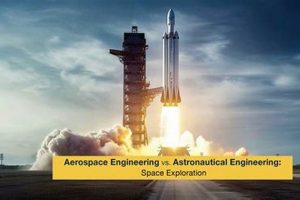
Assessments used in the field of flight vehicle and spacecraft development serve to evaluate a candidate’s proficiency in areas such as aerodynamics, propulsion, structures, and control systems. For instance, a query might probe the understanding of Bernoulli’s principle and its application in wing design or explore different types of rocket engine cycles. The intent is to gauge not just theoretical knowledge but also the ability to apply that knowledge to practical engineering problems.
The value of these evaluations lies in their capacity to identify individuals who possess the technical aptitude and problem-solving skills necessary for success in this demanding sector. Historically, these inquiries have evolved alongside advancements in the field, adapting to incorporate emerging technologies and methodologies. They help ensure that only qualified professionals are entrusted with the design, development, and testing of complex systems critical to both aviation and space exploration.
The following details common subject areas, question types, and effective preparation strategies relevant to these assessments.
Strategies for Technical Assessments in Aerospace Engineering
Technical evaluations within the aerospace sector demand rigorous preparation and a thorough understanding of fundamental engineering principles. The following are strategies to improve performance during these assessments.
Tip 1: Master Fundamental Concepts: A solid grasp of core principles in aerodynamics, thermodynamics, structures, and control systems is paramount. Expect questions that require the application of these concepts to solve practical engineering problems. For instance, be prepared to explain the principles behind lift generation or the operation of different types of propulsion systems.
Tip 2: Review Relevant Coursework: Thoroughly review textbooks, notes, and assignments from relevant coursework. Focus on problem-solving techniques and the application of theoretical knowledge to real-world scenarios. Specifically, revisit materials related to fluid mechanics, heat transfer, stress analysis, and control theory.
Tip 3: Practice Problem Solving: Solve a wide variety of problems related to aerospace engineering principles. This practice helps develop problem-solving skills and builds confidence in one’s abilities. Access online resources, textbooks, and practice exams to find suitable problems.
Tip 4: Understand Industry Standards and Regulations: Familiarize oneself with relevant industry standards and regulations, such as those established by the FAA and NASA. Awareness of these standards demonstrates professionalism and attention to detail.
Tip 5: Prepare for Technical Design Questions: Be ready to discuss design considerations for common aerospace components and systems. This includes the ability to explain the trade-offs involved in different design choices and to justify specific design decisions based on engineering principles.
Tip 6: Develop Strong Communication Skills: The ability to clearly and concisely explain technical concepts is crucial. Practice articulating technical ideas in a way that is easy to understand, even for those who may not be experts in the field. Use diagrams, graphs, and equations to support explanations.
Tip 7: Research the Specific Company/Role: Understand the specific technologies and projects that the company or role is involved in. This allows one to tailor responses to demonstrate relevant knowledge and experience.
By focusing on fundamental knowledge, practicing problem-solving, and developing strong communication skills, candidates can significantly enhance their performance during technical evaluations. Such preparation conveys competence and a commitment to excellence.
Effective preparation, coupled with a clear understanding of core aerospace engineering principles, is vital for navigating these assessments successfully.
1. Aerodynamics Principles

Aerodynamics principles form a cornerstone of aerospace engineering, making them a frequent and crucial subject within technical evaluations for related positions. Assessments frequently explore a candidate’s depth of understanding and ability to apply these principles to solve practical problems related to aircraft and spacecraft design and performance.
- Lift Generation
Technical discussions often delve into the mechanics of lift generation, encompassing topics like pressure distribution over airfoils, the role of angle of attack, and the influence of wing geometry. Expect inquiries involving the application of Bernoulli’s principle and the continuity equation to explain lift. Examples include questions regarding the impact of flap deployment on lift coefficient or the aerodynamic differences between various airfoil designs. A proper evaluation requires demonstration of fundamental knowledge coupled with ability to address complexities associated with real-world designs.
- Drag Reduction
Minimizing drag is vital for fuel efficiency and performance. Technical reviews frequently assess comprehension of different drag components form drag, skin friction drag, and induced drag and strategies for reducing them. Questions may involve designing winglets to minimize induced drag, employing laminar flow control techniques to reduce skin friction, or optimizing aircraft shape to reduce form drag. Candidate responses should demonstrate analytical reasoning alongside a grasp of practical drag reduction methods.
- Stability and Control
Aircraft stability and control are paramount for safe flight. Assessment of related knowledge during technical interviews routinely occurs. Stability considerations encompass both static and dynamic stability, while control aspects cover the effectiveness of control surfaces and the design of control systems. Example assessments might involve calculating the trim angle of an aircraft, analyzing the effect of a tail configuration on longitudinal stability, or discussing the design of a flight control system for a UAV. Successful responses hinge upon an understanding of fundamental stability criteria and related design considerations.
- Compressible Flow
High-speed flight introduces complexities associated with compressible flow. Technical evaluations frequently address phenomena such as shock wave formation, sonic boom generation, and the impact of compressibility on aerodynamic performance. Questions might involve calculating Mach number given airspeed and altitude, analyzing the behavior of flow through a convergent-divergent nozzle, or describing strategies for minimizing wave drag at supersonic speeds. A proper understanding of gas dynamics and its influence on aircraft design is generally expected.
These facets of aerodynamics are not isolated concepts but are intertwined and critically important to the design and operation of aerospace vehicles. Successfully navigating the discussions requires not just a theoretical understanding but the ability to apply these principles to solve real-world aerospace engineering challenges.
2. Propulsion systems
Propulsion systems represent a critical area within aerospace engineering. Therefore, technical evaluations frequently delve into the candidates’ comprehension of various propulsion technologies, their operating principles, and their applications in both atmospheric and space environments. Understanding propulsion is essential for the effective design and analysis of aircraft, spacecraft, and related vehicles, making it a prominent topic in engineering assessments. Without effective propulsion, powered flight is impossible. This cause-and-effect relationship underscores the importance of propulsion expertise. An example is questions on rocket engine cycles which demand intricate knowledge of thermodynamics and fluid dynamics. This also proves that it’s importance as a component.
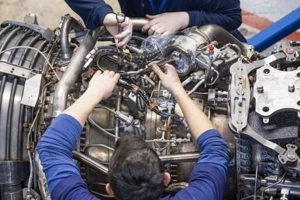
Technical questioning often covers a spectrum of topics, including but not limited to: gas turbine engines, ramjets, scramjets, rocket engines (liquid and solid propellant), and electric propulsion. Assessments may involve analyzing engine performance parameters, such as thrust, specific fuel consumption, and thermal efficiency. Candidates may be asked to compare and contrast different propulsion systems based on factors like mission requirements, operating conditions, and overall performance characteristics. Design-oriented questions can range from nozzle design for optimal thrust to component selection for engine durability. The ability to explain combustion processes and address associated challenges, such as flame stability and emissions control, are also common evaluation points.
The inclusion of propulsion systems in technical assessments reflects the practical significance of this knowledge in real-world aerospace applications. A thorough grasp of propulsion concepts is indispensable for engineers involved in the design, development, and testing of flight vehicles. The assessments not only gauge knowledge, but also problem-solving skills applicable to designing efficient and safe aerospace systems. This knowledge is directly tied to the performance, safety, and environmental impact of aircraft and spacecraft, making it a fundamental aspect of aerospace engineering expertise.
3. Structural analysis

Structural analysis is a fundamental component of aerospace engineering, directly influencing the safety and performance of flight vehicles. Consequently, it frequently arises during technical evaluations for related roles. A comprehensive understanding of structural behavior under various loading conditions is deemed essential for engineers involved in aircraft and spacecraft design, making it a key area of scrutiny. Neglecting structural integrity can lead to catastrophic failures, underscoring the importance of rigorous analysis and sound engineering judgment.
Technical evaluations often include questions pertaining to stress analysis, fatigue analysis, buckling analysis, and finite element methods (FEM). Candidates might be tasked with calculating stress distributions in aircraft wings under aerodynamic loads, assessing the fatigue life of critical components, or determining the critical buckling load of a fuselage section. Practical examples can include discussing the effects of temperature gradients on structural integrity or explaining the rationale behind material selection for specific aerospace applications. Proficiency in FEM software and a demonstrated ability to interpret analysis results are also frequently assessed. These factors all contribute to real world designs
The prominence of structural analysis in technical discussions highlights its practical significance in ensuring the safety and reliability of aerospace vehicles. A thorough grasp of structural principles enables engineers to design robust structures capable of withstanding the extreme environments encountered during flight. Thus, competency in this area is crucial for success in aerospace engineering, and, therefore, a key component of technical assessments for the industry.
4. Control theory

Control theory constitutes a fundamental discipline within aerospace engineering. Consequently, technical evaluations for related positions frequently incorporate questions designed to assess a candidate’s understanding of control systems principles and their application to flight vehicles. The ability to design, analyze, and implement control systems is considered crucial for ensuring the stability, performance, and safety of aircraft and spacecraft.
- Stability Analysis
Stability analysis, a cornerstone of control theory, addresses the behavior of systems when subjected to disturbances. Technical assessments often evaluate the ability to determine stability using techniques such as Bode plots, Nyquist plots, and root locus analysis. For example, a question may involve analyzing the stability of an aircraft’s pitch control system or designing a controller to stabilize an unstable system. Demonstrating a thorough understanding of stability criteria and methods for ensuring stability is essential.
- Control System Design
Control system design encompasses the process of synthesizing controllers to meet specific performance requirements. Technical reviews frequently assess proficiency in designing PID controllers, lead-lag compensators, and state-space controllers. Design challenges often involve achieving desired transient response characteristics (e.g., settling time, overshoot) and steady-state accuracy. Real-world examples may include designing an autopilot system for an aircraft or a trajectory tracking controller for a spacecraft.
- State Space Representation
State space representation provides a powerful framework for analyzing and designing complex control systems. Technical questioning may involve converting transfer functions to state space form, analyzing system observability and controllability, and designing state feedback controllers. This method allows engineers to create models which more efficiently simulate the systems in question. Understanding state space concepts is crucial for tackling advanced control problems in aerospace applications.
- Nonlinear Control
Nonlinear control techniques are essential for dealing with systems exhibiting nonlinear behavior. Technical evaluations might explore understanding of methods such as feedback linearization, sliding mode control, and adaptive control. Such inquiries test knowledge on how to manage complex systems often encountered in aerospace applications, where linear models may not accurately represent system dynamics. These methods are employed to maintain performance in the face of parameter variations or external disturbances.
These facets of control theory underscore its significance in aerospace engineering. Success in technical evaluations requires not only a theoretical understanding of these concepts but also the ability to apply them to practical control system design and analysis problems relevant to aircraft and spacecraft. The understanding of complex systems can greatly help improve results and understanding of new projects.
5. Material science

Material science is intrinsic to aerospace engineering, informing critical decisions about structural integrity, weight reduction, and performance under extreme conditions. Technical evaluations in the aerospace sector, therefore, frequently include inquiries designed to assess a candidate’s understanding of material properties and behavior. Such evaluations serve to determine if a candidate possesses the knowledge necessary to select appropriate materials for specific aerospace applications and to predict their performance under operational stresses. Material selection directly impacts an aircraft’s weight, strength, heat resistance, and overall longevity. Understanding the intricate relationships between material properties and aerospace requirements is therefore paramount.
Consider, for example, the use of aluminum alloys in aircraft fuselages. Interviewers might pose questions about the specific aluminum alloys used, their tensile strength, fatigue resistance, and corrosion behavior. Further, questions may arise regarding the process of selecting alloys based on these properties to meet structural and performance requirements. Another common topic is composite materials, such as carbon fiber reinforced polymers, and their application in aircraft wings and control surfaces. Assessments might involve discussing the advantages and disadvantages of composites compared to metals, considering factors like strength-to-weight ratio, stiffness, and manufacturing costs. Similarly, the properties and applications of high-temperature alloys, such as titanium alloys and nickel-based superalloys, in jet engine components may be explored to evaluate an engineer’s understanding of material behavior at elevated temperatures and their resistance to creep and oxidation.
In conclusion, the connection between material science and technical evaluations in aerospace engineering underscores the practical significance of this knowledge for ensuring the safety, efficiency, and durability of flight vehicles. A thorough understanding of material properties, selection criteria, and failure mechanisms is vital for aerospace engineers to make informed decisions and contribute to the design of advanced aerospace systems. Assessments ensure that candidates demonstrate the proficiency needed to address material-related challenges effectively in the demanding aerospace sector.
Frequently Asked Questions
This section addresses common inquiries regarding technical evaluations for aerospace engineering roles, aiming to provide clarity and guidance for prospective candidates.
Question 1: What is the primary focus of technical evaluations in aerospace engineering?
The central aim is to assess a candidate’s understanding of core aerospace engineering principles and their ability to apply this knowledge to solve practical engineering problems. These assessments scrutinize fundamental competencies across disciplines such as aerodynamics, propulsion, structures, and control systems.
Question 2: Which academic subjects are most relevant to these evaluations?
Key subject areas include fluid mechanics, thermodynamics, heat transfer, structural mechanics, control theory, and materials science. A strong foundation in these subjects is essential for successfully navigating technical evaluations.
Question 3: What types of questions can be anticipated?
Questions may range from theoretical inquiries requiring the application of fundamental principles (e.g., Bernoulli’s principle) to design-oriented problems involving the synthesis of engineering solutions (e.g., airfoil design). Candidates should also be prepared for questions that require analysis of system performance or troubleshooting of technical issues.
Question 4: How important is familiarity with industry standards and regulations?
Knowledge of industry standards and regulations, such as those established by the FAA and NASA, is viewed favorably. Familiarity with these standards demonstrates a commitment to professional practices and a comprehensive understanding of the aerospace landscape.
Question 5: Are communication skills evaluated alongside technical knowledge?
Effective communication skills are indeed crucial. Candidates must articulate technical concepts clearly and concisely, utilizing diagrams, graphs, and equations as necessary to support their explanations. The ability to convey complex ideas in an understandable manner is highly valued.
Question 6: How can one best prepare for these technical evaluations?
Preparation involves a thorough review of relevant coursework, extensive practice in problem-solving, and familiarity with industry standards and regulations. Additionally, researching the specific company or role can allow candidates to tailor their responses and demonstrate relevant knowledge and experience.
Successful navigation of aerospace engineering technical evaluations hinges upon a robust understanding of fundamental principles, strong problem-solving skills, and the ability to communicate effectively. Proactive preparation and a commitment to continuous learning are essential for demonstrating competence and securing opportunities within this demanding field.
The next section will explore advanced topics in aerospace engineering.
Conclusion
The preceding exploration of assessments used in the field of flight vehicle and spacecraft development highlighted the importance of demonstrating proficiency in core areas such as aerodynamics, propulsion, structural analysis, control theory, and material science. These evaluations serve to identify candidates possessing the technical aptitude and problem-solving skills necessary to contribute to the advancement of aerospace technology.
The aerospace sector demands rigorous preparation and a commitment to excellence. Mastering fundamental concepts, practicing problem-solving, and developing strong communication skills are crucial for success. Continuous learning and adaptation to emerging technologies will remain essential for those seeking to shape the future of aerospace engineering. Aspiring professionals are encouraged to embrace these challenges and contribute to this vital field.