A bachelor’s degree in aerospace engineering, or a closely related field such as mechanical engineering, is the fundamental academic requirement for entering this profession. This undergraduate program provides the core scientific and mathematical knowledge necessary to understand the principles governing aircraft and spacecraft design, construction, and operation. The curriculum typically includes coursework in aerodynamics, propulsion, structures, flight mechanics, and control systems. Specific topics might involve the study of fluid dynamics, heat transfer, materials science, and orbital mechanics.
Acquiring specialized knowledge through advanced studies can enhance career prospects and enable engineers to contribute to more complex projects. Master’s degrees and doctoral programs allow for focused research and development in areas like space exploration, advanced materials, or computational fluid dynamics. These advanced degrees often lead to leadership roles in research institutions, government agencies, and private companies, driving innovation in the aerospace sector. Furthermore, advanced credentials may be essential for roles requiring in-depth expertise in specialized areas.
Beyond formal academic qualifications, practical experience obtained through internships, co-operative education programs, or research projects is invaluable. Such opportunities allow aspiring engineers to apply theoretical knowledge to real-world problems, develop essential skills in teamwork and problem-solving, and gain exposure to industry practices. This combination of theoretical grounding and practical application is crucial for success in the demanding field of aerospace engineering. Professional licensure, while not always mandatory, demonstrates competency and commitment to ethical practice, enhancing credibility and opening doors to certain roles.
Guidance on Academic Preparation for Aerospace Engineering
The following recommendations are provided to individuals pursuing a career in aerospace engineering. Adhering to these suggestions can strengthen one’s candidacy for educational programs and subsequent professional opportunities.
Tip 1: Emphasize a Strong Foundation in Mathematics and Science: Excellence in mathematics and physics is paramount. Focus on mastering calculus, differential equations, linear algebra, and fundamental physics concepts. A solid grasp of these subjects is crucial for understanding advanced aerospace engineering principles.
Tip 2: Select Relevant Coursework: Prioritize courses in mathematics, physics, computer science, and engineering during secondary education. Consider advanced placement or honors courses to demonstrate a commitment to academic rigor. Exposure to programming languages like Python or MATLAB can be advantageous.
Tip 3: Seek Extracurricular Activities: Participate in science clubs, robotics competitions, or aviation-related activities. These experiences demonstrate interest in the field and provide opportunities for hands-on learning and skill development. Involvement in STEM-focused organizations can enhance a college application.
Tip 4: Pursue Internships or Research Opportunities: Seek opportunities to gain practical experience through internships at aerospace companies or research assistant positions at universities. These experiences provide valuable insights into the industry and allow individuals to apply their knowledge in real-world settings.
Tip 5: Develop Strong Communication Skills: Effective communication is essential for collaboration and conveying technical information. Focus on developing strong writing and presentation skills through coursework and extracurricular activities. Participation in debate or public speaking can be beneficial.
Tip 6: Choose an Accredited Program: When selecting an undergraduate program, ensure that it is accredited by ABET (Accreditation Board for Engineering and Technology). Accreditation signifies that the program meets established standards of quality and rigor.
Tip 7: Network with Professionals: Attend industry conferences, career fairs, and networking events to connect with aerospace engineers and learn about career opportunities. Building relationships with professionals in the field can provide valuable guidance and mentorship.
By concentrating on these areas, prospective aerospace engineers can significantly improve their prospects for academic success and professional advancement. A dedication to rigorous study and practical experience is essential for a fulfilling career in this demanding field.
The subsequent sections of this document will delve into more advanced topics related to career development within aerospace engineering.
1. Bachelor's Degree

A bachelor’s degree serves as the cornerstone of education for aspiring aerospace engineers. Considering “what education is needed to be a aerospace engineer”, the bachelor’s degree provides the foundational knowledge and skills necessary to enter the profession. It represents the initial, critical step in acquiring the expertise required to design, develop, test, and maintain aircraft, spacecraft, and related systems. Without this base, advanced specialization and practical application are significantly hindered. The curriculum, typically encompassing mathematics, physics, and core engineering principles, provides the necessary framework for understanding complex aerospace concepts.
The impact of a bachelor’s degree is evident in various professional scenarios. For example, a newly graduated aerospace engineer might begin their career performing structural analysis on aircraft components or assisting in the design of satellite propulsion systems. These tasks directly utilize the fundamental knowledge acquired during their undergraduate studies. Furthermore, a bachelor’s degree often unlocks entry-level positions within government agencies like NASA or private aerospace companies such as Boeing or SpaceX. The practical application of this education is demonstrated by engineers contributing to real-world projects involving aircraft design optimization, spacecraft trajectory planning, or the development of new aerospace technologies.
In summary, a bachelor’s degree is the essential starting point, and therefore intrinsically linked to “what education is needed to be a aerospace engineer,” providing the prerequisite knowledge and skills for entry into the field. Its importance lies not only in theoretical understanding but also in enabling practical application within the aerospace industry. Challenges exist in keeping the curriculum current with rapidly evolving technologies. However, a solid undergraduate foundation remains paramount for individuals seeking a successful career in aerospace engineering, preparing them for advanced learning and professional opportunities.
2. Engineering Fundamentals

Engineering fundamentals constitute a core component of education for aspiring aerospace engineers. Addressing “what education is needed to be a aerospace engineer” necessitates a detailed examination of these fundamental principles, which provide the analytical and problem-solving skills essential for success in the field.
- Thermodynamics
Thermodynamics, the study of energy and its transformations, is crucial for understanding propulsion systems and thermal management in aerospace applications. The design and optimization of jet engines, rocket engines, and spacecraft thermal control systems rely heavily on thermodynamic principles. Understanding heat transfer, fluid dynamics, and combustion processes allows engineers to improve efficiency and performance. For example, the analysis of the thermodynamic cycle of a jet engine enables engineers to optimize its fuel consumption and thrust output. Therefore, thermodynamics is essential when considering “what education is needed to be a aerospace engineer”.
- Fluid Mechanics
Fluid mechanics is paramount in the design of aircraft and spacecraft. Aerodynamic performance, lift generation, drag reduction, and stability are all governed by the principles of fluid flow. Understanding boundary layers, turbulence, and compressible flow enables engineers to design airfoils, control surfaces, and propulsion systems that maximize efficiency and maneuverability. The design of aircraft wings, for instance, requires a deep understanding of fluid mechanics to ensure optimal lift and minimal drag, which makes this topic a crucial consideration for determining “what education is needed to be a aerospace engineer”.
- Materials Science
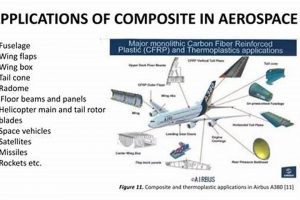
The selection of appropriate materials is critical in aerospace engineering due to the extreme conditions encountered, including high stresses, extreme temperatures, and corrosive environments. Materials science provides the knowledge to choose and characterize materials with the required strength, stiffness, weight, and resistance to degradation. The development of lightweight composites and high-temperature alloys is essential for improving aircraft performance and spacecraft durability. For example, the use of carbon fiber reinforced polymers in aircraft structures enables weight reduction and increased fuel efficiency, so Materials Science has to be considered when addressing “what education is needed to be a aerospace engineer”.
- Structural Analysis
Structural analysis is essential for ensuring the integrity and safety of aerospace vehicles. Understanding stress, strain, and deformation allows engineers to design structures that can withstand the loads encountered during flight and space travel. Finite element analysis (FEA) is a powerful tool used to simulate and analyze the structural behavior of complex aerospace components. The design of aircraft fuselages and wings requires meticulous structural analysis to ensure they can withstand aerodynamic forces and internal pressure. This is a key skill needed, and so must be considered when addressing “what education is needed to be a aerospace engineer”.
In conclusion, engineering fundamentals provide the essential building blocks for a comprehensive education in aerospace engineering. Understanding these principles is not only crucial for solving complex engineering problems but also for driving innovation and advancing the field. The mastery of these fundamentals forms an intrinsic part of “what education is needed to be a aerospace engineer”, enabling graduates to contribute meaningfully to the design and development of future aerospace systems.
3. Specialized Coursework

The link between specialized coursework and the necessary qualifications for a career in aerospace engineering is direct and consequential. Specialized coursework addresses advanced topics within the aerospace domain, providing a deeper understanding beyond general engineering principles. Without this targeted education, engineers are limited in their ability to contribute to sophisticated design, analysis, and research endeavors. The acquisition of specialized knowledge is a crucial determinant of competency in specific sub-disciplines such as propulsion, aerodynamics, astrodynamics, or aerospace structures. For instance, a course on advanced composite materials equips an engineer with the skills to design lightweight and high-strength components for aircraft or spacecraft, an area where generic engineering knowledge falls short.
Practical significance arises from the increasing complexity of aerospace systems. A satellite engineer tasked with optimizing orbital trajectories requires specific coursework in astrodynamics and orbital mechanics. Similarly, engineers designing the next generation of hypersonic vehicles need specialized knowledge of compressible flow, high-temperature materials, and advanced propulsion systems. Specialized coursework provides the theoretical foundation and practical tools necessary for tackling these challenges. Moreover, regulatory compliance and safety standards within the aerospace industry demand engineers with detailed knowledge of specific systems and their performance characteristics, knowledge that can only be acquired through focused education.
In conclusion, specialized coursework forms an indispensable component of the educational prerequisites for aerospace engineers. It bridges the gap between foundational knowledge and the practical demands of the profession, enabling engineers to contribute meaningfully to innovation and problem-solving. Challenges lie in adapting curricula to the rapidly evolving technological landscape and ensuring accessibility to specialized training. However, focused education remains paramount for equipping aerospace engineers with the expertise necessary to address the future challenges of flight and space exploration.
4. Practical Experience

The role of practical experience is integral to any assessment of “what education is needed to be a aerospace engineer.” Formal education provides the theoretical underpinnings, but practical application solidifies understanding, develops crucial skills, and prepares individuals for the realities of the aerospace industry. This integration of theoretical knowledge with hands-on application is essential for transforming aspiring engineers into capable professionals.
- Internships and Co-operative Education Programs
Internships and co-operative education programs offer structured opportunities to work within aerospace companies or research institutions. These placements allow students to apply their classroom knowledge to real-world projects, gaining exposure to industry standards and practices. For example, an intern might assist in the design of an aircraft wing or contribute to the testing of a satellite component. These experiences provide invaluable insights into the practical challenges of aerospace engineering, complementing theoretical knowledge and highlighting areas for further academic focus.
- Research Projects and Laboratory Work
Participation in research projects and laboratory work enables students to engage in hands-on experimentation and analysis. These activities foster critical thinking, problem-solving skills, and the ability to design and conduct experiments. For instance, a student might conduct wind tunnel tests to study aerodynamic performance or develop algorithms for autonomous flight control. This direct involvement in research allows students to deepen their understanding of fundamental principles and contribute to the advancement of aerospace technology. Research experiences also expose students to the iterative nature of engineering design and the importance of data analysis and interpretation, essential elements in considering “what education is needed to be a aerospace engineer.”
- Design Projects and Competitions
Design projects and competitions provide opportunities for students to apply their knowledge and skills to the development of innovative aerospace solutions. These projects often involve teamwork, communication, and the ability to manage complex engineering challenges. Examples include designing and building unmanned aerial vehicles (UAVs) for specific missions or participating in competitions focused on rocket propulsion or satellite design. The challenges inherent in these projects necessitate the integration of theoretical knowledge with practical considerations, fostering creativity, and enhancing problem-solving abilities, thus, improving the student when consider “what education is needed to be a aerospace engineer”.
- Software and Simulation Tools
Proficiency in industry-standard software and simulation tools is crucial for aerospace engineers. Practical experience using computer-aided design (CAD) software, computational fluid dynamics (CFD) software, and finite element analysis (FEA) software allows students to simulate and analyze complex aerospace systems. This hands-on experience with these tools enables engineers to optimize designs, predict performance, and identify potential problems before physical prototypes are built. Acquiring these skills through coursework, projects, and internships enhances employability and prepares students for the demands of modern aerospace engineering, and so the right education is necessary to handle these tools.
These varied forms of practical experience, from structured internships to independent research projects, collectively contribute to a well-rounded education for aspiring aerospace engineers. They provide opportunities to apply theoretical knowledge, develop essential skills, and gain exposure to the realities of the aerospace industry. This integrated approach to education ensures that graduates are not only knowledgeable but also capable of contributing effectively to the advancement of aerospace technology and so improves their skills in realtion to “what education is needed to be a aerospace engineer.”
5. Advanced Degrees
An advanced degree, typically a Master of Science or a Doctor of Philosophy, represents a significant escalation in the educational journey for an aerospace engineer. The pursuit of such a degree directly addresses the question of “what education is needed to be a aerospace engineer” by providing specialized knowledge and research skills beyond the scope of a bachelor’s program. While a bachelor’s degree establishes a foundational understanding, advanced degrees enable engineers to delve into niche areas, fostering innovation and expertise essential for tackling complex challenges within the field. The cause-and-effect relationship is evident: a need for deeper, more specialized knowledge leads to the pursuit of an advanced degree, which then enables the engineer to contribute to advanced research and development projects. For example, an engineer seeking to specialize in hypersonic aerodynamics would likely require a Master’s or Doctoral degree with coursework and research focused on compressible flow, high-temperature gas dynamics, and related computational methods. This expertise would be invaluable in designing the next generation of high-speed vehicles.
The practical significance of advanced degrees is manifested in various career paths. Individuals holding advanced degrees often assume leadership roles in research and development, guiding projects that push the boundaries of aerospace technology. They may lead teams designing novel propulsion systems, developing advanced materials for spacecraft, or creating innovative solutions for air traffic management. Moreover, advanced degrees are frequently a prerequisite for faculty positions at universities, enabling individuals to contribute to the education of future aerospace engineers and the advancement of aerospace knowledge. Consider the role of a research scientist at NASA developing advanced algorithms for autonomous spacecraft navigation; this position would almost invariably require a Ph.D. in aerospace engineering or a closely related field. The specialized skills acquired through advanced studies are directly applied to address critical challenges in aerospace research and development, driving technological progress.
In summary, advanced degrees are integral to answering the question of “what education is needed to be a aerospace engineer” for those seeking to specialize, lead research efforts, or educate future generations. They bridge the gap between foundational knowledge and the expertise required to innovate and solve complex problems in the aerospace industry. A challenge lies in ensuring accessibility to advanced education and aligning curricula with the evolving needs of the industry. However, the pursuit of advanced degrees remains a crucial pathway for aerospace engineers aspiring to contribute to the forefront of technological advancement and to shape the future of flight and space exploration.
6. Professional Licensure
Professional licensure, specifically the designation of Professional Engineer (PE), bears a complex but discernible relationship to “what education is needed to be a aerospace engineer.” While not universally mandated for all aerospace engineering roles, licensure signifies a level of competency, experience, and ethical commitment that can be advantageous for specific career paths. The underlying cause of this relationship stems from the fact that licensure requires a combination of accredited education, practical experience, and the successful completion of rigorous examinations. Therefore, a strong educational foundation is a necessary, though not sufficient, condition for achieving licensure. The importance of PE licensure as a component of “what education is needed to be a aerospace engineer” lies in its demonstration of an engineer’s ability to safeguard public health, safety, and welfare. This is particularly crucial in aerospace, where design failures can have catastrophic consequences. For example, an aerospace engineer overseeing the structural design of an aircraft wing might be required to hold a PE license to ensure compliance with safety regulations and industry standards. Without such licensure, the engineer’s capacity to independently approve designs or assume ultimate responsibility for their structural integrity might be limited.
Further analysis reveals that PE licensure is often valued in roles involving direct oversight of engineering projects, particularly those with significant public safety implications. Examples include positions within government regulatory agencies, aerospace consulting firms, and certain engineering management roles within manufacturing companies. The practical significance of understanding this connection is twofold. First, it informs aspiring aerospace engineers about the potential benefits of pursuing licensure and guides their career planning accordingly. Second, it highlights the importance of selecting an ABET-accredited engineering program, as graduation from such a program is typically a prerequisite for taking the PE exam. In practice, an aerospace engineer working on the design of a new satellite might not require a PE license if their role is primarily focused on research and development. However, if that same engineer were to transition to a role involving the direct supervision of satellite manufacturing and testing, licensure might become a necessary qualification.
In conclusion, while professional licensure is not a universal requirement for all aerospace engineering positions, it represents a significant credential that demonstrates competency, ethical conduct, and a commitment to public safety. It directly relates to “what education is needed to be a aerospace engineer” because it requires a strong educational foundation as a prerequisite. Challenges may arise from the varying requirements across different jurisdictions and the time commitment required to obtain licensure. However, for engineers seeking to advance into leadership roles or work on projects with significant public safety implications, professional licensure can be a valuable asset.
Frequently Asked Questions
This section addresses commonly asked questions regarding the educational requirements for a career in aerospace engineering. It aims to provide clear and concise answers based on industry standards and best practices.
Question 1: Is a bachelor’s degree in aerospace engineering absolutely necessary?
While a bachelor’s degree in aerospace engineering is the most direct path, a degree in a closely related field such as mechanical engineering, electrical engineering, or physics can also provide a suitable foundation. However, supplemental coursework in aerospace-specific topics may then be necessary.
Question 2: How important are mathematics and science courses in high school?
Excellence in mathematics and science courses during secondary education is paramount. A strong foundation in calculus, differential equations, linear algebra, physics, and chemistry is essential for success in an aerospace engineering program.
Question 3: Are there specific skills or experiences that make an applicant more competitive for aerospace engineering programs?
Yes. Experience in areas such as robotics, model rocketry, aviation clubs, or participation in STEM-related competitions demonstrates a genuine interest and aptitude for the field. Strong programming skills and familiarity with CAD software are also advantageous.
Question 4: Is an advanced degree (Master’s or Ph.D.) necessary for all aerospace engineering careers?
No. A bachelor’s degree is sufficient for many entry-level positions. However, an advanced degree is often required for research and development roles, leadership positions, and faculty positions at universities.
Question 5: How important is practical experience gained through internships or co-op programs?
Practical experience is invaluable. Internships and co-op programs provide opportunities to apply theoretical knowledge to real-world problems, develop essential skills, and gain exposure to industry practices. These experiences significantly enhance career prospects.
Question 6: Is professional licensure (PE) required for aerospace engineers?
Professional licensure is not universally required but may be necessary for certain roles involving direct oversight of engineering projects and those with public safety implications. Licensure demonstrates competency and commitment to ethical practice.
In summary, a solid academic foundation combined with practical experience and a commitment to continuous learning are essential for a successful career in aerospace engineering. The pursuit of advanced degrees and professional licensure can further enhance career opportunities and expertise.
This concludes the frequently asked questions section. The following segments will address related information.
Conclusion
The preceding sections have methodically explored the essential components of “what education is needed to be a aerospace engineer.” A rigorous undergraduate curriculum, encompassing fundamental engineering principles, followed by opportunities for specialized coursework and hands-on practical experience, forms the bedrock of preparation. Advanced degrees offer a pathway to specialized expertise and leadership, while professional licensure validates competency and commitment to ethical practice. The aggregation of these elements represents the established standard for aspiring aerospace engineers.
Prospective engineers must meticulously consider these requirements as they embark on their educational journey. While the challenges are significant, the rewards of contributing to the advancement of flight and space exploration are substantial. A dedication to continuous learning and a commitment to excellence will be essential for navigating the evolving landscape of aerospace engineering and contributing to future innovations.