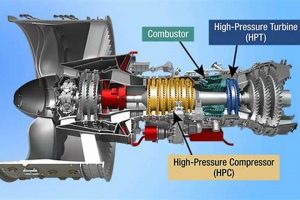
One discipline studies the universe and celestial objects, seeking to understand their physical properties, behavior, and evolution. Examples include studying black holes, analyzing starlight to determine a star’s composition, and developing cosmological models to explain the universe’s origin. The other field applies engineering principles to the design, construction, and operation of aircraft and spacecraft. This encompasses areas like aerodynamics, propulsion systems, and satellite technology.
Understanding the distinct nature of these two areas is important for students considering career paths, as their curricula and professional opportunities diverge significantly. A clear understanding assists in focused academic preparation and more effective career planning, leading to better alignment between skills and job requirements. Historically, while both fields rely on physics and mathematics, their practical applications and focus have evolved along separate trajectories, leading to specialized knowledge domains.
This article will elaborate on the core focuses, educational requirements, and career opportunities associated with each field. Furthermore, it will illuminate the specific skills and areas of expertise cultivated within each discipline, providing a detailed comparison of their respective roles in advancing scientific knowledge and technological progress.
Guidance for Distinguishing Between Astrophysics and Aerospace Engineering
The following guidance is provided to aid in differentiating between astrophysics and aerospace engineering, enabling informed decisions regarding academic pursuits and career aspirations.
Tip 1: Focus of Inquiry. Astrophysics centers on the study of celestial objects and phenomena, employing physics to understand the universe’s composition, behavior, and evolution. Aerospace engineering applies engineering principles to design, develop, and test aircraft and spacecraft.
Tip 2: Educational Path. Astrophysics typically requires a strong foundation in physics and mathematics, culminating in advanced degrees focused on theoretical or observational astronomy. Aerospace engineering programs emphasize applied mathematics, aerodynamics, propulsion, and structural mechanics. A bachelor’s degree is often a starting point, with opportunities for specialization at the graduate level.
Tip 3: Core Skill Sets. Astrophysicists develop strong analytical, problem-solving, and data analysis skills. Expertise in computer modeling and programming is often crucial. Aerospace engineers cultivate skills in design, testing, and project management, along with a deep understanding of engineering software and hardware.
Tip 4: Career Trajectories. Astrophysics graduates may pursue careers in research institutions, observatories, or academia. Aerospace engineers find employment in the aerospace industry, government agencies, or private companies involved in aircraft or spacecraft development.
Tip 5: Application of Knowledge. Astrophysics seeks to expand fundamental knowledge about the universe, often involving long-term research projects. Aerospace engineering focuses on creating practical solutions for flight and space exploration, usually involving design and construction of tangible products.
Tip 6: Required Aptitude. An aptitude for abstract thought, theoretical modeling, and prolonged independent research is valuable in astrophysics. A strong aptitude for hands-on problem solving, design iteration, and teamwork is beneficial in aerospace engineering.
Tip 7: Consider Research Interests. Determine whether your interests lie in understanding the fundamental laws governing the cosmos, or in designing and building the technology necessary to explore it.
Careful consideration of these distinctions will contribute to a clearer understanding of the separate demands and rewards presented by each discipline.
This guidance facilitates a more nuanced appreciation of the unique contributions of both astrophysics and aerospace engineering to scientific advancement and technological innovation.
1. Celestial study versus vehicle design

The fundamental distinction between astrophysics and aerospace engineering hinges on their respective focuses: celestial study and vehicle design. Celestial study, the domain of astrophysics, concerns the understanding of celestial objects, phenomena, and the universe as a whole. Vehicle design, the core of aerospace engineering, involves the creation, development, and operation of aircraft and spacecraft. This difference dictates their methodologies, skill sets, and career paths.
The importance of celestial study versus vehicle design as a component of the broader difference lies in defining the driving purpose of each field. Celestial study seeks to answer fundamental questions about the universe, while vehicle design aims to provide the tools and systems to explore and utilize it. For example, astrophysics utilizes telescopes and complex data analysis to study distant galaxies, contributing to our understanding of the universe’s evolution. Conversely, aerospace engineering designs and builds the James Webb Space Telescope, a sophisticated instrument that enables astrophysical observations. The interplay is thus one of knowledge creation and technological application.
Understanding this dichotomy is essential for students considering these fields. It clarifies whether their interests lie in theoretical exploration or practical implementation. The divergent career paths, with astrophysics leading to research and academia and aerospace engineering leading to industry and government, reflect this fundamental separation. The challenges lie in bridging the gap between these disciplines, fostering collaboration to advance both scientific knowledge and technological capabilities in space exploration and beyond. Therefore, recognizing celestial study and vehicle design as the primary differentiators is crucial for informed decision-making and effective career planning within these domains.
2. Theoretical versus applied science

Astrophysics operates primarily as a theoretical science, seeking to understand the fundamental laws governing the universe. It relies heavily on mathematical models, computer simulations, and observational data analysis to develop theories explaining celestial phenomena. The focus is on advancing knowledge and understanding, often without immediate practical applications. In contrast, aerospace engineering is fundamentally an applied science. It employs established scientific principles, including those derived from physics and mathematics, to design, construct, and operate aircraft and spacecraft. The emphasis is on creating tangible solutions to real-world problems related to flight and space exploration.
The importance of distinguishing theoretical from applied science in this context lies in understanding the driving forces and goals of each discipline. Astrophysics aims to expand fundamental knowledge about the universe, while aerospace engineering seeks to translate that knowledge into practical technologies. For example, the theory of general relativity, a cornerstone of astrophysics, predicted the existence of gravitational waves. The detection of these waves required advanced engineering solutions in detector design, an example of the interplay. Furthermore, the development of new materials with specific thermal properties for spacecraft heat shields leverages materials science derived from both theoretical physics and experimental engineering, illustrating the symbiotic relationship between these approaches. Without the theoretical understanding of astrophysical processes, many aerospace engineering challenges would remain unresolved, and vice-versa.
In summary, astrophysics and aerospace engineering represent distinct yet complementary approaches to understanding and interacting with the cosmos. Astrophysics primarily advances theoretical knowledge, while aerospace engineering focuses on practical application. This fundamental difference influences their methodologies, skill sets, and career paths. Recognizing and appreciating this distinction is crucial for informed decision-making regarding academic pursuits and professional endeavors in these fields. Further challenges remain in facilitating greater collaboration between theoretical and applied scientists and engineers to accelerate progress in both space exploration and fundamental scientific understanding.
3. Cosmic understanding versus technological advancement

The dichotomy of cosmic understanding versus technological advancement encapsulates a core distinction between astrophysics and aerospace engineering. While astrophysics seeks to expand knowledge of the universe, aerospace engineering focuses on the technological means to explore and utilize it. This relationship highlights the different goals and methodologies of each field.
- Fundamental Research versus Applied Innovation
Astrophysics centers on fundamental research, delving into the nature of dark matter, the formation of galaxies, and the evolution of stars. Aerospace engineering, conversely, emphasizes applied innovation, translating scientific discoveries into practical technologies, such as spacecraft propulsion systems or satellite communication networks. Astrophysics answers fundamental questions about the universe, while aerospace engineering seeks to create the tools to explore and exploit that understanding.
- Data Acquisition versus Instrument Development
Astrophysics relies on data acquired from telescopes and space-based observatories to test theoretical models and advance cosmic understanding. Aerospace engineering focuses on the development of these instruments and platforms. For instance, astrophysicists analyze data from the James Webb Space Telescope to study distant galaxies, while aerospace engineers design and build the telescope itself, along with the launch vehicles to put it into orbit. Thus, one field generates the data, and the other enables its collection.
- Knowledge Expansion versus Problem Solving
Cosmic understanding, the purview of astrophysics, is about expanding the boundaries of human knowledge about the cosmos, irrespective of immediate practical applications. Technological advancement in aerospace engineering is geared towards solving real-world problems, such as improving fuel efficiency in aircraft or developing new satellite-based Earth observation systems. Knowledge expansion strives to illuminate the unknown, while problem-solving strives to improve existing technologies.
- Theoretical Models versus Practical Applications
Astrophysics emphasizes the development of theoretical models and simulations to explain the behavior of celestial objects and phenomena. Aerospace engineering prioritizes the practical application of these models to design and build functioning systems. For example, astrophysical models of atmospheric drag are used by aerospace engineers to design satellite orbits and predict their decay rates, demonstrating a direct link between theoretical understanding and practical application.
These facets underscore the synergistic relationship between cosmic understanding and technological advancement in astrophysics and aerospace engineering. While astrophysics provides the fundamental knowledge and theories about the universe, aerospace engineering utilizes these insights to develop the technologies required for space exploration and utilization. This interplay is crucial for advancing both scientific knowledge and technological capabilities.
4. Fundamental laws versus practical implementation

The distinction between fundamental laws and practical implementation serves as a key differentiator. Astrophysics is primarily concerned with elucidating the fundamental laws that govern the universe. This includes exploring gravity, electromagnetism, and the quantum mechanics that dictate the behavior of celestial objects and systems. Conversely, aerospace engineering focuses on the practical implementation of these laws to design, build, and operate aircraft and spacecraft. The emphasis shifts from understanding the underlying principles to applying them to achieve specific engineering goals.
The importance of this distinction is underscored by considering the cause-and-effect relationship. For instance, the theory of general relativity, a cornerstone of astrophysics, describes gravity as a curvature of spacetime. Aerospace engineers then utilize this understanding to calculate trajectories for spacecraft, accounting for gravitational influences from various celestial bodies. Similarly, the study of thermodynamics in astrophysics informs the design of thermal management systems in satellites, ensuring that sensitive instruments operate within their optimal temperature ranges. Real-life examples abound: understanding plasma physics, vital to astrophysics in describing stellar atmospheres, guides the development of plasma propulsion systems for spacecraft. The practical significance of recognizing this dichotomy is clear: astrophysics provides the theoretical groundwork upon which aerospace engineering builds its technological achievements.
Furthermore, the successful operation of complex systems, such as the James Webb Space Telescope, exemplifies the convergence of these disciplines. Astrophysicists define the scientific objectives, while aerospace engineers design and build the telescope, ensuring its stability, pointing accuracy, and thermal control. The telescope’s operation relies on fundamental laws understood by astrophysicists, while its physical realization and functionality are products of aerospace engineering expertise. Challenges arise when theoretical predictions need to be tested through engineering design, often necessitating innovative solutions and trade-offs. Ultimately, understanding the connection between fundamental laws and practical implementation enriches both fields, fostering collaboration and driving advancements in scientific discovery and technological innovation.
5. Astronomy focus versus flight systems
The divergence between an astronomy focus and the development of flight systems constitutes a significant aspect in differentiating astrophysics from aerospace engineering. One prioritizes the observation and understanding of celestial phenomena, while the other concentrates on the design and construction of vehicles for atmospheric and space-based operations. These disparate objectives shape the methodologies, educational requirements, and career trajectories associated with each field.
- Observational Data Acquisition vs. Vehicle Performance
The primary focus of astronomy is the acquisition and interpretation of observational data from telescopes and other instruments to understand celestial objects and phenomena. Conversely, aerospace engineering centers on the performance characteristics of flight systems, including lift, drag, propulsion, and structural integrity. While astrophysicists analyze light spectra to determine a star’s composition, aerospace engineers optimize wing designs to maximize lift-to-drag ratios. The former emphasizes data analysis, the latter, performance optimization.
- Remote Observation vs. Direct Interaction
Astronomy primarily involves remote observation of distant objects. Researchers rarely interact directly with the objects they study. Flight systems, however, are designed for direct interaction with the atmosphere or space environment, requiring engineers to consider factors such as atmospheric entry, orbital mechanics, and radiation shielding. An astrophysicist studies black holes from Earth, while an aerospace engineer designs a probe to orbit or land on Mars.
- Theoretical Modeling vs. Hardware Implementation
Astronomy relies heavily on theoretical modeling and computer simulations to explain observed phenomena. Aerospace engineering emphasizes the hardware implementation of these models, transforming theoretical designs into tangible flight systems. An astrophysical model might predict the existence of exoplanets, while aerospace engineering focuses on designing telescopes capable of detecting them or spacecraft to visit them.
- Cosmological Scale vs. System-Level Scale
Astronomy deals with phenomena at cosmological scales, encompassing the entire universe and its evolution. Flight systems operate at a system-level scale, addressing engineering challenges within the confines of an aircraft or spacecraft. Astrophysicists study the expansion of the universe, while aerospace engineers focus on optimizing the efficiency of a rocket engine.
Ultimately, the contrasting priorities of astronomy focus and flight systems highlight the fundamental distinctions between astrophysics and aerospace engineering. Astrophysics seeks to understand the universe through observation and theory, while aerospace engineering aims to engineer and operate the vehicles that allow us to explore it. This difference has deep implications regarding educational backgrounds and skills required for a career in each field.
Frequently Asked Questions
The following questions address common points of confusion regarding the differences between astrophysics and aerospace engineering. These answers aim to provide clear and concise explanations.
Question 1: Is astrophysics simply a subfield of aerospace engineering, given that both involve space?
No. Astrophysics is a branch of physics that applies physical laws and theories to study celestial objects and phenomena. Aerospace engineering is an engineering discipline focused on the design, construction, and operation of aircraft and spacecraft.
Question 2: What are the primary educational requirements for pursuing a career in each field?
Astrophysics typically requires a strong foundation in physics and mathematics, often culminating in a Ph.D. Aerospace engineering programs emphasize engineering principles, aerodynamics, propulsion, and structural mechanics, often beginning with a Bachelor’s degree.
Question 3: Do the career paths for astrophysicists and aerospace engineers overlap significantly?
While some overlap exists, particularly in areas like mission planning for space-based telescopes, the primary career paths diverge. Astrophysicists often work in research institutions and academia, while aerospace engineers find employment in the aerospace industry and government agencies.
Question 4: What are the key skills developed in each discipline?
Astrophysicists develop strong analytical, problem-solving, and data analysis skills, often requiring expertise in computer modeling and programming. Aerospace engineers cultivate skills in design, testing, and project management, coupled with a deep understanding of engineering software and hardware.
Question 5: Does one field contribute more to technological advancements than the other?
Both fields contribute significantly, albeit in different ways. Astrophysics expands our fundamental understanding of the universe, providing a basis for future technological developments. Aerospace engineering translates this knowledge into practical applications and technologies for space exploration and aviation.
Question 6: Is prior experience in one field helpful when transitioning to the other?
Experience in one field can be beneficial, but transitioning requires additional education and training. A background in physics can provide a strong foundation for aerospace engineering, while aerospace engineering skills can be valuable in designing instrumentation for astrophysical research.
These answers illustrate the fundamental distinctions and relative contributions of astrophysics and aerospace engineering to scientific understanding and technological progress.
The next section will explore the historical evolution of each field.
Distinguishing Astrophysics and Aerospace Engineering
This exploration has elucidated the core aspects defining the separation between astrophysics and aerospace engineering. Astrophysics, a branch of physics, is dedicated to understanding the fundamental laws and phenomena governing the cosmos. Aerospace engineering, conversely, applies engineering principles to the design, construction, and operation of vehicles for flight within Earth’s atmosphere and beyond. Educational paths, skill sets, and career trajectories diverge significantly between the two fields, reflecting their distinct objectives. While both disciplines contribute to humanity’s knowledge of the universe and its ability to explore space, their approaches and applications are fundamentally different.
Continued advancements in both areas necessitate specialized expertise and foster interdisciplinary collaboration. As astrophysical discoveries present new challenges and opportunities, aerospace engineers are crucial in developing the technologies needed to observe and explore these phenomena. A clear understanding of the distinct characteristics of each field will guide future generations of scientists and engineers in their pursuit of knowledge and technological innovation. The ongoing interplay between understanding the universe and developing the means to explore it will shape the future of scientific and technological progress.
![Best Work Environment for Aerospace Engineers [2024] | Innovating the Future of Flight with Reliable Aviation Solutions](https://mixaerospace.com/wp-content/uploads/2026/04/th-277-300x200.jpg "Best Work Environment for Aerospace Engineers [2024] Innovating the Future of Flight with Reliable Aviation Solutions")