The requirements to enter the aerospace engineering field are multifaceted, encompassing a strong foundation in mathematics and science, particularly physics. Essential is a bachelor’s degree in aerospace engineering or a closely related field, such as mechanical engineering, from an accredited institution. Coursework should include aerodynamics, propulsion, structural analysis, control systems, and materials science. Further, developing proficiency in computer-aided design (CAD) software and programming languages is crucial.
Possessing a robust understanding of these elements allows engineers to contribute to the design, development, testing, and manufacturing of aircraft, spacecraft, and related systems. The field’s historical context reveals a constant evolution driven by technological advancements and the need for safer, more efficient air and space travel. Mastery of the fundamental principles and ongoing adaptation to new technologies are vital for success in this demanding profession. The application of these skills benefits society through innovations in transportation, communication, and exploration.
Therefore, the following aspects will be addressed: the necessary educational qualifications, the crucial skills to cultivate, the importance of practical experience, and the potential career paths within the domain. Furthermore, the continuous professional development required to remain competitive and contribute meaningfully to the industry will be highlighted.
Essential Guidance for Aspiring Aerospace Engineers
The pursuit of a career in aerospace engineering demands rigorous preparation and strategic planning. The following guidance offers critical insights to navigate the academic and professional landscape of this challenging, yet rewarding field.
Tip 1: Cultivate a Strong Mathematical Foundation: A deep understanding of calculus, differential equations, linear algebra, and statistics is indispensable. Aerospace engineering principles rely heavily on mathematical models and simulations. Mastering these concepts ensures a solid base for advanced studies.
Tip 2: Excel in Physics: A thorough grasp of Newtonian mechanics, thermodynamics, fluid dynamics, and electromagnetism is crucial. These principles govern the behavior of aircraft and spacecraft, necessitating a comprehensive understanding for effective design and analysis.
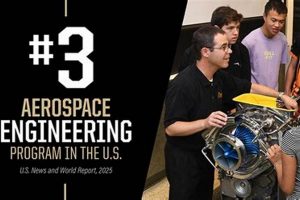
Tip 3: Choose a Relevant Academic Program: Enroll in an accredited aerospace engineering program or a closely related discipline, such as mechanical engineering with a specialization in aerospace. Accreditation ensures the curriculum meets industry standards and prepares graduates for professional practice.
Tip 4: Develop Proficiency in CAD and Programming: Master computer-aided design (CAD) software for creating and analyzing engineering designs. Furthermore, acquire proficiency in programming languages such as MATLAB, Python, or C++ for simulation, data analysis, and control system development.
Tip 5: Seek Internships and Research Opportunities: Gain practical experience through internships with aerospace companies, government agencies, or research institutions. These experiences provide valuable insights into real-world engineering challenges and enhance career prospects.
Tip 6: Participate in Aerospace-Related Projects: Engage in extracurricular activities such as designing and building model rockets, participating in drone competitions, or contributing to student-led aerospace projects. These activities demonstrate initiative and passion for the field.
Tip 7: Network with Professionals: Attend industry conferences, join professional organizations like the American Institute of Aeronautics and Astronautics (AIAA), and connect with aerospace engineers through online platforms. Networking expands knowledge, provides mentorship opportunities, and facilitates career advancement.
The assimilation of these guidelines enhances preparedness for the demands of aerospace engineering. A dedicated focus on fundamental principles, practical application, and continuous learning is essential for a successful career trajectory.
These considerations form the bedrock for further exploration of specific career paths and specializations within the aerospace engineering domain. The subsequent sections delve into advanced educational opportunities and potential areas of focus.
1. Education

Formal education forms the cornerstone of an aerospace engineer’s qualifications. A bachelor’s degree in aerospace engineering or a closely related field, such as mechanical engineering with an aerospace concentration, is the minimum requirement for entry-level positions. The curriculum typically encompasses fundamental engineering principles, specialized aerospace topics, and extensive laboratory work. The depth and breadth of the coursework directly influence an engineer’s ability to analyze complex systems, design innovative solutions, and contribute to the advancement of aerospace technology. Without this rigorous academic preparation, the foundational understanding of aerodynamics, propulsion, structures, and control systems would be absent, thereby hindering effective practice. Consider, for instance, the design of a new aircraft wing; the engineer must apply principles of fluid dynamics, structural analysis, and materials science, all learned during their formal education, to ensure optimal performance and safety.
Advanced degrees, such as a Master’s or Doctorate, are often pursued for specialized roles in research and development, or for leadership positions within the industry. These advanced programs provide opportunities for in-depth study in specific areas, such as computational fluid dynamics, composite materials, or space systems engineering. The knowledge gained through graduate-level education enables engineers to tackle complex challenges, conduct original research, and contribute to cutting-edge advancements in aerospace. For example, the development of new satellite propulsion systems or the design of hypersonic vehicles often requires the advanced knowledge and skills acquired through graduate studies. Furthermore, continuing education through professional development courses and certifications is essential to stay abreast of the latest technological advancements and industry standards.
In conclusion, education is not merely a prerequisite but a continuous process that shapes an aerospace engineer’s capabilities and contributions. The initial undergraduate education provides the fundamental knowledge, while advanced degrees and continuing education enable specialization and innovation. Without a solid educational foundation, aspiring engineers lack the necessary tools to address the complex challenges of designing, developing, and maintaining aircraft and spacecraft. Thus, prioritizing and investing in education is critical for both individual success and the advancement of the aerospace industry.
2. Skills

The acquisition and application of specific skills are indispensable to become an aerospace engineer. Possessing a strong academic background is insufficient without the ability to translate theoretical knowledge into practical solutions. These skills encompass technical proficiency, analytical thinking, and problem-solving capabilities. The ability to apply scientific principles to the design and development of aircraft, spacecraft, and related systems is paramount. For instance, an engineer designing a new aircraft wing must possess skills in aerodynamics, structural analysis, and materials science to ensure its efficiency, safety, and structural integrity. Therefore, skills directly influence the performance of an aerospace engineer and, by extension, the success of engineering projects. This underlines skills as a critical component of “what do you need to be an aerospace engineer”.
Further analysis reveals that critical thinking and problem-solving skills are crucial when troubleshooting unexpected issues or optimizing existing systems. The aerospace sector routinely encounters intricate challenges, requiring engineers to assess complex data, identify root causes, and devise effective solutions. For example, when faced with a malfunctioning satellite communication system, an engineer must systematically analyze the signal flow, identify the faulty component, and implement a corrective action. Moreover, effective communication skills are essential for collaborating with diverse teams, presenting technical information, and documenting project progress. Successfully navigating the complexities of this industry necessitates the continuous development and refinement of these capabilities. Numerical competency and modeling expertise using Computer Aided Design (CAD) and similar tools is also a core skillset for modern aerospace engineering.
In summary, skills are not merely supplementary qualifications but rather fundamental requirements for aspiring aerospace engineers. These skills, ranging from technical expertise to analytical thinking and problem-solving capabilities, directly determine an engineer’s ability to contribute meaningfully to the industry. Continuously developing and honing skills addresses challenges encountered and ensures adaptation to the evolving demands of the aerospace landscape. In conclusion, acquiring and applying the appropriate skillset is crucial for both the career advancement of the individual aerospace engineer and the progressive advancement of the sector overall.
3. Experience

Practical experience forms an integral component of “what do you need to be an aerospace engineer.” Theoretical knowledge acquired through academic coursework necessitates practical application to solidify understanding and develop proficiency. Exposure to real-world engineering challenges through internships, co-op programs, or research projects provides invaluable insights into the design, development, and testing phases of aerospace systems. The impact of this experience is evidenced by the enhanced problem-solving skills and technical acumen displayed by engineers who have had the opportunity to work on tangible projects. For example, an engineer who has participated in the design and testing of a flight control system gains a deeper understanding of its intricacies and potential failure modes than one who has only studied it in a classroom. This practical knowledge is crucial for effective decision-making and innovation in the field.
The significance of experience extends beyond technical competence. It also fosters the development of essential soft skills, such as teamwork, communication, and project management. Aerospace projects are typically collaborative endeavors involving diverse teams of engineers, scientists, and technicians. Working in these environments allows aspiring engineers to learn how to effectively communicate technical ideas, coordinate tasks, and resolve conflicts. Furthermore, managing complex projects from conception to completion requires organizational skills, time management abilities, and the ability to adapt to changing circumstances. The ability to work under pressure, adhere to strict deadlines, and maintain attention to detail are habits that are honed by experience.
In conclusion, experience serves as a bridge between theoretical knowledge and practical application, solidifying an aerospace engineer’s skillset and enhancing their ability to contribute effectively to the industry. The insights gained through internships, research projects, and other forms of practical engagement equip engineers with the necessary tools to tackle real-world challenges, collaborate effectively, and drive innovation. Therefore, seeking out opportunities to gain relevant experience is crucial for aspiring aerospace engineers and constitutes an indispensable element of their professional development.
4. Knowledge
Possessing a broad and deep knowledge base is a fundamental prerequisite to effectively engage in aerospace engineering. This knowledge transcends rote memorization, instead necessitating a comprehensive understanding of scientific principles, engineering methodologies, and industry best practices. It is the intellectual bedrock upon which innovative designs are built and complex problems are solved, directly informing every facet of aerospace engineering endeavors.
- Aerodynamics and Fluid Mechanics
A thorough understanding of aerodynamics and fluid mechanics is essential for designing efficient and stable aircraft and spacecraft. This includes knowledge of boundary layer theory, lift and drag generation, compressible flow, and computational fluid dynamics (CFD). For example, understanding how airflow interacts with an aircraft wing is crucial for optimizing its shape to minimize drag and maximize lift, directly impacting fuel efficiency and performance. The effective application of these principles distinguishes successful designs from those that fail to meet performance criteria.
- Propulsion Systems
Comprehensive knowledge of propulsion systems is vital for aerospace engineers, encompassing a deep understanding of various engine types, including jet engines, rocket engines, and electric propulsion systems. This knowledge includes the thermodynamic cycles governing engine operation, combustion processes, and nozzle design. For instance, when designing a rocket engine for a satellite launch vehicle, knowledge of propellant chemistry, combustion stability, and nozzle expansion ratios is crucial for achieving the required thrust and specific impulse, parameters directly influencing the mission’s success.
- Materials Science and Structural Analysis
A strong foundation in materials science and structural analysis is imperative for ensuring the safety and reliability of aerospace structures. This involves knowledge of material properties, such as strength, stiffness, fatigue resistance, and corrosion resistance, as well as structural analysis techniques, such as finite element analysis (FEA). For example, when designing the fuselage of an aircraft, engineers must select materials that can withstand the stresses and strains imposed by aerodynamic loads, pressure differentials, and temperature variations, while minimizing weight to improve fuel efficiency. A lack of understanding can lead to catastrophic structural failures.
- Control Systems and Avionics
Knowledge of control systems and avionics is essential for designing and implementing automated systems for aircraft and spacecraft. This includes knowledge of feedback control theory, sensor technology, navigation systems, and communication systems. For example, an engineer designing an autopilot system for an aircraft must understand how to integrate sensor data from gyroscopes, accelerometers, and GPS receivers to maintain stable flight and accurately track a desired course. Poorly designed control systems can lead to instability and loss of control.
The confluence of these knowledge domains, supplemented by continuous learning and adaptation to emerging technologies, constitutes the intellectual capital necessary for success in aerospace engineering. The absence of proficiency in even one of these areas can significantly impede an engineer’s ability to contribute meaningfully to the field, highlighting the indispensable role knowledge plays in shaping competence and driving innovation in the aerospace sector.
5. Aptitude

Aptitude, often described as a natural inclination or inherent talent, significantly influences an individual’s potential to excel in aerospace engineering. While formal education, practical skills, and comprehensive knowledge are crucial, a predisposition towards certain cognitive abilities enhances the assimilation and application of these elements. Aptitude therefore serves as a catalyst, accelerating learning and fostering innovation within the demanding realm of aerospace.
- Spatial Reasoning
Spatial reasoning, the capacity to mentally manipulate objects in three dimensions, is indispensable for aerospace engineers. This aptitude facilitates the visualization of complex designs, the understanding of aerodynamic forces acting on aircraft, and the interpretation of engineering drawings. For instance, designing a satellite’s antenna array necessitates visualizing its orientation in space and its coverage area. A strong spatial reasoning ability expedites this process and improves the accuracy of the design.
- Analytical Thinking
Analytical thinking, the ability to dissect complex problems into manageable components and identify underlying patterns, is paramount in aerospace engineering. This aptitude enables engineers to diagnose system malfunctions, optimize designs for efficiency, and evaluate the performance of aircraft and spacecraft. Consider troubleshooting a malfunctioning flight control system. Analytical thinking allows an engineer to systematically examine sensor data, identify potential causes, and devise effective solutions, thereby minimizing downtime and ensuring safety.
- Mathematical Proficiency
While mathematical skills can be acquired through education, an innate aptitude for mathematical reasoning enhances the comprehension and application of complex mathematical concepts. This aptitude facilitates the development of mathematical models, the analysis of engineering data, and the solution of complex equations. The design of a rocket trajectory, for example, relies heavily on mathematical modeling and optimization techniques. An individual with a natural aptitude for mathematics can more readily grasp these concepts and apply them to achieve precise and efficient trajectories.
- Problem-Solving Skills
Problem-solving skills are essential for addressing the multifaceted challenges inherent in aerospace engineering. This aptitude involves the ability to identify problems, generate solutions, evaluate alternatives, and implement effective strategies. For instance, if an aircraft experiences unexpected vibrations during flight testing, an engineer must be able to quickly identify the source of the vibrations and develop a solution to mitigate them. An aptitude for problem-solving enables engineers to approach such challenges with creativity, resourcefulness, and resilience.
In conclusion, while education, skills, and experience contribute significantly to competence in aerospace engineering, aptitude serves as an underlying enabler, amplifying the effectiveness of these factors. The inherent capacity for spatial reasoning, analytical thinking, mathematical proficiency, and problem-solving enhances an engineer’s ability to learn, innovate, and contribute meaningfully to the field. These aptitudes, whether innate or cultivated, therefore constitute an integral aspect of what is needed to be a successful aerospace engineer.
6. Licenses
Professional licensure, while not always mandatory for all aerospace engineering roles, represents a significant aspect of professional credibility and legal authorization in certain specific domains. The attainment of a Professional Engineer (PE) license, for example, often becomes essential for engineers who directly oversee or approve engineering designs that impact public safety. This license signifies a demonstrated level of competence, ethical conduct, and commitment to upholding engineering standards. The consequences of practicing engineering without the appropriate licensure where it is required by law can range from legal penalties to invalidation of engineering work, potentially jeopardizing safety and project integrity. The cause is typically a requirement based on performing work in a way that impacts public safety. The effect is increased scrutiny of work and ability to independently sign off on designs.
The practical significance of licensure arises in scenarios where engineers hold responsibility for critical system design, construction, or maintenance. Consider a project involving the structural design of a new airport terminal. An aerospace engineer involved in the design, especially if signing off on those designs, must often hold a PE license to certify that the structure meets all relevant safety codes and regulations. Similarly, engineers employed by government agencies, such as the Federal Aviation Administration (FAA), may require specific licenses or certifications to perform their duties, ensuring they possess the necessary expertise to oversee aircraft safety and air traffic control systems. The understanding and possession of necessary licenses is crucial to successfully working within the field.
In summary, licensure constitutes a component, and often a mandatory legal requirement, of what is needed to be an aerospace engineer in specific roles. While not universally required across all positions, its possession demonstrates a commitment to professional standards, ethical practice, and public safety. The acquisition of relevant licenses hinges upon the engineer’s career trajectory and the nature of their responsibilities. Aspiring aerospace engineers should investigate the licensure requirements within their chosen specialization to ensure compliance with relevant regulations and enhance their professional credibility. Further research into specific roles should be performed to understand which licenses will be required.
7. Passion

The commitment required to become an aerospace engineer necessitates a fundamental level of dedication; however, true success in this demanding field extends beyond mere commitment to encompass a genuine passion for aerospace and related sciences. This intrinsic motivation fuels the perseverance required to overcome the inherent challenges and complexities of the profession.
- Driving Innovation
A passion for aerospace serves as a catalyst for innovation. Engineers driven by genuine enthusiasm are more likely to explore unconventional solutions, push the boundaries of existing technologies, and pursue novel research avenues. The development of composite materials for aircraft structures, for example, was propelled by engineers passionate about reducing weight and improving fuel efficiency. This passion leads to groundbreaking advancements that would otherwise remain unexplored.
- Sustaining Perseverance
Aerospace engineering projects often encounter significant obstacles, requiring engineers to navigate complex technical challenges and endure prolonged development cycles. A strong passion for the field provides the resilience necessary to persevere through these difficulties, maintaining motivation and focus when faced with setbacks. The design and testing of a new rocket engine, for instance, may involve countless iterations and extensive testing. A passion for space exploration and propulsion systems sustains engineers through this arduous process, fostering determination and commitment to achieving success.
- Fueling Continuous Learning
The aerospace industry is characterized by continuous technological advancements, requiring engineers to engage in ongoing learning and professional development. A genuine passion for the field fosters a proactive approach to acquiring new knowledge, attending conferences, and pursuing advanced training. This commitment to lifelong learning ensures that engineers remain at the forefront of their discipline, contributing to cutting-edge research and development. The evolving landscape of autonomous flight systems, for example, demands that engineers remain abreast of the latest advancements in artificial intelligence and robotics.
- Inspiring Collaboration
Passion is contagious, influencing not only individual performance but also fostering a collaborative and enthusiastic team environment. Engineers who are genuinely passionate about their work inspire colleagues, cultivate a shared vision, and promote a culture of innovation and excellence. The development of a new aircraft, for example, requires the coordinated efforts of numerous engineers across various disciplines. A shared passion for aviation fosters effective communication, collaboration, and a collective commitment to achieving the project’s goals.
These facets emphasize that passion serves not only as a personal motivator but also as a catalyst for innovation, perseverance, continuous learning, and collaborative success. Aerospace engineering necessitates considerable intellectual investment, and a genuine passion for the field provides the fuel to undertake these demands. Without passion, the drive to reach ever higher and deeper into the unknown falters.
Frequently Asked Questions
The following addresses common inquiries regarding the necessary qualifications and attributes required to succeed in the field of aerospace engineering. The information presented aims to provide clarity and guidance for aspiring professionals.
Question 1: What level of mathematics proficiency is required?
A strong foundation in calculus, differential equations, linear algebra, and statistics is essential. These mathematical disciplines underpin the fundamental principles of aerospace engineering.
Question 2: Is a master’s degree necessary for career advancement?
While a bachelor’s degree can secure entry-level positions, a master’s degree is often advantageous for specialized roles in research and development or leadership positions within the industry.
Question 3: What types of software skills are beneficial?
Proficiency in computer-aided design (CAD) software, such as CATIA or SolidWorks, and programming languages like MATLAB, Python, or C++ is highly valuable for design, analysis, and simulation tasks.
Question 4: How important are internships?
Internships provide practical experience, industry insights, and networking opportunities, significantly enhancing career prospects. They are strongly recommended for aspiring aerospace engineers.
Question 5: Is professional licensure a requirement for all aerospace engineers?
Professional licensure, such as a Professional Engineer (PE) license, is not always mandatory but may be required for engineers who oversee or approve designs that impact public safety.
Question 6: What personal qualities contribute to success?
In addition to technical skills, strong analytical thinking, problem-solving abilities, communication skills, and a genuine passion for aerospace are critical for success in this challenging field.
In conclusion, success in aerospace engineering necessitates a combination of rigorous academic preparation, practical skills development, professional qualifications, and intrinsic motivation. A holistic approach to acquiring these elements is crucial for achieving a fulfilling and impactful career in the field.
The subsequent discussion will focus on specific career paths and specializations within aerospace engineering, providing further insights into potential areas of focus and advancement.
What Do You Need to Be an Aerospace Engineer
This exploration of “what do you need to be an aerospace engineer” has illuminated the multifaceted requirements for success in this demanding field. The necessity of a robust academic foundation, encompassing mathematics, physics, and specialized engineering disciplines, has been emphasized. Furthermore, the development of essential skills, including proficiency in CAD software, programming languages, and analytical problem-solving techniques, is paramount. Practical experience, gained through internships, research projects, and collaborative endeavors, provides invaluable real-world insights. Equally important are the less tangible, yet vital, attributes of aptitude, professional licensure where legally mandated, and a genuine passion for aerospace innovation.
The pursuit of a career as an aerospace engineer necessitates a significant investment of time, effort, and resources. However, the potential rewardscontributing to advancements in air and space travel, developing cutting-edge technologies, and pushing the boundaries of human knowledgeare substantial. Aspiring aerospace engineers are encouraged to diligently cultivate the knowledge, skills, and attributes outlined herein, thereby positioning themselves for a successful and impactful career in this dynamic and globally significant field. The future of aerospace engineering hinges upon the dedication and competence of those who choose to embrace its challenges and opportunities.